Tapestry
early 18th century


1 of 4
Object Label
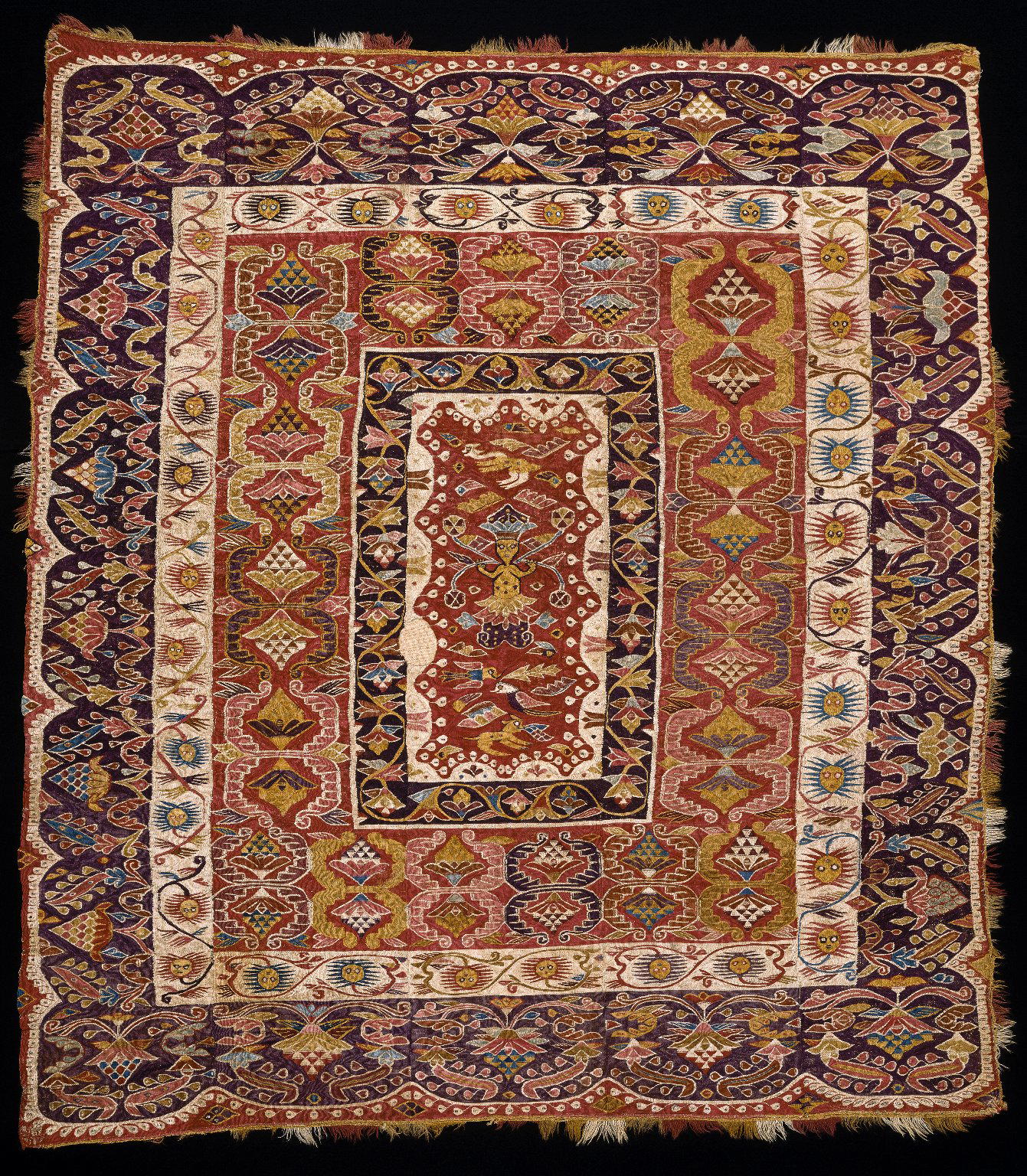
Tapestries, rugs, and rich fabrics were among the most valuable goods in early colonial households, second only to jewels and precious objects in gold and silver. The private market for these textiles was stimulated once Europeans realized such works’ importance in pre-Columbian cultures.
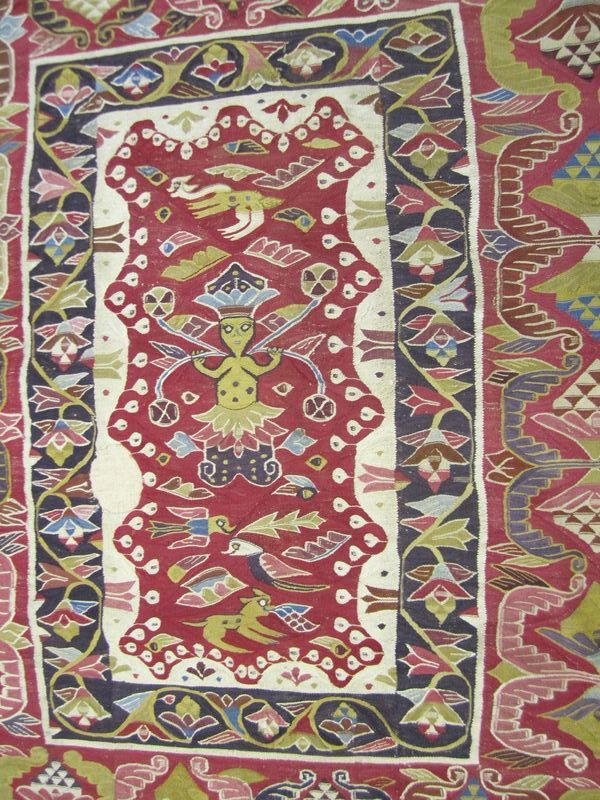
The sixteenth-century Peruvian tapestry at the left features both European and indigenous motifs, including a spotted dog (a symbol of the Dominican order) in the central field and animals from the Peruvian ornamental repertoire, such as snakes, viscachas (Andean rodents), rabbits, and birds. Native and non-native motifs were also combined in later colonial examples, such as the tapestry at the right from Cajamarca with a mermaid, a European element that was very popular in Peru, surrounded by Andean animals.
The sixteenth-century Peruvian tapestry at the left features both European and indigenous motifs, including a spotted dog (a symbol of the Dominican order) in the central field and animals from the Peruvian ornamental repertoire, such as snakes, viscachas (Andean rodents), rabbits, and birds. Native and non-native motifs were also combined in later colonial examples, such as the tapestry at the right from Cajamarca with a mermaid, a European element that was very popular in Peru, surrounded by Andean animals.
Caption
Tapestry, early 18th century. Camelid fiber, 77 3/4 x 67 3/4in. (197.5 x 172.1cm). Brooklyn Museum, Museum Collection Fund, 46.133.1. (Photo: Brooklyn Museum)
Gallery
Not on view
Collection
Gallery
Not on view
Collection
Title
Tapestry
Date
early 18th century
Period
Colonial Period
Medium
Camelid fiber
Classification
Dimensions
77 3/4 x 67 3/4in. (197.5 x 172.1cm)
Credit Line
Museum Collection Fund
Accession Number
46.133.1
Have information?
Have information about an artwork? Contact us at