Pianoforte

Brooklyn Museum photograph
Object Label
Although the large and arresting gilt-bronze mounts of pharaonic heads that decorate either side of this superb pianoforte are emphatic examples of Egyptomania, other decorative elements are derived from different ancient cultures. For example, the central bronze plaque depicts a woman in classical garb spinning wool—the ancient Greek allegorical representation of Fate. The long marquetry panels of various inlaid woods on either side depict ancient Roman bronze oil lamps. This eclectic combination of artistic sources is typical of late nineteenth-century objects and was considered a sign of erudition on the part of the designer and the consumer who purchased the object.
Caption
(of piano works) Martins & Son (United States, New York, active 1846–ca. 1895); (of piano case) Pottier & Stymus Manufacturing Company (United States, New York, active ca. 1859–1910). Pianoforte, ca. 1870. Rosewood, walnut, 57 × 80 × 30 in., 662 lb. (144.8 × 203.2 × 76.2 cm, 300.28kg). Brooklyn Museum, Gift of Mrs. Ray Blatt and Joseph Blatt, 61.231. (Photo: Brooklyn Museum)
Gallery
Not on view
Collection
Gallery
Not on view
Collection
Title
Pianoforte
Date
ca. 1870
Medium
Rosewood, walnut
Classification
Dimensions
57 × 80 × 30 in., 662 lb. (144.8 × 203.2 × 76.2 cm, 300.28kg)
Credit Line
Gift of Mrs. Ray Blatt and Joseph Blatt
Accession Number
61.231
Frequent Art Questions
This piano is cool!
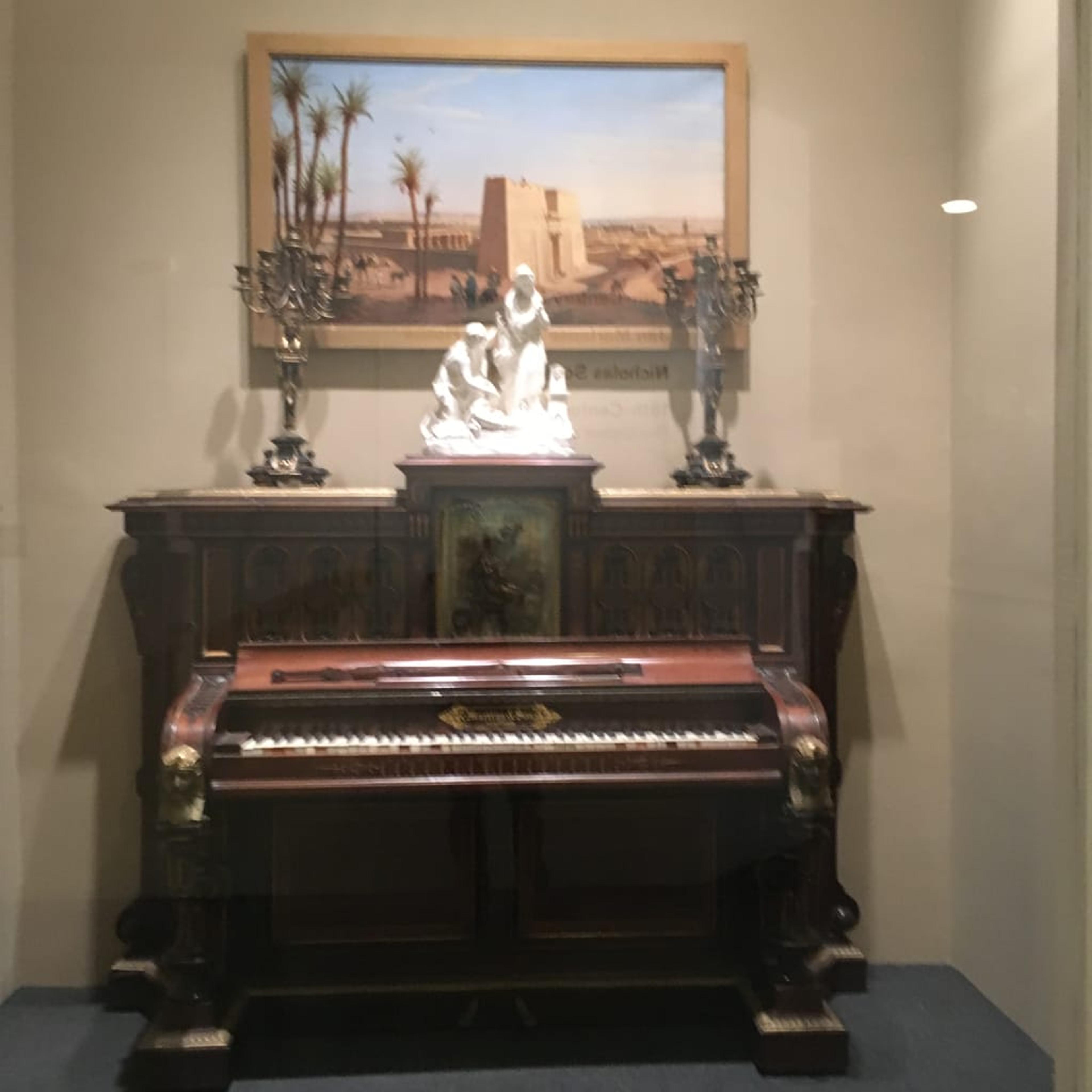 Isn't it?! In the late 19th century people were very interested in bringing design ideas from "exotic" places into their homes.Egypt was a favourite, as were Japan, India, and Morocco. Rooms would combine elements from these places in a very eclectic way. Steam engines and other new developments in transportation allowed people to travel further and more easily than ever before, which impacted design and the decorative arts.
Can you tell me more about who made this?
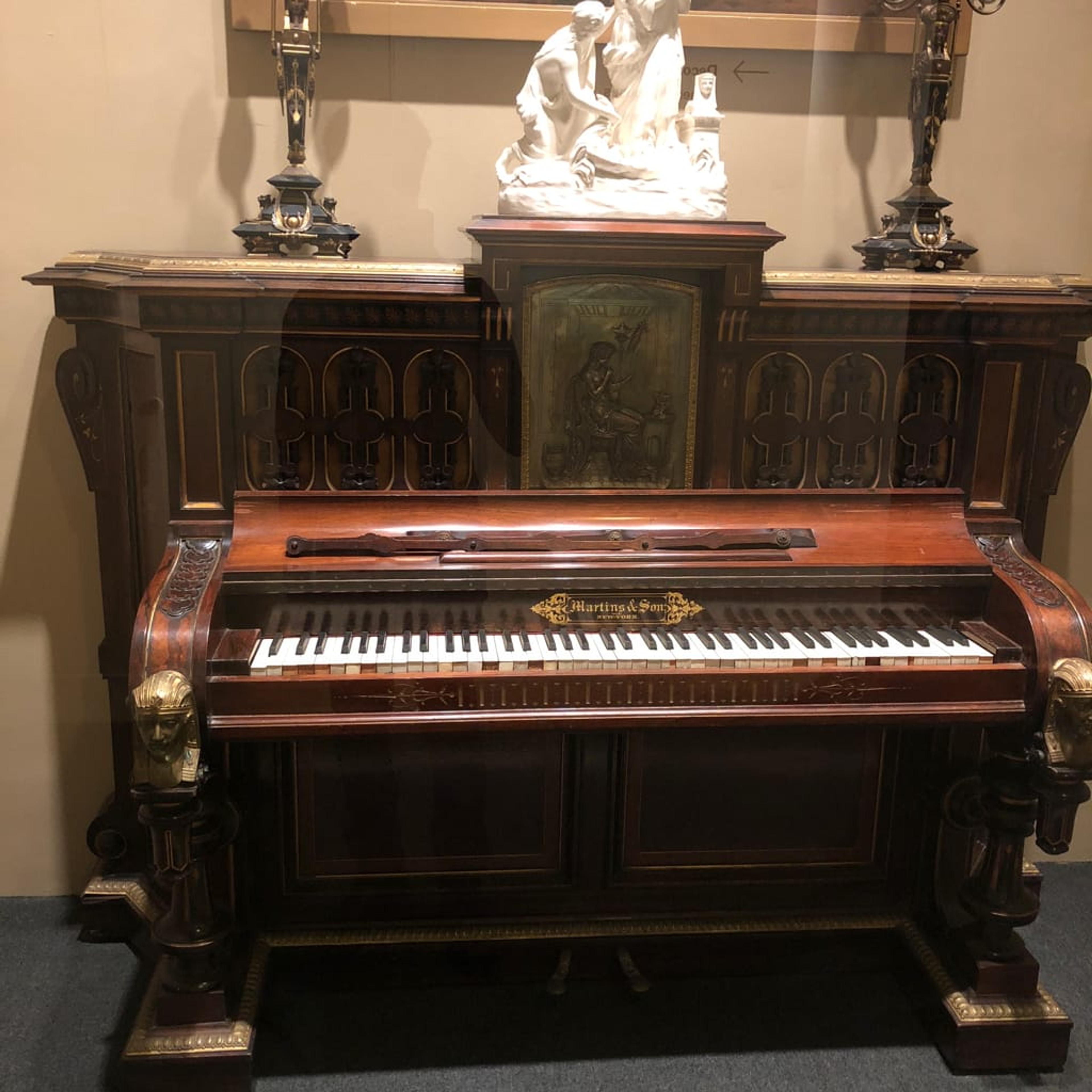 The marker of the piano elements was Martin & Sons, a Manhattan based piano manufacturer working around 1870. Martins and Son, originally Martins & Ouvrier, established a piano shop in New York in 1846, and continued producing pianos into the 1890s.The case was actually made by the furniture firm Pottier & Stymus, a prominent American furniture and design firm of the Victorian period.
Is this a hand made piano?
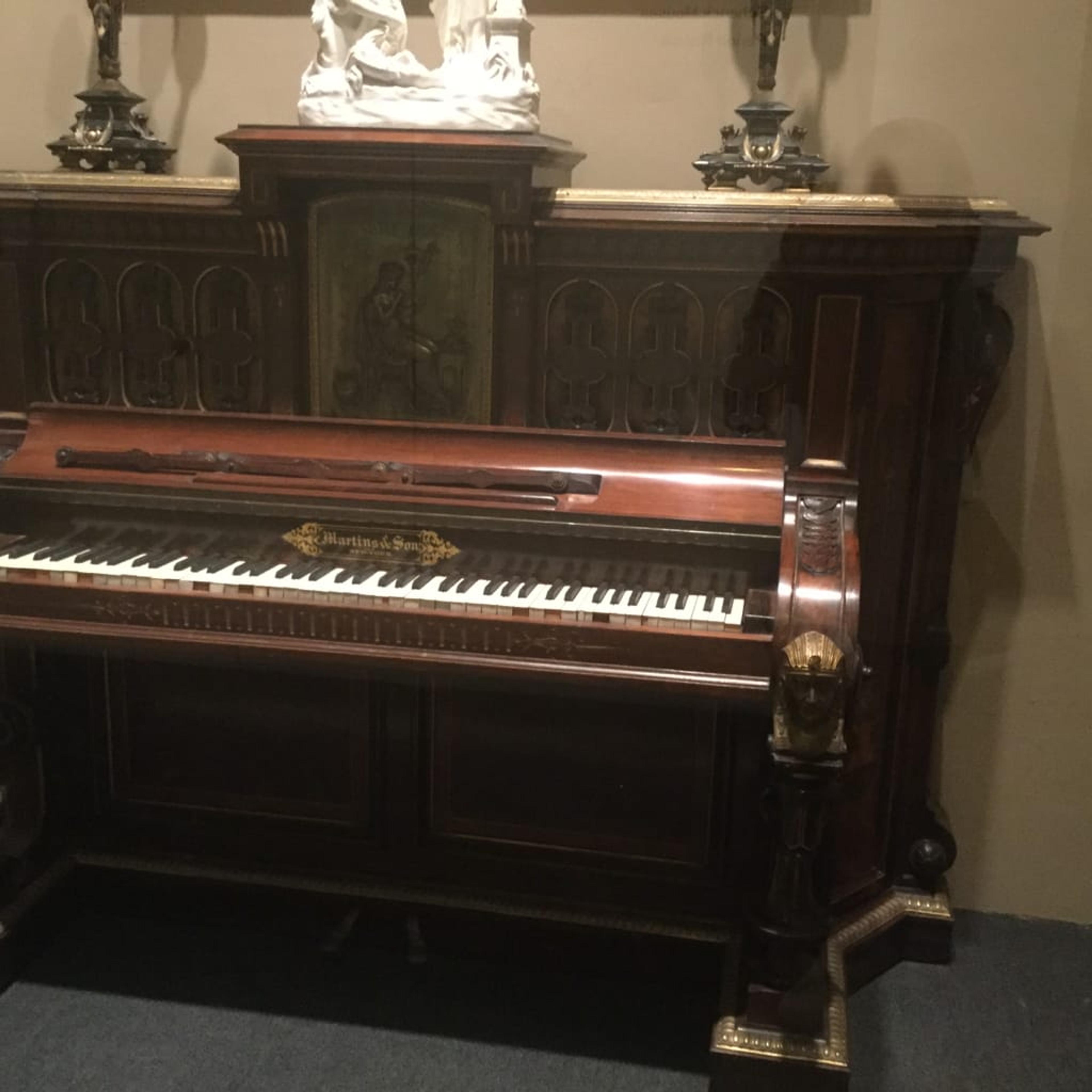 This piano was made by a company called Martins & Son, a Manhattan based manufacturer working around 1870. They were a small family business, so my guess would be that the piano is handcrafted, yes.
How old is this piano?
This pianoforte dates to around 1870. So it was made around 150 years ago.
Have information?
Have information about an artwork? Contact us at