Teapot
Meissen Porcelain Factory
Object Label
Germans bought Wedgwood in large quantities beginning in the late eighteenth century. Not surprisingly, the German Meissen Porcelain Factory began to make very close Wedgwood imitations, such as this teapot, to gain back some of the luxury porcelain market from their English competitors.
Caption
Meissen Porcelain Factory (German, founded 1710). Teapot, early 19th century. Porcelain, 5 x 7 1/2 x 4 1/4 in. (12.7 x 19.1 x 10.8 cm). Brooklyn Museum, Gift of the Estate of Emily Winthrop Miles, 64.82.9a-b.
Gallery
Not on view
Collection
Gallery
Not on view
Collection
Manufacturer
Title
Teapot
Date
early 19th century
Medium
Porcelain
Classification
Dimensions
5 x 7 1/2 x 4 1/4 in. (12.7 x 19.1 x 10.8 cm)
Markings
On bottom of teapot: Impressed Meissen logo
Credit Line
Gift of the Estate of Emily Winthrop Miles
Accession Number
64.82.9a-b
Frequent Art Questions
Are these solid pieces, or is the white fused to the blue?
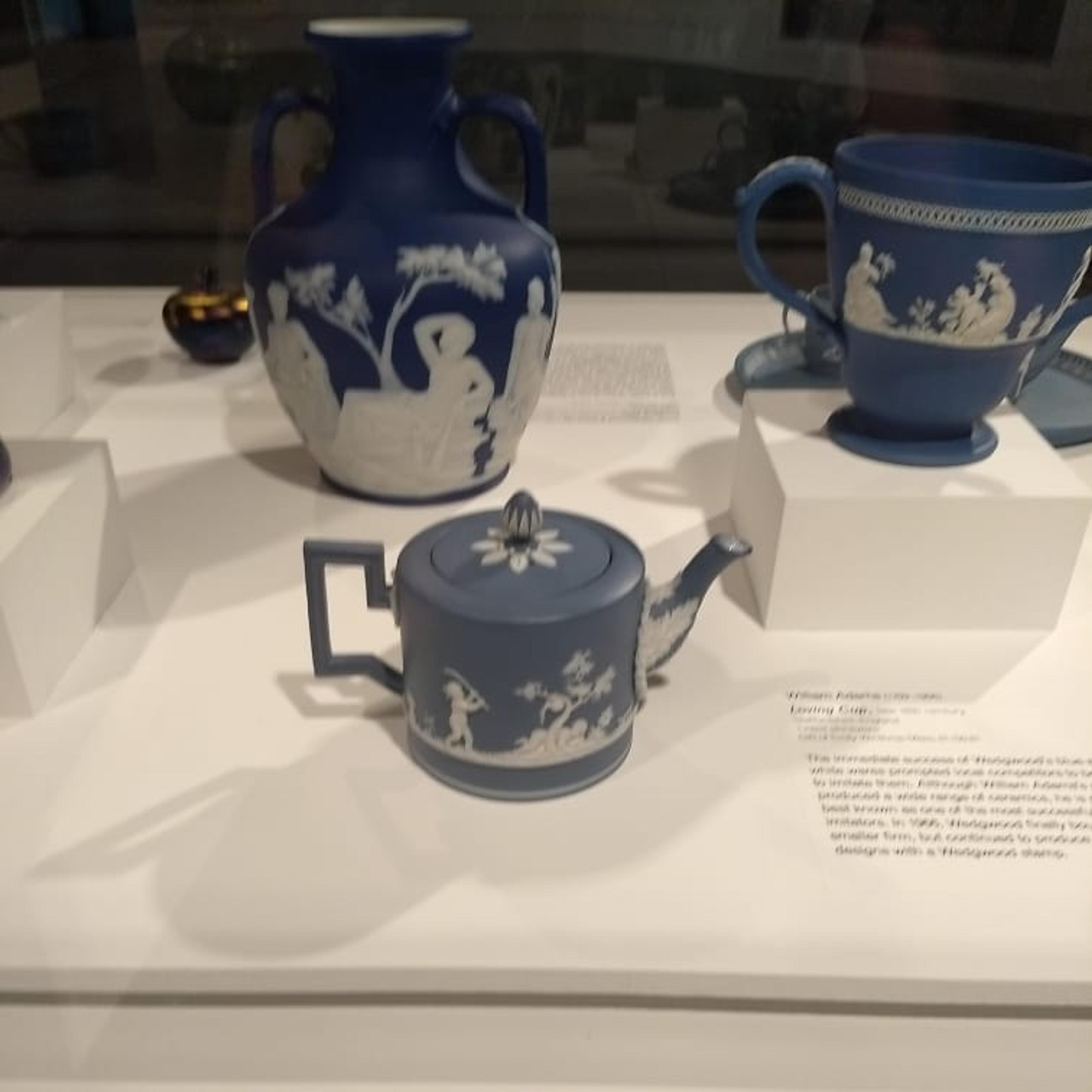 The Wedgwood vessels are made of a tinted blue stoneware called Jasperware, named for its resemblance to ancient Roman jasper carvings.The white decorations were made in a mold and applied onto the surface. The Meissen teapot is made of porcelain, which is pure white. The surface has been glazed blue to resemble Wedgwood’s Jasperware.Thanks.
Have information?
Have information about an artwork? Contact us at