Vase

1 of 4
Object Label
Objects both made in Japan and those that appropriated forms and motifs from Japanese models were especially popular, particularly after Commodore Matthew Perry forcibly opened Japanese ports to European and American trade in 1853. Although many of the objects on display here were industrially manufactured, critics promoted objects from cultures, such as Japan and the Islamic world, and historical styles, such as the Gothic, that evoked what were thought to be less industrialized and more “honest” forms of production.
During the 1850s, the development of wood pulp paper allowed for a proliferation of inexpensive magazines and books to be published, and some of these were directed toward the growing middle class, which was enjoying increased leisure time and more disposable income. Women were encouraged in these publications to furnish their homes with lighter furniture and objects. Often, this period of decoration is called the Aesthetic movement, “art for art’s sake,” or “the artistic interior,” and its profusion of highly decorated and painted and gilded surfaces on simple forms dominated domestic interiors.
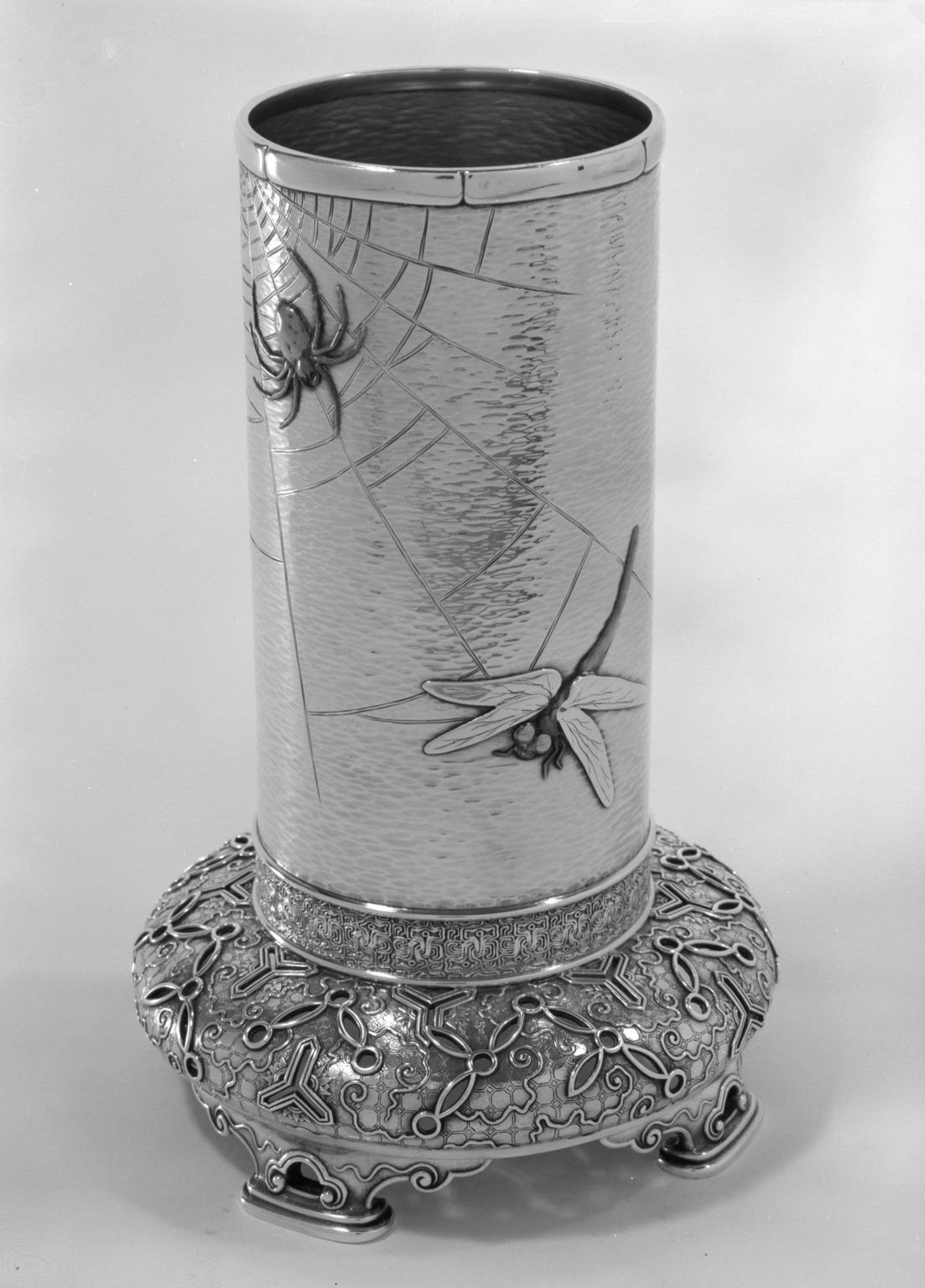
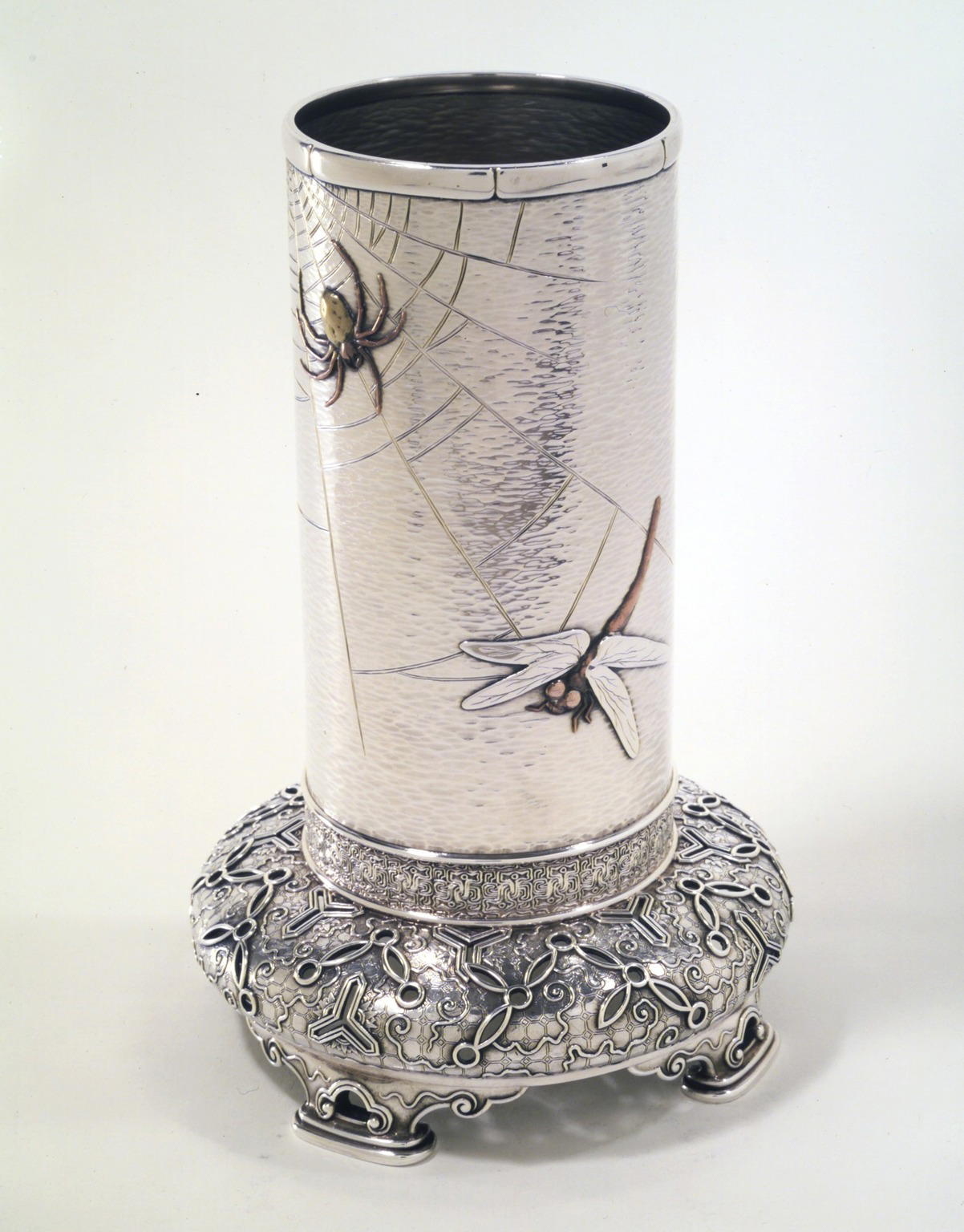
Here, Ottoman-inspired vine patterns decorate ewer and vase forms, while Japanese motifs are loosely interpreted on a plaque, a silver Tiffany vase, and a gilt-handled vase. The writing desk by R. J. Horner is constructed of yellow-stained maple, resembling bamboo.
Caption
Edward C Moore (American, 1827–1892); Tiffany & Company (American, founded 1853). Vase, 1877. Silver, sterling silver, copper, high-zinc brass, copper-silver-gold alloy, height: 9 1/2 in. (24.1 cm); diameter of top: 3 3/4 in. (9.5 cm); diameter of base: 8 1/2 in. (21.6 cm). Brooklyn Museum, H. Randolph Lever Fund, 82.18. (Photo: Brooklyn Museum)
Designer
Maker
Title
Vase
Date
1877
Geography
Place manufactured: United States
Medium
Silver, sterling silver, copper, high-zinc brass, copper-silver-gold alloy
Classification
Dimensions
height: 9 1/2 in. (24.1 cm); diameter of top: 3 3/4 in. (9.5 cm); diameter of base: 8 1/2 in. (21.6 cm)
Signatures
no signature
Inscriptions
no inscriptions
Markings
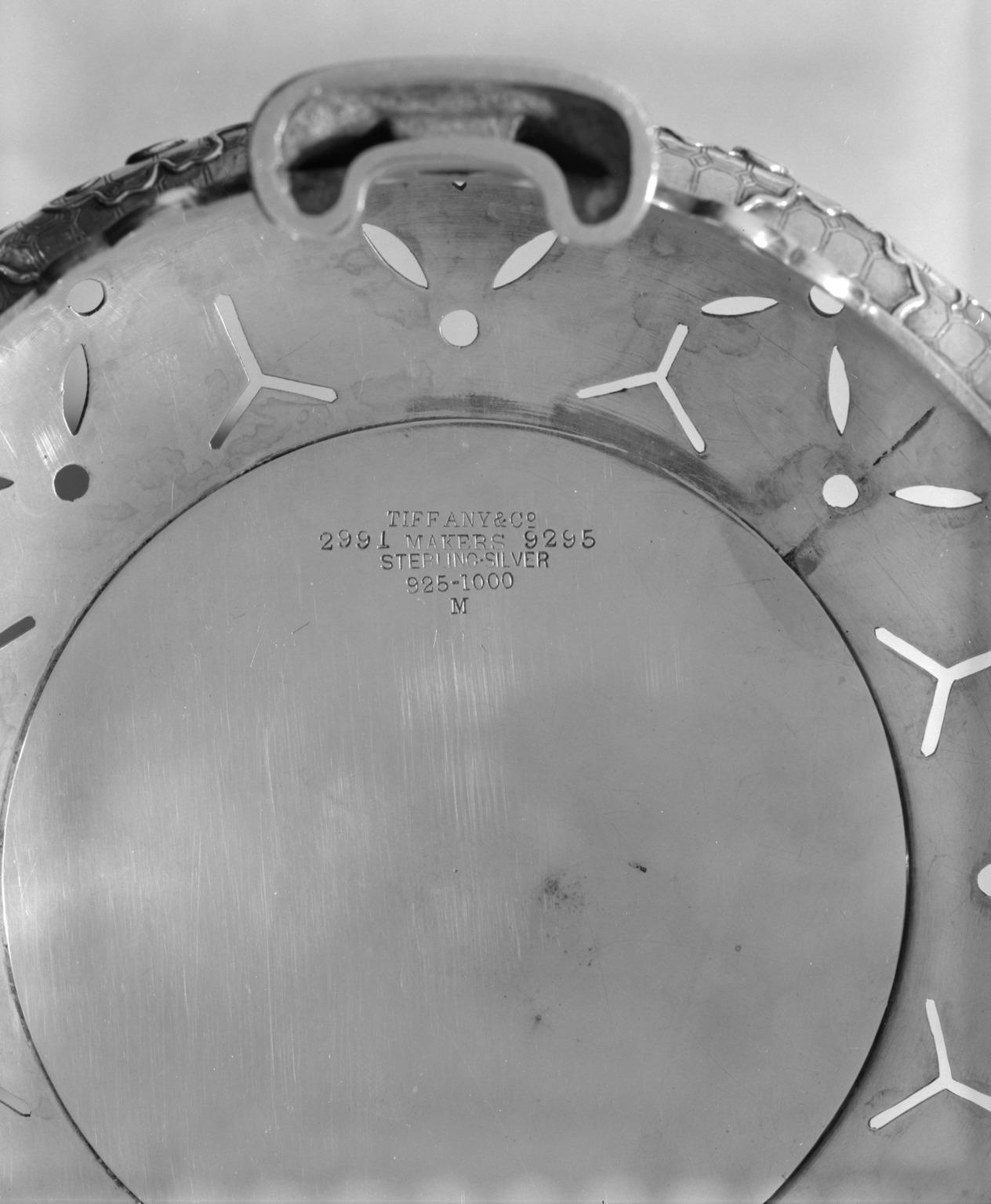
Stamped on bottom: "TIFFANY & Co / 2991 MAKERS 9295 / STERLING SILVER 925-1000 / M" Scratched on bottom: "103 27/05" Stamped on rim: "ET"
Credit Line
H. Randolph Lever Fund
Accession Number
82.18
Have information?
Have information about an artwork? Contact us at