Large Left Hand (Grande main gauche)
Auguste Rodin
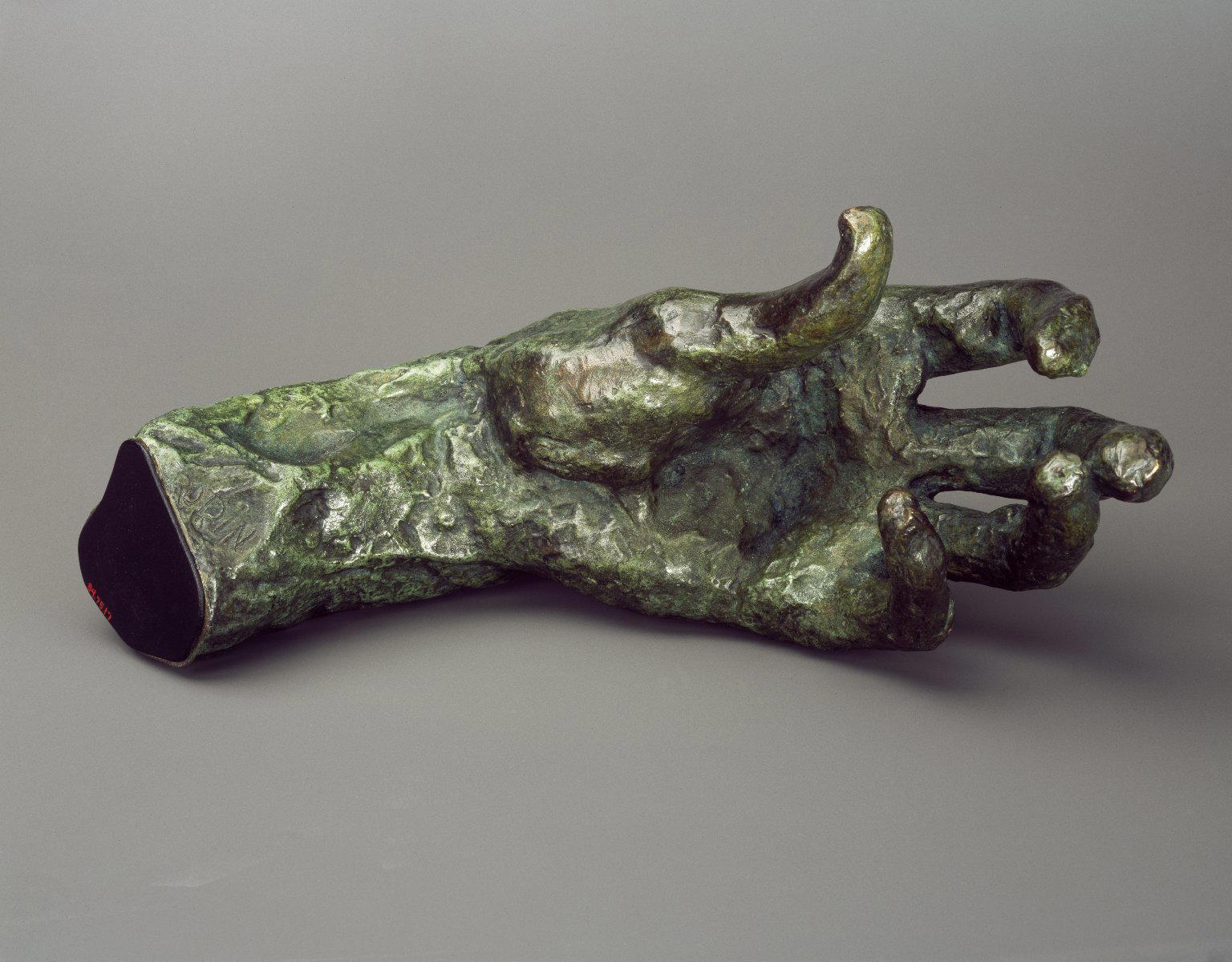
Brooklyn Museum photograph
Object Label
Rodin was fascinated by the expressive capabilities of partial figures and fragmented body parts, particularly hands. He modeled hundreds of them, using them both as parts of more complex pieces and as independent sculptures that did not require further context or connection to communicate meaning and emotion.
Inspired by Renaissance artists and the academic tradition, Rodin took anatomy classes and studied preserved body parts and anatomical models on view at a medical museum in Paris. The contorted shapes of the diseased hands he saw there may have inspired hand studies like this one. Indeed, some physicians who have studied his hand sculptures claim to be able to discern specific syndromes and injuries in them.
Inspired by Renaissance artists and the academic tradition, Rodin took anatomy classes and studied preserved body parts and anatomical models on view at a medical museum in Paris. The contorted shapes of the diseased hands he saw there may have inspired hand studies like this one. Indeed, some physicians who have studied his hand sculptures claim to be able to discern specific syndromes and injuries in them.
Caption
Auguste Rodin (French, 1840–1917). Large Left Hand (Grande main gauche), before 1912; date of cast unknown. Bronze, 11 5/8 x 4 1/2 x 5 1/2 in. (29.5 x 11.4 x 14 cm). Brooklyn Museum, Gift of the Iris and B. Gerald Cantor Foundation, 84.75.17. (Photo: Brooklyn Museum)
Gallery
Not on view
Gallery
Not on view
Artist
Title
Large Left Hand (Grande main gauche)
Date
before 1912; date of cast unknown
Geography
Place made: France
Medium
Bronze
Classification
Dimensions
11 5/8 x 4 1/2 x 5 1/2 in. (29.5 x 11.4 x 14 cm)
Signatures
Inside of wrist: "RODIN"
Credit Line
Gift of the Iris and B. Gerald Cantor Foundation
Accession Number
84.75.17
Frequent Art Questions
Who's hand is that?
This is one of many hands that Rodin sculpted. We don't know whose it was modeled after, if anyone. Rodin was fascinated by the expressive qualities of gesture and often experimented with disembodied parts.What is the meaning of the hands?
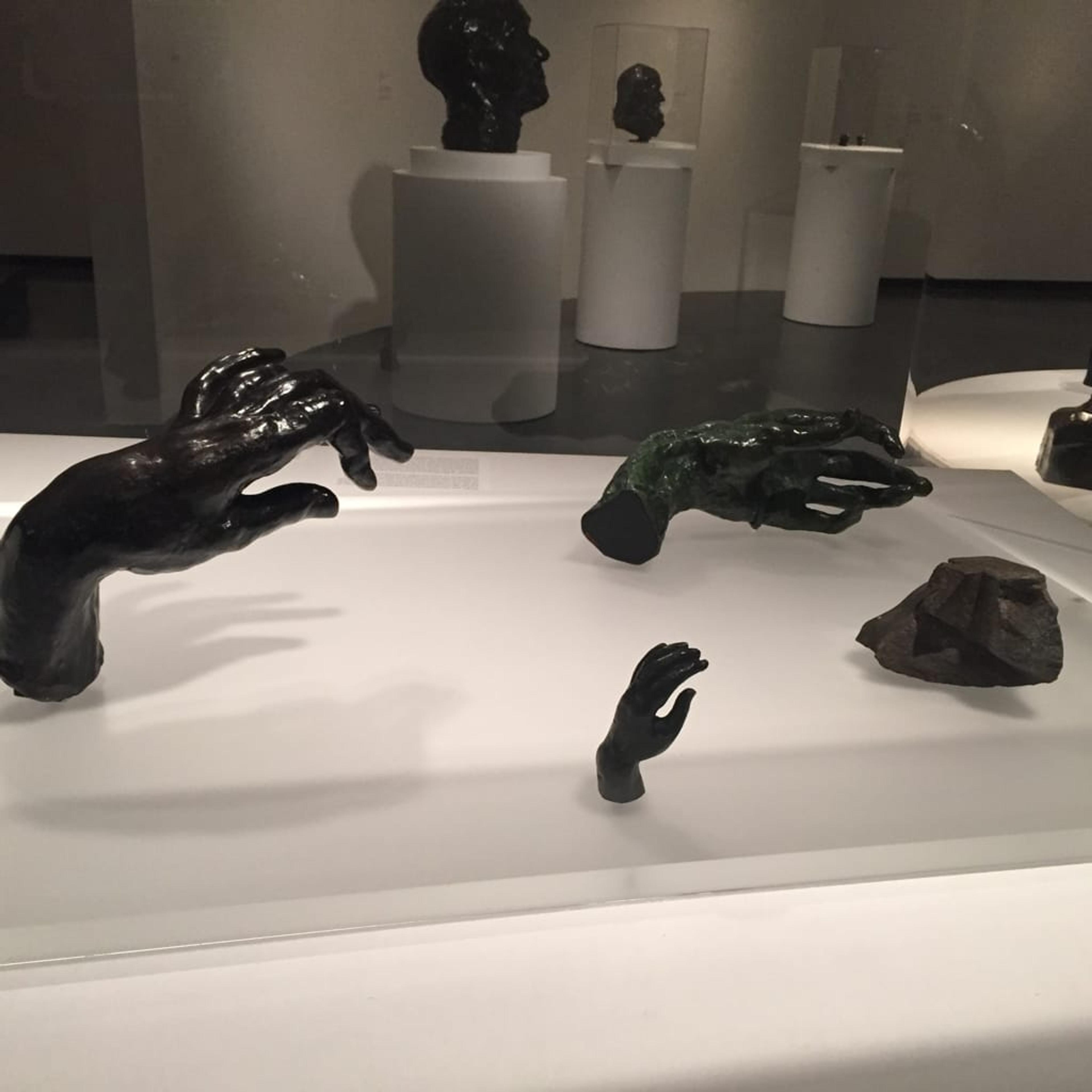 These hands are kind of like practice sculptures for larger works. Rodin was interested in expressing stories and emotion through the body. He would sculpt different body parts separately so that he could focus on one at a time. For example, the large hand on the left is based on the hand of a pianist. Also, Rodin took inspiration from ancient sculpture which is often found in fragments.
Have information?
Have information about an artwork? Contact us at