Balzac, Monumental Head (Balzac, tête monumentale)


1 of 2
Object Label
Caption
Auguste Rodin (French, 1840–1917). Balzac, Monumental Head (Balzac, tête monumentale), 1898; cast 1979. Bronze, 20 x 17 1/2 x 16 in. (50.8 x 44.5 x 40.6 cm). Brooklyn Museum, Gift of the Iris and B. Gerald Cantor Foundation, 84.75.23. (Photo: Brooklyn Museum)
Gallery
Not on view
Gallery
Not on view
Artist
Title
Balzac, Monumental Head (Balzac, tête monumentale)
Date
1898; cast 1979
Geography
Place made: France
Medium
Bronze
Classification
Dimensions
20 x 17 1/2 x 16 in. (50.8 x 44.5 x 40.6 cm)
Signatures
Base, proper left: "A. Rodin" Interior, front of neck, plate in relief: "A. Rodin"
Inscriptions
Base, proper left, below signature: "No 6"
Markings
Back, lower edge of base: ".Georges Rudier./.Fondeur. Paris." Lower edge of base, proper left: "© by Musée Rodin 1978"
Credit Line
Gift of the Iris and B. Gerald Cantor Foundation
Accession Number
84.75.23
Frequent Art Questions
Why is that some of his sculptures without eyes? Did he intentionally leave it out?
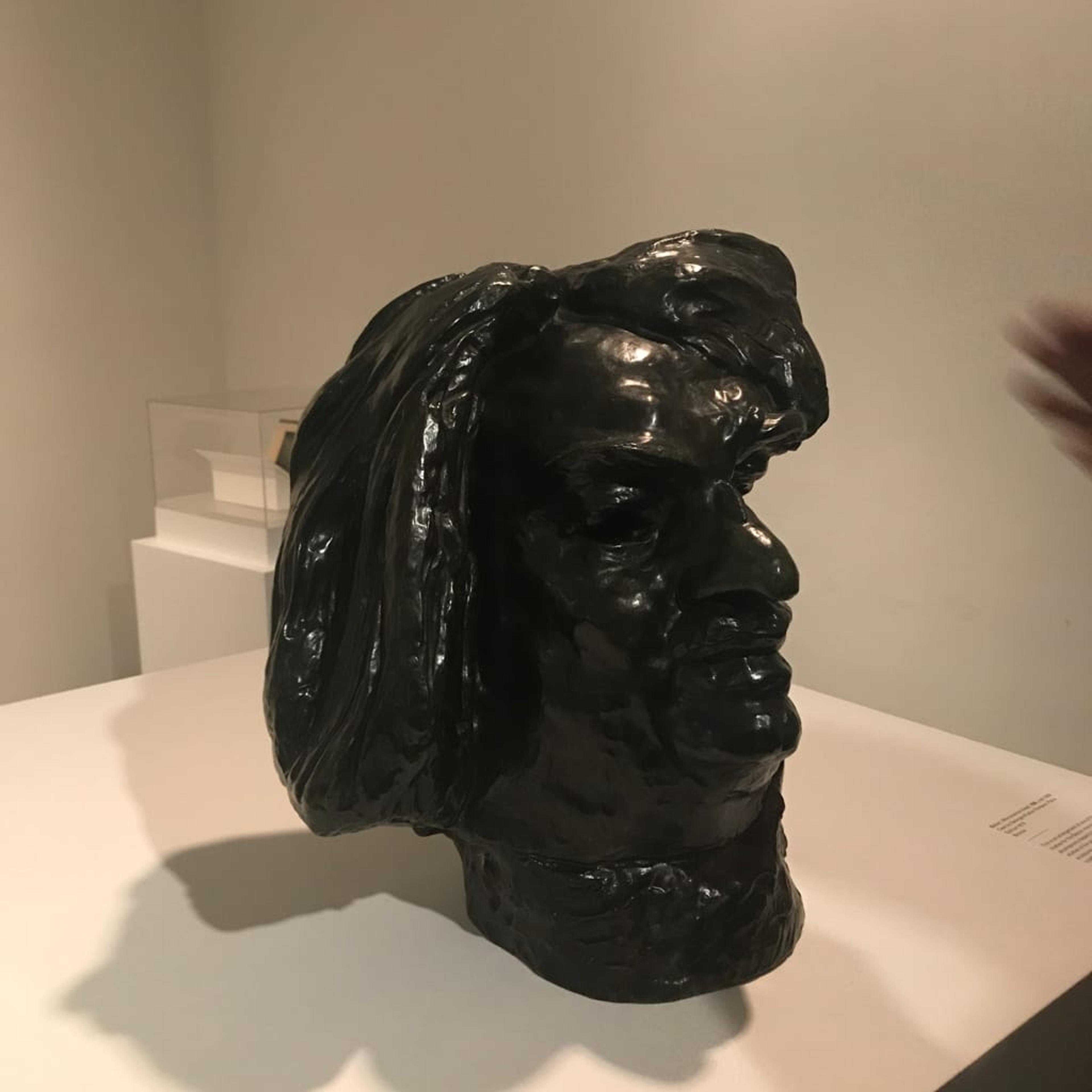 I believe the lack of eyes is a reference to antiquity. Many of the ancient sculptures Rodin would have seen would have been missing their eyes either because the inlays had been lost or the paint has come off.Rodin was known to make such direct references to the sculptures he saw, including removing limbs. Also, he was more concerned with expression than detail.
Why are the eyes hollow?
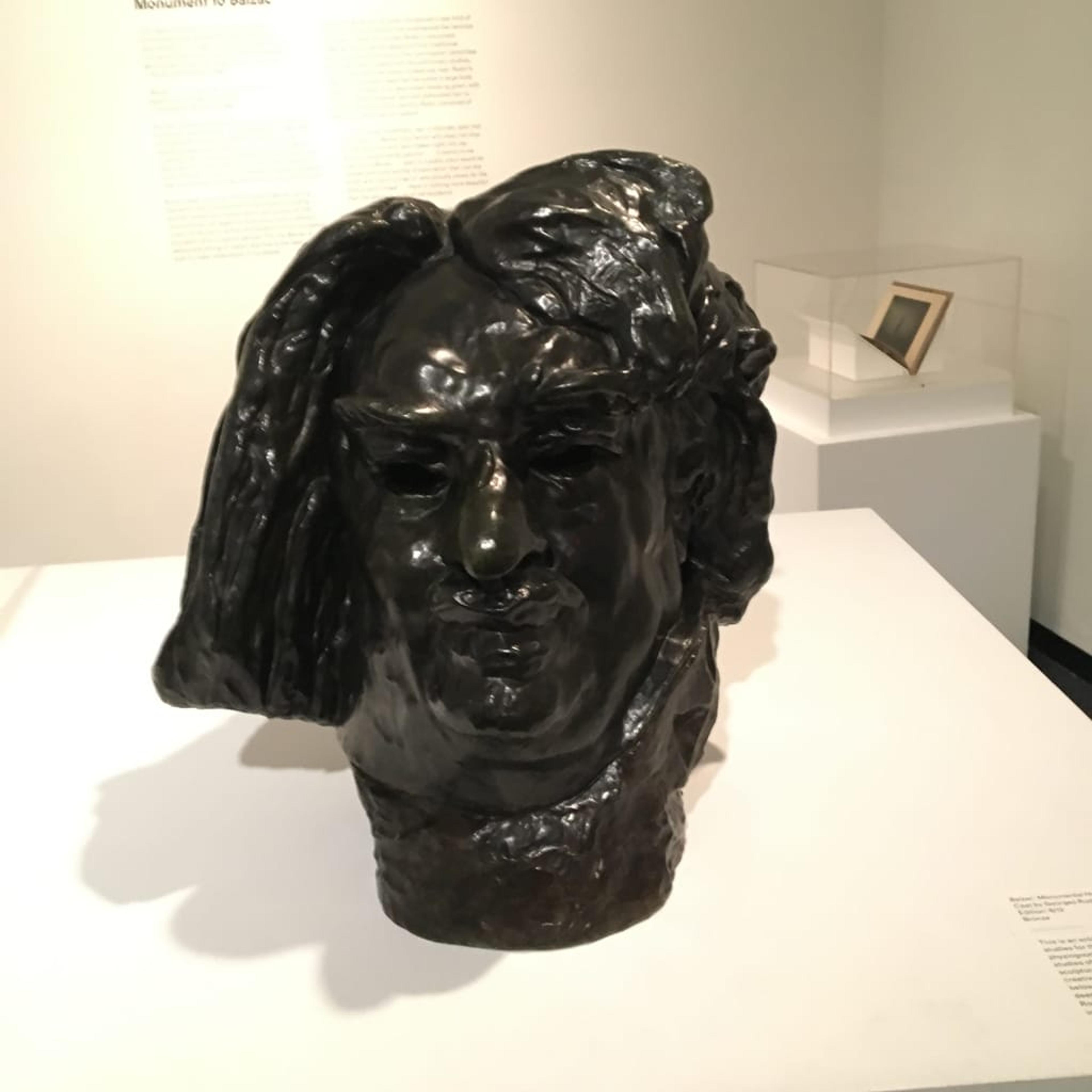 We're not sure, but one theory is that it is meant as a reference to ancient sculptures which often have hollow eyes where the inlays were removed. Rodin often took inspiration from ancient sculpture including the ways that damage would change the overall effect.
Have information?
Have information about an artwork? Contact us at