Funerary Sedan Chair
19th century


1 of 4
Object Label
This miniature sedan had long poles running through the holes in the base so it could be carried on the shoulders of footmen. It mimics the style and shape of palanquins used for transport of aristocratic women, but its small size indicates that it was used in funeral processions. It would have held an inscribed tablet believed to represent the spirit of the deceased. The tablet accompanied the coffin to the burial site, then was taken to the family ancestral shrine, where it was installed and worshipped regularly by surviving family members. As funeral rites became simpler in modern times, these miniature palanquins fell out of favor. Today they are extremely rare.
Caption
Funerary Sedan Chair, 19th century. Wood, metal, paper, 34 1/2 x 20 1/2 x 25 1/4 in. (87.6 x 52.1 x 64.1 cm). Brooklyn Museum, Designated Purchase Fund, 85.224. (Photo: Brooklyn Museum)
Collection
Collection
Frequent Art Questions
Tell me more.
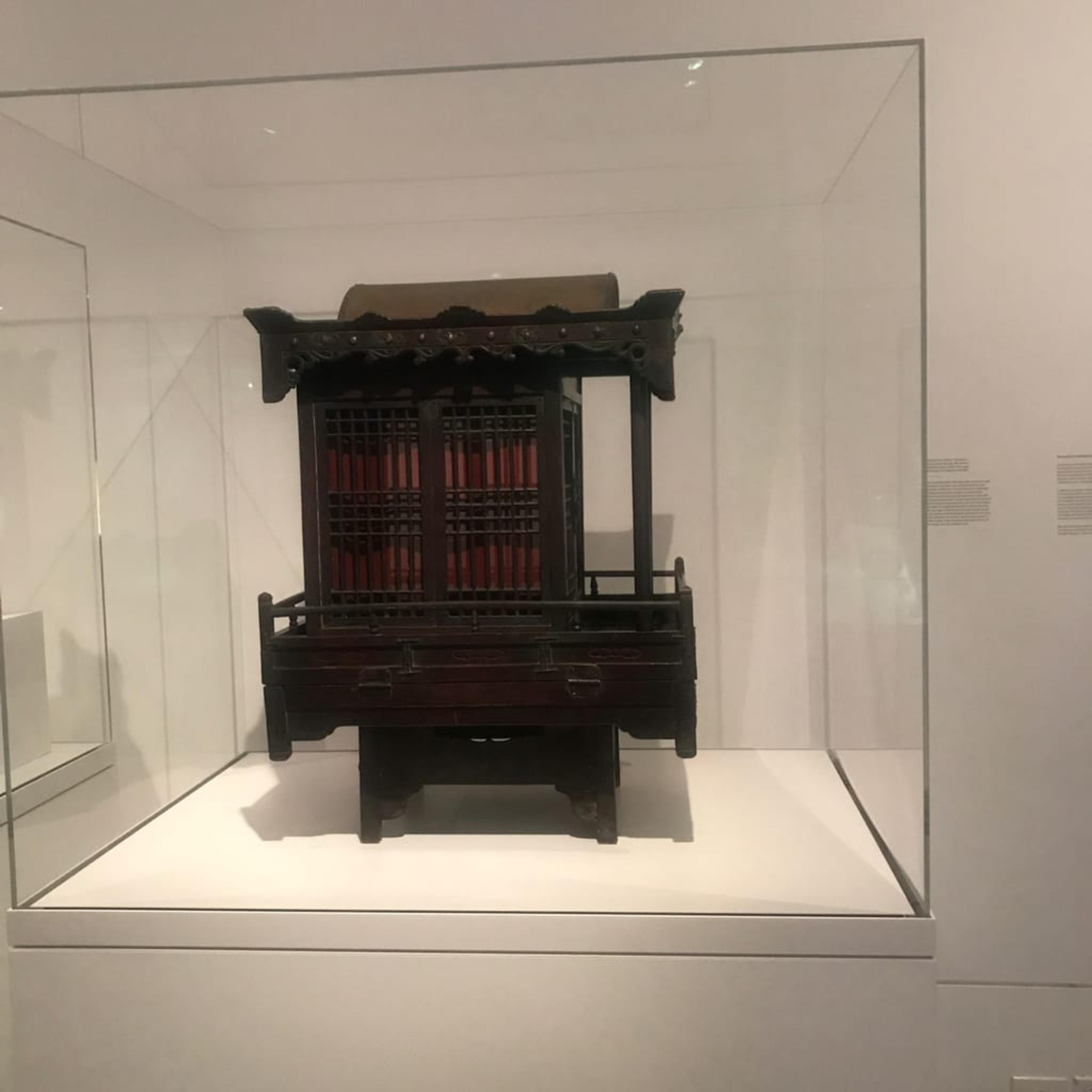 This was used as part of funeral processions in 19th century Korea.While a large coffin held the body of the dead, this palanquin would have held an inscribed tablet, representing the spirit of the deceased. In a way, signifying the presence of the deceased at their own funeral.During the funeral procession, the palanquin would have followed behind the coffin to the cemetery and then continue on to the family spirit shrine, where the tablet would be installed for ancestor worship.
Have information?
Have information about an artwork? Contact us at