Spirit Shrine
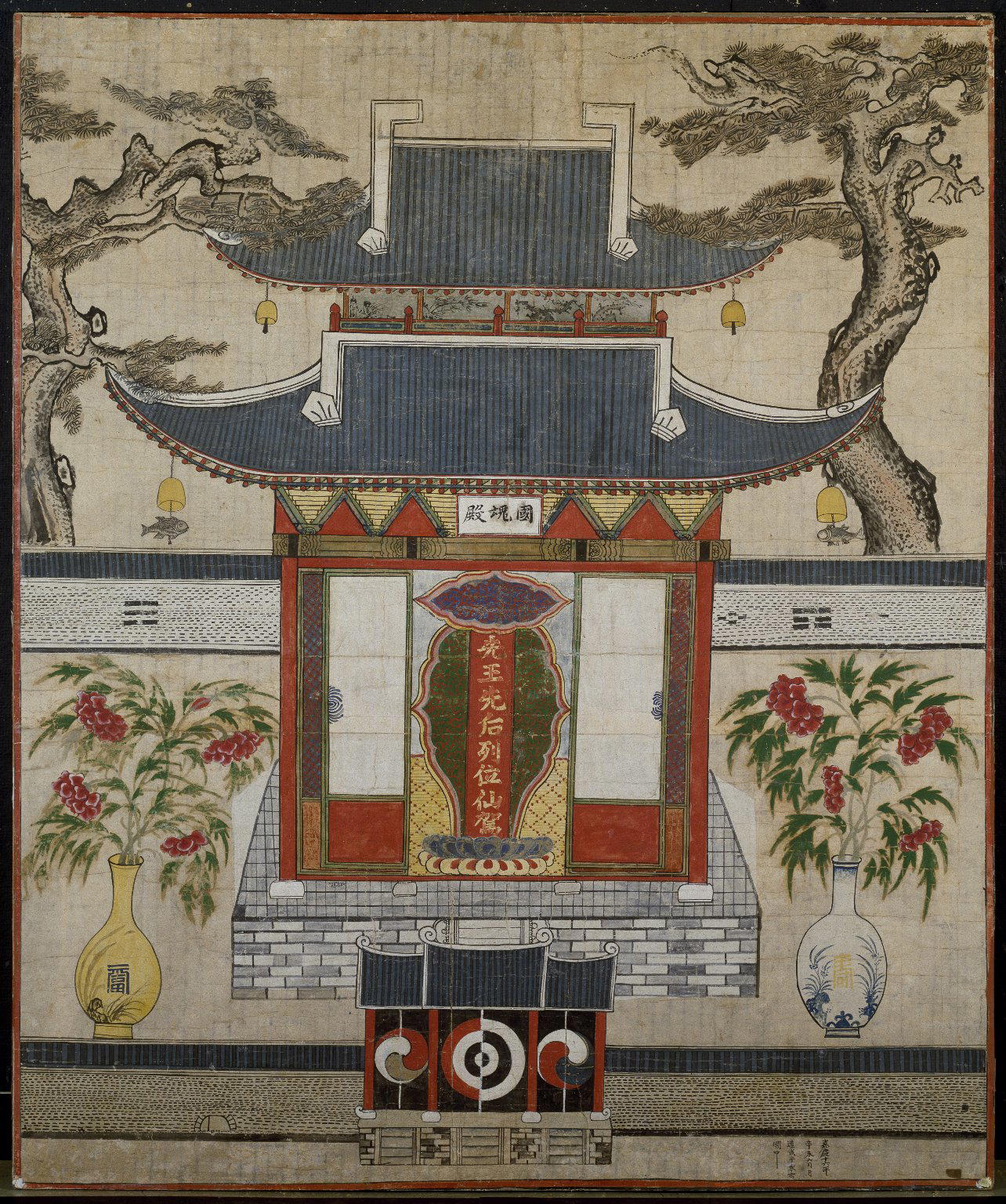
Brooklyn Museum photograph
Object Label
Caption
Spirit Shrine, June 1811. Ink and color on paper, 67 5/16 × 56 5/8 in. (171 × 143.8 cm) frame: 70 × 59 1/4 × 2 3/4 in. (177.8 × 150.5 × 7 cm). Brooklyn Museum, Designated Purchase Fund, 86.25. (Photo: Brooklyn Museum)
Gallery
Not on view
Collection
Gallery
Not on view
Collection
Title
Spirit Shrine
Date
June 1811
Dynasty
Joseon Dynasty
Geography
Place made: Korea
Medium
Ink and color on paper
Classification
Dimensions
67 5/16 × 56 5/8 in. (171 × 143.8 cm) frame: 70 × 59 1/4 × 2 3/4 in. (177.8 × 150.5 × 7 cm)
Inscriptions
Inscribed, in the center: "Peace for previous King and Queen [unnamed]"; and in the lower-right corner: "the sixth month of the sixteenth year of the Chia-ching era [1811]"
Credit Line
Designated Purchase Fund
Accession Number
86.25
Frequent Art Questions
What do the black bars on the left and right sides of this painting represent?
They are part of the brickwork of the temple wall enclosures but they are also trigrams, shorthand for certain Asian written characters. In this case, they are generic auspicious words for good fortune and long life!I love the fish-shaped wind chimes hanging from the shrine's eaves. These are found in many Buddhist temples in Korea, and serve as a reminder to stay vigilant, as fish are known to sleep with their eyes open.Thanks!Is this a painting of a real building?
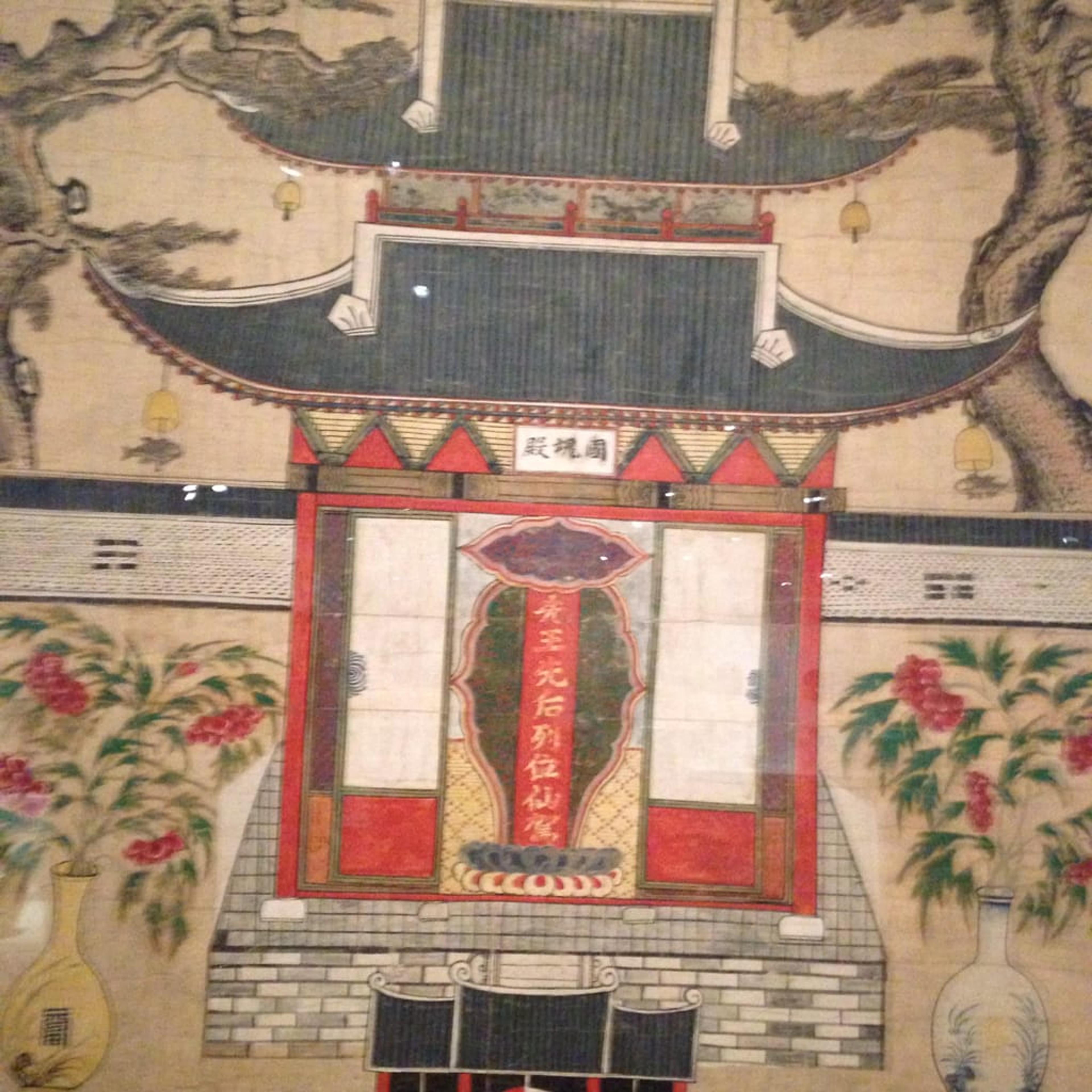 A type of building, yes. You are looking at a painting of a spirit shrine, where families would go to worship the spirits of their deceased ancestors. It would be kept on the properties of aristocratic family homes.This, however, is obviously a painting and the red text in the center reads "Peace for previous King and Queen" and would have hung in a public building for the public to worship the royal house.Do you notice the vases flanking either side of the shrine? They are filled with peonies, which symbolize wealth and honor. Keep an eye out for them in other objects in the exhibition, especially the ceramics.
What are the names of these symbols?
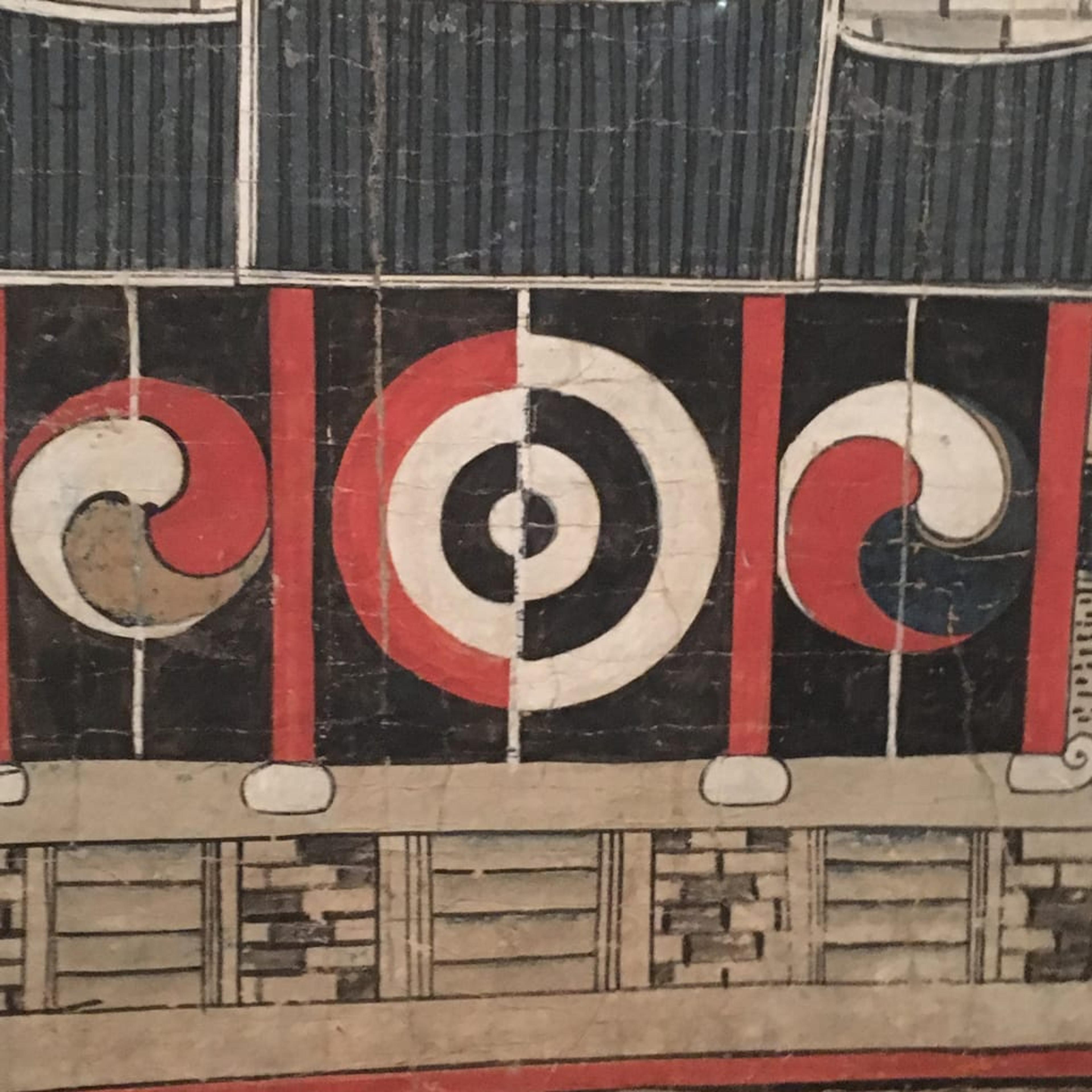 I'm not positive about the meanings of the symbols you pointed out in this painting but I can give you some information about another small detail in this work.Do you notice the black bars on either side of the wall behind the shrine?Sure.Those are trigrams, shorthand for certain Asian written characters. In this case, they are generic auspicious words for good fortune and long life!Thank you.
I am confused if this is a Korean Art because I can read the characters in the painting. They are Chinese characters.
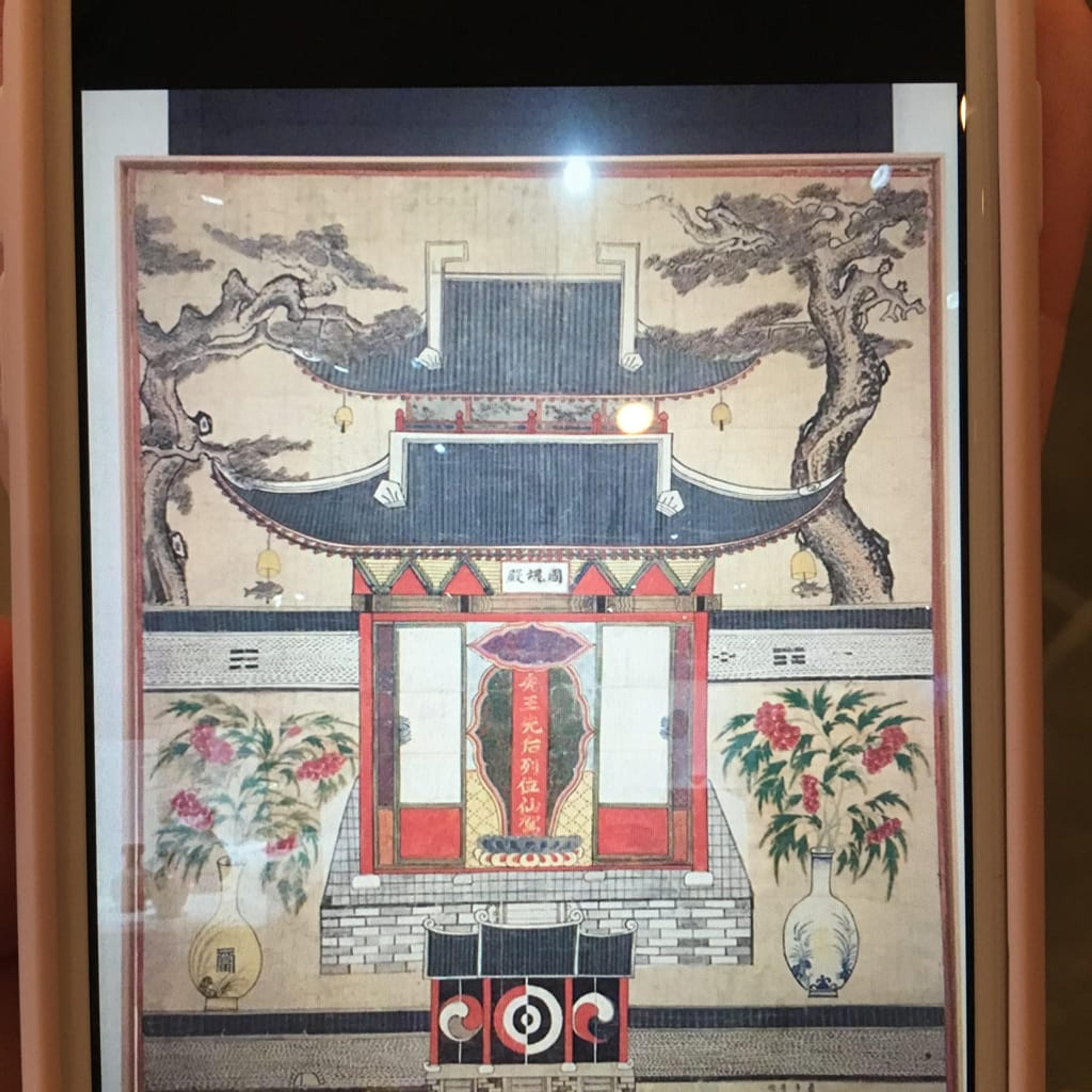 They are indeed! Korea has a political and scholarly history that is quite tied to China's. Hangul, what you recognize as the Korean writing system, was actually invented in the Joseon Dynasty, around the 15th century.Before the invention of Hangul, the Chinese writing system was used, and it continued to show up in some more scholarly or decorative contexts like this.Thank you! I see. I also see the year in the painting that written Jiaqing Sixteenth. Jiaqing was one of the emperor in Qing Dynasty in China. I look up Wikipedia. It was exactly 1811. That was the reason I was confused. I wonder if the Korean marked time by Chinese emperor’s name at that time?For a long time, Korea was part of a tribute system in which the Korean king was under the rule of the Chinese emperor. Korea was fairly independent, but this system certainly accounts for the naming of a Chinese emperor when telling the date.Thanks! It’s interesting. One more question, When did Korean start to mark their own date?Of course! Looking, I can't seem to find a definitive date, However, the country did become more insular during the Joseon dynasty, so it wouldn't have been out of place to start changing to a uniquely Korean system at that time.Cool! Thank you very much. I appreciate it.
Have information?
Have information about an artwork? Contact us at