Wheeled Ram-Headed Vessel
Mesopotamian


1 of 10
Object Label
Animal-shaped pottery vessels mounted on oversized wheels had a long history in the ancient Middle East. This early example has the head of a ram with curving horns. Liquid poured into the hole on top flowed out of the opening in the animal’s snout. A loop on the front allowed the attachment of a cord so that the vessel could be pulled. Such vessels have been excavated in both temples and houses. They were probably used in religious or funerary rituals.
Caption
Mesopotamian. Wheeled Ram-Headed Vessel, second half 3rd millenium B.C.E.. Terracotta, 9 x 4 x 9 in. (22.9 x 10.2 x 22.9 cm). Brooklyn Museum, Purchased with funds given by Shelby White, 87.77. (Photo: Brooklyn Museum)
Gallery
Not on view
Gallery
Not on view
Culture
Title
Wheeled Ram-Headed Vessel
Date
second half 3rd millenium B.C.E.
Period
Early Dynastic III Period, or later
Geography
Possible place made: Mesopotamia (modern day Iraq, Turkey, & Syria)
Medium
Terracotta
Classification
Dimensions
9 x 4 x 9 in. (22.9 x 10.2 x 22.9 cm)
Credit Line
Purchased with funds given by Shelby White
Accession Number
87.77
Frequent Art Questions
How old is this? Has this actual piece been restored?
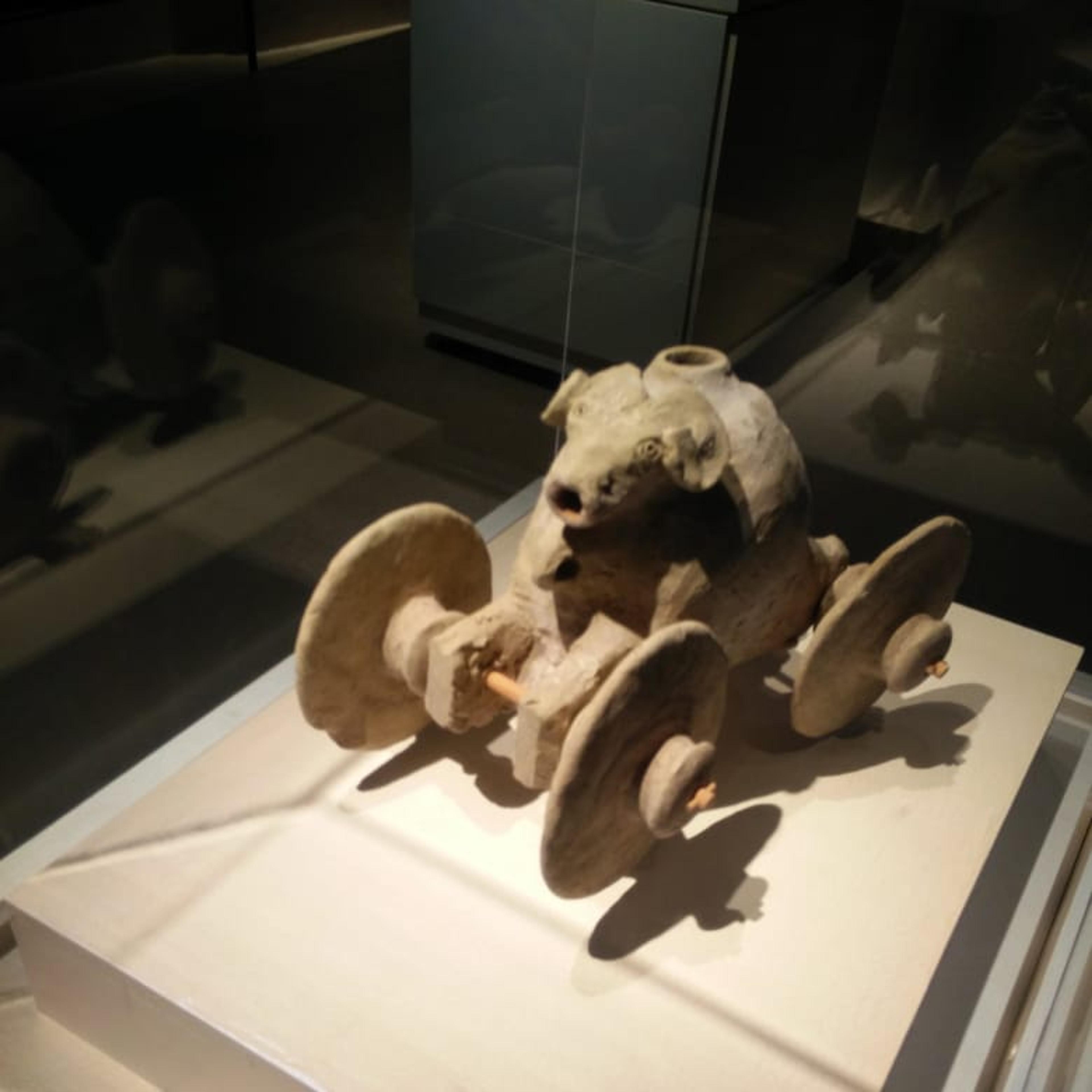 This is from the late 3rd millenium BCE or over 4000 years ago. The wooden axels have been restored, but the terracotta is original! Animal shaped vessels were popular in numerous ancient cultures for various purposes. This ram-cart shape was used by Sumerian people when the 3rd Dynasty ruler from Ur in Lower Mesopotamia. It likely had a funerary or ritual purpose.
How was this used?
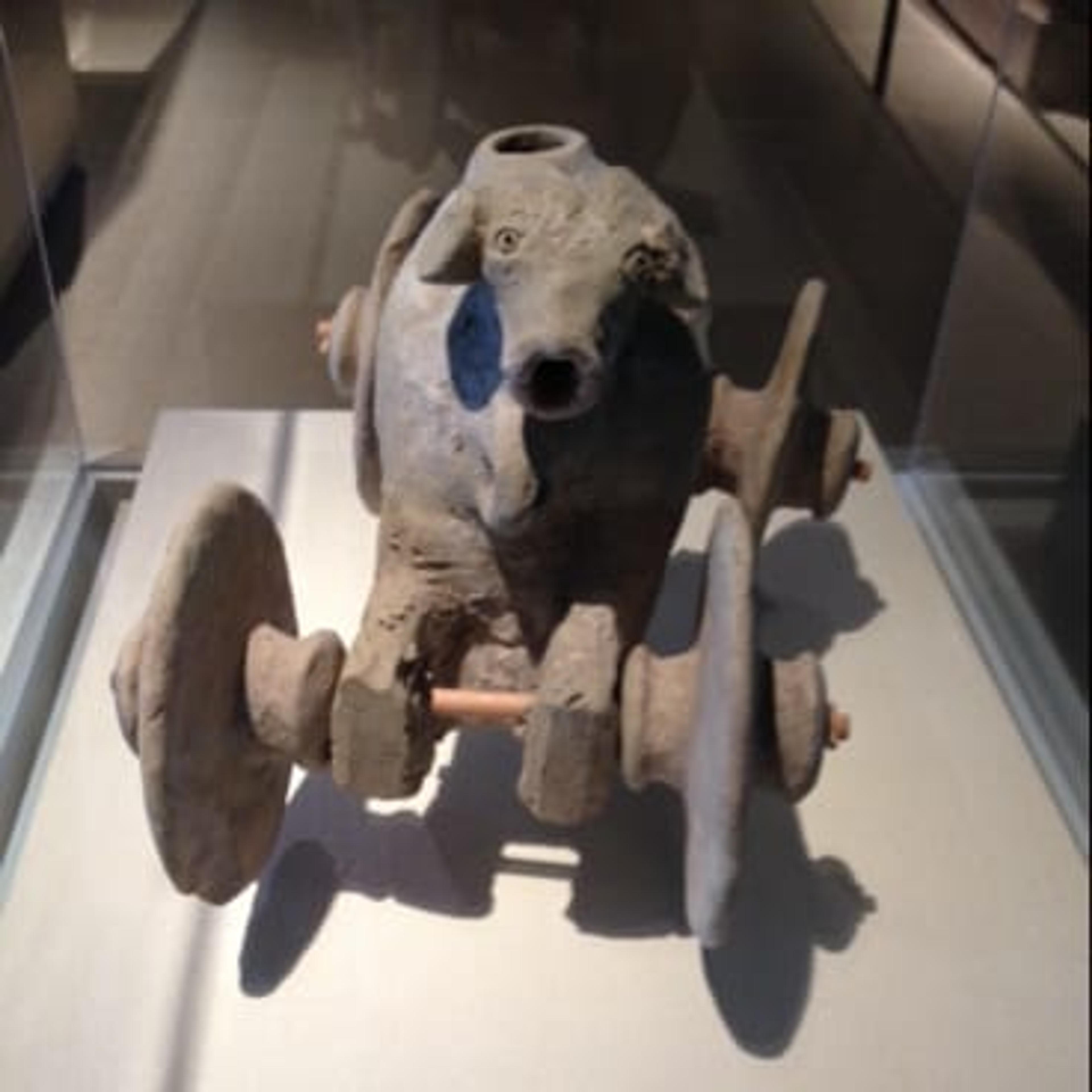 This vessel from ancient Mesopotamia (modern-day Iraq) would have held some form of liquid, either wine or water and used for a ritual purpose. You'd pour the liquid from the top of the head and once the vessel filled up, the over flow would pour out of the snout.
Have information?
Have information about an artwork? Contact us at