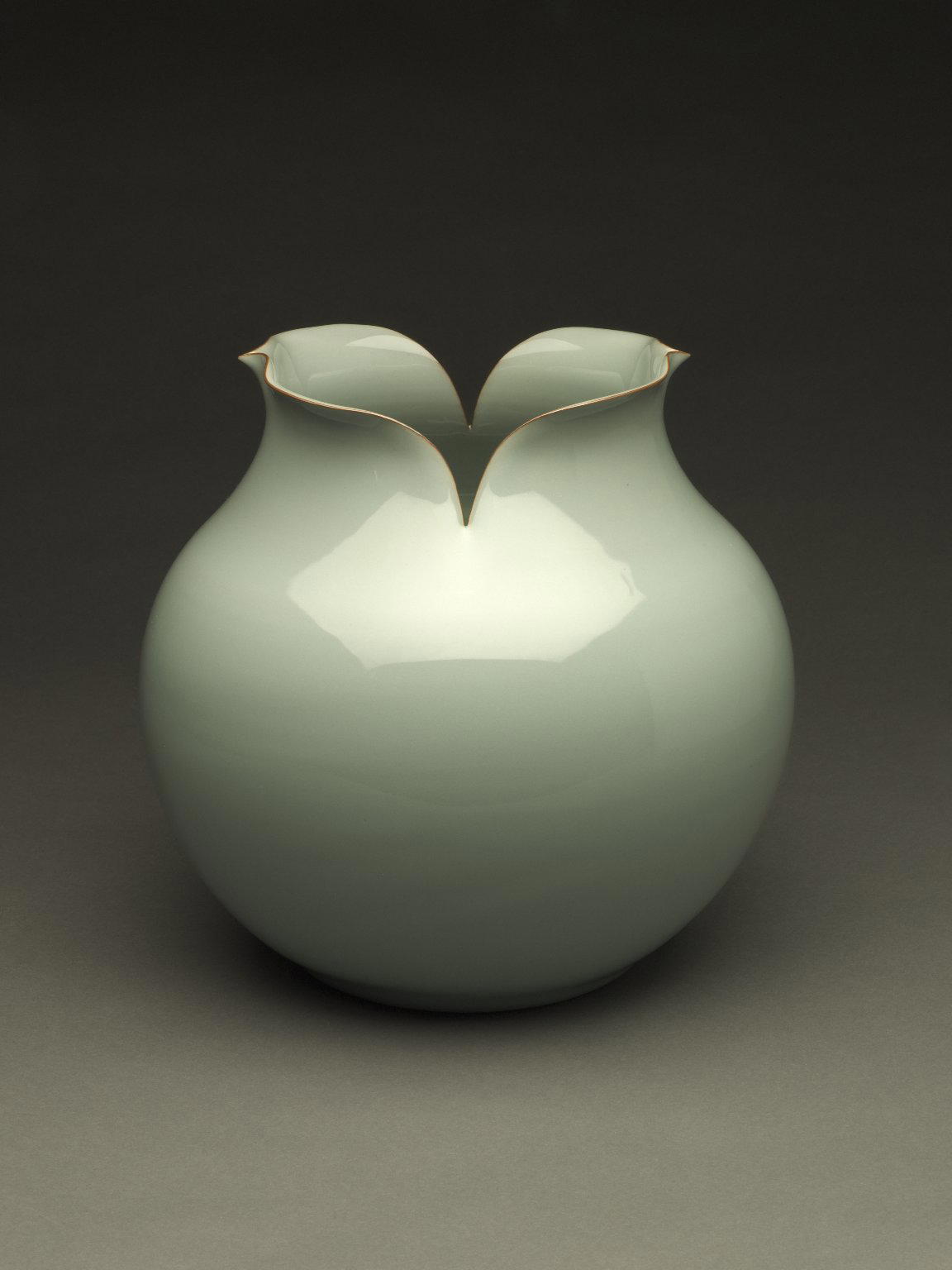
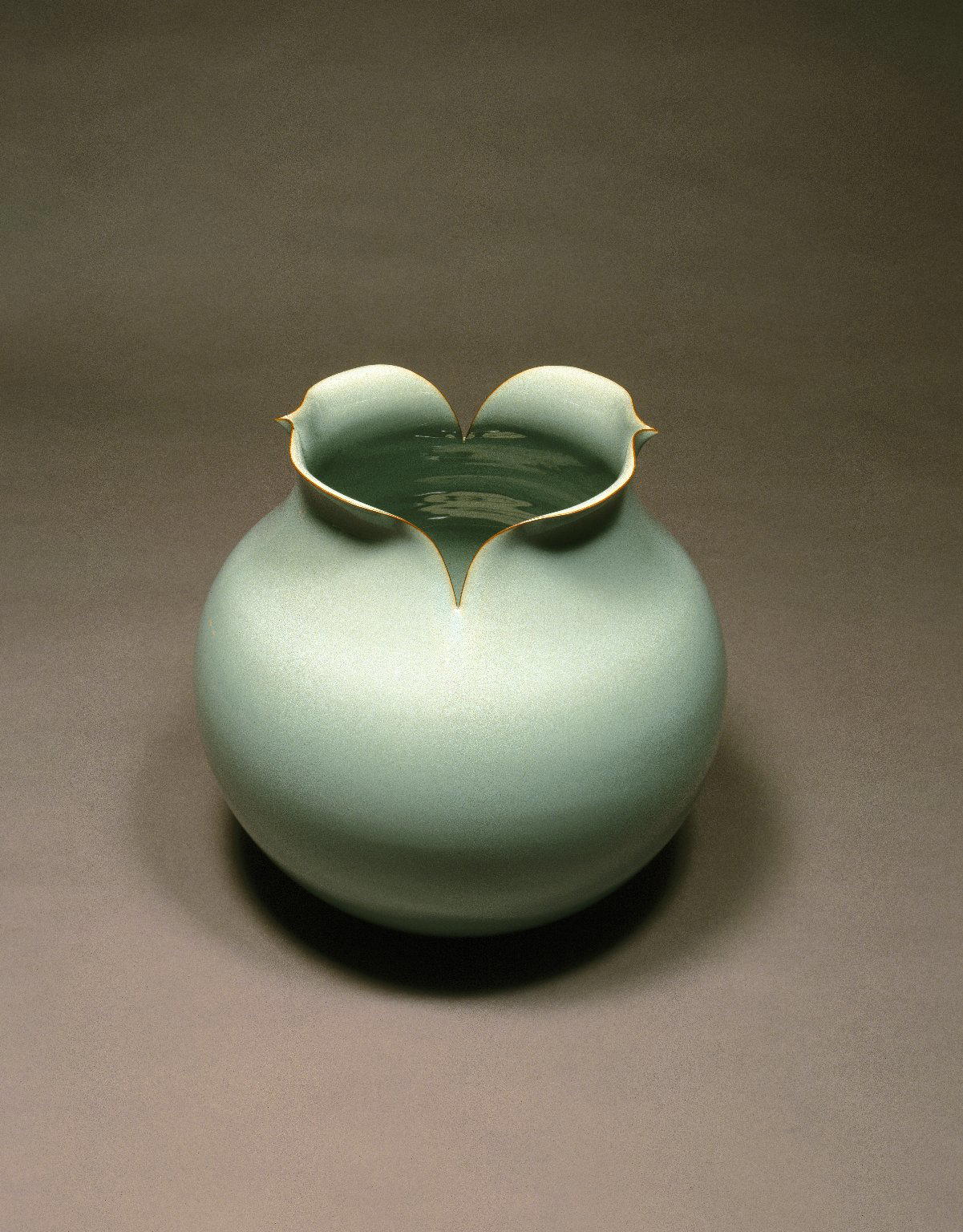
Vase with Everted Floriate Rim
1 of 2
Object Label
This vase, with its subtle blue-green glaze, is reminiscent of the rarified celadon wares produced by the royal kilns of China's Southern Song Dynasty (A.D. 960–1270). Its sensously flared mouth, rising out of a rounded body, clearly reveals the artist's technical mastery and creative flair.
Caption
Kawase Shinobu (Japanese, born 1950). Vase with Everted Floriate Rim, 1988. Stoneware, Guan-type celadon glaze, 10 1/2 x 11 in. (26.7 x 27.9 cm). Brooklyn Museum, Purchased with funds given by the Mary Livingston Griggs and Mary Griggs Burke Foundation, 1989.55. (Photo: Brooklyn Museum)
Gallery
Not on view
Collection
Gallery
Not on view
Collection
Artist
Title
Vase with Everted Floriate Rim
Date
1988
Period
Showa Period
Geography
Place made: Japan
Medium
Stoneware, Guan-type celadon glaze
Classification
Dimensions
10 1/2 x 11 in. (26.7 x 27.9 cm)
Credit Line
Purchased with funds given by the Mary Livingston Griggs and Mary Griggs Burke Foundation
Accession Number
1989.55
Frequent Art Questions
Are Kawase & Fukami Living National Treasures in Japan?
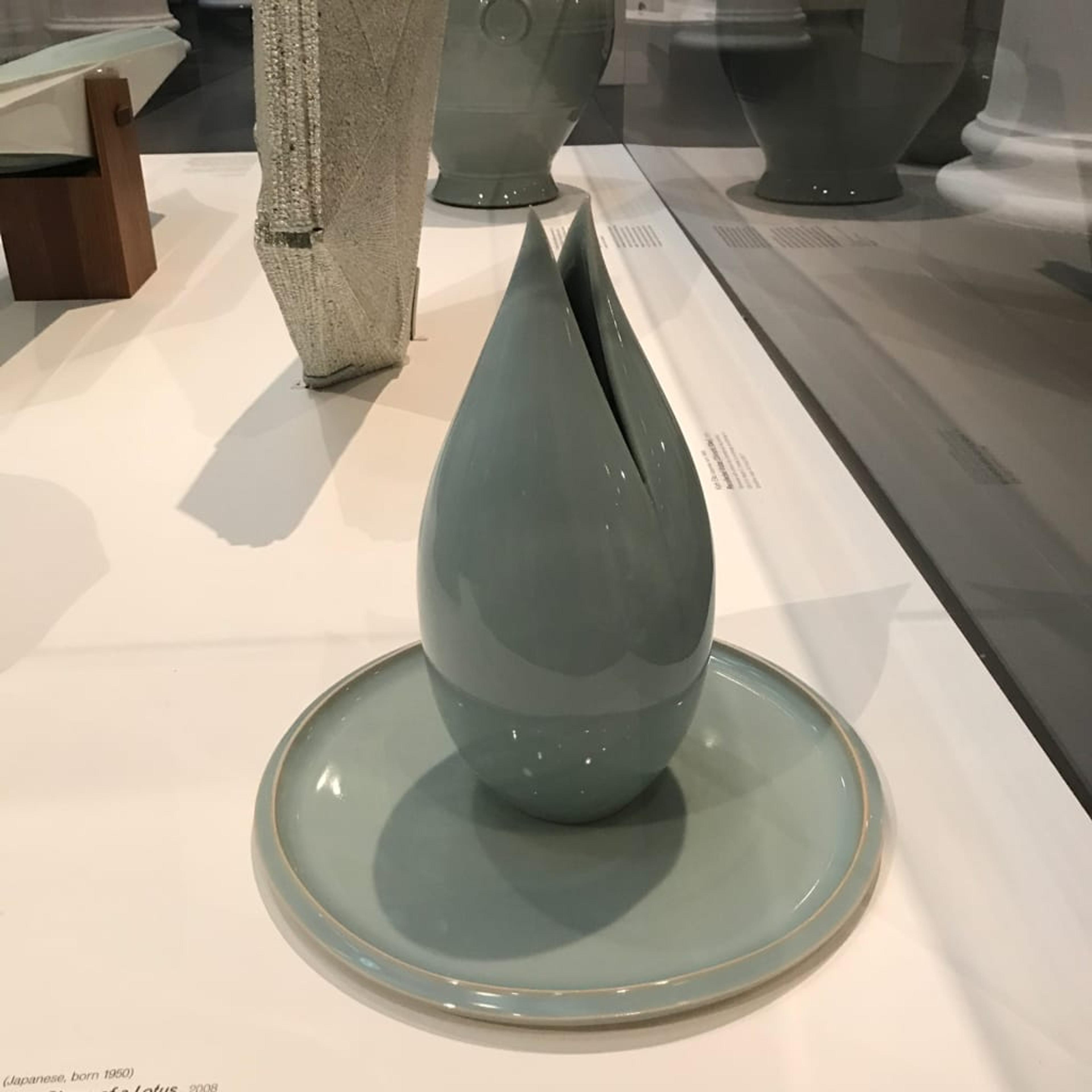 Neither artist is a Living National Treasure at this time. I'm not aware of any ceramic artist who works in a more contemporary vein like Fukami or Kawase who has earned the designation, though there are Living National Treasures who work in modern forms. The designation is most often given to people who are continuing to refine traditional approaches.
Tell me more.
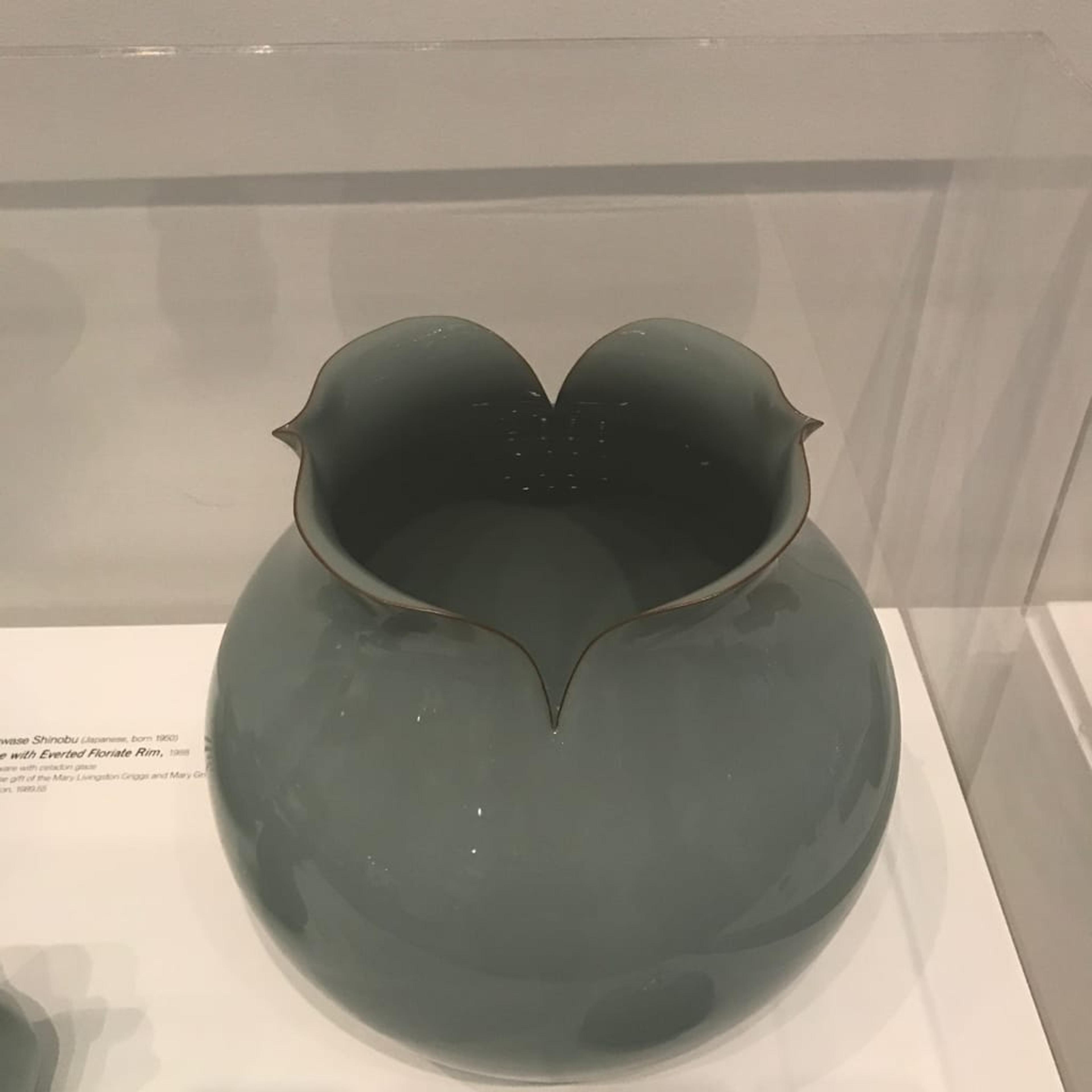 This vase, made in 1988, uses celadon glaze, a blue-green glaze with a long history in Chinese ceramics.The artist was influenced in particular by ceramics produced during the Song dynasty (920-1279), considered a high point in the history of Chinese ceramics.You'll notice that this vase has a rim that opens and curves like a flower. Flowers, specifically the lotus, have strong connections to Buddhism as symbols for purity and enlightenment.
How does Kawase Shinobu make his pieces? The shapes look too perfect and satisfying to be real.
I agree! Initially, the clay is turned on a wheel. That contributes significantly to the perfect symmetry. The even application of the glaze also contributes to the smoothness of the surface.
Have information?
Have information about an artwork? Contact us at