Paddle Doll
ca. 2008–1630 B.C.E.


1 of 6
Object Label
The term paddle doll dates to archaeologists’ first discovery of such objects in the early twentieth century. Today, Egyptologists understand these objects not as dolls, but as representations of musicians who doubled as midwives. The necklaces they wear represent a musical instrument called a menat in Egyptian.
The Egyptians considered music to be a therapeutic or even magical element aiding childbirth. When these images were included in the tomb, they could help ease the pain of rebirth into the next life.
The Egyptians considered music to be a therapeutic or even magical element aiding childbirth. When these images were included in the tomb, they could help ease the pain of rebirth into the next life.
Caption
Paddle Doll, ca. 2008–1630 B.C.E.. Wood, pigment, 8 7/8 x 2 7/16 x 1/4 in. (22.6 x 6.2 x 0.6 cm). Brooklyn Museum, Charles Edwin Wilbour Fund, 37.103E. (Photo: Brooklyn Museum)
Gallery
Not on view
Gallery
Not on view
Frequent Art Questions
Why are these called a dolls?
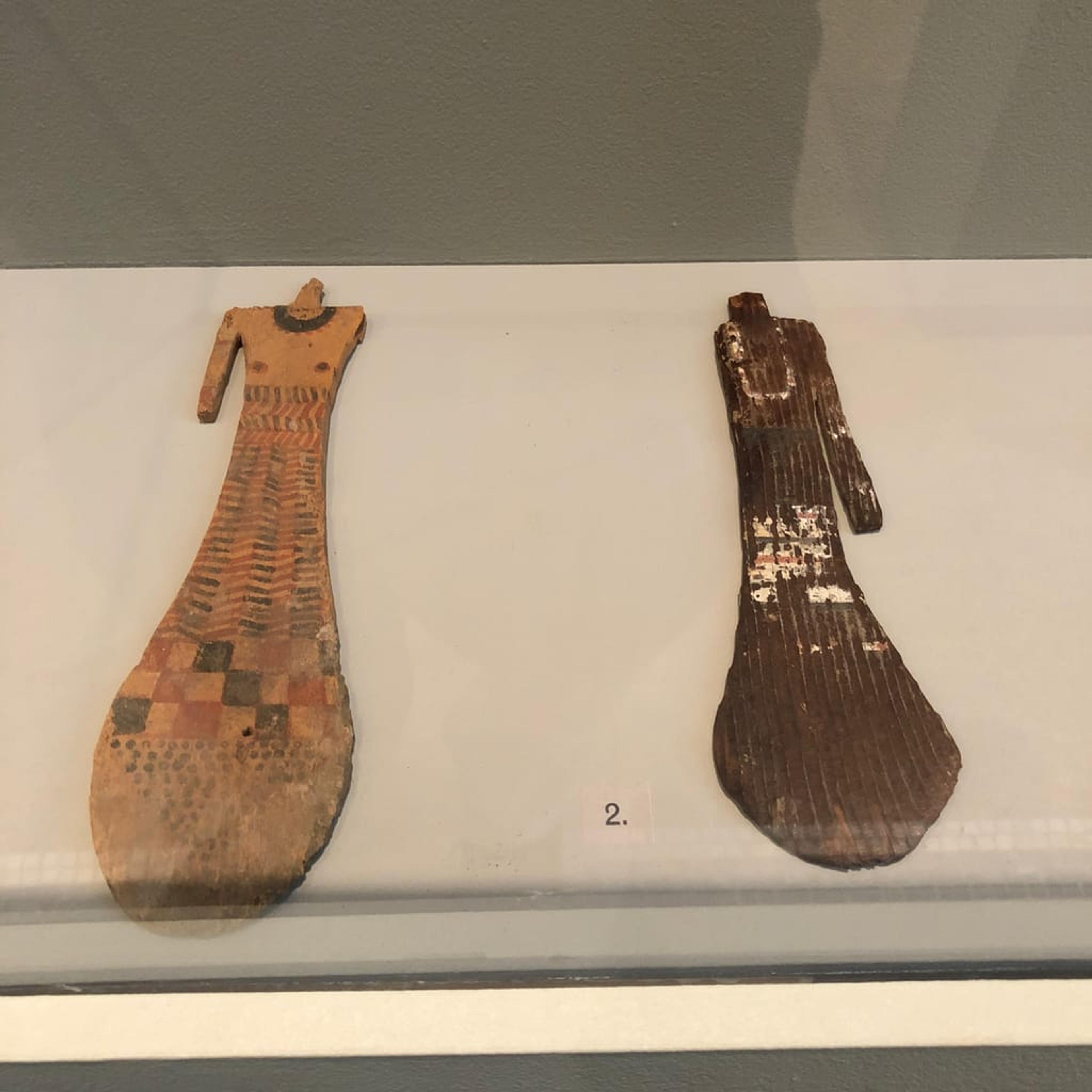 I believe the term doll was assigned to this type of object because of the abbreviated human form similar to a toy. The term has endured even though we not know that they were not toys, but that they were likely associated with music.
Have information?
Have information about an artwork? Contact us at