Shrew Coffin




1 of 6
Object Label
Caption
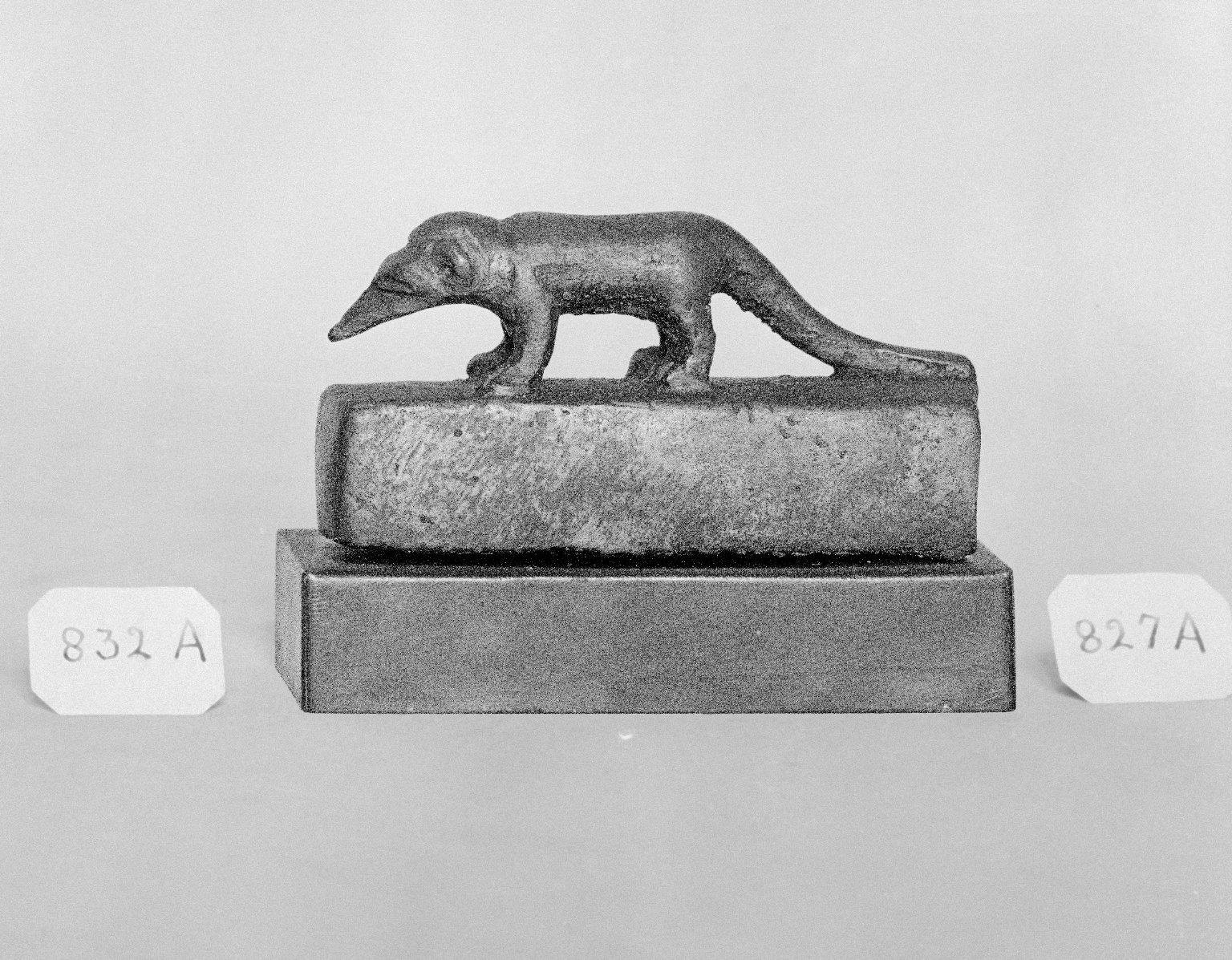
Shrew Coffin, 664–30 B.C.E.. Bronze, animal remains, 1 5/16 x 3/4 x 2 1/2 in., 0.2 lb. (3.3 x 1.9 x 6.4 cm, 0.08kg) as mounted: 1 1/2 x 7/8 x 2 1/2 in. (3.8 x 2.2 x 6.4 cm). Brooklyn Museum, Charles Edwin Wilbour Fund, 37.410Ea-b. (Photo: Brooklyn Museum (Gavin Ashworth, photographer))
Gallery
Not on view
Gallery
Not on view
Title
Shrew Coffin
Date
664–30 B.C.E.
Dynasty
Dynasty 26, or later
Period
Late Period to Ptolemaic Period
Geography
Reportedly from: Lower Egypt, Egypt
Medium
Bronze, animal remains
Classification
Dimensions
1 5/16 x 3/4 x 2 1/2 in., 0.2 lb. (3.3 x 1.9 x 6.4 cm, 0.08kg) as mounted: 1 1/2 x 7/8 x 2 1/2 in. (3.8 x 2.2 x 6.4 cm)
Credit Line
Charles Edwin Wilbour Fund
Accession Number
37.410Ea-b
Frequent Art Questions
What Egyptian god is the shrew is supposed to be associated with?
Shrews were used to stand in for the ichneumon, the African mongoose. The ichneumon was associated with Horus and the god Atum, and was worshipped for it's ability to see in the dark and ability to kill snakes.You might have seen a small statue of a king and (much larger) Ichneumon elsewhere in the exhibition!Interesting! I knew the ichneumon was variously worshipped, also as the goddess Mafdet, but I didn't know the shrew could be a possible stand-in for it.Isn't it fascinating?It really is!
Have information?
Have information about an artwork? Contact us at