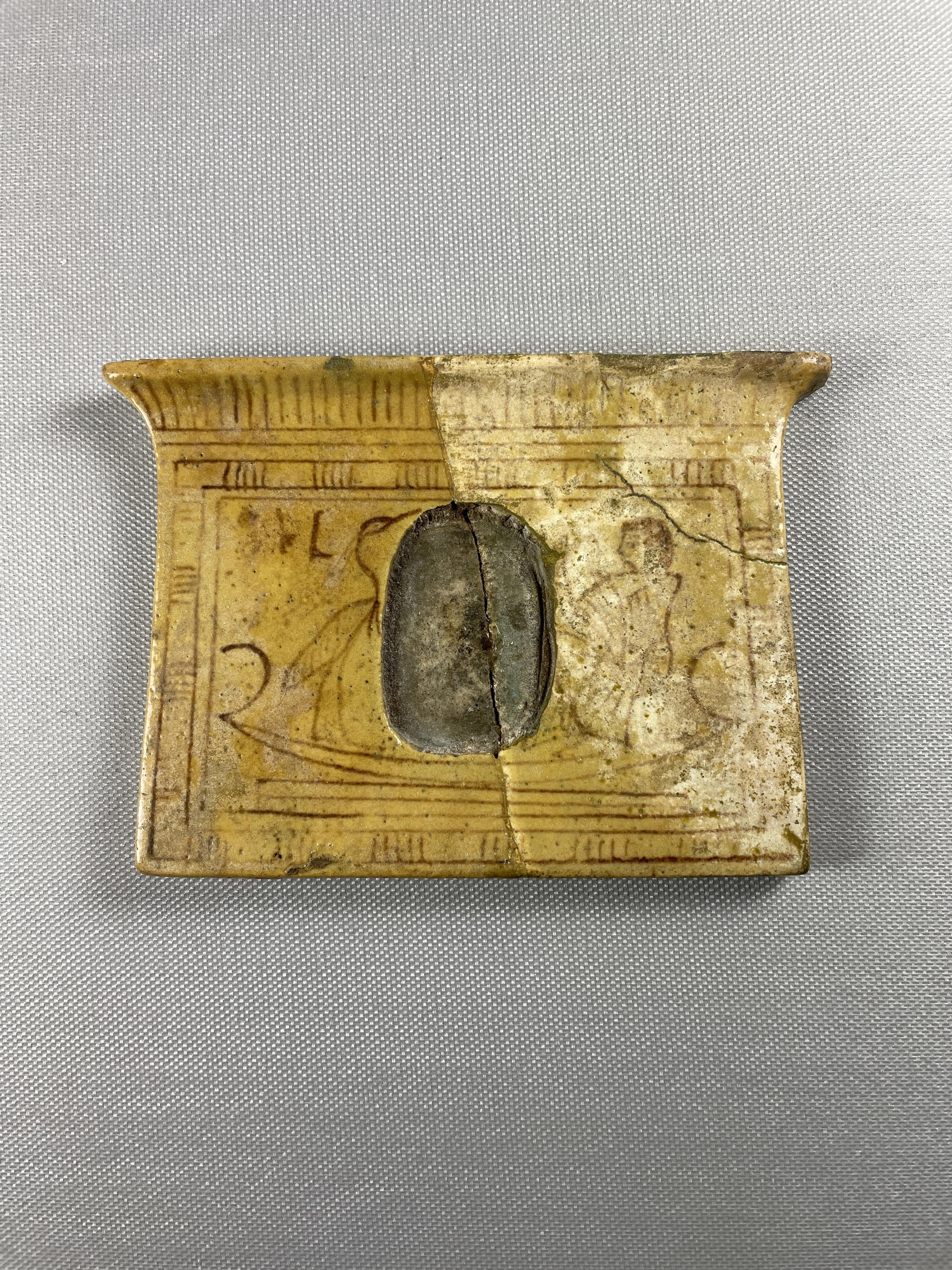
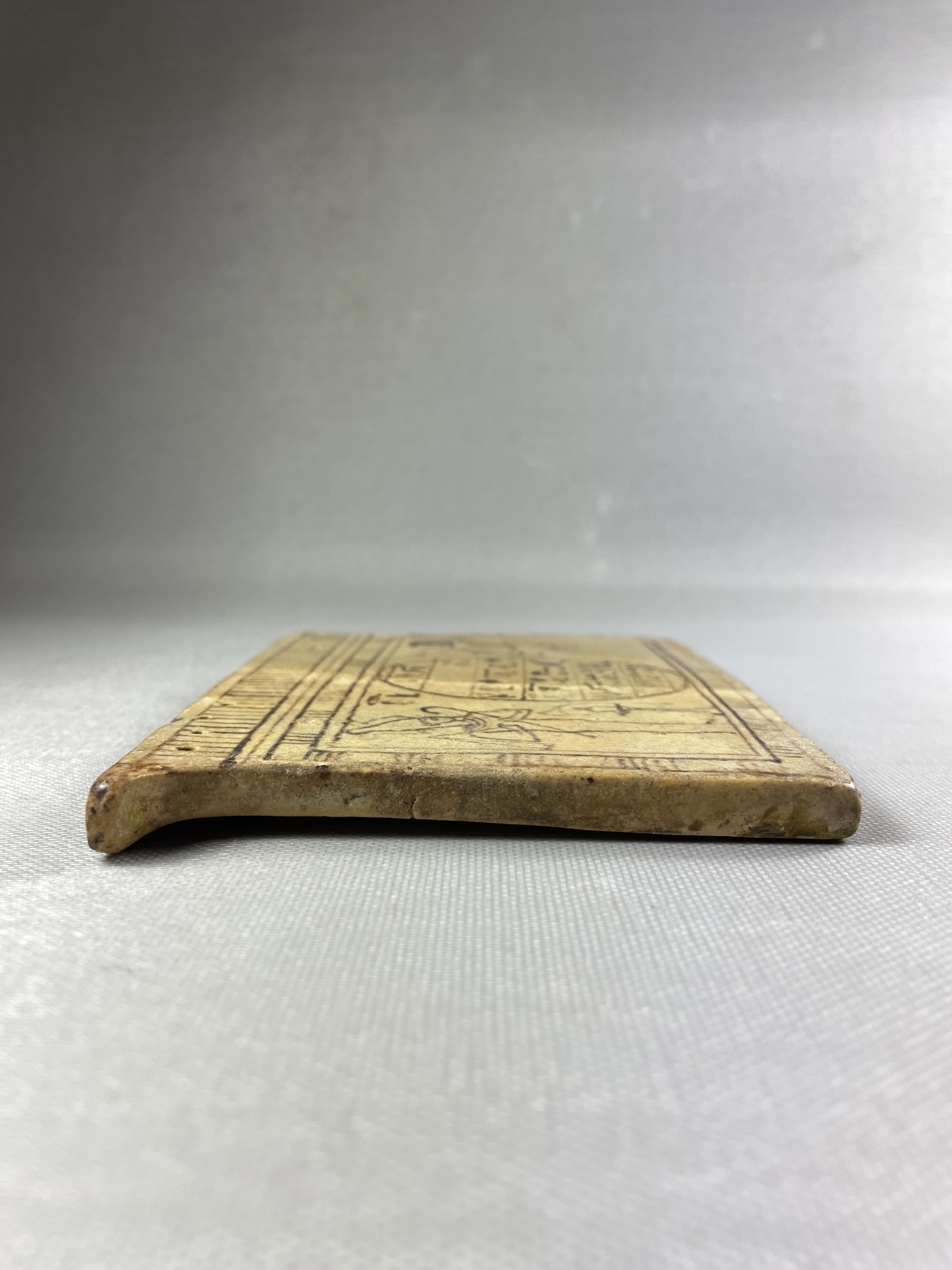
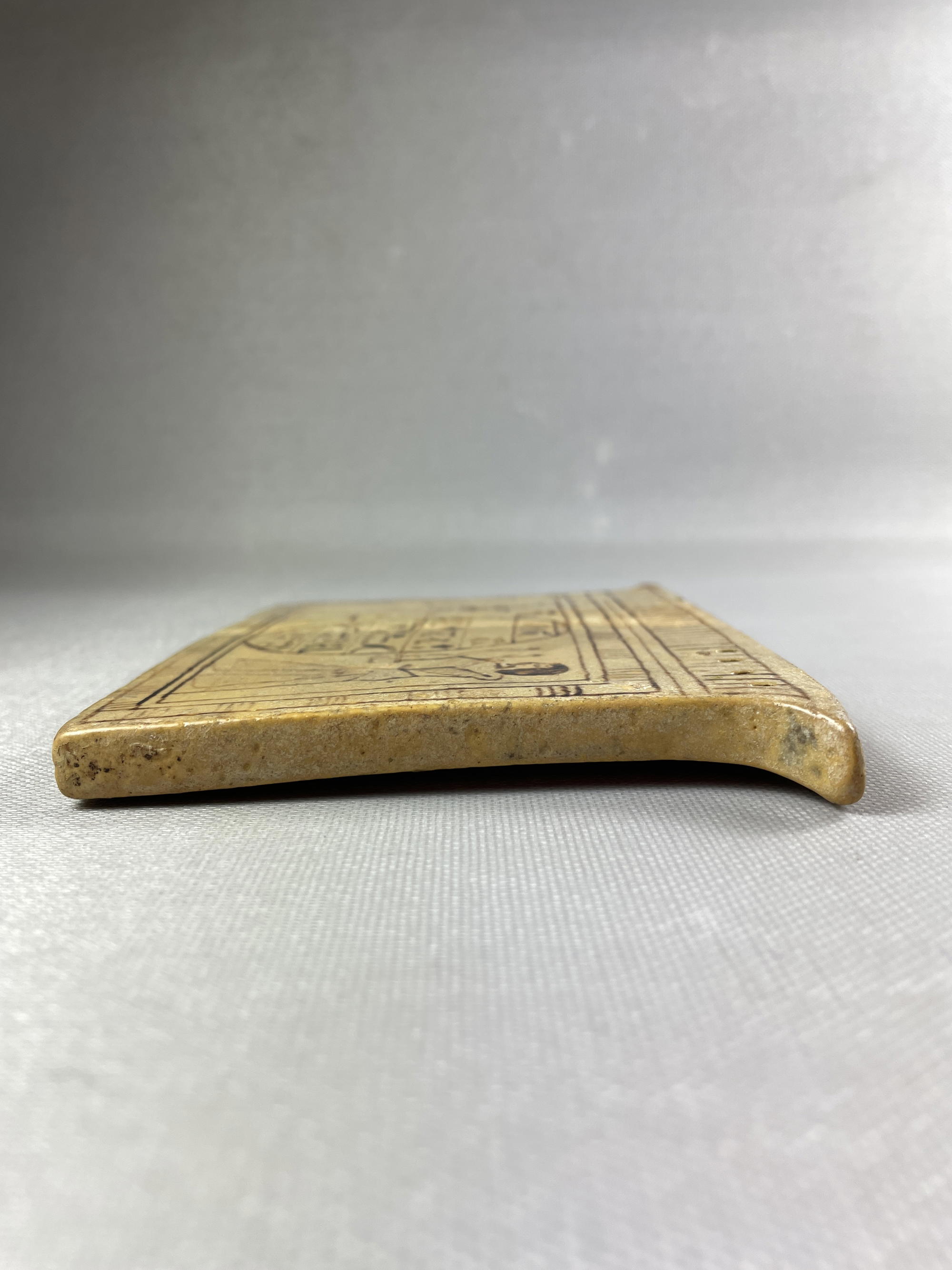
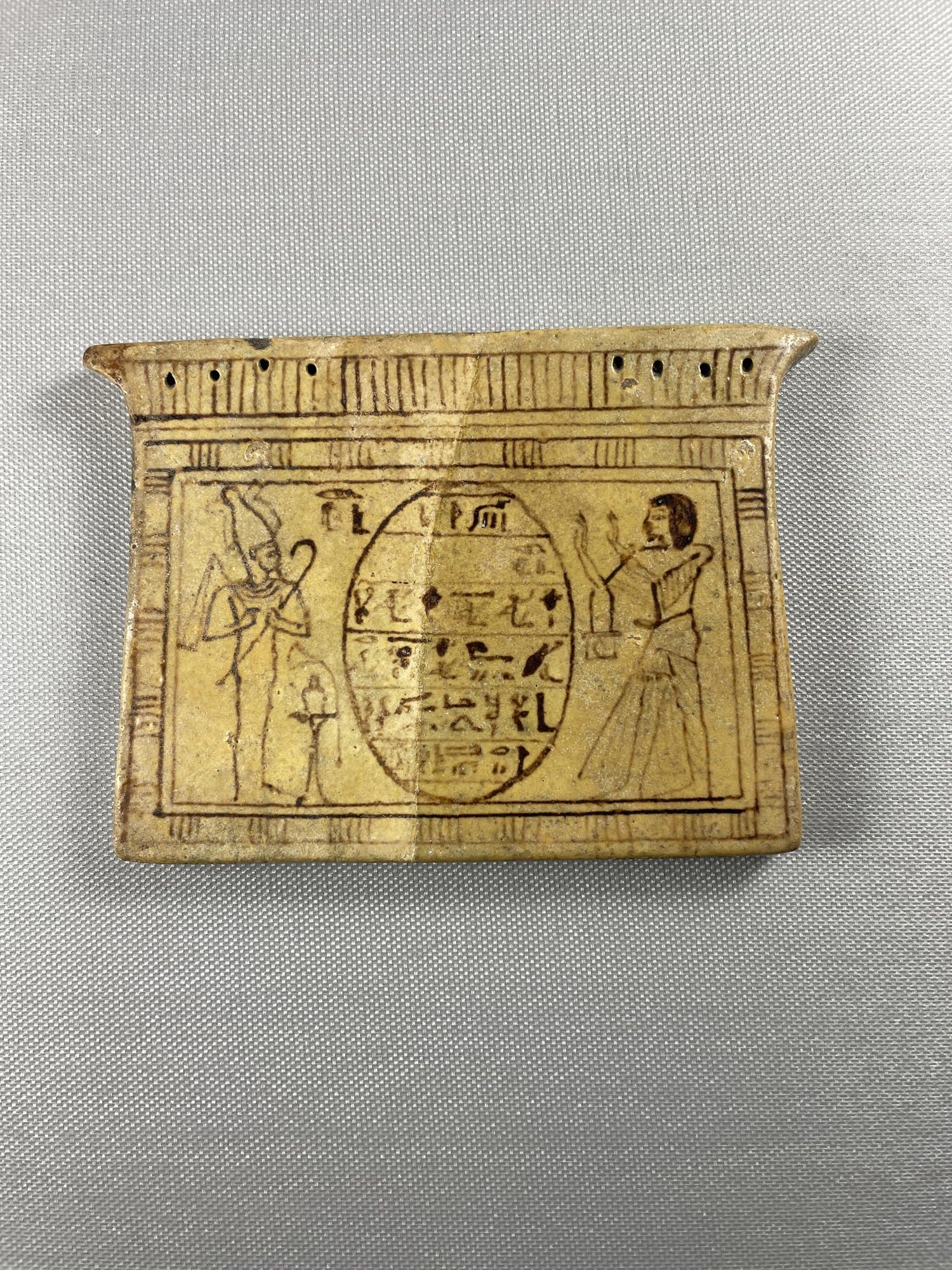
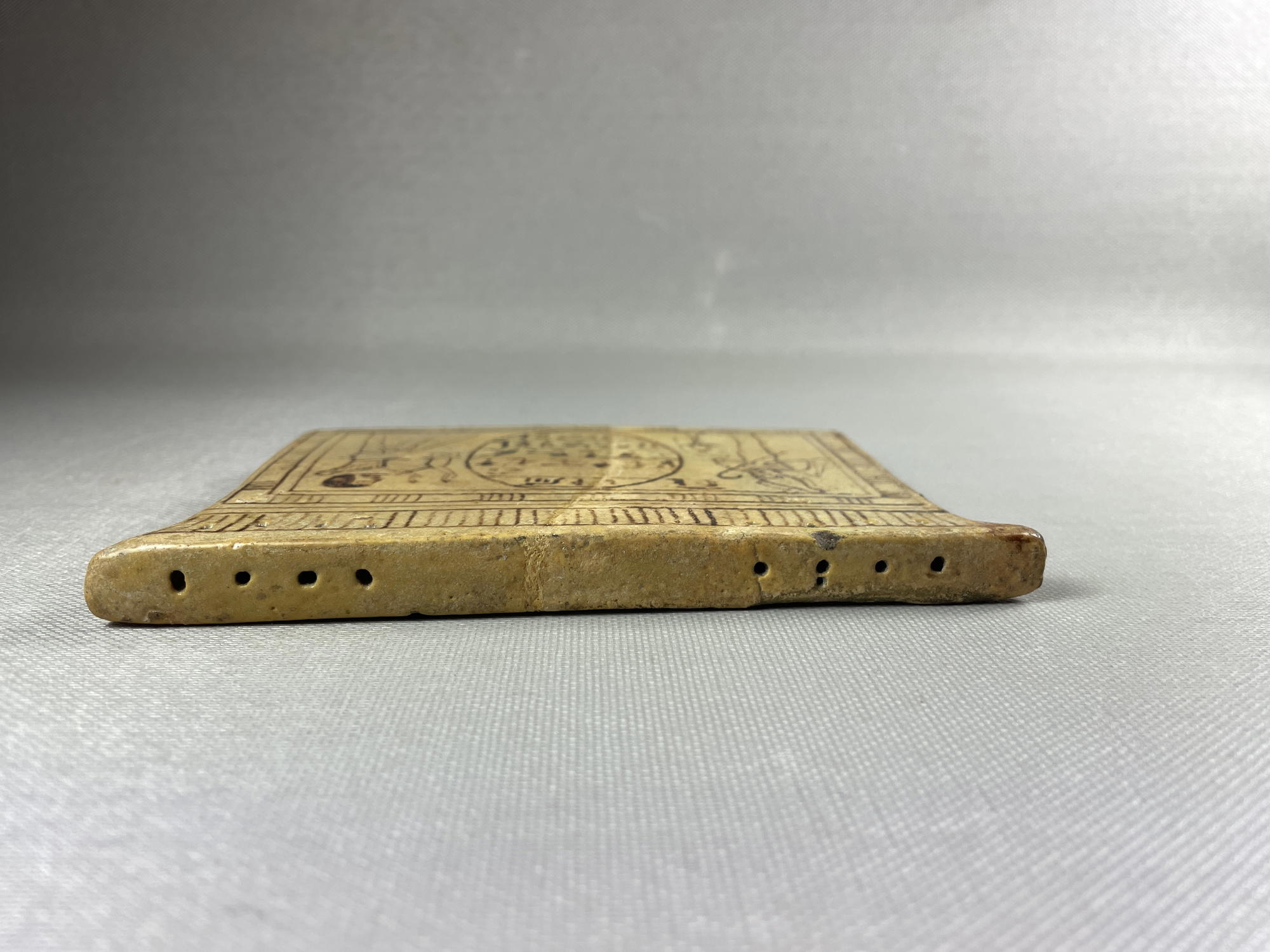
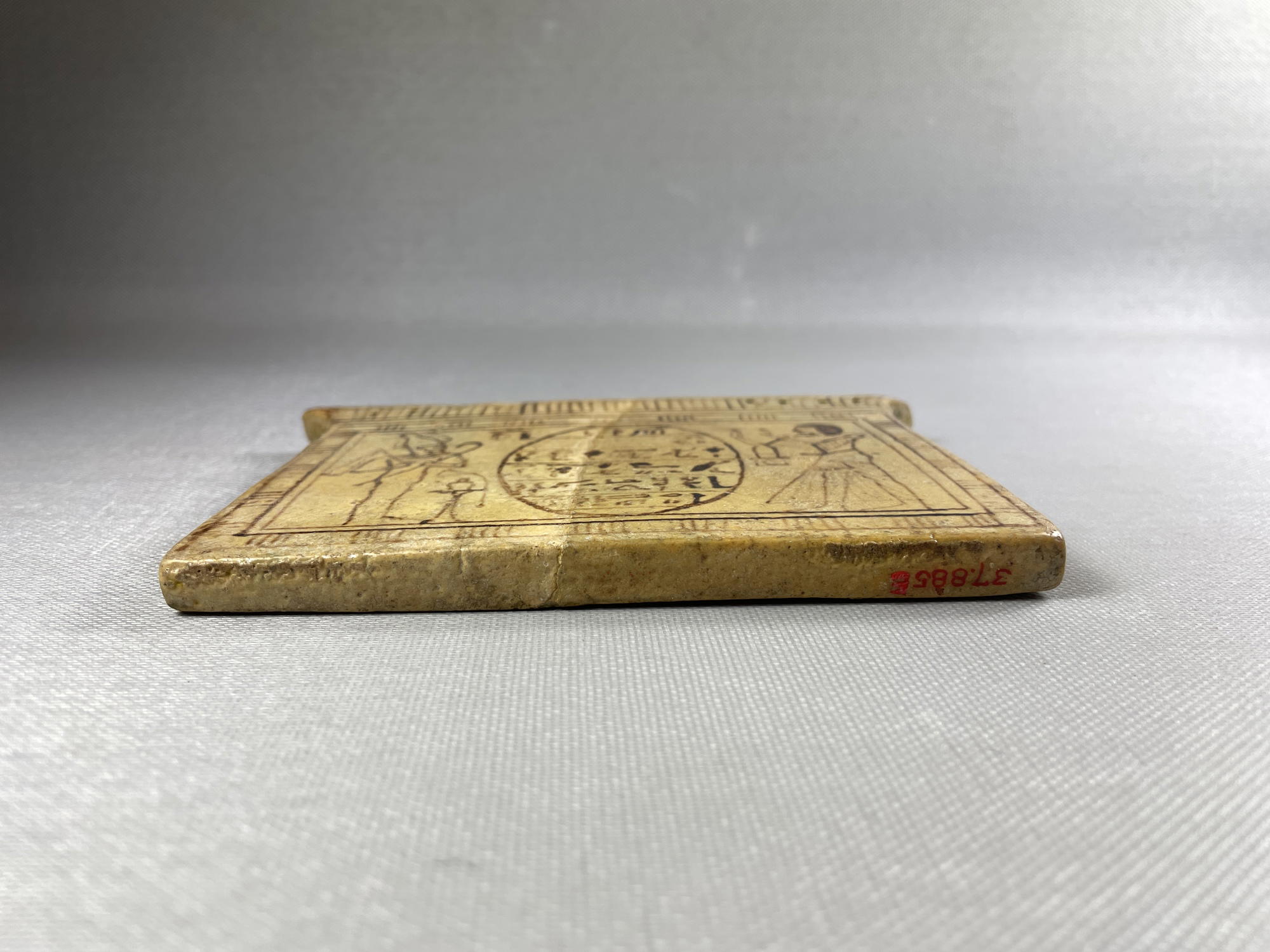
Pylon-Shaped Pectoral with Drawing of Heart Scarab
ca. 1539–1070 B.C.E.

1 of 7
Object Label
Living persons wore only one or a few amulets at a time, but mummies usually bear many amulets. The Ma’at amulet (no. 2) and heart scarabs (nos. 1, 3, 11), which occurred in many forms, guaranteed a successful judgment of the dead. The amulets of a hand (no. 8), lungs and a windpipe (no. 12), and wadjet-eyes (i.e., “healthy” eyes; no. 4) protected those parts of the body and also had connotations of resurrection and the unity or integrity of the mummy. The enigmatic aper amulet (no. 13) takes the form of the hieroglyph meaning “to be equipped,” perhaps in reference to the mummy’s preparation. The two crowns (nos. 5, 6) were symbols of power. The Heh insignia (no. 7), like the popular ankh-sign, denoted eternal life. Among the living, the frog (no. 9) and possibly also the hare (no. 10) suggested fertility. The amulets of the Four Sons of Horus (no. 15) perhaps served, as they did with canopic jars, to protect various organs of the body.
Caption
Pylon-Shaped Pectoral with Drawing of Heart Scarab, ca. 1539–1070 B.C.E.. Faience, 4 7/16 × 1/2 × 5 7/8 in. (11.3 × 1.2 × 15 cm). Brooklyn Museum, Charles Edwin Wilbour Fund, 37.885E. (Photo: Brooklyn Museum)
Gallery
Not on view
Gallery
Not on view
Title
Pylon-Shaped Pectoral with Drawing of Heart Scarab
Date
ca. 1539–1070 B.C.E.
Dynasty
Dynasty 18 to Dynasty 20
Period
New Kingdom
Medium
Faience
Classification
Dimensions
4 7/16 × 1/2 × 5 7/8 in. (11.3 × 1.2 × 15 cm)
Credit Line
Charles Edwin Wilbour Fund
Accession Number
37.885E
Have information?
Have information about an artwork? Contact us at