Scarab Coffin
664–332 B.C.E.


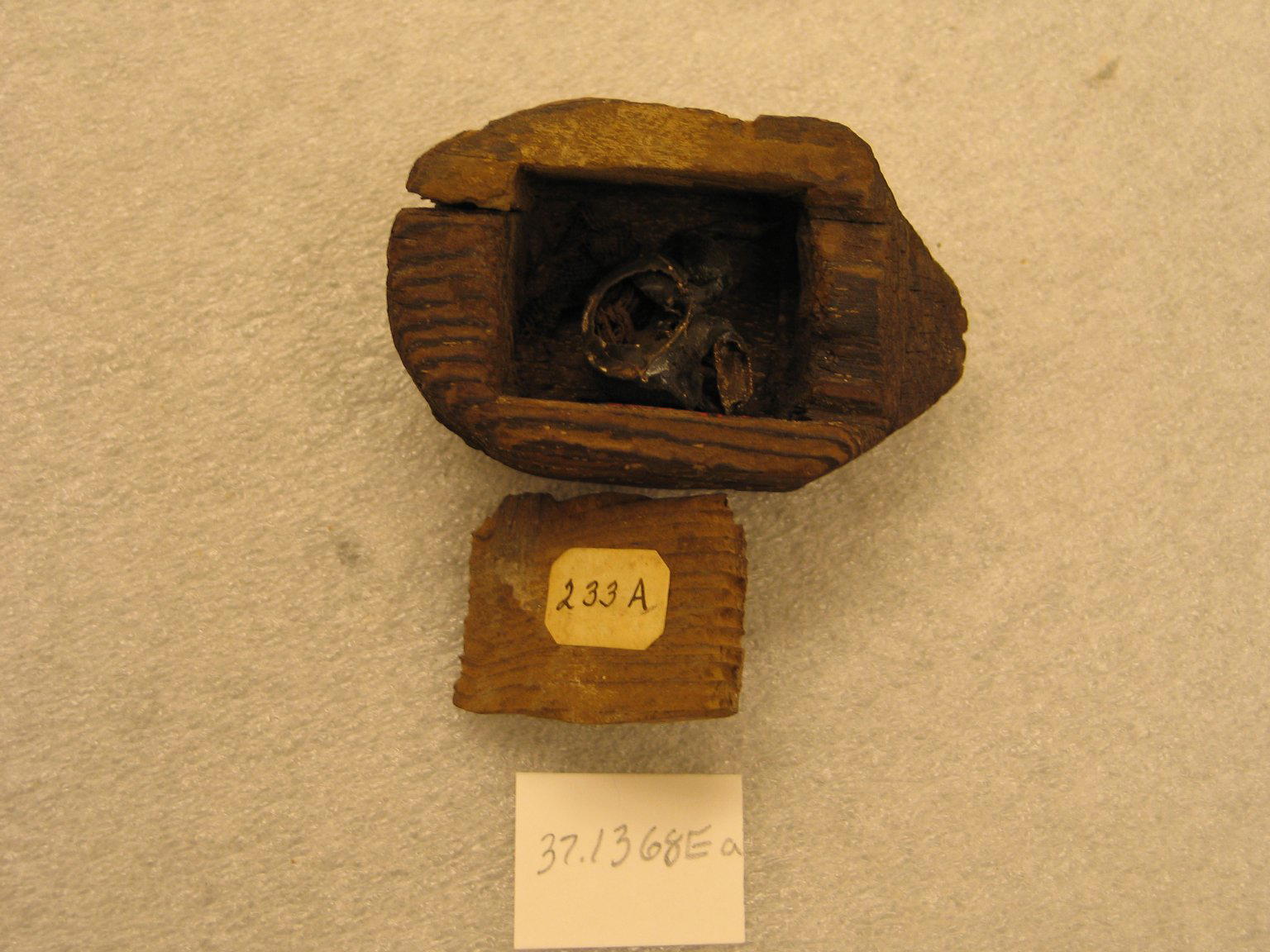

1 of 5
Object Label
The scarab beetle lays its eggs in small balls of dung, which it sometimes moves into position with its forelegs. This action led to associating the scarab with the force that rolls the sun across the heavens. Because the word for scarab beetle in the Egyptian language contains the same consonants as the word for “to come into being,” the ancient Egyptians especially associated the scarab with the sun, when it newly comes into being every morning. Scarabs could therefore be mummified to make requests to the sun god.
Caption
Scarab Coffin, 664–332 B.C.E.. Wood, animal remains, Coffin with Lid: 1 7/16 × 1 15/16 × 3 1/8 in. (3.6 × 5 × 8 cm). Brooklyn Museum, Charles Edwin Wilbour Fund, 37.1368Ea-c. (Photo: Brooklyn Museum)
Gallery
Not on view
Gallery
Not on view
Title
Scarab Coffin
Date
664–332 B.C.E.
Dynasty
Dynasty 26 to Dynasty 30
Period
Late Period
Geography
Reportedly from: Saqqara, Egypt
Medium
Wood, animal remains
Classification
Dimensions
Coffin with Lid: 1 7/16 × 1 15/16 × 3 1/8 in. (3.6 × 5 × 8 cm)
Credit Line
Charles Edwin Wilbour Fund
Accession Number
37.1368Ea-c
Frequent Art Questions
Tell me more about Scarabs.
These scarabs represented the cycle of the sun and rebirth to the ancient Egyptians. Scarabs, also called dung beetles, create balls of dung, which were viewed as symbols of death and decay. They then rolled the balls of dung which, to the ancient Egyptians, mirrored the way the sun moving across the sky!The wooden scarab here is actually a scarab coffin, as scarabs could be mummified to communicate with sun gods. The stone scarab is a heart scarab, an amulet that was buried with a mummy.
Have information?
Have information about an artwork? Contact us at