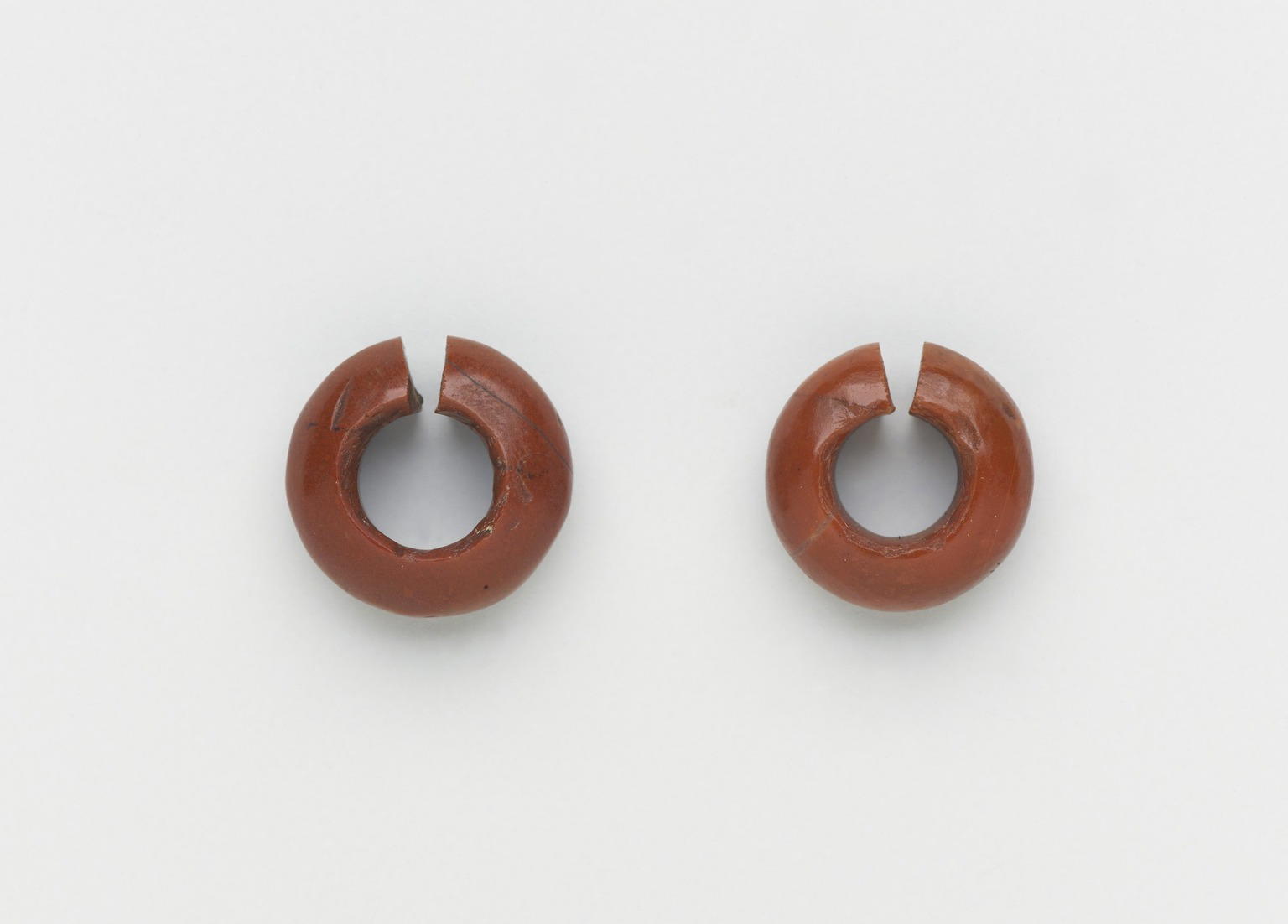
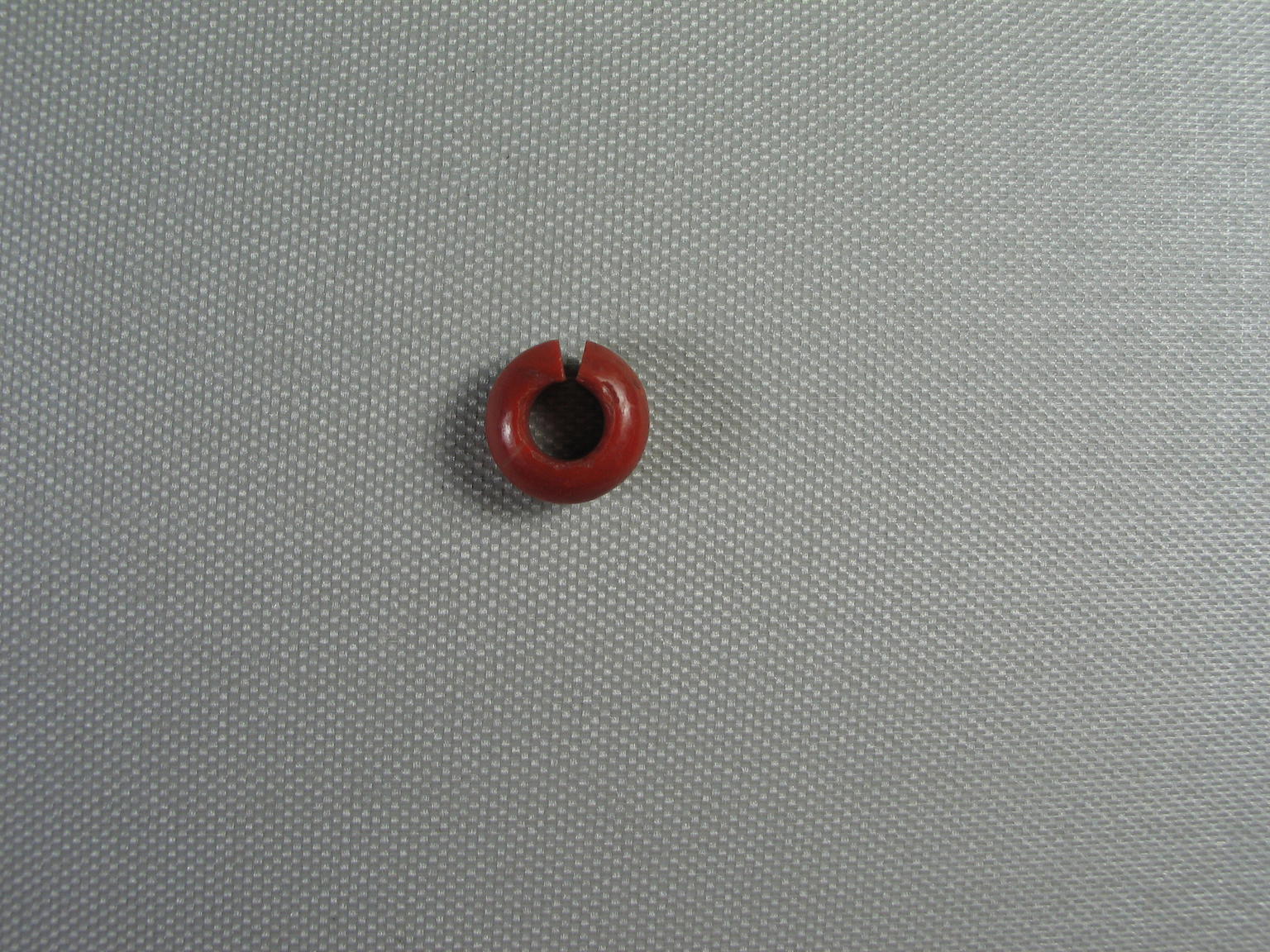
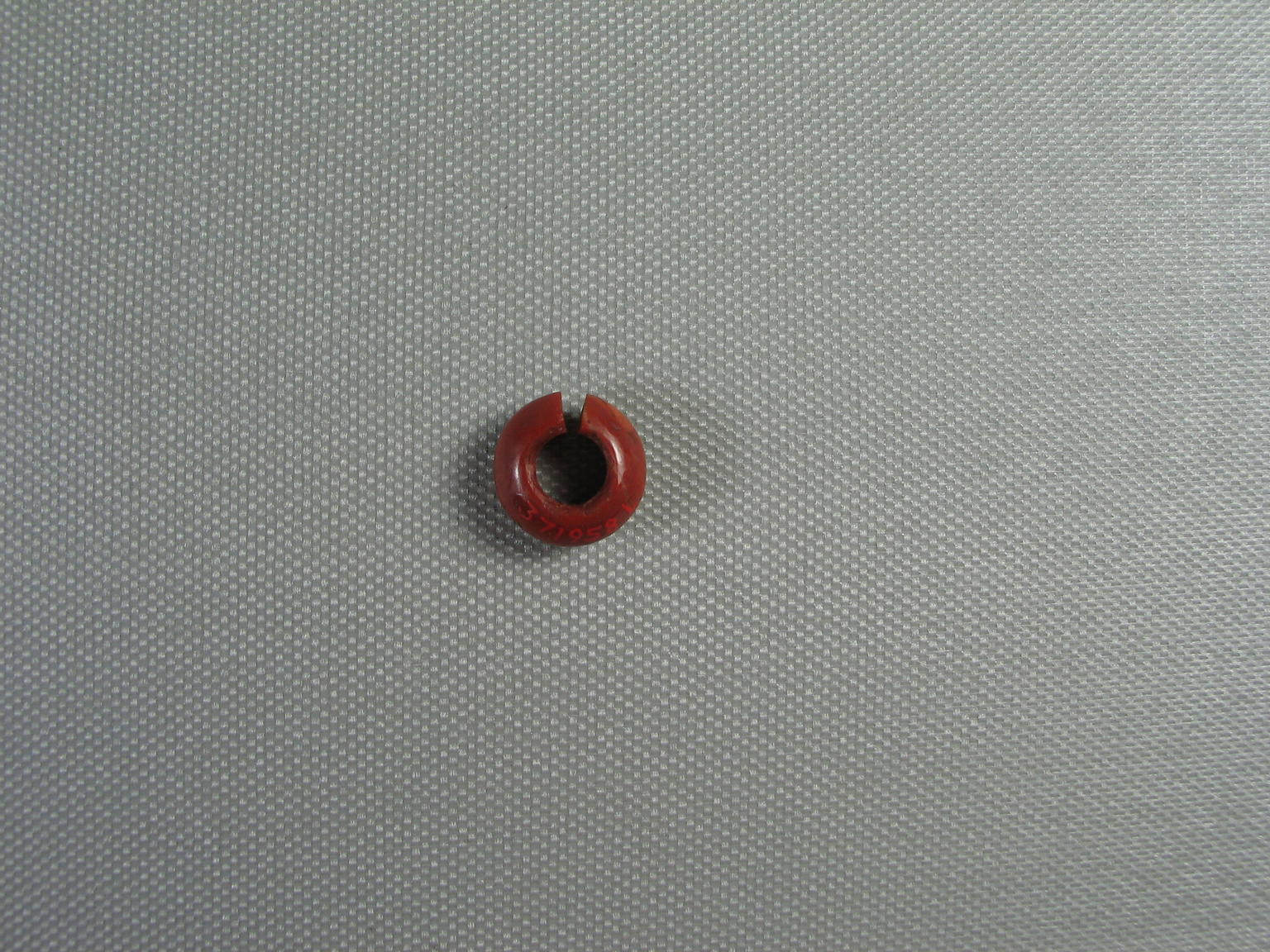
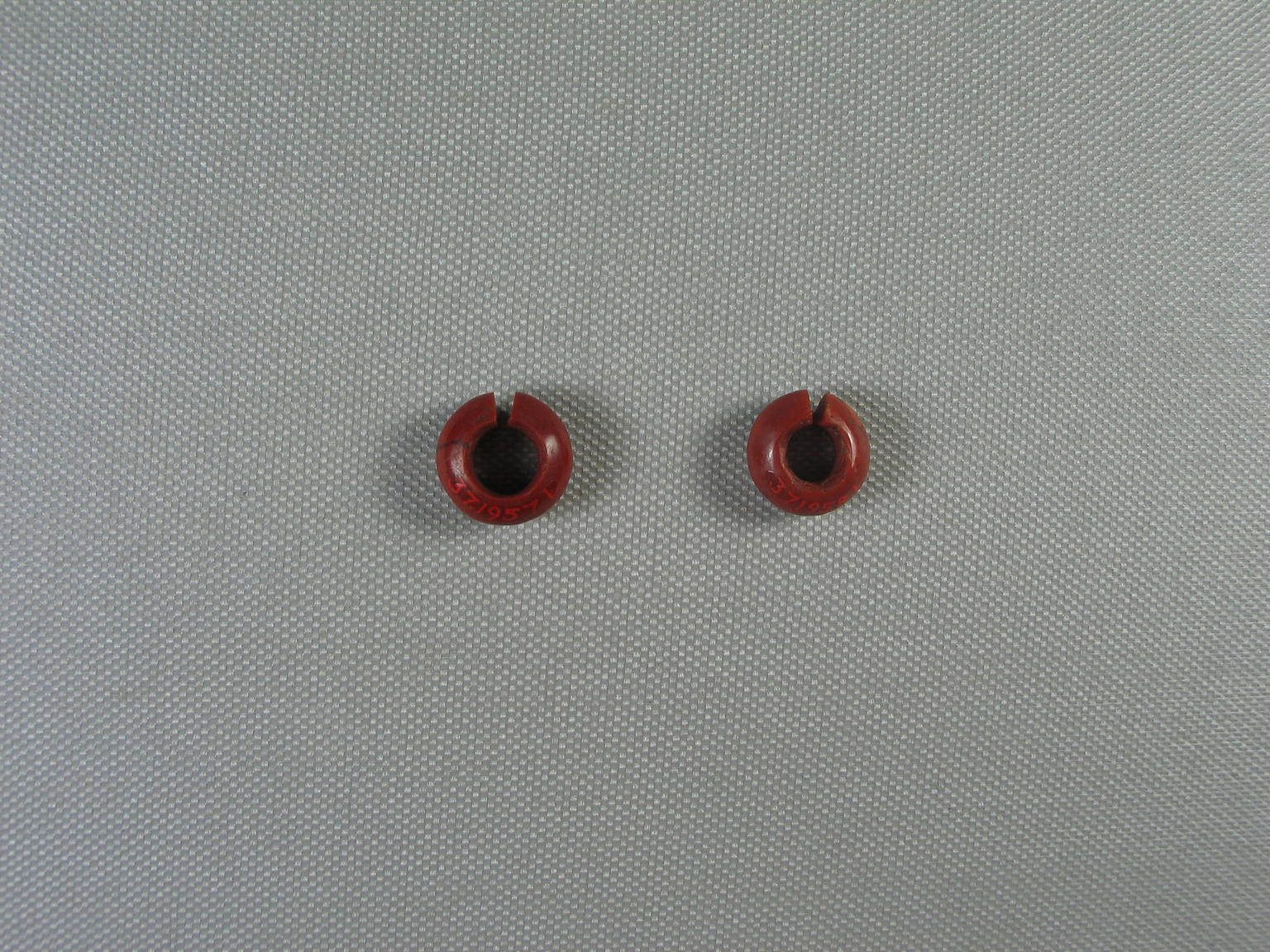
Penannular Earring
ca. 1539–1190 B.C.E.
1 of 4
Object Label
Because rebirth required an act of physical conception, sexual allure was still important to the Egyptians after death. Indeed an ancient Egyptian believed his or her appearance in the tomb was more important than ever, creating the erotic stimulus that would lead to rebirth. Thus cosmetics, combs for styling hair, and jewelry such as these earrings were included in the tomb to enhance amatory potential. These goods also followed a person to the next world.
Caption
Penannular Earring, ca. 1539–1190 B.C.E.. Red jasper, 5/16 × Diam. 11/16 in. (0.8 × 1.7 cm). Brooklyn Museum, Charles Edwin Wilbour Fund, 37.1958E.
Gallery
Not on view
Gallery
Not on view
Title
Penannular Earring
Date
ca. 1539–1190 B.C.E.
Dynasty
Dynasty 18 to Dynasty 19
Period
New Kingdom
Medium
Red jasper
Classification
Dimensions
5/16 × Diam. 11/16 in. (0.8 × 1.7 cm)
Credit Line
Charles Edwin Wilbour Fund
Accession Number
37.1958E
Frequent Art Questions
I read in the label that the ancient Egyptians believed that cosmetics, combs, jewelry were included for sexual allure since rebirth require conception. But we use cosmetics, combs and jewelry on deceased people now, yet it’s not for sex. How do we know that sexual allure is the reason for the jewelry and cosmetics?
Great question! It has to do with the styling and what we know about the ancient Egyptians conceptions of the afterlife.Today, much of the use of cosmetics on the dead is, as I'm sure you know, meant to make them look more lifelike and like themselves, to provide a sense of comfort to loved ones.I don't believe much make-up was actually applied to the physical body in ancient Egypt, but instead that they would be entombed with the kind of cosmetics, perfumes, jewelry, and wigs that one might wear to a party.Oh, I see. The cosmetics were included within the tomb, sort of like, “You’re gonna need these where you’re going.”Exactly! You can see in the Stela of Thenet, for example, Thenet, on the right, wears a translucent dress and an object on her head known as a fragrant cone which would melt into her hair as perfume.Interesting!
Have information?
Have information about an artwork? Contact us at