Ibis Mummy
664–332 B.C.E.
1 of 2
Object Label
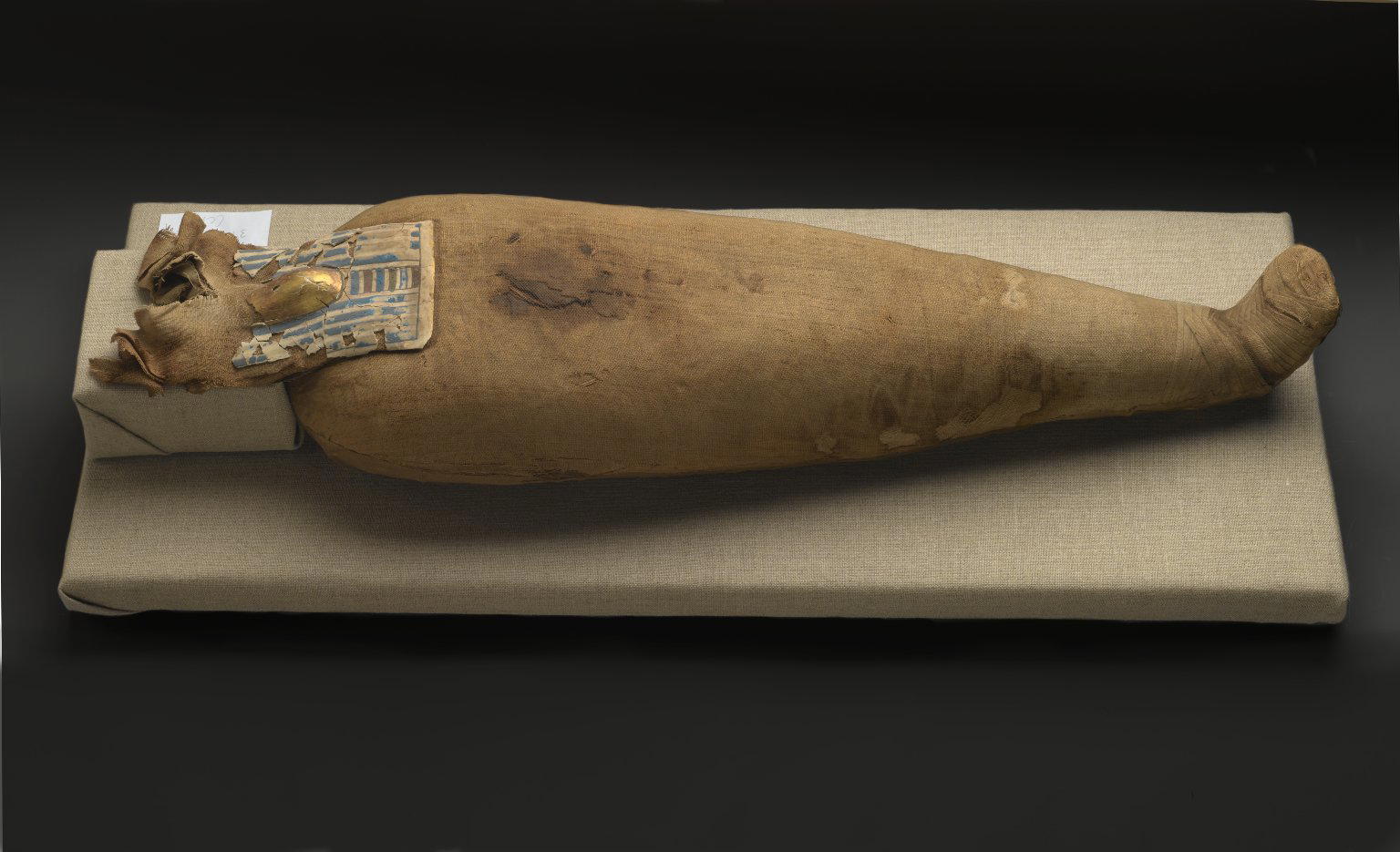
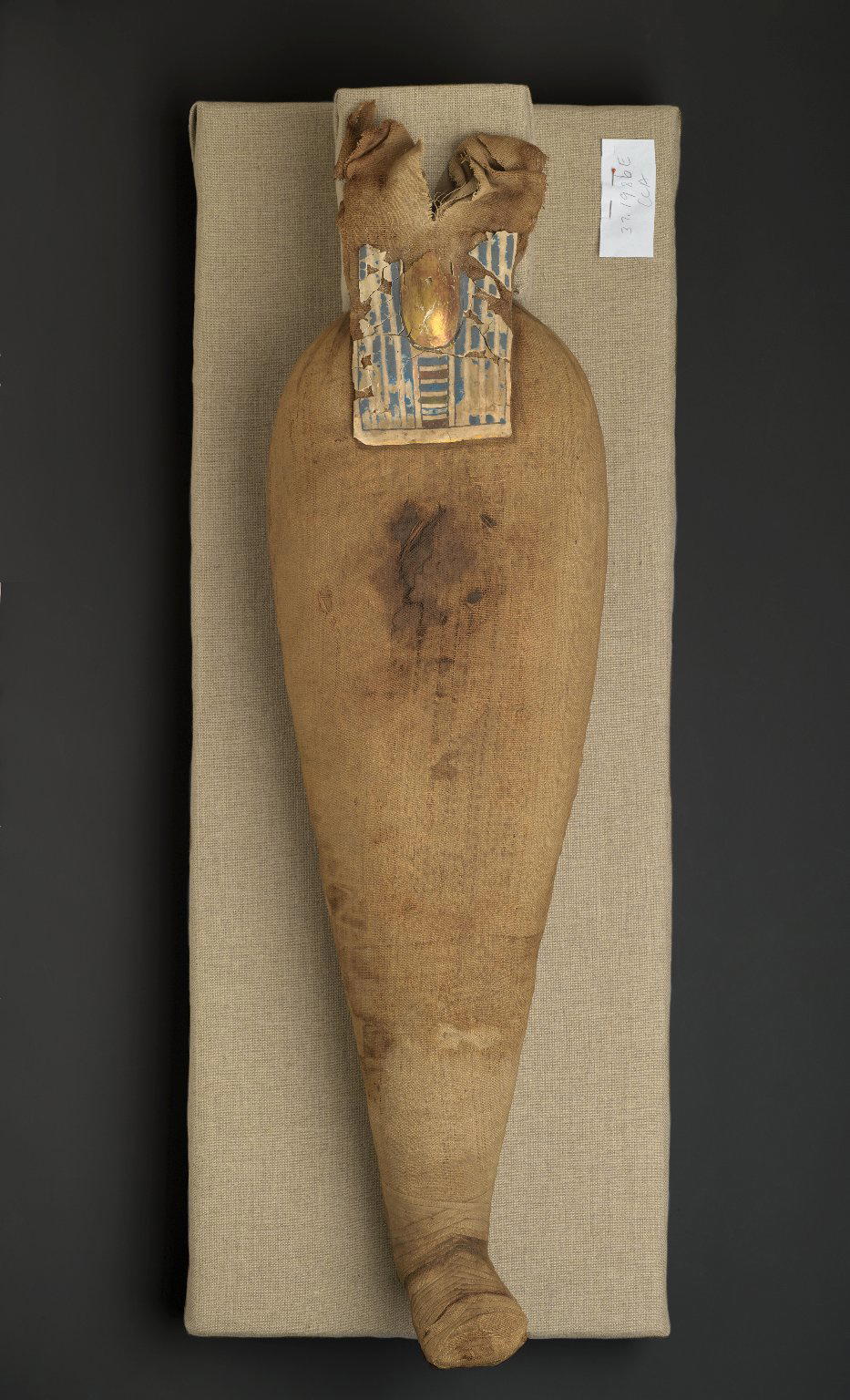
The shape of this animal mummy resembles that of a human mummy or the figure of the god Osiris, king of the dead. The painted plaster remains of an elaborate headdress, like those worn by kings, and a curved beard also emphasized for an Egyptian viewer this mummy’s close connection with Osiris.
The X-ray shows a complete ibis inside the wrappings.
The X-ray shows a complete ibis inside the wrappings.
Caption
Ibis Mummy, 664–332 B.C.E.. Animal remains, linen, cartonnage, pigment, 23 × 7 × 4 in. (58.4 × 17.8 × 10.2 cm). Brooklyn Museum, Charles Edwin Wilbour Fund, 37.1986E. (Photo: Brooklyn Museum)
Gallery
Not on view
Gallery
Not on view
Title
Ibis Mummy
Date
664–332 B.C.E.
Dynasty
Dynasty 26, or later
Period
Late Period to Ptolemaic Period
Geography
Reportedly from: Saqqara, Egypt
Medium
Animal remains, linen, cartonnage, pigment
Classification
Dimensions
23 × 7 × 4 in. (58.4 × 17.8 × 10.2 cm)
Credit Line
Charles Edwin Wilbour Fund
Accession Number
37.1986E
Frequent Art Questions
What is the ibis mummy
Hi! An ibis is a type of water bird with a long, curved beak. The ancient Egyptians associated them with Thoth, the god of wisdom and writing.There were certain temples where the priests bred the birds specifically to be mummified and sold to the public for making donations to the god.Thank you!!What did the ibis symbolize something that made them so popular?
Their long beak resembled the reed pens used by scribes, which is how they came to be associated with the god Thoth.What was the significance of the Ibis?
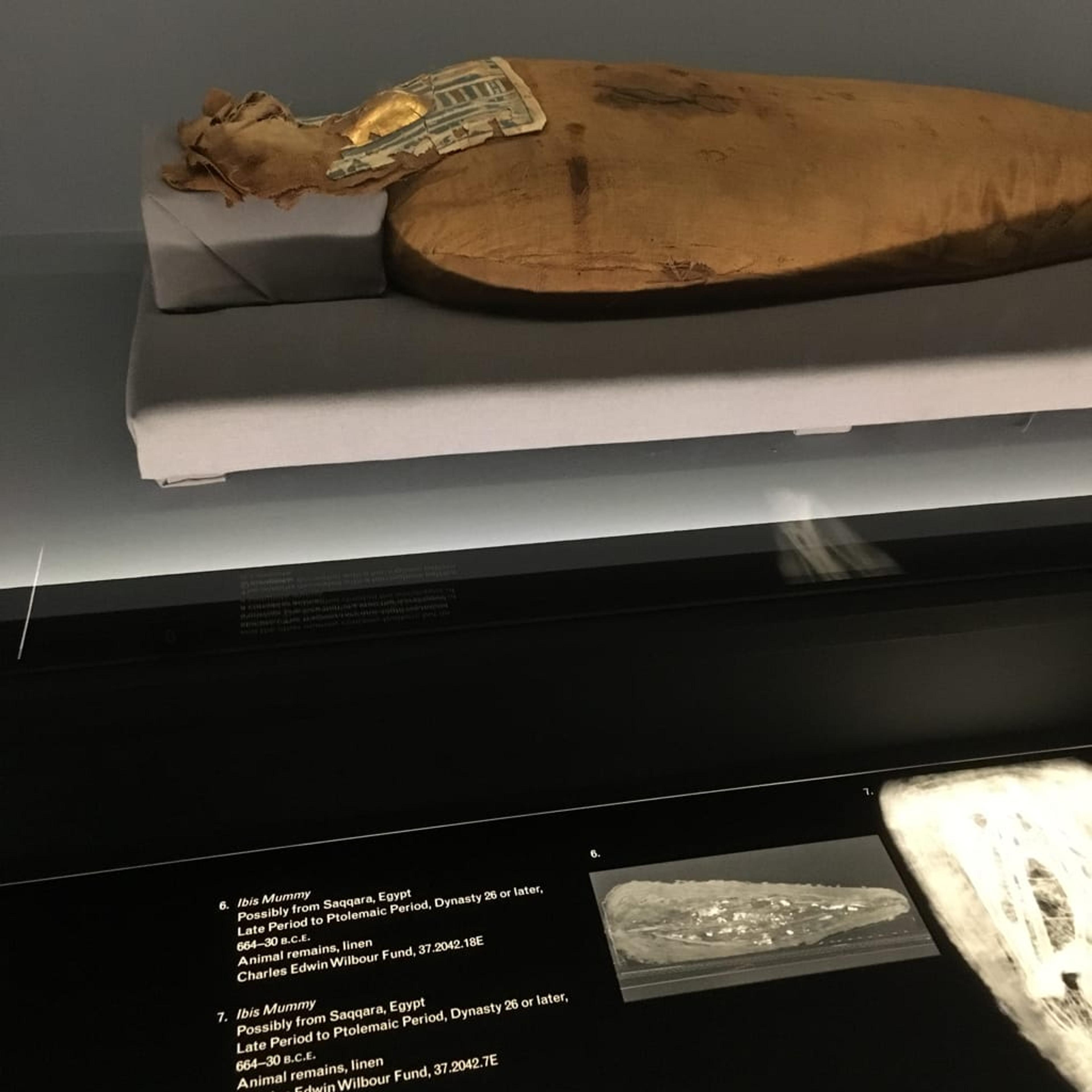 The ibis is associated with Thoth, the god of wisdom. The birds long, curving beak resembles the reed used by scribes to write.The Egyptians believed that animals had souls and that a mummified ibis could carry messages to Thoth. We know that people asked for things like help with family, work, etc. Similar to things we would want help with today!Thank you.
Tell me more.
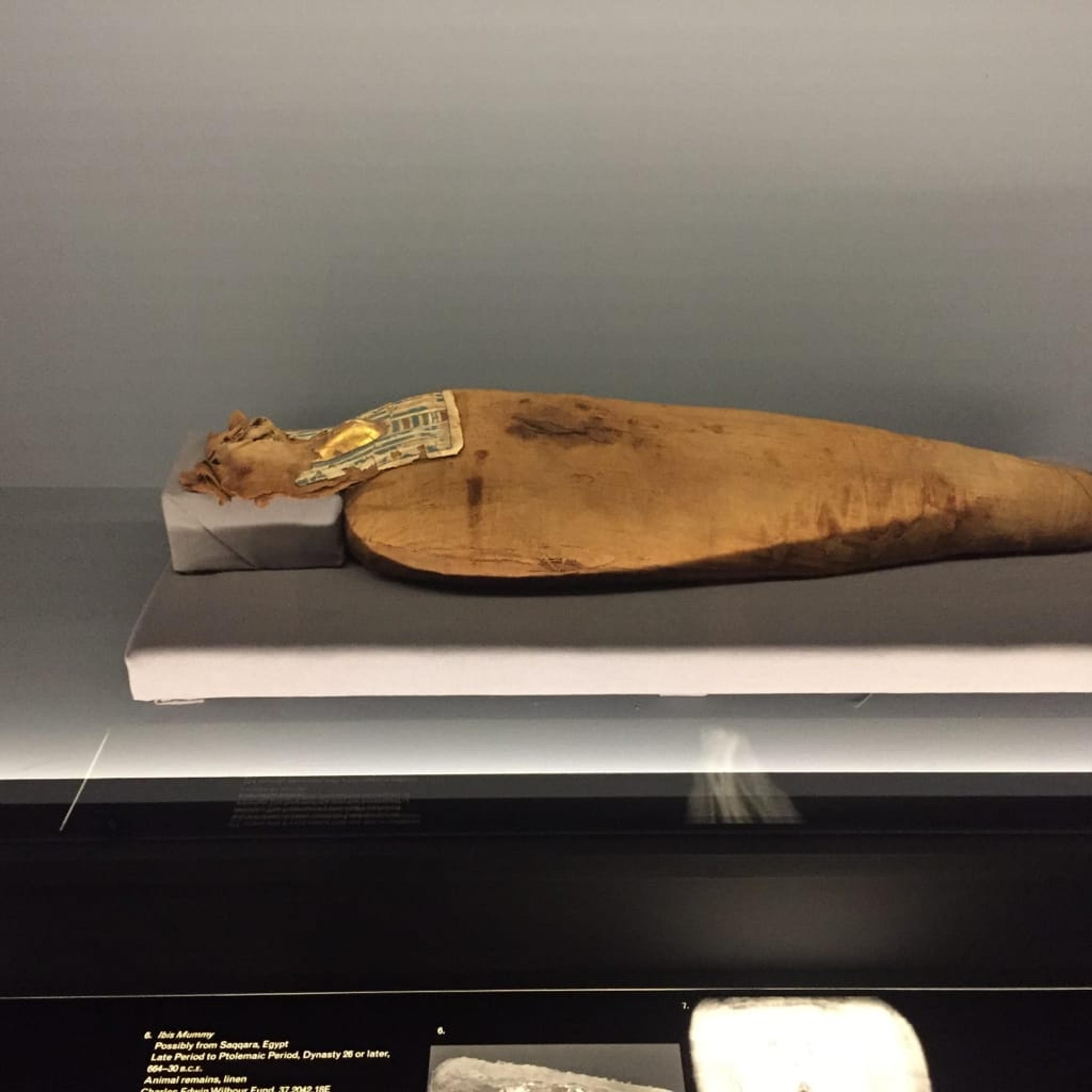 This small human shaped mummy actually contains an ibis which would have been offered to Thoth, the god of wisdom.Ibis mummies were some of the most often donated in ancient Egypt. As many as two million ibis mummies were donated at Saqqara alone!Thanks!
Have information?
Have information about an artwork? Contact us at