Mary Magdalene

Brooklyn Museum photograph
Object Label
Richard Greenough, the younger brother and pupil of the Neoclassical sculptor Horatio Greenough, belongs to the second generation of American expatriate artists who lived and worked in Italy. Like Thomas Ball, Emma Stebbins, and Margaret Foley, whose biblical figures are displayed nearby, Greenough drew on the Old and New Testaments in seeking subjects for his work in marble. Mary Magdalene was a follower of Christ who witnessed the Crucifixion. Greenough broke with the visual restraint of Neoclassicism to introduce an emotional element, expressed not only in facial expression and gesture, but also in the dynamic surface rhythms and bold play of light and shadow in the folds of drapery.
Caption
Richard Saltonstall Greenough (American, 1819–1904). Mary Magdalene, 1869. Marble, 70 3/8 x 24 1/2 x 19 1/2 in., 900 lb. (178.8 x 62.2 x 49.5 cm, 408.24kg). Brooklyn Museum, Gift of the Cooper Union Museum of Art, 62.153. (Photo: Brooklyn Museum)
Collection
Collection
Title
Mary Magdalene
Date
1869
Medium
Marble
Classification
Dimensions
70 3/8 x 24 1/2 x 19 1/2 in., 900 lb. (178.8 x 62.2 x 49.5 cm, 408.24kg)
Signatures
Incised on edge of base at proper left side, rear: "R. S. GREENOUGH, / SCt. PARIS, 1869."
Inscriptions
Incised along front edge of base: "MARY MAGDALENE"
Credit Line
Gift of the Cooper Union Museum of Art
Accession Number
62.153
Frequent Art Questions
Who sculpted Mary?
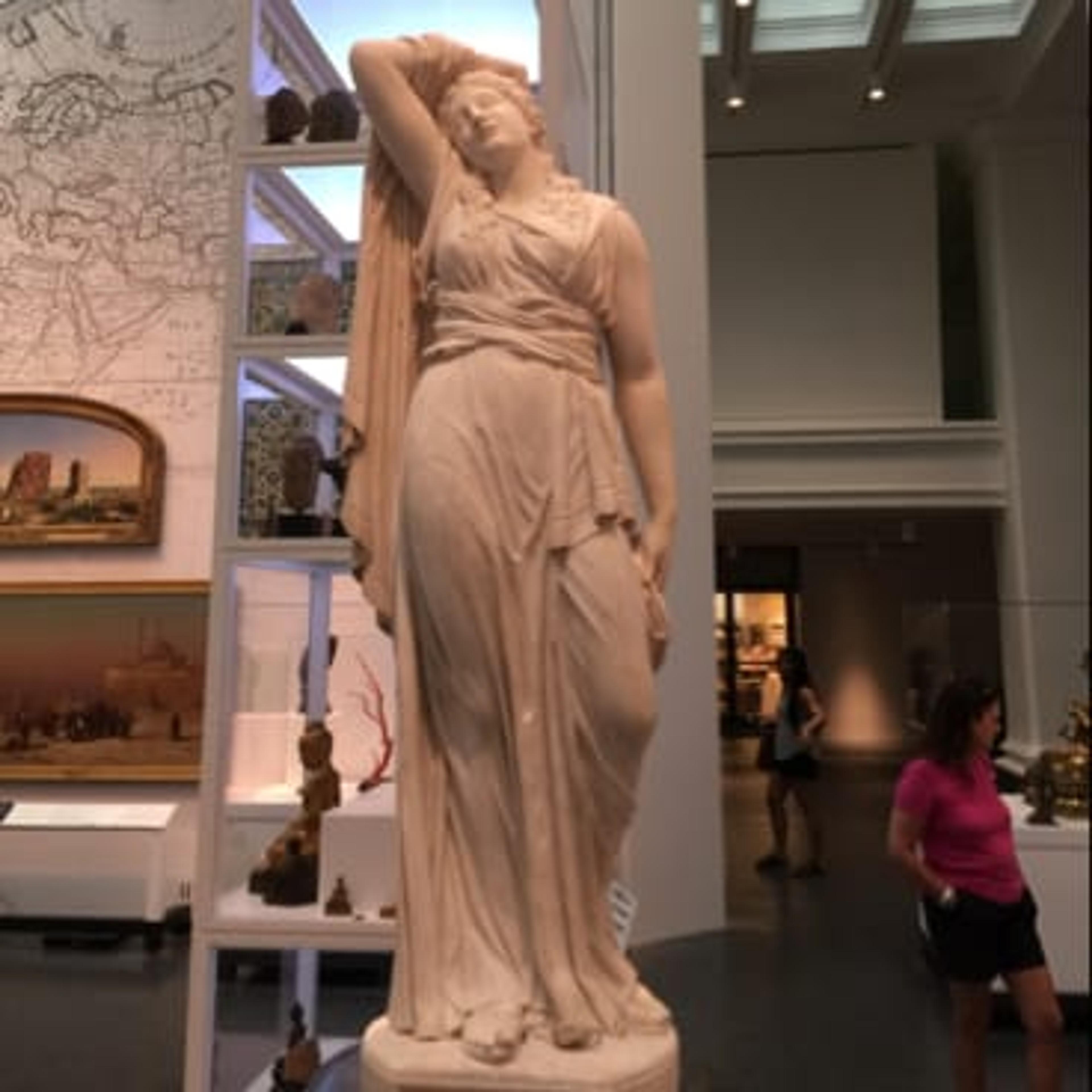 That sculpture of Mary Madgalene is by Richard Greenough, an American sculptor of the 1800s. Greenough had a studio in Italy and he was very familiar with sculpture of the classical era, the Renaissance, and the Baroque.
That's one of my favorite sculptures here! Richard Greenough was an American sculptor working abroad in Rome and then Paris. He was strongly influenced by the art of ancient or classi al Greek and Rome, which he was able to see in European museums so his style is called "neoclassical." Are you familiar with Mary Magdalene?
Yes, but do tell me more!She was a close follower of Christ, and in the New Testament, she is the first to arrive at Christ's tomb three days after his Crucifixion. Here, Greenough shows her in a moment of grief when she finds that Christ's tomb is empty. Her face and gesture are so expressive, and if you look at her hand, you'll see that she is holding a branch of thorns. It's a reference to Christ's passion and suffering. The sculptor's wife, Sarah Greenough, wrote a poem inspired by this sculpture telling the story of Christ's death and resurrection from Mary's point of view.Oh that is so beautiful, thank you, I wasn't sure if it was before or after she met Jesus.You're welcome! It's just before Christ appears to her and reveals himself as risen so we as viewers know what is going to happen, but she doesn't yet.I had no idea all of that about this sculpture, I was just so moved by the emotion. I will look up poem. So impressive and expressive! Thank you.There are some other life-size marble sculptures of women in "American Identities," on the 5th floor but I have to admit that this one is my favorite.Thanks again and I will go check them out. Happy New Years and all the best for 2016!Happy New Year! Thanks so much.I'm Italian, for this reason I'm interested about this work!
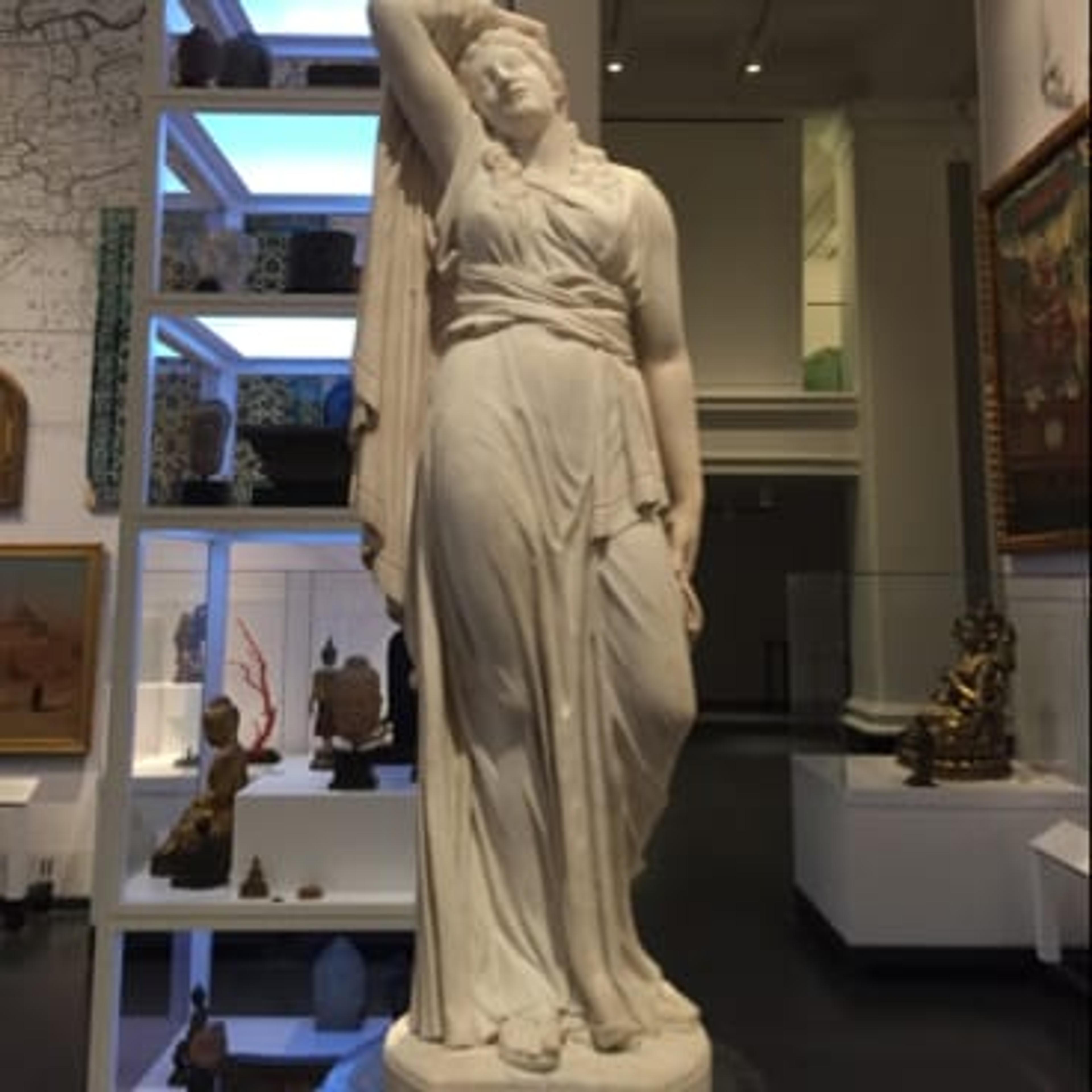 Richard Greenough was an American sculptor working abroad in Rome and then Paris. He was strongly influenced by the art of ancient or classical Greek and Rome, which he was able to see in European museums so his style is called "Neoclassical." He did this work sculpture of what he thought Mary Magdalene would look like. Greenough was very much inspired by the Renaissance and the Baroque styles of sculpture.Yes it's incredible...I thought I was in front a classic masterpiece.There are similar sculptures on the 5th floor in our American art galleries by other American sculptors that evoke the Classical style.
Can you tell me about this?
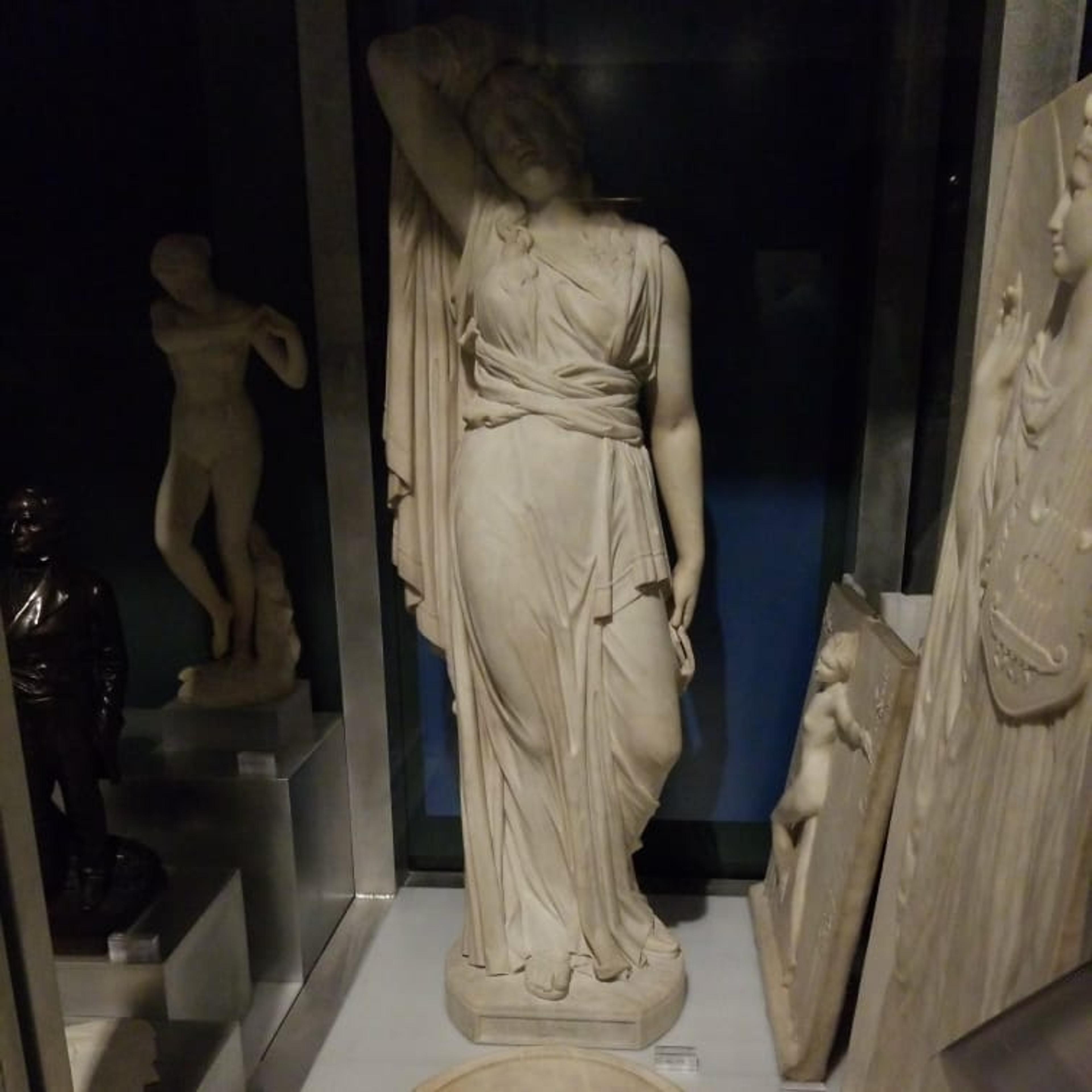 This is a statue of Mary Magdalene by Richard Greenough. The artist was one of many American sculptors who lived and worked in Italy in the 1800s. He was interested in depicting figures from the Old and New Testaments, including Mary Magdalene, who plays an important part in the life story of Jesus Christ.
Have information?
Have information about an artwork? Contact us at