Samaya Gokorei (Five-Pronged Vajra Bell)
13th century
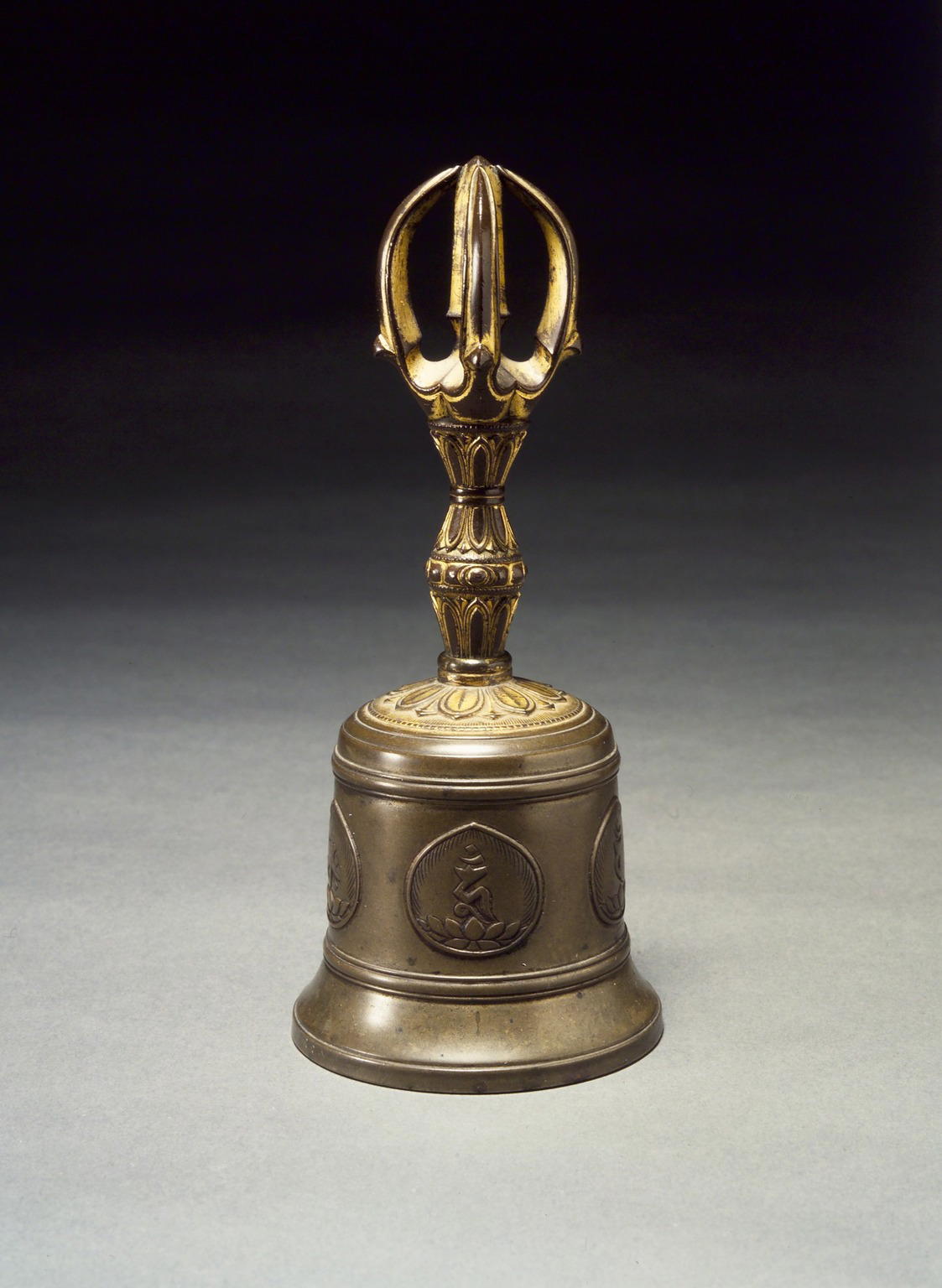
Brooklyn Museum photograph
Object Label
A stylized representation of a lightning bolt, called a vajra, has long been an important emblem of power in Buddhist teachings and art. Vajras usually look like two-sided tridents, with prongs on both ends of a shaft, but their heads can have one, three, five, or six prongs. Esoteric Buddhism is called Vajrayana, or the “way of the vajra,” because the lightning bolt represents the active, forceful approach to enlightenment, one that cuts through ignorance and fear.
In esoteric Buddhist practice, initiated worshippers often hold a vajra and a hand bell, known in Sanskrit as a ghanta. The vajra symbolizes action or method, and the bell represents wisdom. Buddhists believe that these two complementary qualities must be combined and balanced in order to gain insight and progress toward enlightenment.
In esoteric Buddhist practice, initiated worshippers often hold a vajra and a hand bell, known in Sanskrit as a ghanta. The vajra symbolizes action or method, and the bell represents wisdom. Buddhists believe that these two complementary qualities must be combined and balanced in order to gain insight and progress toward enlightenment.
Caption
Samaya Gokorei (Five-Pronged Vajra Bell), 13th century. Bronze with traces of gilding, Height: 7 1/8 in. Diameter at base: 3 in. Brooklyn Museum, Gift of Bernice and Robert Dickes, 1989.145. (Photo: Brooklyn Museum)
Collection
Collection
Title
Samaya Gokorei (Five-Pronged Vajra Bell)
Date
13th century
Period
Kamakura Period
Geography
Place made: Japan
Medium
Bronze with traces of gilding
Classification
Dimensions
Height: 7 1/8 in. Diameter at base: 3 in.
Credit Line
Gift of Bernice and Robert Dickes
Accession Number
1989.145
Have information?
Have information about an artwork? Contact us at