Female Figurine
Ancient Near Eastern


1 of 6
Object Label
Like many of the earliest female figurines, this woman is shown with rudimentary arms, large breasts, hips, and thighs, and no indication of lower legs or feet. Her head is small, with unrealistic facial features; it has been heavily restored. The figure was modeled in clay, dried in the sun, and then painted in several colors, with patterns that may represent tattoos or jewelry. Whether images like these represented real, ideal, or divine women, their main purpose was certainly to encourage female fertility.
Caption
Ancient Near Eastern. Female Figurine, late 5th millennium B.C.E. Clay, pigment, 4 1/8 x 1 7/8 x 1 5/8 in. (10.4 x 4.7 x 4.2 cm). Brooklyn Museum, Hagop Kevorkian Fund and Designated Purchase Fund, 1990.14. (Photo: Brooklyn Museum)
Gallery
Not on view
Gallery
Not on view
Culture
Title
Female Figurine
Date
late 5th millennium B.C.E
Period
Late Halaf Period
Geography
Possible place made: Mesopotamia (modern day Iraq, Turkey, & Syria), Possible place made: Northern region, Syria
Medium
Clay, pigment
Classification
Dimensions
4 1/8 x 1 7/8 x 1 5/8 in. (10.4 x 4.7 x 4.2 cm)
Credit Line
Hagop Kevorkian Fund and Designated Purchase Fund
Accession Number
1990.14
Frequent Art Questions
What is this?
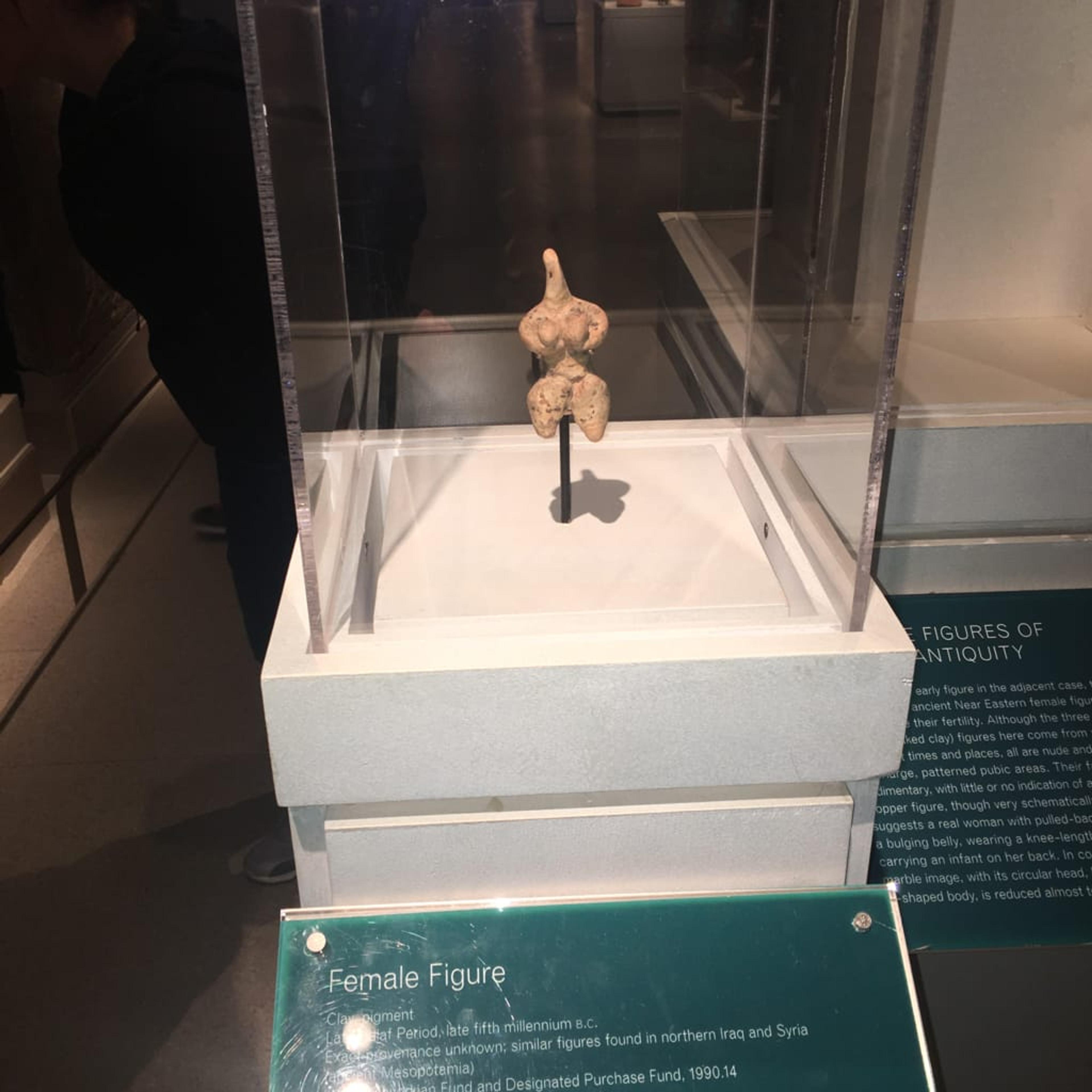 This female fertility figure is one of the oldest objects in our museum! Many of the earliest sculptures around the world represented women with emphasized fertility traits. This example comes from northern Mesopotamia over 7000 years ago.
Can you tell me more about this?
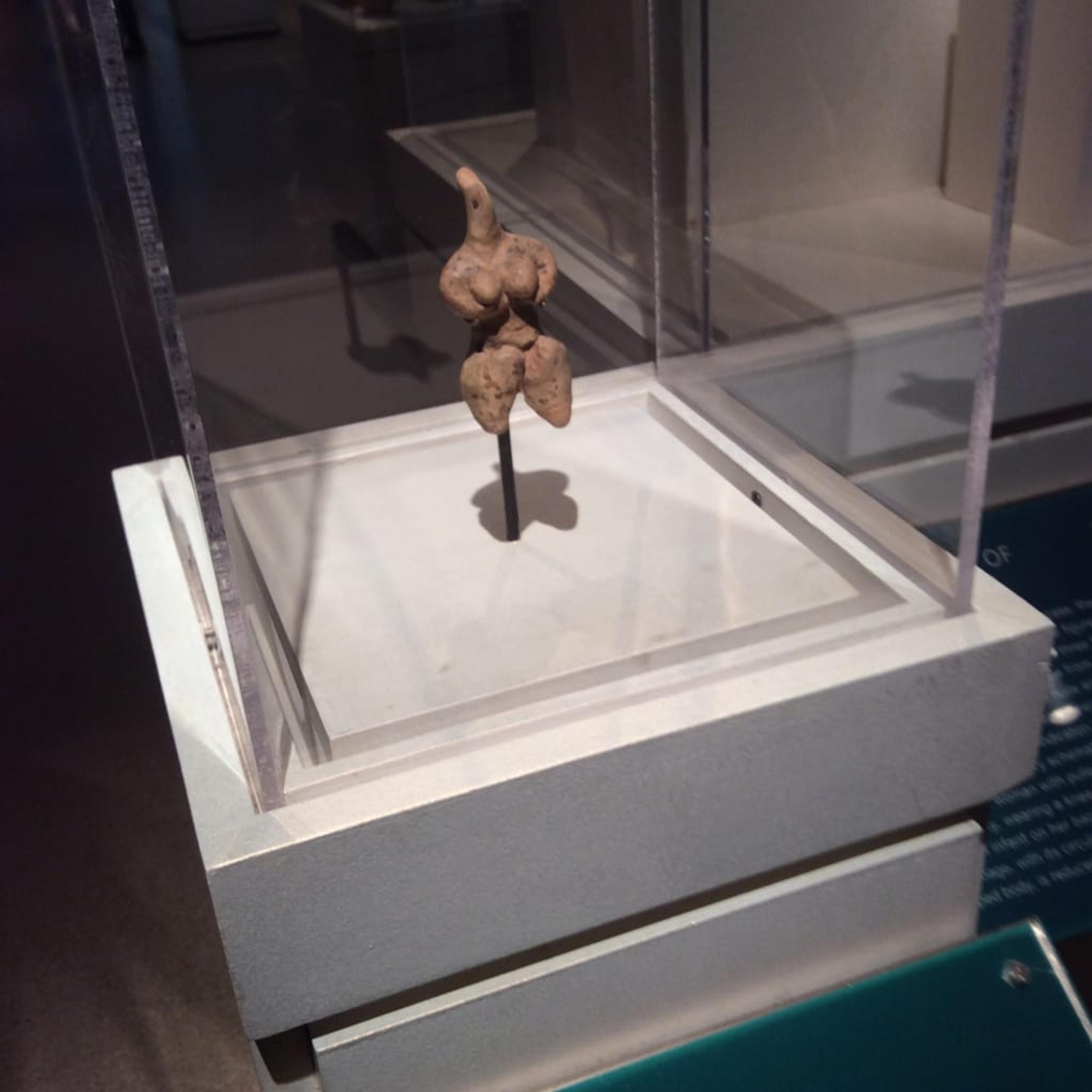 This was made during the neolithic period, when human societies had just begun to settle in one place thanks to the development of agriculture. So we think there may be a connection between this representation of human fertility and fertility of the land.It is interpreted as being a "fertility figure", and may have been placed in the earth as a way of encouraging that fertility.What make researchers so sure of what it represents?They are not sure! The theories are based on the belief systems that existed when people did develop written language coupled with archaeological context.
For this to have been preserved for this long, would it have been passed down through the generations of a family?
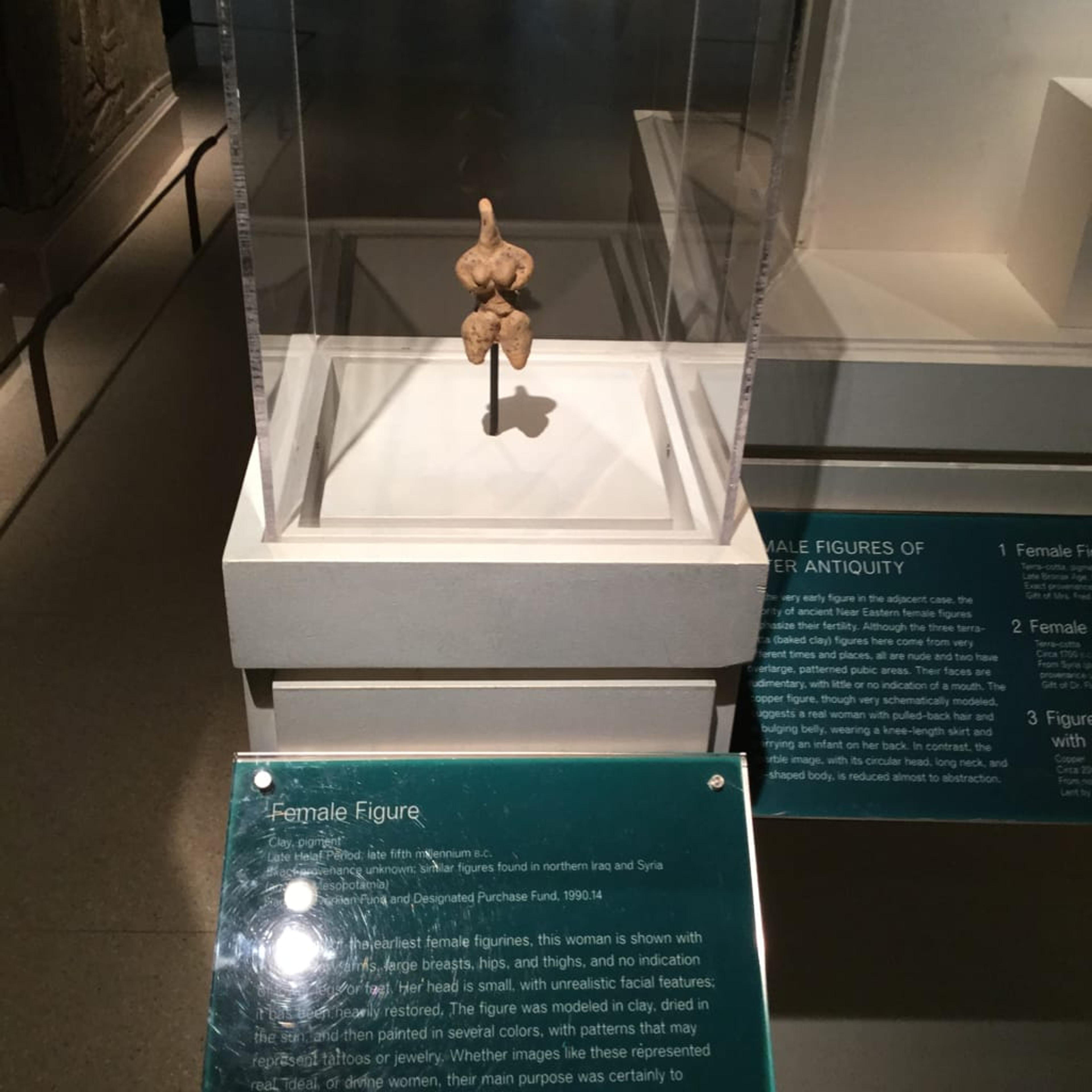 More likely, the statue would have been buried at some point and then uncovered in modern times. The best preserved ancient objects in the museum have typically been found in tombs.Interesting.
Why are the female idols depicted as abstract figures?
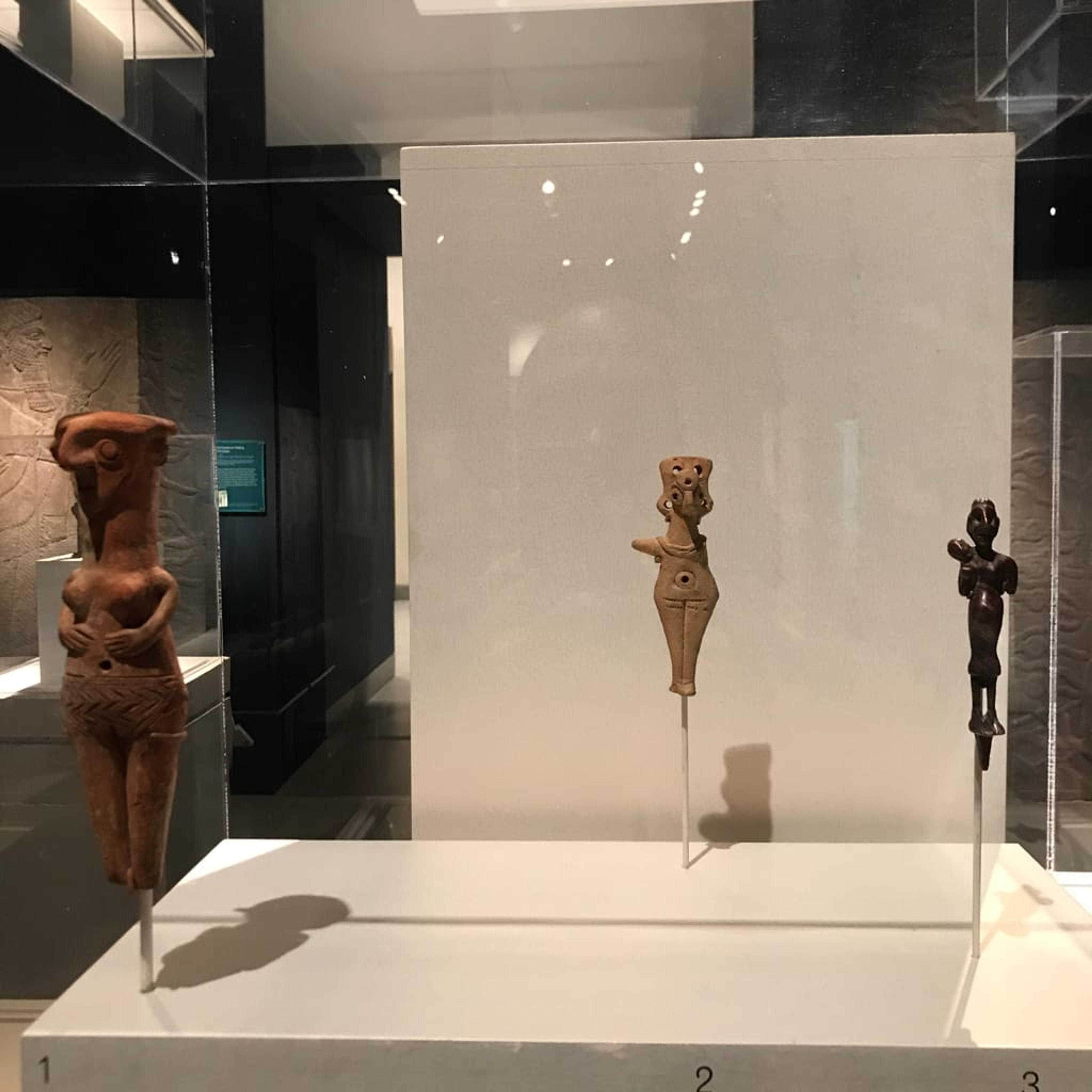 Lots of people wonder that! These small female figurines and ones like them are some of the oldest art works known in the worlds today. They predate writing so we can only speculate.One theory is that communication was more important than realism. You may notice that breasts and pubic regions are emphasized leading scholars to believe that these were symbols of fertility. As long as the viewer could tell that the figure was a fertile woman, it has done its job, it does not need to be realistic. To the same end, these were produced in great numbers and it was easier to make somewhat abstracted figures.
What is the oldest piece of art that Brooklyn Museum currently has on display?
The old work on view--and the oldest in our collection--is a female fertility figurine from the Halaf Period (about 7000 years ago) in northern Mesopotamia.Was it given to a bride during a wedding ceremony? Like an old school version of putting a ring on the finger?
We don't really know! It's thought that the figure was tied to the idea of fertility, and could be depicting a divine woman.InterestingIt looks like whoever made it didn't spend more than an hour or two sculpting it.
We find a number of this type of figure in the ancient Near East but they are so early that they predate any writing. Without people writing down what they thought or believed, there's always some degree of uncertainty.Why wouldn't they have spent more time on making it? Or am I wrong about that?Sometimes the conveying the idea was the most important aspect of a statue, especially if it's tied to religion.
Have information?
Have information about an artwork? Contact us at