Female Figure
Cypriot


1 of 3
Object Label
The majority of ancient Near Eastern female figures emphasize their fertility. Although the three terracotta (baked clay) figures here come from very different times and places, all are nude and two have overlarge, patterned pubic areas. Their faces are rudimentary, with little or no indication of a mouth. The copper figure, though very schematically modeled, suggests a real woman with pulled-back hair and a bulging belly, wearing a knee-length skirt and carrying an infant on her back. In contrast, the marble image, with its circular head, long neck, and U-shaped body, is reduced almost to abstraction.
Caption
Cypriot. Female Figure, ca. 1450–1200 B.C.E.. Terracotta, pigment, 3 9/16 x 2 3/16 x 2 1/16 in. (9.1 x 5.5 x 5.3 cm). Brooklyn Museum, Gift of Mrs. Frederic H. Betts, 22.12. (Photo: Brooklyn Museum)
Gallery
Not on view
Gallery
Not on view
Culture
Frequent Art Questions
Why are the female idols depicted as abstract figures?
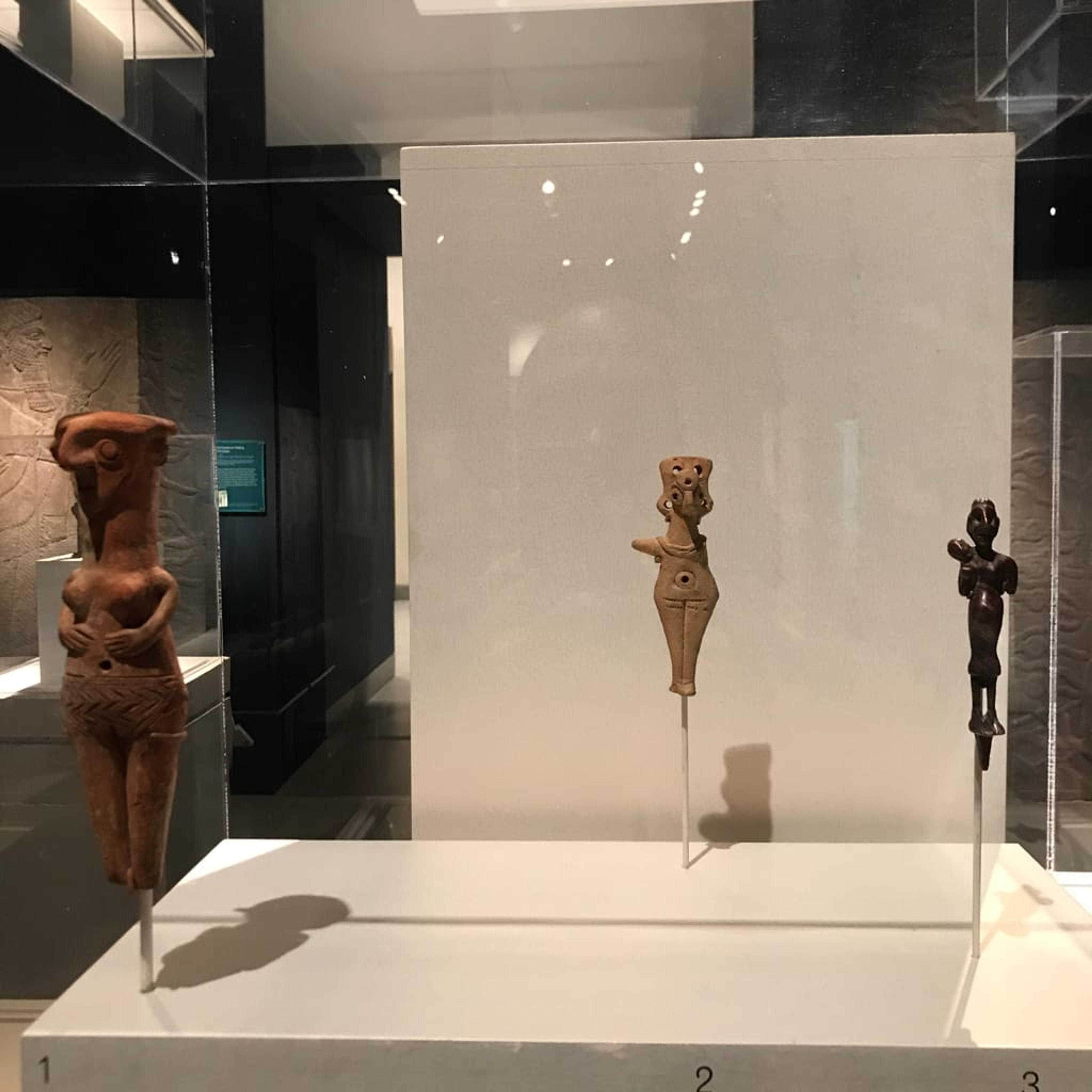 Lots of people wonder that! These small female figurines and ones like them are some of the oldest art works known in the worlds today. They predate writing so we can only speculate.One theory is that communication was more important than realism. You may notice that breasts and pubic regions are emphasized leading scholars to believe that these were symbols of fertility. As long as the viewer could tell that the figure was a fertile woman, it has done its job, it does not need to be realistic. To the same end, these were produced in great numbers and it was easier to make somewhat abstracted figures.
What was the purpose of this?
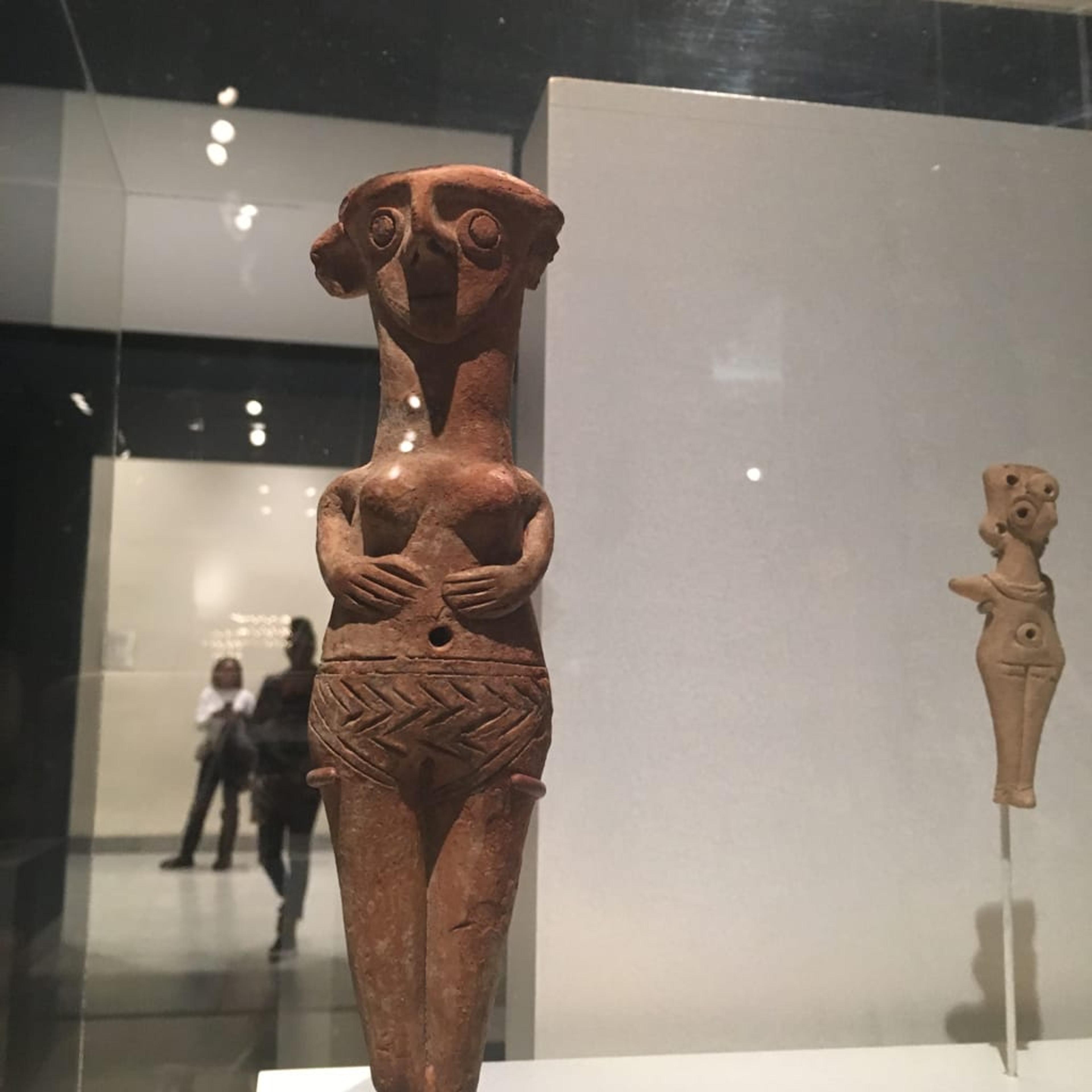 This figurine and the others in this case are understood as personifications of fertility. Note the exaggerated hips and breasts as well as the emphasis on the pubic region.These were common throughout Europe and the Near East from the Stone Age on.
Have information?
Have information about an artwork? Contact us at