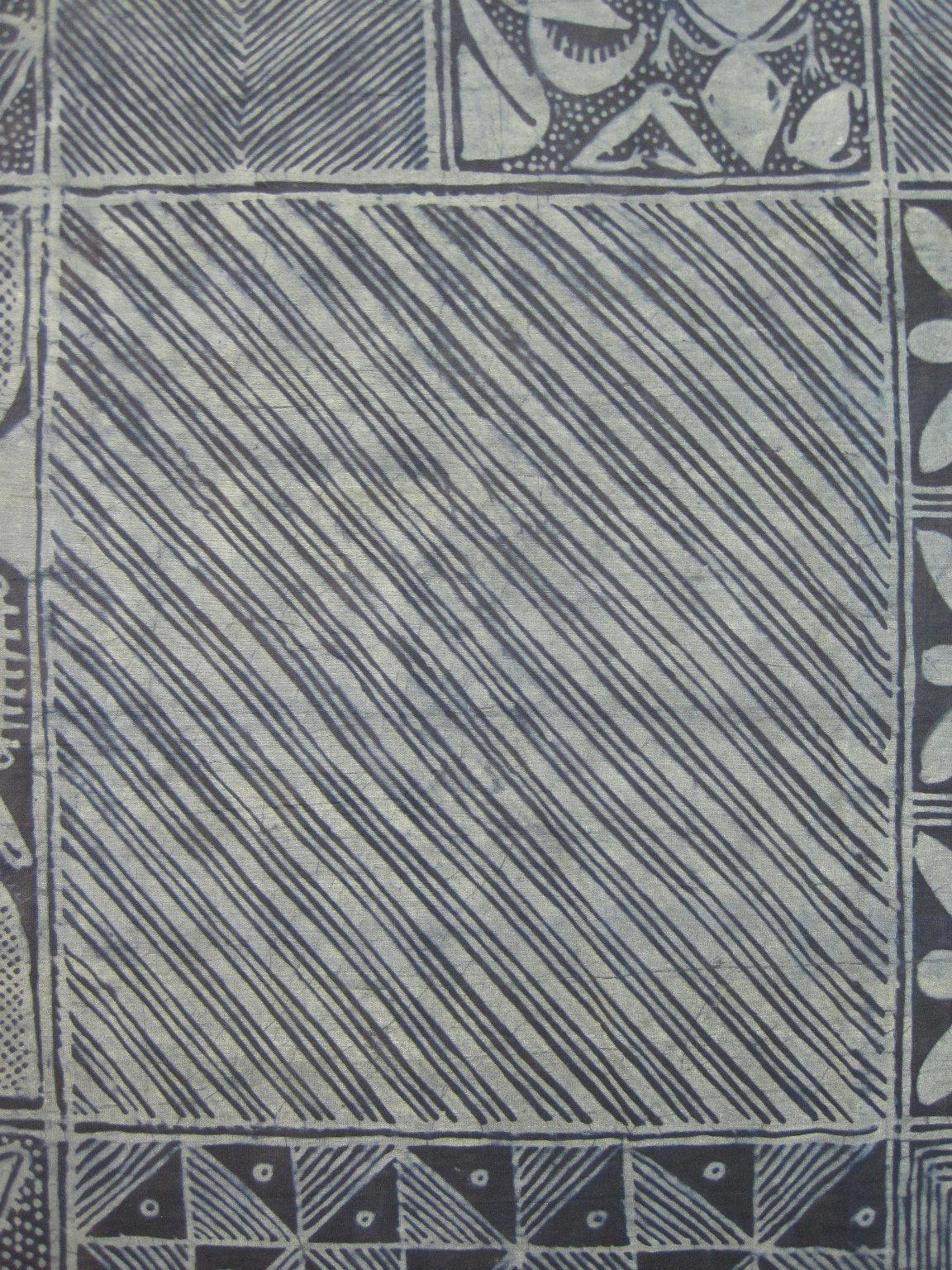
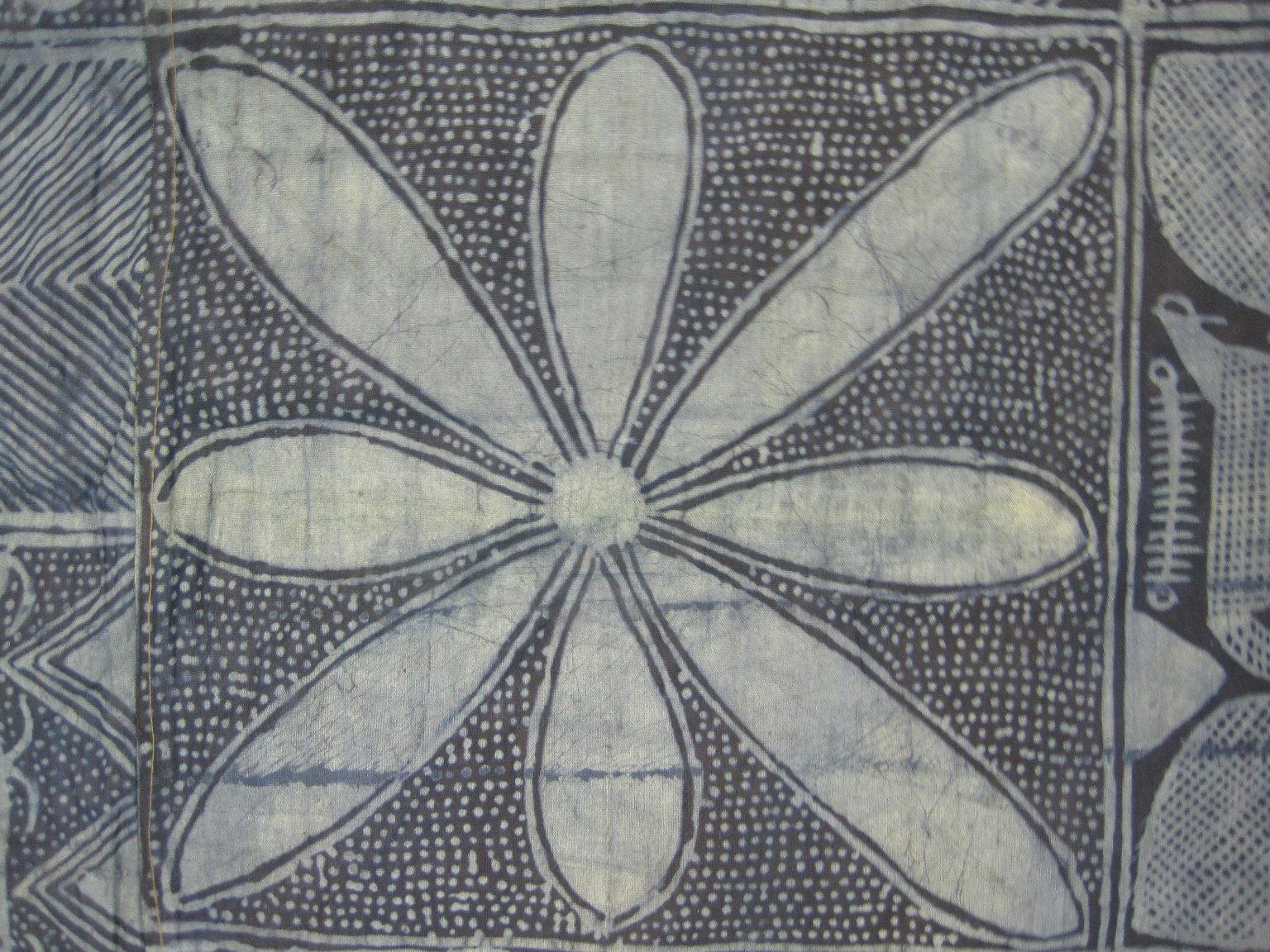
Woman's wrapper (àdìrẹ ẹlé̩kọ)






1 of 24
Object Label
Caption
Yorùbá , unknown maker's mark. Woman's wrapper (àdìrẹ ẹlé̩kọ), 20th century. Commercial cotton cloth, synthetic indigo dye, 68 5/8 × 78 × 1/16 in. (174.3 × 198.1 × 0.1 cm) mount (when installed): 68 5/8 × 79 1/2 × 3 in. (174.3 × 201.9 × 7.6 cm). Brooklyn Museum, Purchased with funds given by Frieda and Milton F. Rosenthal, 1990.132.8.
Gallery
Not on view
Collection
Gallery
Not on view
Collection
Title
Woman's wrapper (àdìrẹ ẹlé̩kọ)
Date
20th century
Geography
Place made: Abẹ́òkúta, Nigeria
Medium
Commercial cotton cloth, synthetic indigo dye
Classification
Dimensions
68 5/8 × 78 × 1/16 in. (174.3 × 198.1 × 0.1 cm) mount (when installed): 68 5/8 × 79 1/2 × 3 in. (174.3 × 201.9 × 7.6 cm)
Credit Line
Purchased with funds given by Frieda and Milton F. Rosenthal
Accession Number
1990.132.8
Have information?
Have information about an artwork? Contact us at