Figure of a Frog
ca. 3000–2675 B.C.E.
Object Label
Early Sculpture
Almost all of the small figures in this case originally were placed in temples.
We do not know the significance of many of these early objects. The lion probably embodied divine or royal power, and frogs may have provided protection during childbirth, as in later times.
The figure of a squatting little boy in this case may have been offered to a god as the expression of a wish to bear children. The destructive powers of animals such as pigs, hippos, and scorpions could apparently be neutralized and even made useful through their images, as in the hippo-headed top of a mace (war club).
The ivory lioness was part of a common board game, of which partial sets have survived. The opposing side’s pieces were carved ivory figures of crouching lions or dogs.
Almost all of the small figures in this case originally were placed in temples.
We do not know the significance of many of these early objects. The lion probably embodied divine or royal power, and frogs may have provided protection during childbirth, as in later times.
The figure of a squatting little boy in this case may have been offered to a god as the expression of a wish to bear children. The destructive powers of animals such as pigs, hippos, and scorpions could apparently be neutralized and even made useful through their images, as in the hippo-headed top of a mace (war club).
The ivory lioness was part of a common board game, of which partial sets have survived. The opposing side’s pieces were carved ivory figures of crouching lions or dogs.
Caption
Figure of a Frog, ca. 3000–2675 B.C.E.. Faience, 2 1/16 in. (5.2 cm) Base: 2 3/16 x 1 1/2 in. (5.5 x 3.8 cm). Anonymous loan, L58.2.3.
Title
Figure of a Frog
Date
ca. 3000–2675 B.C.E.
Dynasty
Dynasty 1 to Dynasty 2
Period
Early Dynastic Period
Geography
Possible place collected: Abydos, Egypt
Medium
Faience
Classification
Dimensions
2 1/16 in. (5.2 cm) Base: 2 3/16 x 1 1/2 in. (5.5 x 3.8 cm)
Credit Line
Anonymous loan
Accession Number
L58.2.3
Frequent Art Questions
Why did Egyptians make figures of frogs?
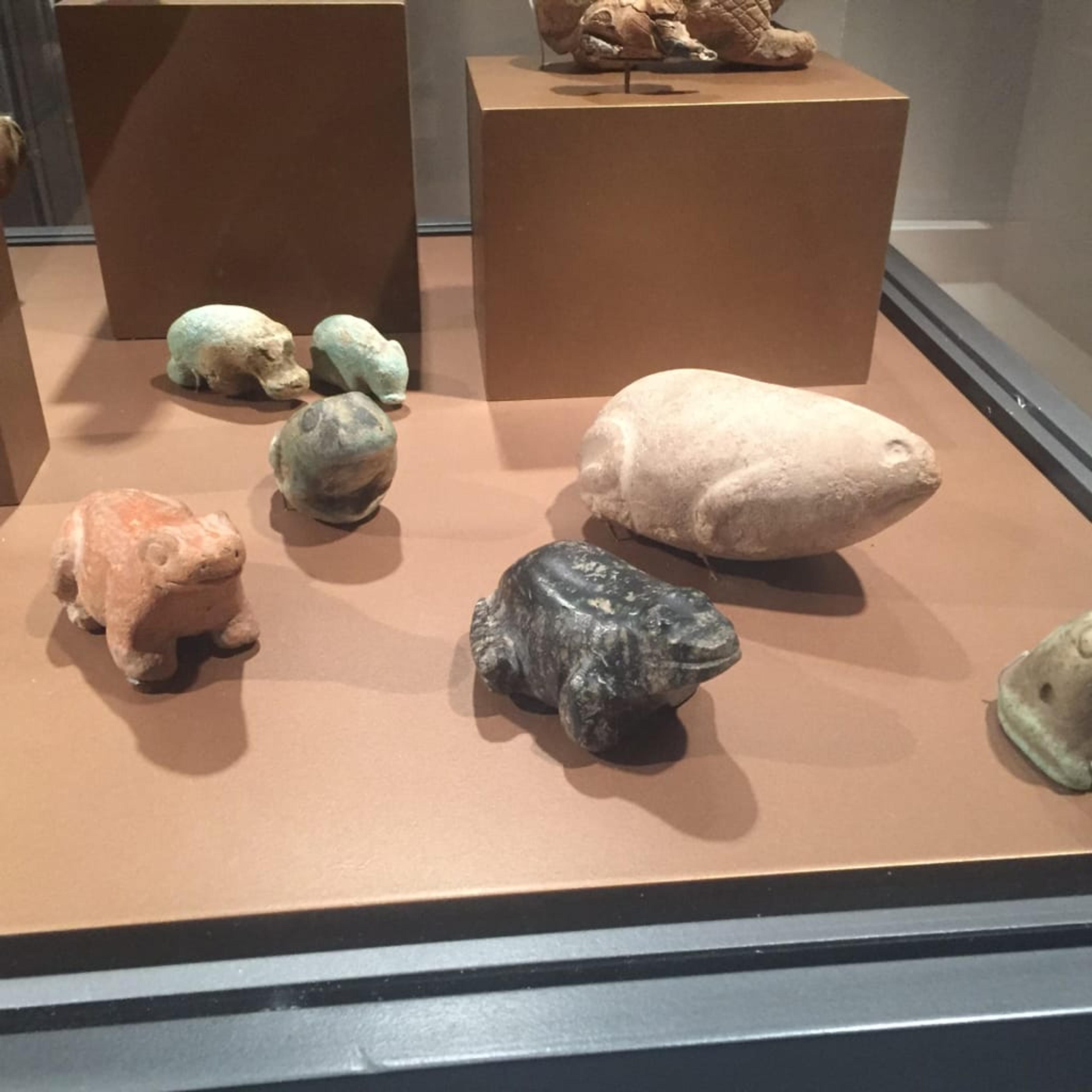 Frogs inhabited marshlands and in later eras frogs were associated with fertility and protected in childbirth. They have have served a similar purpose in the far past as well.These frogs are from prehistoric Ancient Egypt, and predate writing and much of what we know about Egyptian spirituality and iconography. As such we really have to make educated guesses.
Can you tell me anything more about the significance of the frog to the Egyptians?
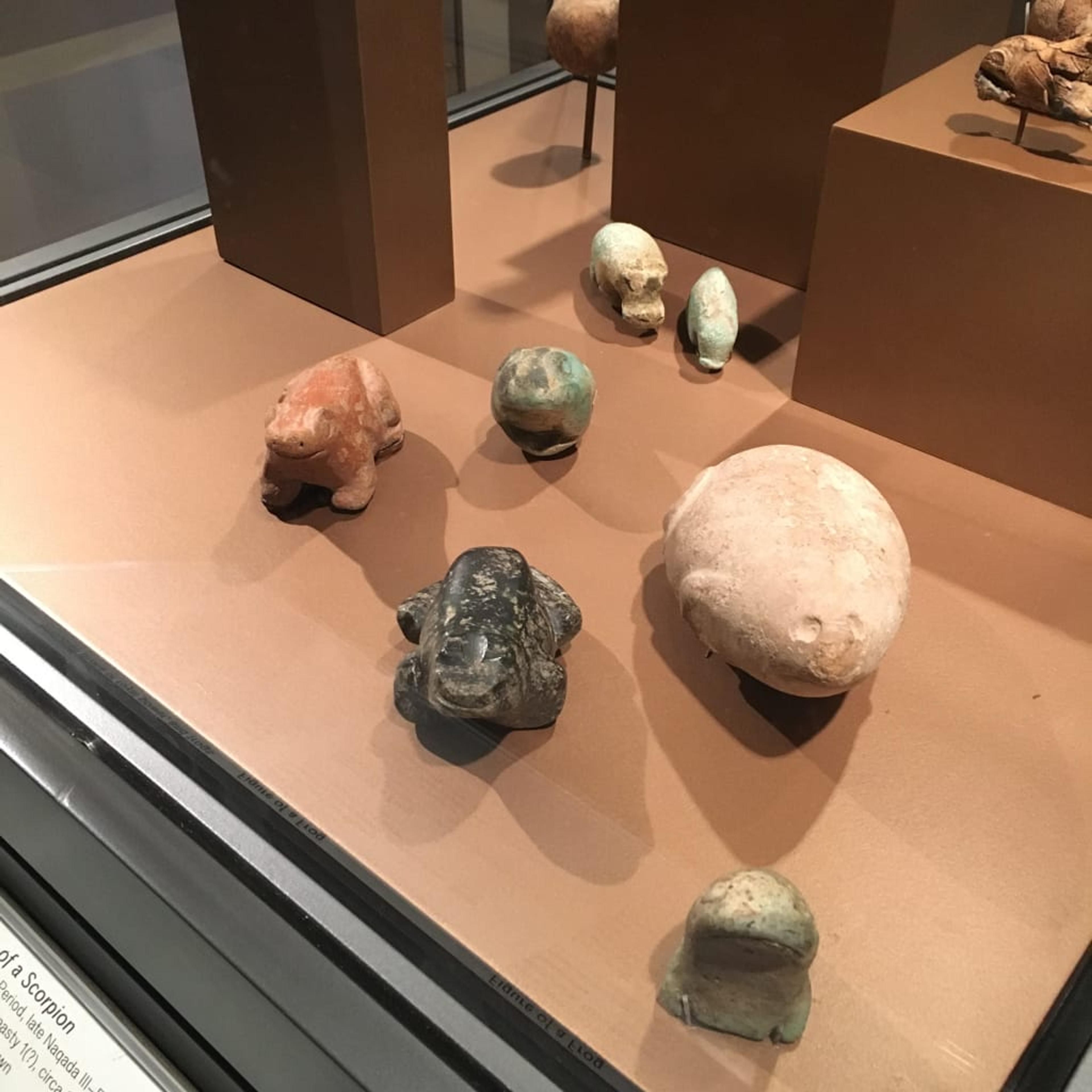 Frogs would appear after the flooding of the Nile, so they became associated with the life-bringing quality of water, and it's role in fertilizing the land. The frog was also one of the hieroglyphic symbols of the goddess Heqet, who was associated with fertility, childbirth, the flooding of the Nile and resurrection.
Have information?
Have information about an artwork? Contact us at