Helmet Mask (Igbudu)
Yorùbá
1 of 6
Object Label
Becoming Controlled
Because masks take on nonhuman, otherworldly characteristics, they are particularly effective as mediators of power. Despite their capacity for freedom and play, masks can also express social limits, serving as agents of calm in moments of tension or anxiety, or as frightening policers of the community on behalf of those in power.
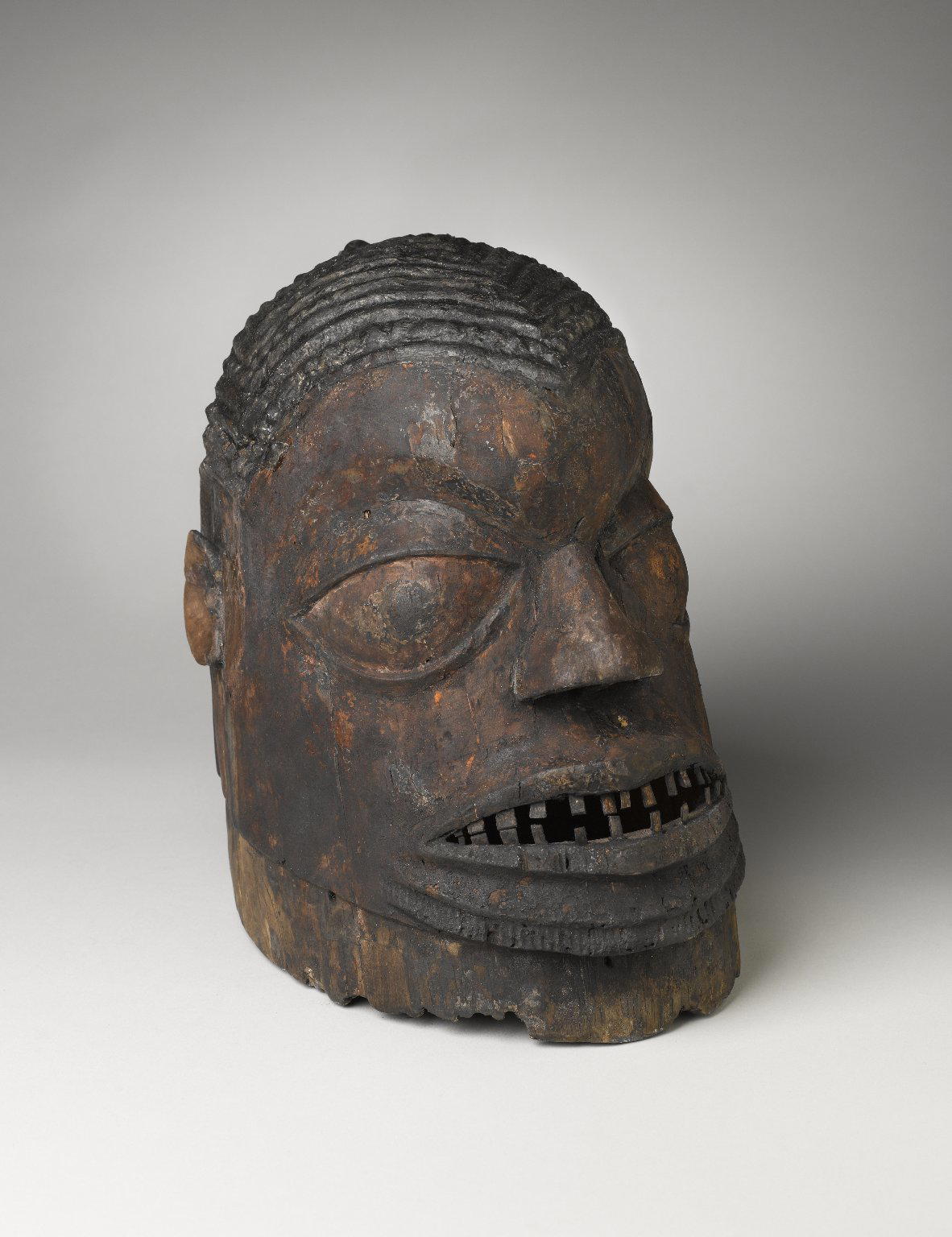
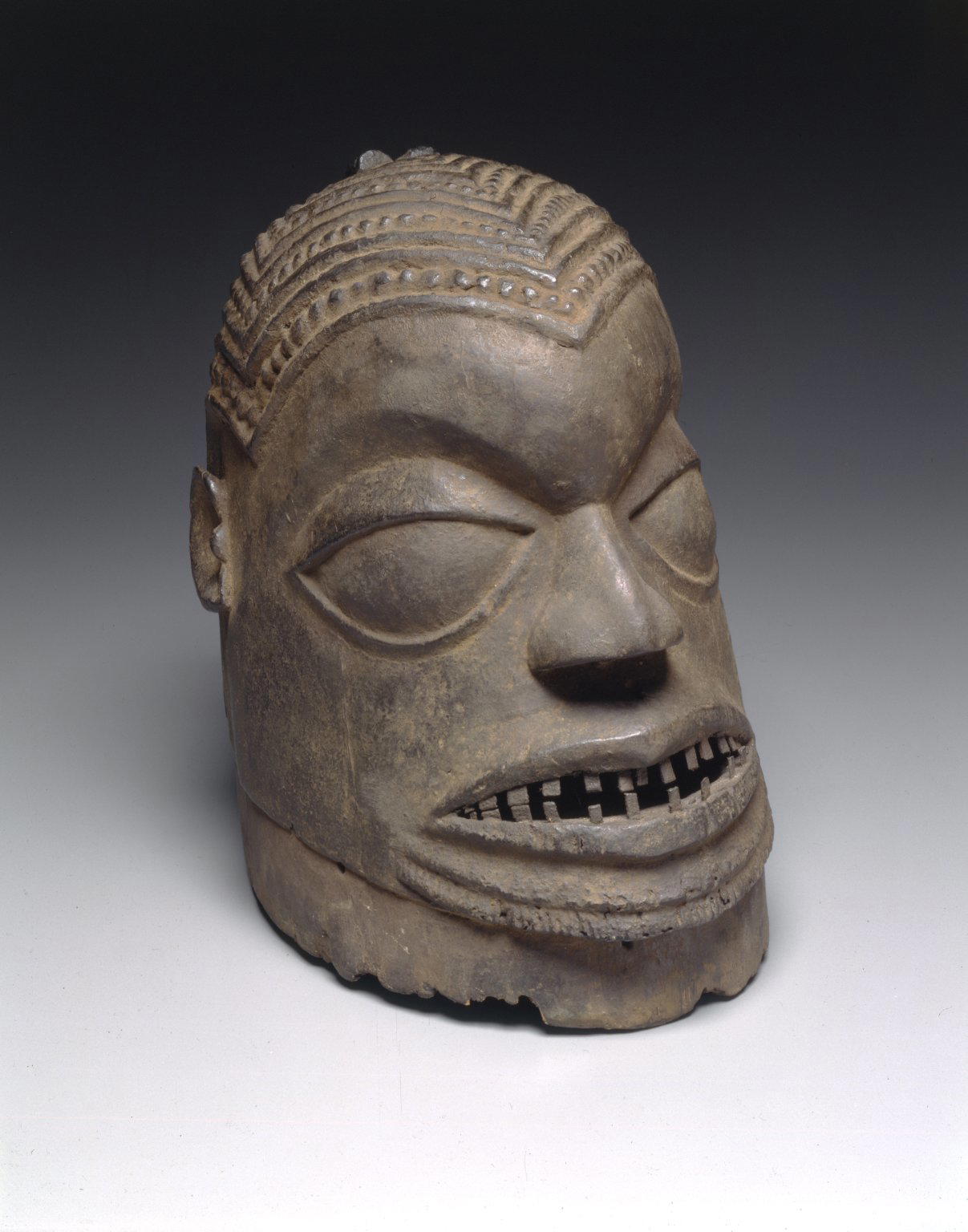
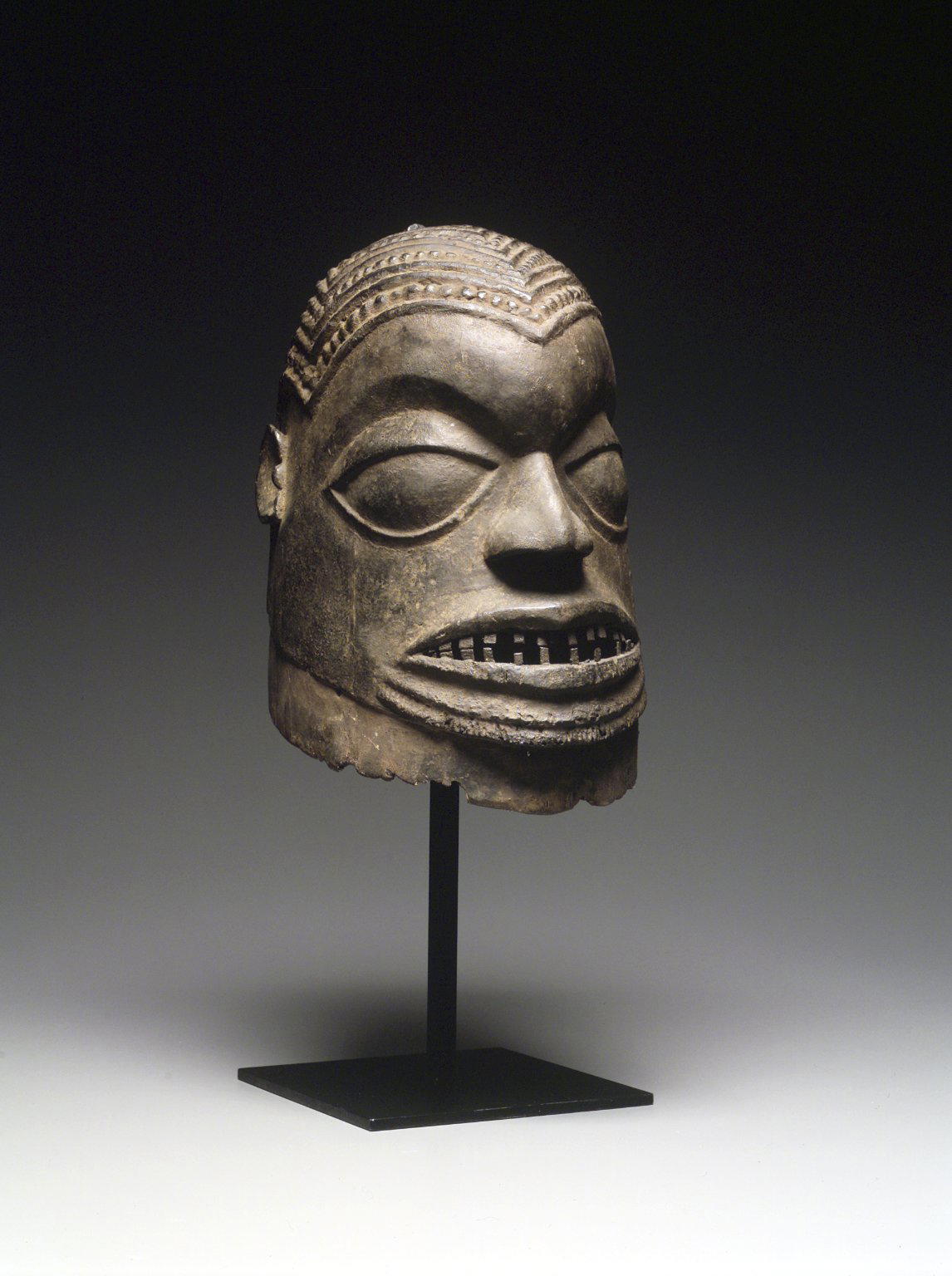
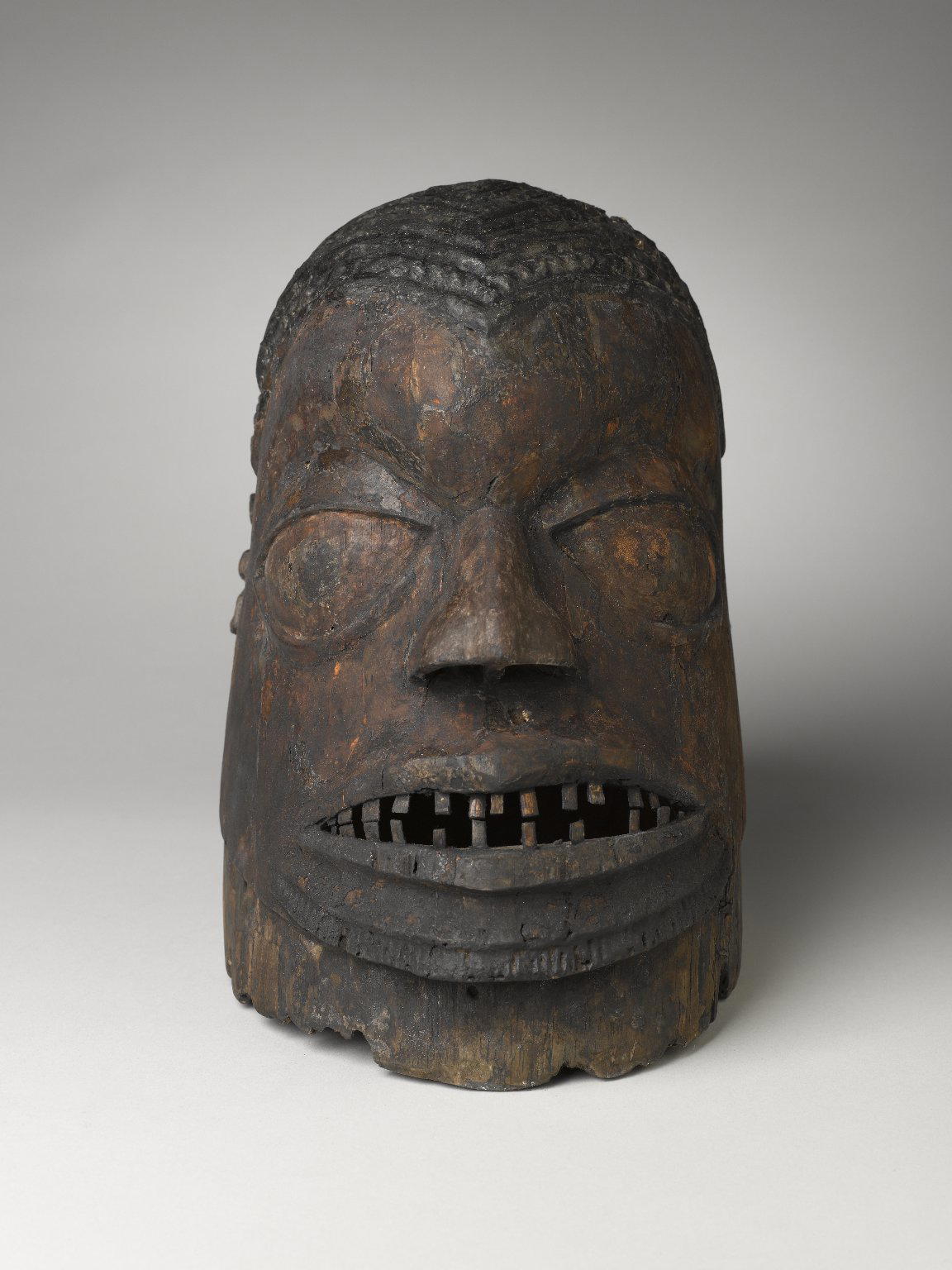
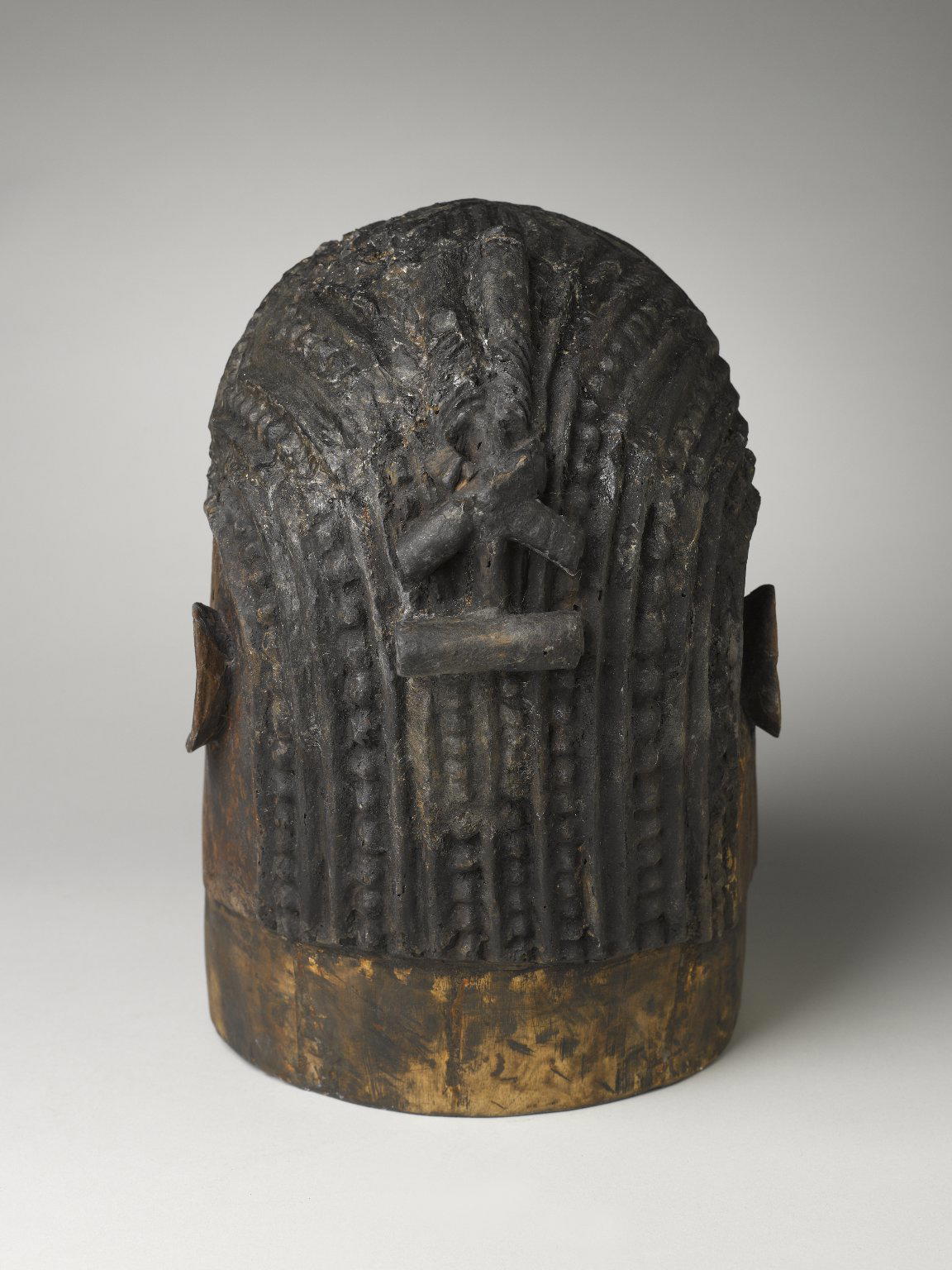
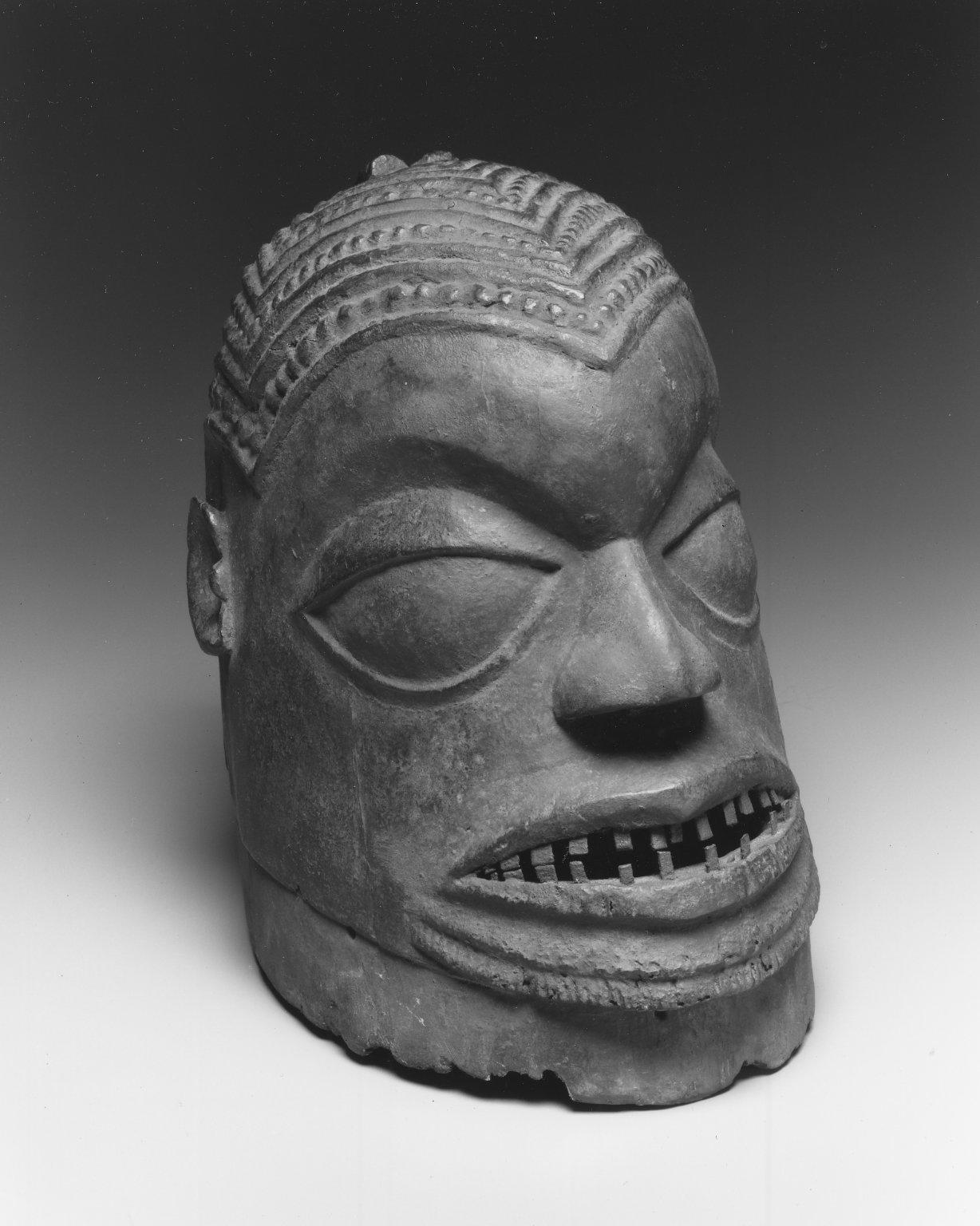
The Igbudu mask represents the evil forces that can threaten a community. One of the only examples of Yoruba sculptural art that is deliberately unattractive, it features a sharp brow, protruding eyes, and wide mouth—all designed to frighten.
The commanding Loma mask, Okobuzogui, is used by the Poro society, a secret men’s association that serves, among other roles, to initiate boys into adulthood. Poro mythology holds that Okobuzogui “swallows” the boys in his menacing jaws as they leave the village for the initiation camp; he also accompanies them upon their return as young men.
Tugunga headdresses are worn only by those who belong to a secret Bamum society of warriors, known as the Nsoro, who perform at the funerals of important members of the community. The masks impress with their size and grandeur and elicit fear and apprehension since they represent the society charged with adjudicating disputes and protecting the king.
Because masks take on nonhuman, otherworldly characteristics, they are particularly effective as mediators of power. Despite their capacity for freedom and play, masks can also express social limits, serving as agents of calm in moments of tension or anxiety, or as frightening policers of the community on behalf of those in power.
The Igbudu mask represents the evil forces that can threaten a community. One of the only examples of Yoruba sculptural art that is deliberately unattractive, it features a sharp brow, protruding eyes, and wide mouth—all designed to frighten.
The commanding Loma mask, Okobuzogui, is used by the Poro society, a secret men’s association that serves, among other roles, to initiate boys into adulthood. Poro mythology holds that Okobuzogui “swallows” the boys in his menacing jaws as they leave the village for the initiation camp; he also accompanies them upon their return as young men.
Tugunga headdresses are worn only by those who belong to a secret Bamum society of warriors, known as the Nsoro, who perform at the funerals of important members of the community. The masks impress with their size and grandeur and elicit fear and apprehension since they represent the society charged with adjudicating disputes and protecting the king.
Caption
Yorùbá. Helmet Mask (Igbudu), 19th century. Wood, metal, pigment, 11 1/4 x 9 3/4 x 13 1/2 in. Brooklyn Museum, Gift of Drs. John I. and Nicole Dintenfass, 1992.135.2. (Photo: Brooklyn Museum)
Gallery
Not on view
Collection
Gallery
Not on view
Collection
Culture
Title
Helmet Mask (Igbudu)
Date
19th century
Geography
Place made: Owo, Nigeria
Medium
Wood, metal, pigment
Classification
Dimensions
11 1/4 x 9 3/4 x 13 1/2 in.
Credit Line
Gift of Drs. John I. and Nicole Dintenfass
Accession Number
1992.135.2
Have information?
Have information about an artwork? Contact us at