Glass
16th or 17th century (probably)
1 of 2
Object Label
VESSELS AND TRAYS FOR SERVING WATER
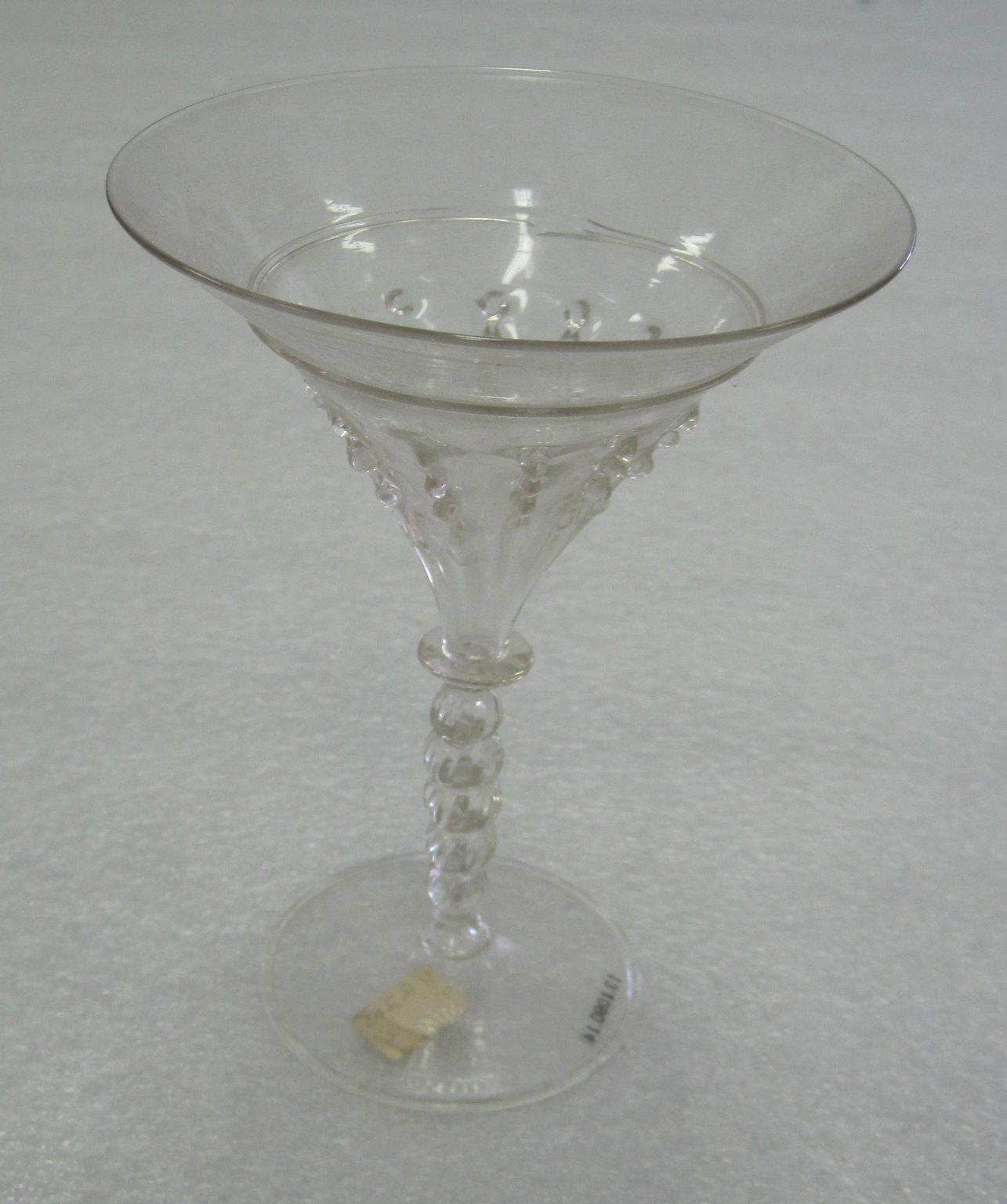
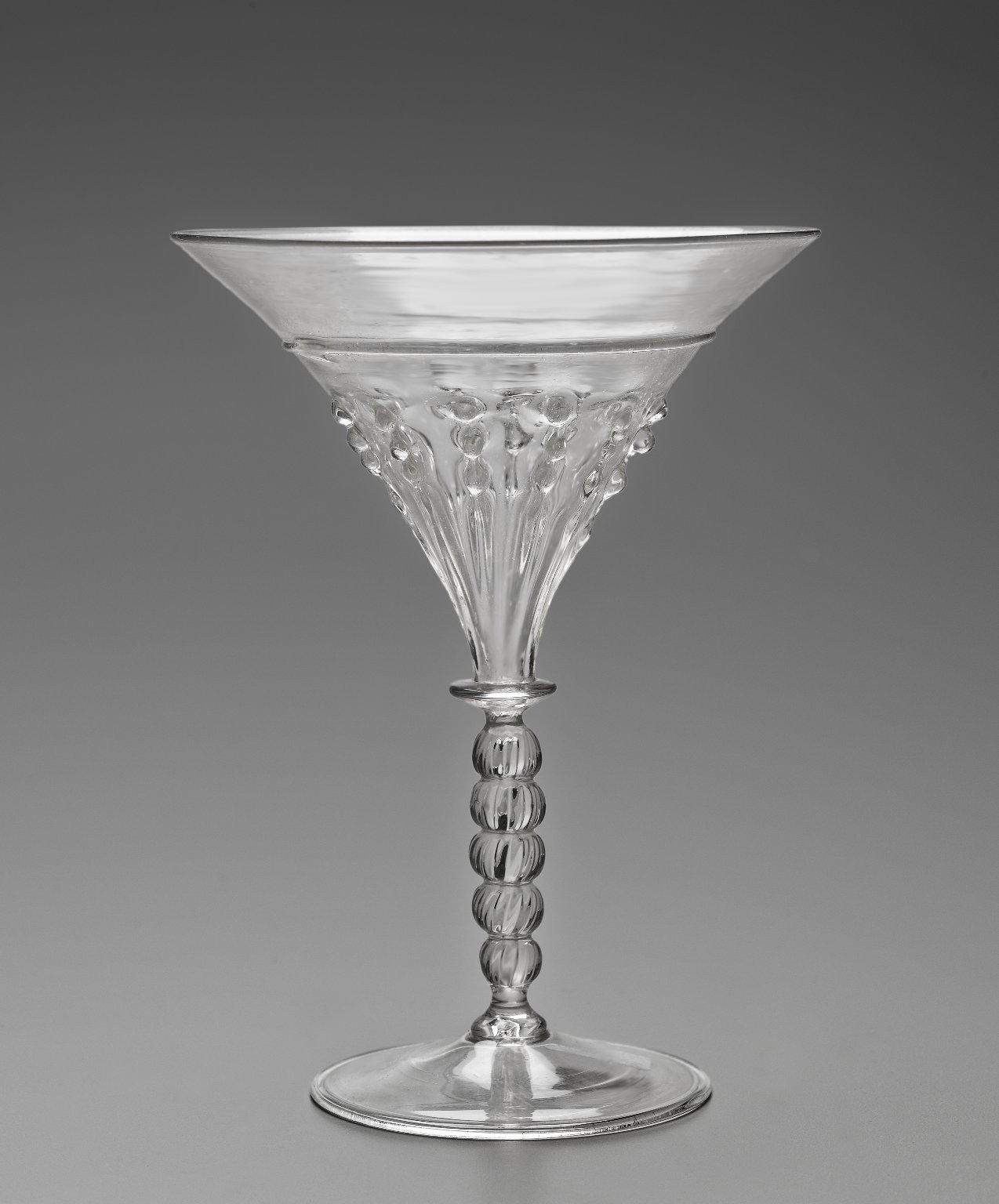
In the rarified cuadra de estrado, even the consumption of water was an elaborate ceremony. Guests were served fresh water, accompanied by sweet biscuits for dipping, on large serving trays or round silver salvers. Imported glasses from Venice and La Granja (outside Madrid) are often listed in colonial inventories along with aromatic clay beakers from Tonalá, Mexico, known as búcaros de Indias, which were particularly prized and widely collected. Because of their porous clay, these vessels slightly chilled the water and also imparted a particular earthy fragrance that was much appreciated. The fascination with búcaros de Indias was so extreme that ladies ate little pieces of them to savor the taste.
In the rarified cuadra de estrado, even the consumption of water was an elaborate ceremony. Guests were served fresh water, accompanied by sweet biscuits for dipping, on large serving trays or round silver salvers. Imported glasses from Venice and La Granja (outside Madrid) are often listed in colonial inventories along with aromatic clay beakers from Tonalá, Mexico, known as búcaros de Indias, which were particularly prized and widely collected. Because of their porous clay, these vessels slightly chilled the water and also imparted a particular earthy fragrance that was much appreciated. The fascination with búcaros de Indias was so extreme that ladies ate little pieces of them to savor the taste.
Caption
Glass, 16th or 17th century (probably). Glass, 6 5/16 x 4 1/2 in. (16.1 x 11.4 cm). Brooklyn Museum, Museum Special Fund, 13.1080.14. (Photo: Brooklyn Museum)
Gallery
Not on view
Collection
Gallery
Not on view
Collection
Title
Glass
Date
16th or 17th century (probably)
Medium
Glass
Classification
Dimensions
6 5/16 x 4 1/2 in. (16.1 x 11.4 cm)
Credit Line
Museum Special Fund
Accession Number
13.1080.14
Have information?
Have information about an artwork? Contact us at