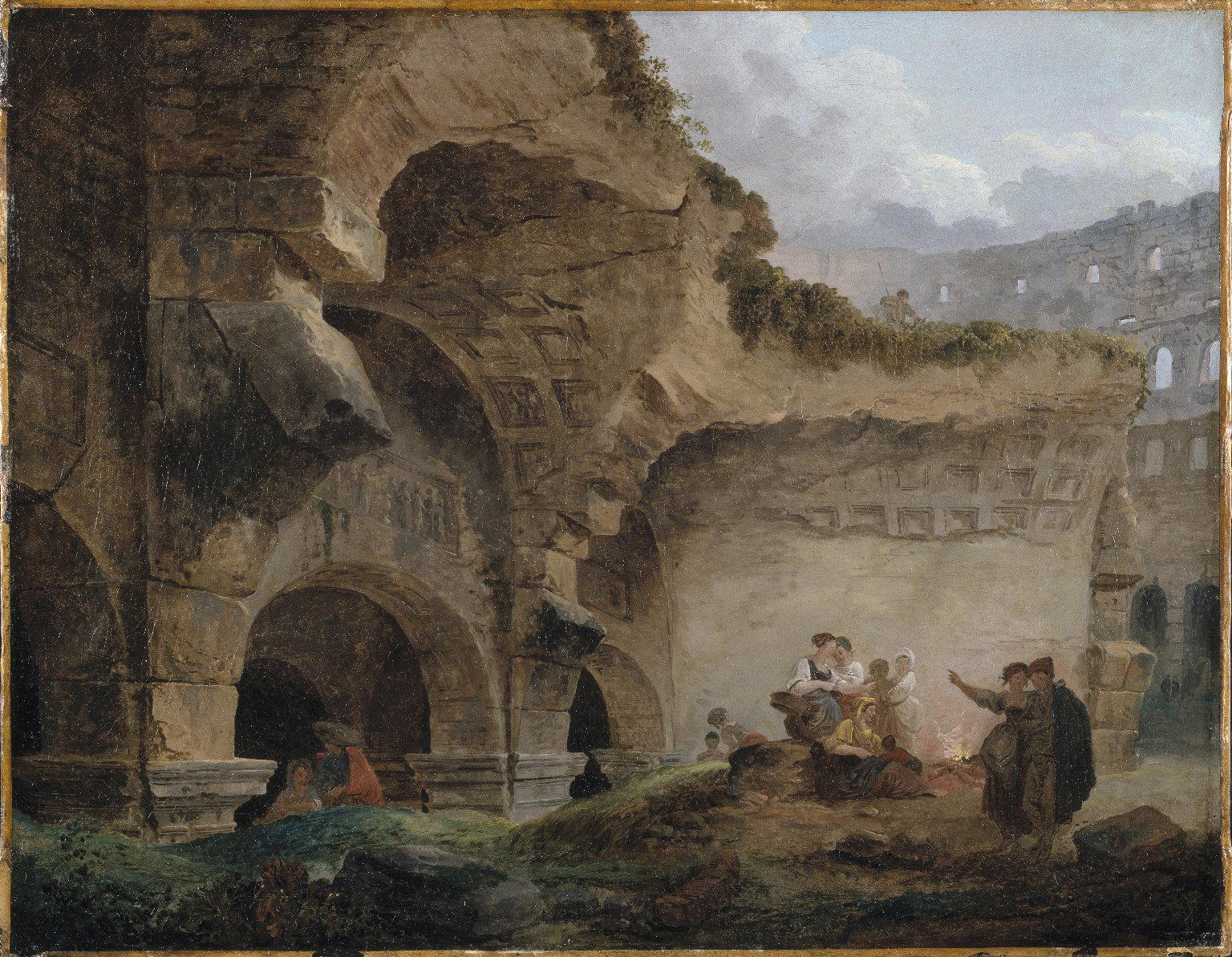
Washerwomen in the Ruins of the Colosseum
Hubert Robert
Brooklyn Museum photograph
Object Label
In this painting, Hubert Robert combined real and imagined architecture: the recognizable pierced walls of Rome’s Colosseum looming over the coffered arches of another decaying structure. A group of washerwomen and other figures gather around a fire, providing a picturesque contrast between ordinary lives of the present day and the lost grandeur of antiquity.
In 1754 Robert had traveled to Italy to further his artistic training and soon found himself captivated by the crumbling ruins of ancient monuments. During his eleven-year stay in Italy, Robert assembled a vast “catalogue” of drawings of such sites, which he would later include in historically evocative fantasy scenes that earned him both patronage and acclaim.
In 1754 Robert had traveled to Italy to further his artistic training and soon found himself captivated by the crumbling ruins of ancient monuments. During his eleven-year stay in Italy, Robert assembled a vast “catalogue” of drawings of such sites, which he would later include in historically evocative fantasy scenes that earned him both patronage and acclaim.
Caption
Hubert Robert (French, 1733–1808). Washerwomen in the Ruins of the Colosseum, ca. 1760s. Oil on canvas, 17 3/4 × 22 3/4 in. (45.1 × 57.8 cm) frame: 23 1/2 × 28 1/2 × 3 1/4 in. (59.7 × 72.4 × 8.3 cm). Brooklyn Museum, Anonymous gift, 1994.70. (Photo: Brooklyn Museum)
Gallery
Not on view
Gallery
Not on view
Artist
Frequent Art Questions
Hubert Robert, an 18th-century French artist, traveled to Italy and created drawings and paintings of the different ancient ruins/monuments that he saw.
Tell me what you've got!
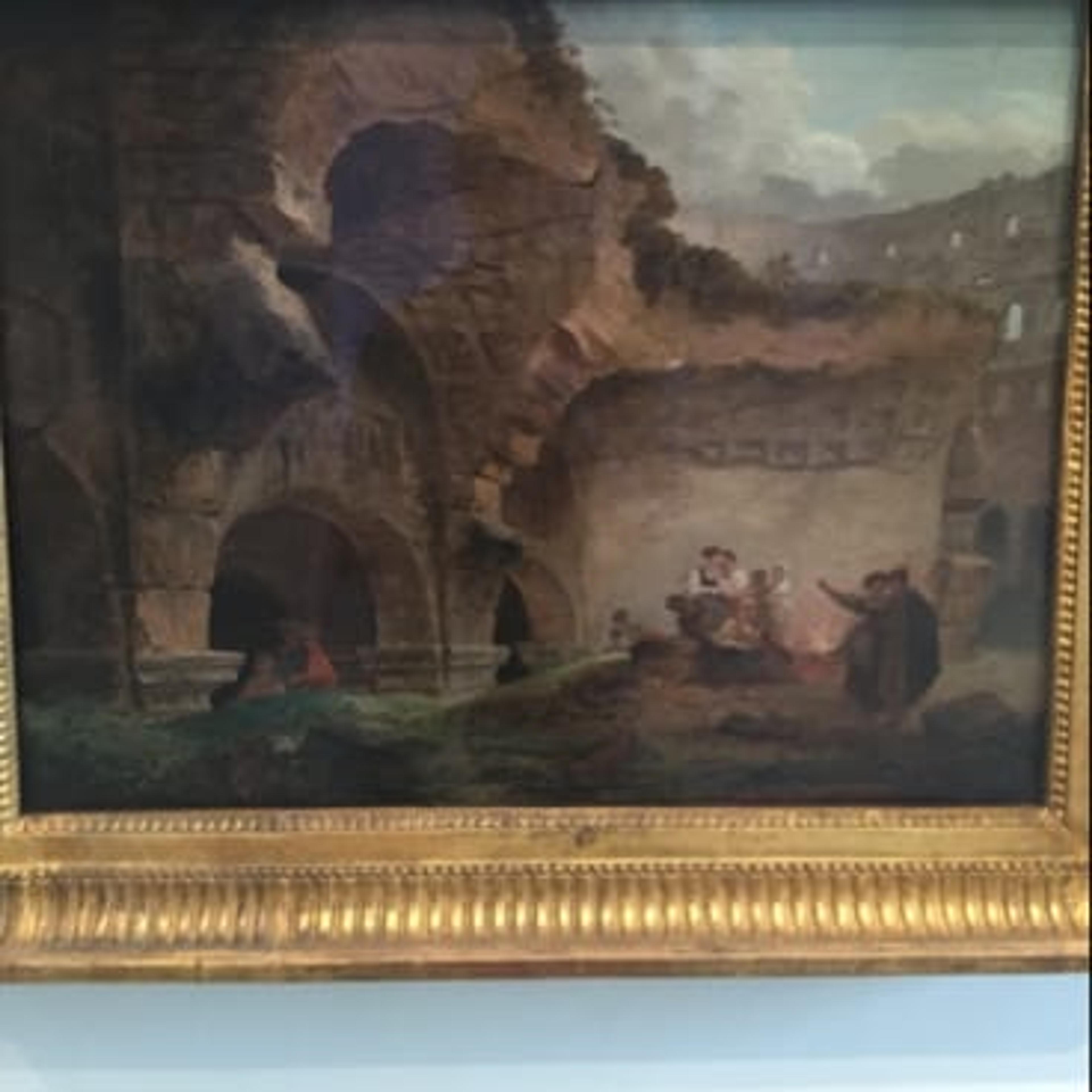 Well, this work is by French artist Hubert Robert who traveled throughout Italy and created drawings of what he saw.He's most well known for his depictions of ruins and lived and worked in Italy for 11 years. Earning himself the nickname "Robert of the Ruins" by his contemporaries. Robert branched off into garden design and furnishings, and also created decorative ensembles of paintings for royalty and the wealthy.Furnishings!? Guess he had to eat.Haha, though at the time being an "academic" artist had a fair amount of security through commissions oftentimes, artists at the time (and today) often branch out. Also, painting furniture was not necessarily regarded as lowly profession. In the Renaissance, many great artists painted marriage chests. Finely painted Venetian furniture was highly prized and very expensive.This info is great, thank you!You're most welcome, feel free to ask more questions and send along images as you see more treasures.
Tell me more.
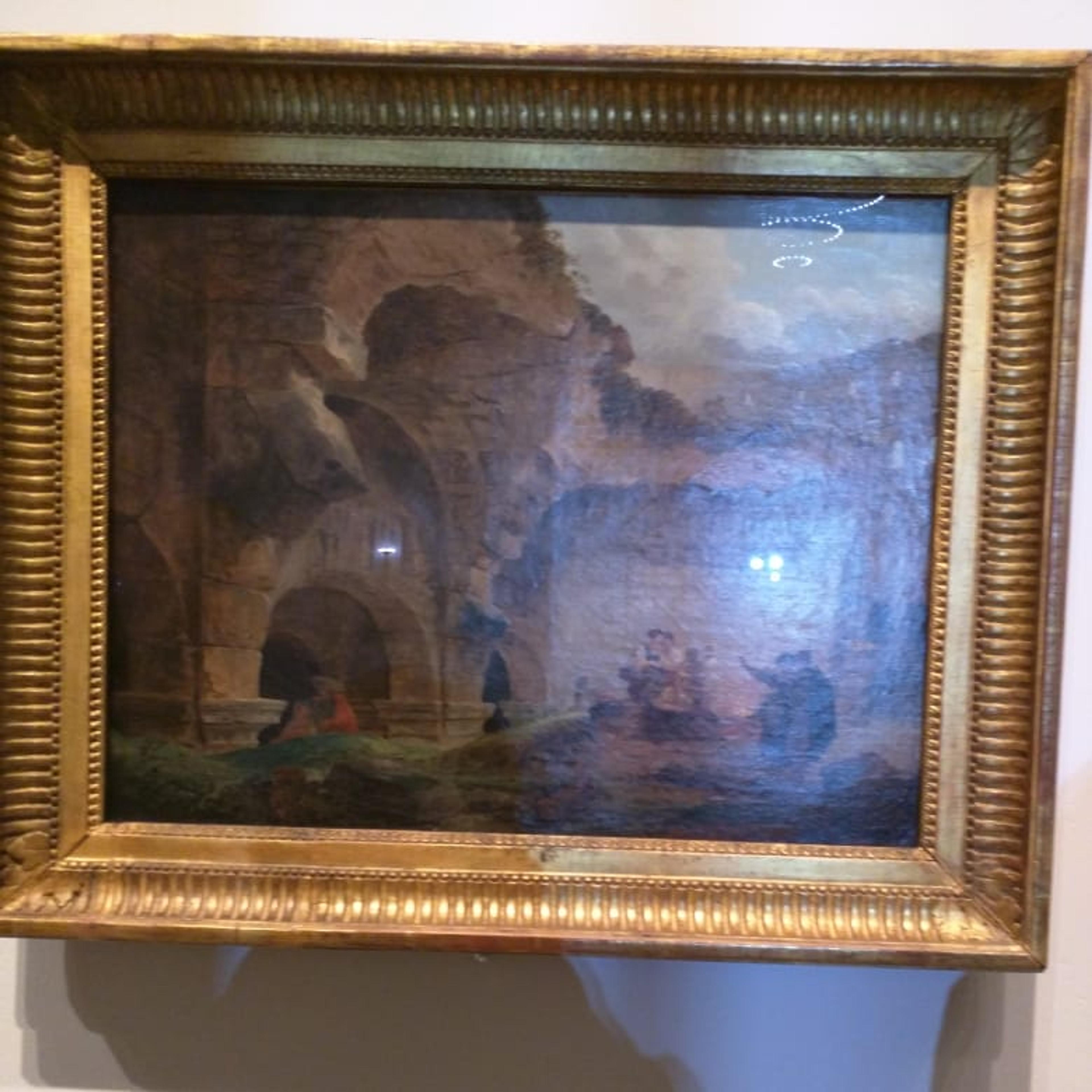 This is such a great little painting! Robert produced artworks of Italian ruins to sell to tourists traveling to Rome on the "Grand Tour".English and French visitors were fascinated with Italian peasants, who are romanticized here. Robert probably manipulated the scale of the ruins to make them even more impressive.What do you like about this work?Pretty amazing to think about how in such a significant time in history, ordinary people were also going about their lives.That's so true. History tends to focus on great figures, but I am fascinated by the lives of ordinary people.
Have information?
Have information about an artwork? Contact us at