Embarkation of the Pilgrims

Brooklyn Museum photograph
Object Label
Caption
Robert Walter Weir (American, 1803–1889). Embarkation of the Pilgrims, 1857. Oil on canvas, 48 1/8 × 72 1/4 in., 133 lb. (122.2 × 183.5 cm, 60.33kg) frame: 60 1/2 x 84 1/2 x 6 3/8 in. (153.7 x 214.6 x 16.2 cm). Brooklyn Museum, A. Augustus Healy Fund and Healy Purchase Fund B, 75.188. (Photo: Brooklyn Museum)
Gallery
Not on view
Collection
Gallery
Not on view
Collection
Artist
Title
Embarkation of the Pilgrims
Date
1857
Medium
Oil on canvas
Classification
Dimensions
48 1/8 × 72 1/4 in., 133 lb. (122.2 × 183.5 cm, 60.33kg) frame: 60 1/2 x 84 1/2 x 6 3/8 in. (153.7 x 214.6 x 16.2 cm)
Signatures
Signed lower left: "Rob.t W. Weir. / 1857."
Credit Line
A. Augustus Healy Fund and Healy Purchase Fund B
Accession Number
75.188
Frequent Art Questions
Is this the same painting that you can also find in the U.S. Capitol? It looks the same.
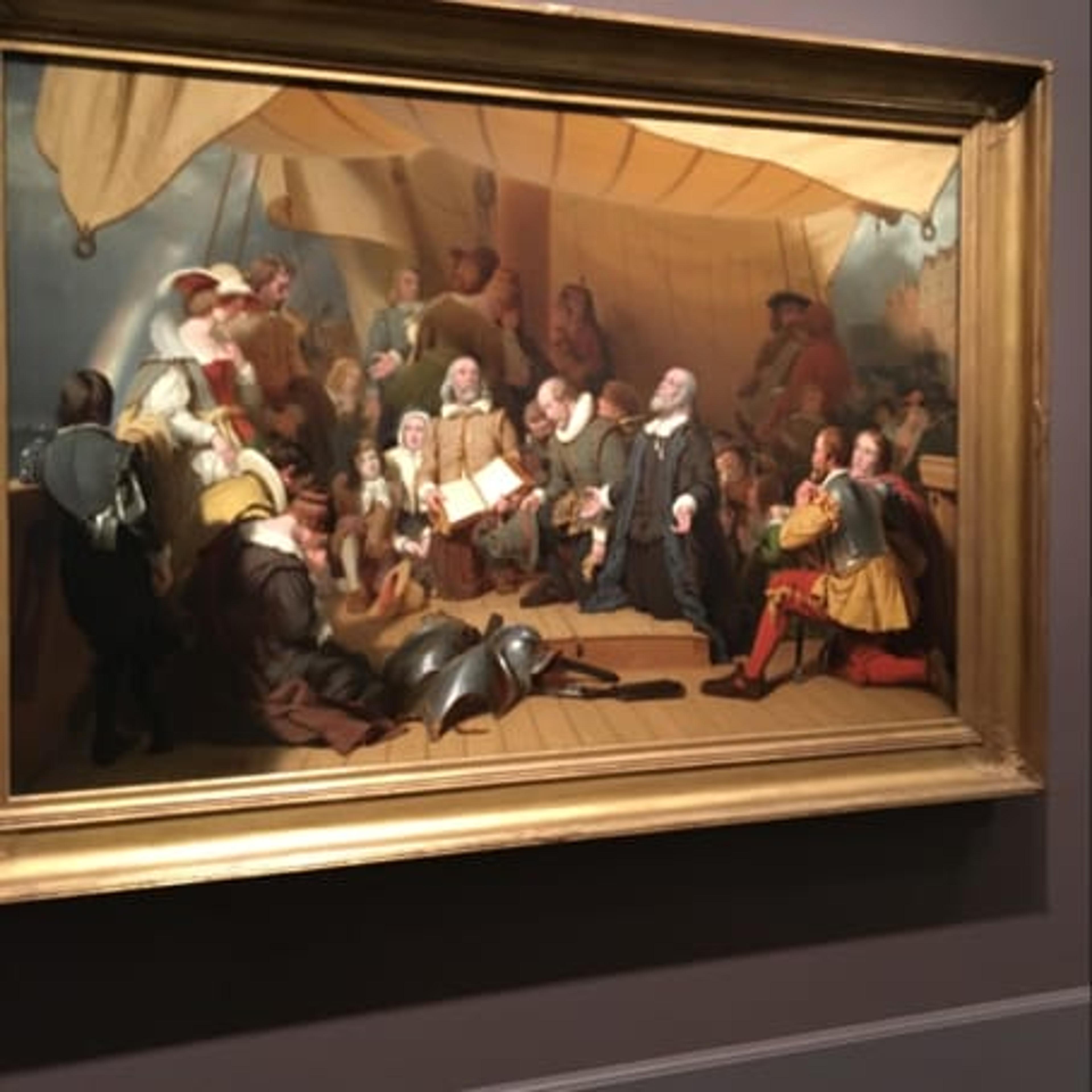 You're right! :)This reduced version of Weir's grand "Embarkation of the Pilgrims," painted in 1843 as part of a government commission for the decoration of the Capitol Rotunda in D.C.
Could you tell me more about this piece?
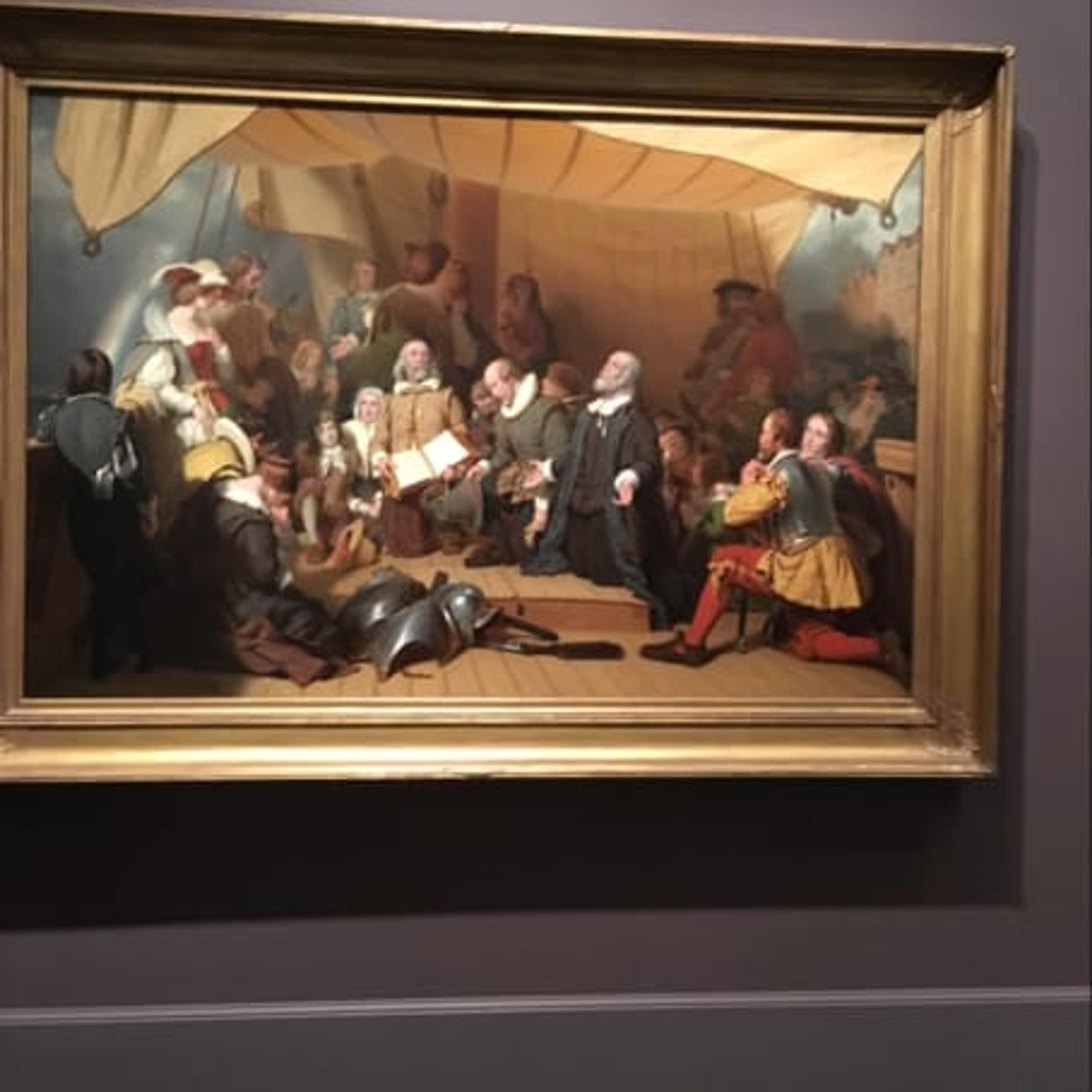 Sure! "Embarkation of the Pilgrims" by Robert Walter Weir depicts the Pilgrims on the deck of the ship Speedwell in 1620. The figures at the center of the composition are William Brewster, holding the Bible; Governor Carver, kneeling; and pastor John Robinson, with extended arms. The departure (or embarkation) of the Speedwell was a big affair, although the ship had to turn back soon after and was eventually abandoned in favor of the larger Mayflower.
Who are they?
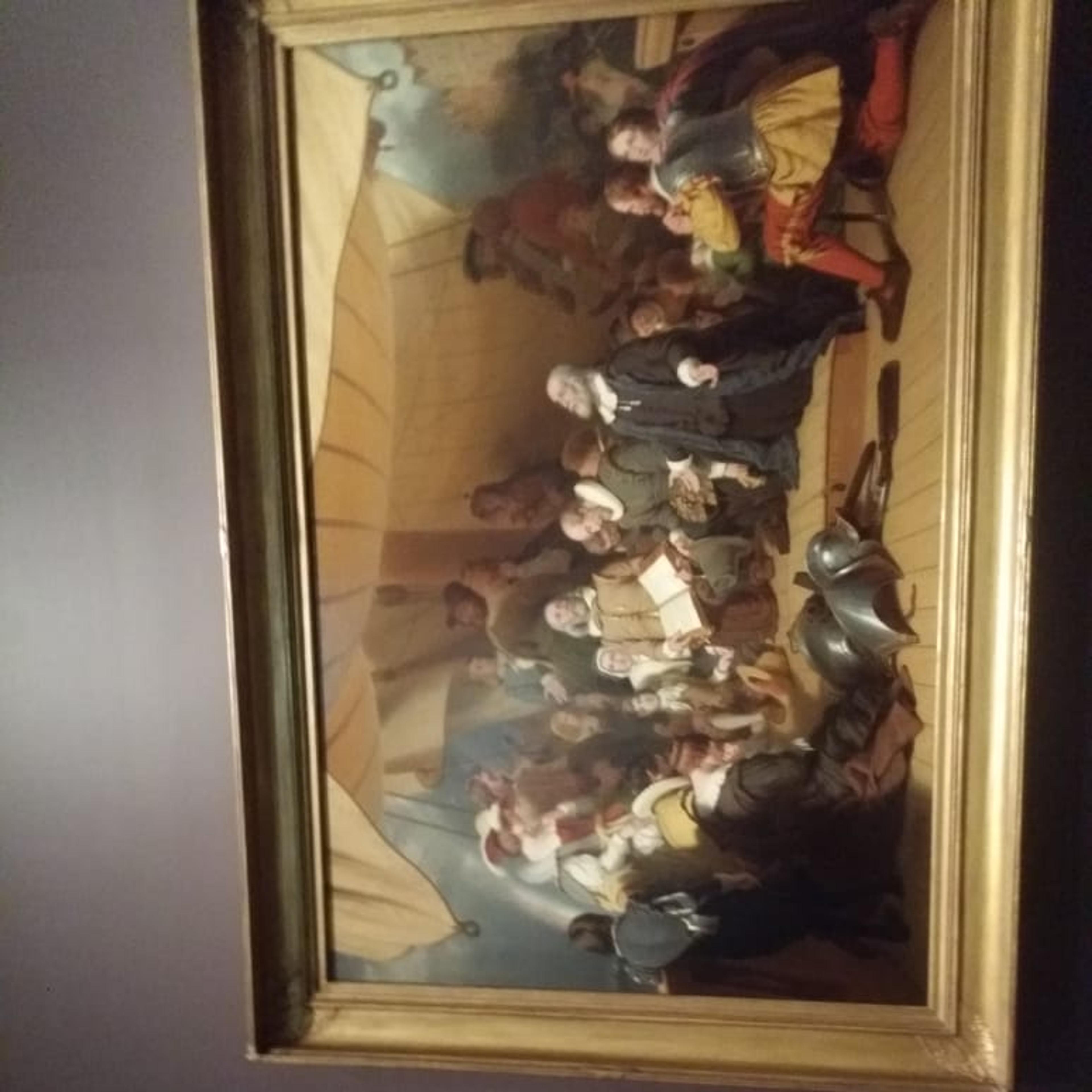 "The Embarkation of the Pilgrims" shows a group of English travelers about to cross the Atlantic in 1620. The figures at the center of the composition are William Brewster, holding the Bible; Governor Carver, kneeling; and pastor John Robinson, praying in a black outfit. Meanwhile, the rest of the painting offers clues to who they are and what they are doing.Notice the very European buildings on the right signifying the place they are leaving behind. Also notice the rainbow on the left, a more important symbol of the hope for peace and prosperity they hope to find in the new land.
Why is there a rainbow?
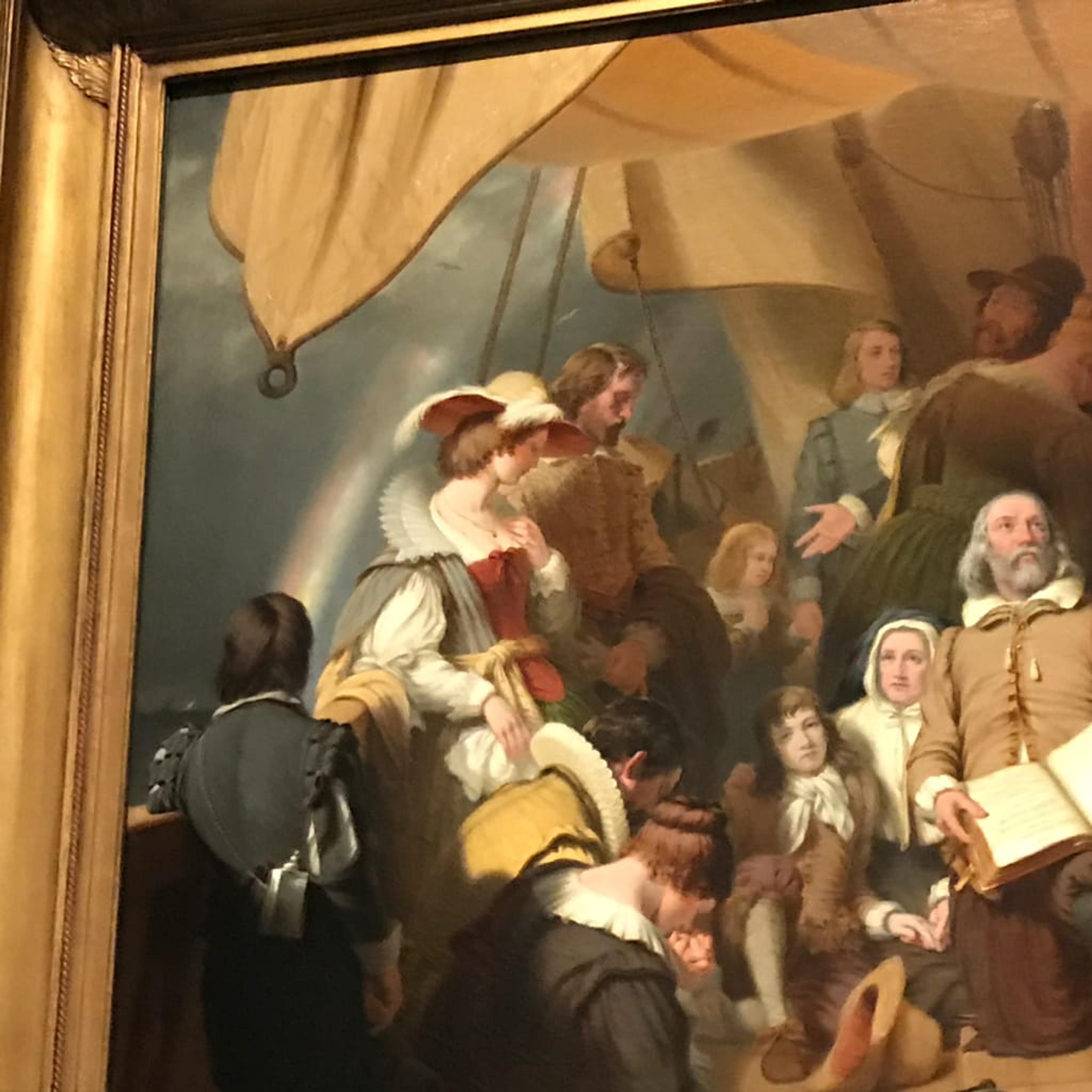 The rainbow is a symbol of hope for the new life the Puritans hope to lead in the New World! It's borrowed from the Old Testament story of Noah and the Ark.
There is a very large print of the painting of the Embarking of the Pilgrims in the rotunda of the US Capitol building. Is that based off the one here?
In fact, it's the other way around! This painting from 1857 recreates Weir's commission for the Capitol issued in 1836. You've got a great visual memory!Thank you so much for your help today!
Have information?
Have information about an artwork? Contact us at