Fragment of Mantle or Poncho
Paracas

1 of 2
Object Label
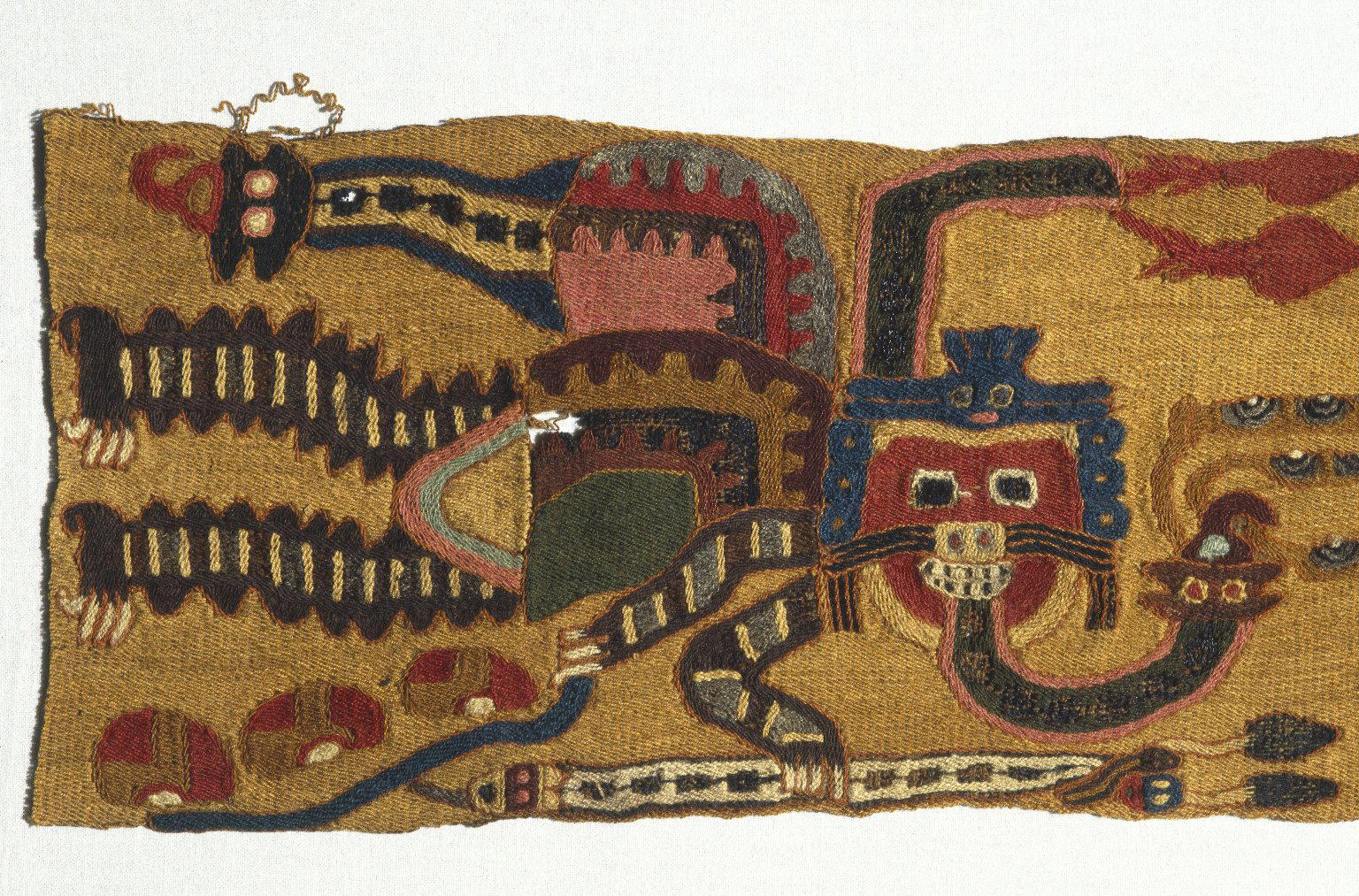
The elaborate anthropomorphic figures depicted on this fragment, termed Plant Beings by scholars, combine human appendages with monkey feet; a bird wing at the back; and the whiskers and stripes of the pampas cat. Each figure holds a staff in one hand and a vine of beans in the other. Sprouting seeds and plants emanating from serpent-headed streamers refer to fertility and rebirth. The streamers, which flow from the mouth, head, and wing of each figure, may be interpreted as blood, a symbol of life and death.
Caption
Paracas. Fragment of Mantle or Poncho, 100 B.C.E.–200 C.E.. Camelid fibers, 4 5/8 x 22 1/2 in. (11.7 x 57.2 cm) Other: 10 x 28in. (25.4 x 71.1cm). Brooklyn Museum, Gift of Morris de Camp Crawford, Jr., 1997.56.2. (Photo: Brooklyn Museum)
Gallery
Not on view
Collection
Gallery
Not on view
Collection
Culture
Title
Fragment of Mantle or Poncho
Date
100 B.C.E.–200 C.E.
Geography
Place found: Paracas, South Coast, Peru
Medium
Camelid fibers
Classification
Dimensions
4 5/8 x 22 1/2 in. (11.7 x 57.2 cm) Other: 10 x 28in. (25.4 x 71.1cm)
Credit Line
Gift of Morris de Camp Crawford, Jr.
Accession Number
1997.56.2
Frequent Art Questions
What's going on here?
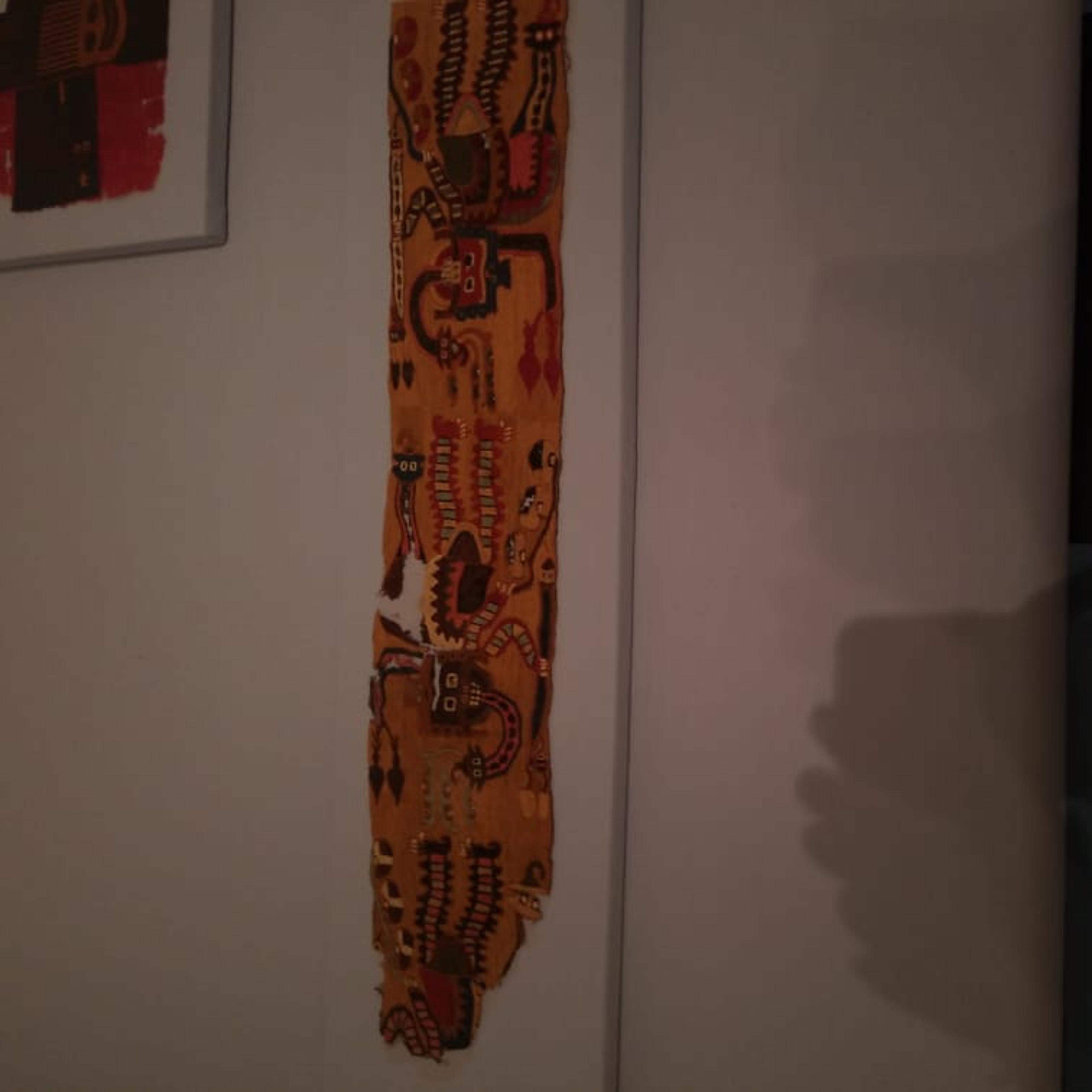 This fragment comes from the South Coast of Peru and is around two thousand years old.The colors and elaborate imagery from this fragment, which would have been part of a larger textile, reflect the intense visual world seen in Andean art from this time period. It's thought that the complex imagery is supposed to imitate shamanic visions. The figures likely represent supernatural beings who are associated with agriculture and fertility due to all the plant/bean imagery emanating from and surrounding their bodies.
Was this textile woven on a backstrap loom?
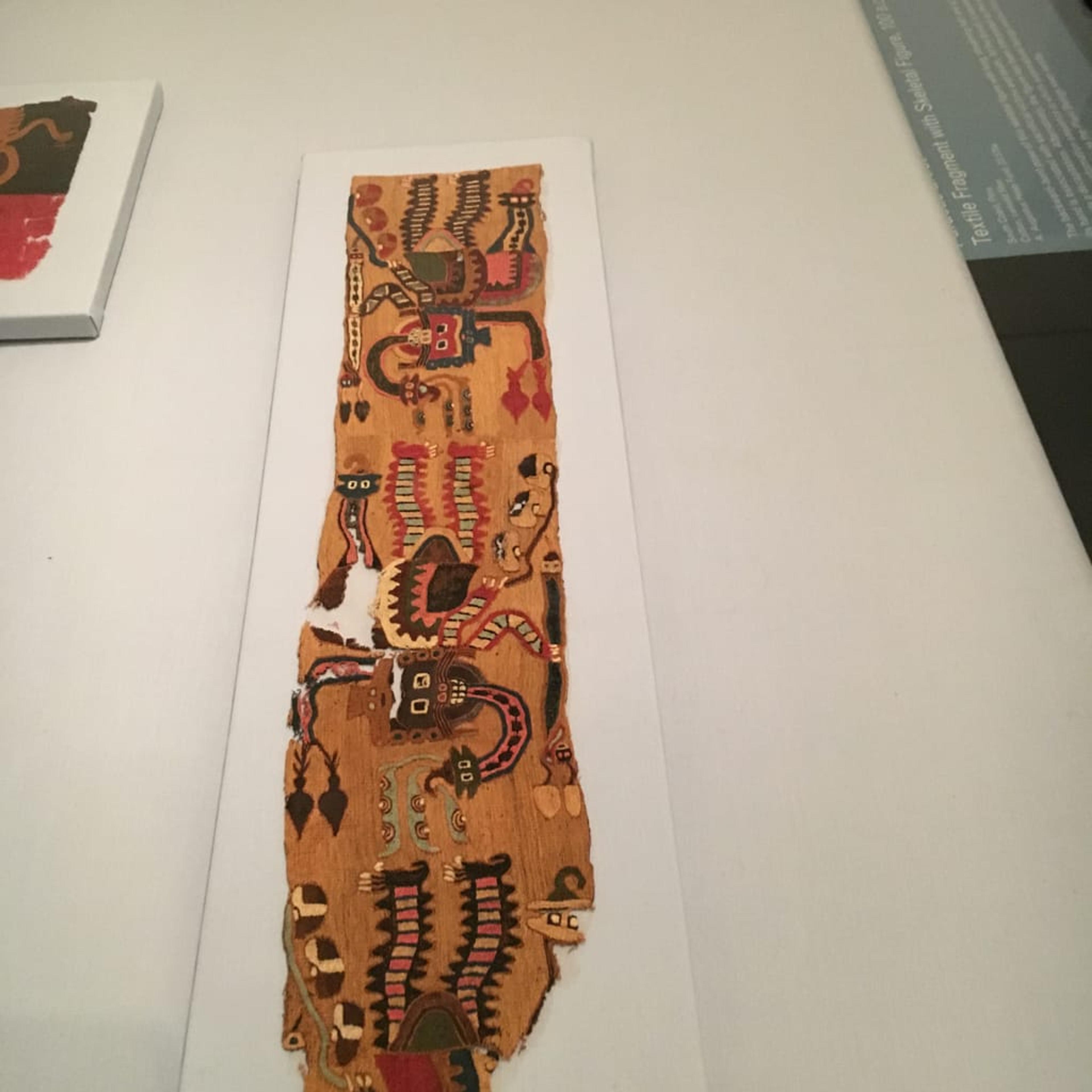 Yes! Weaving in ancient Peru was done with backstrap or stick-looms, with embroidery work sometimes used to create the details on textiles. There are so many details in this fragment. I particularly like the streamers that emerge from the figures, which relate to supernatural power.I like the beans too. Thanks!
How has this possibly been preserved so well after 2,000 years?
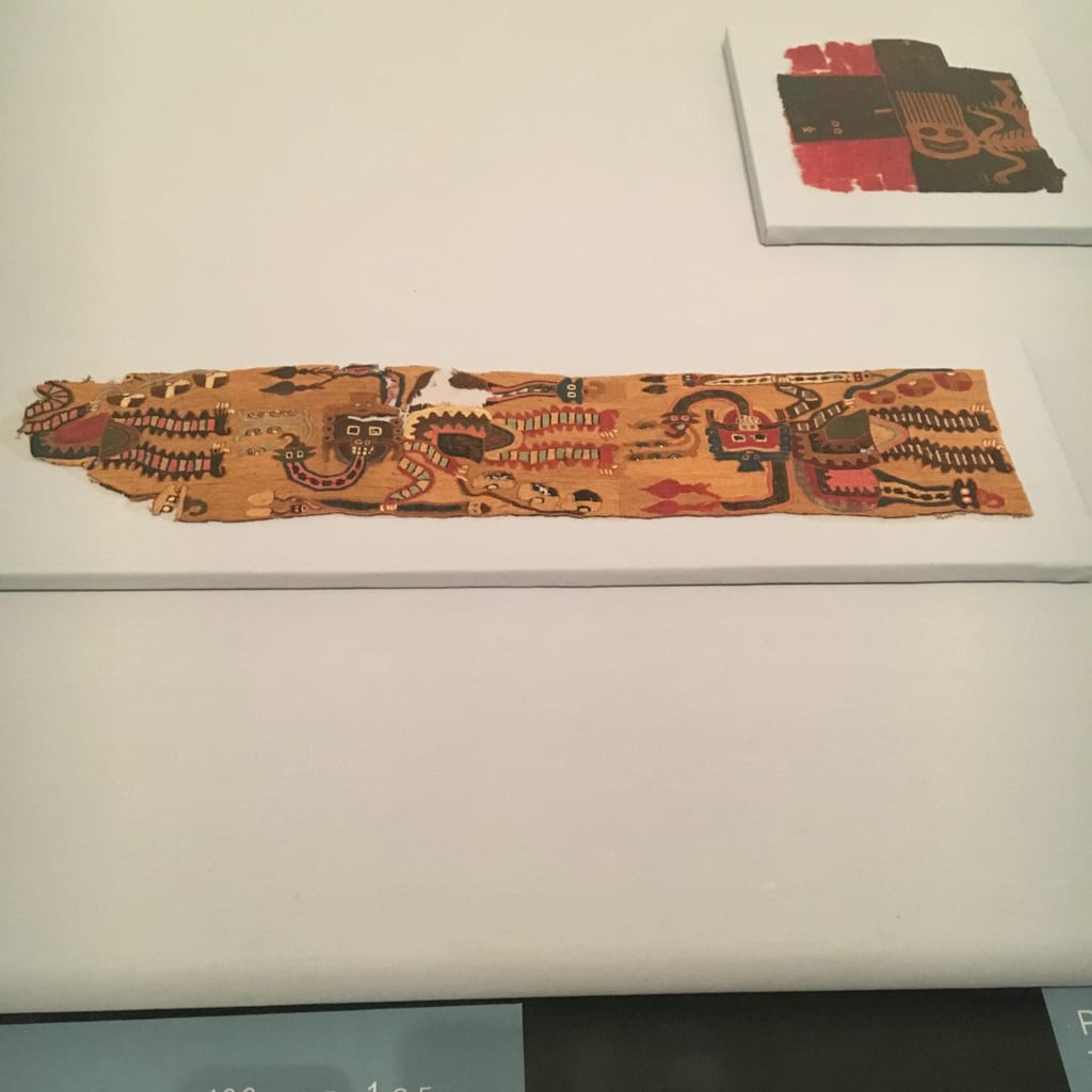 Isn't it incredible? The textiles were preserved because they were placed in tombs in the arid landscape of the Paracas peninsula, away from the light and moisture. Bodies of the deceased would be arranged in a fetal position and wrapped in layers of fabric, forming a mummy bundle. The amount of fabric and quality of the embroidery expressed their social position.Amazing!
Have information?
Have information about an artwork? Contact us at