Necklace Elements
1 of 2
Object Label
Caption
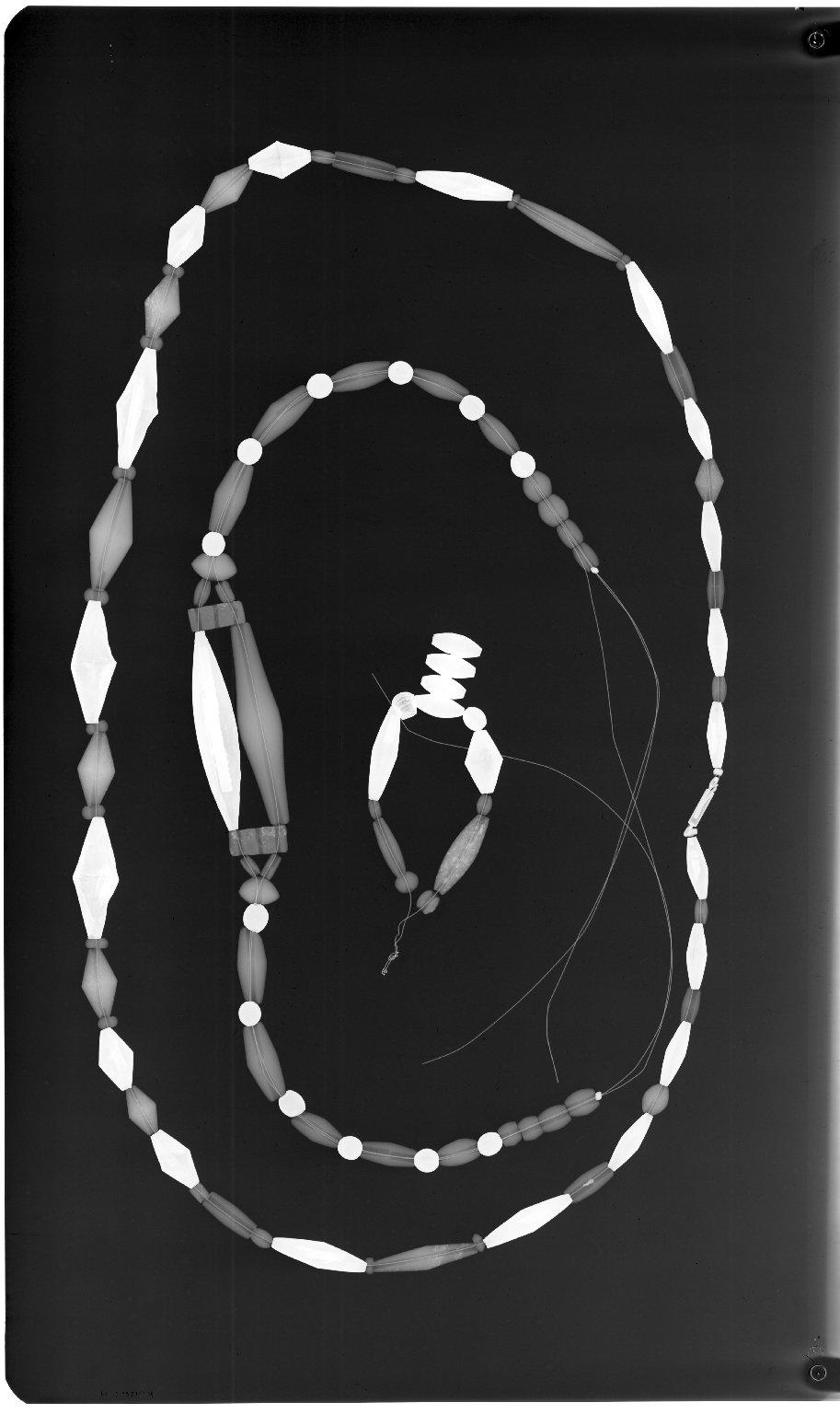
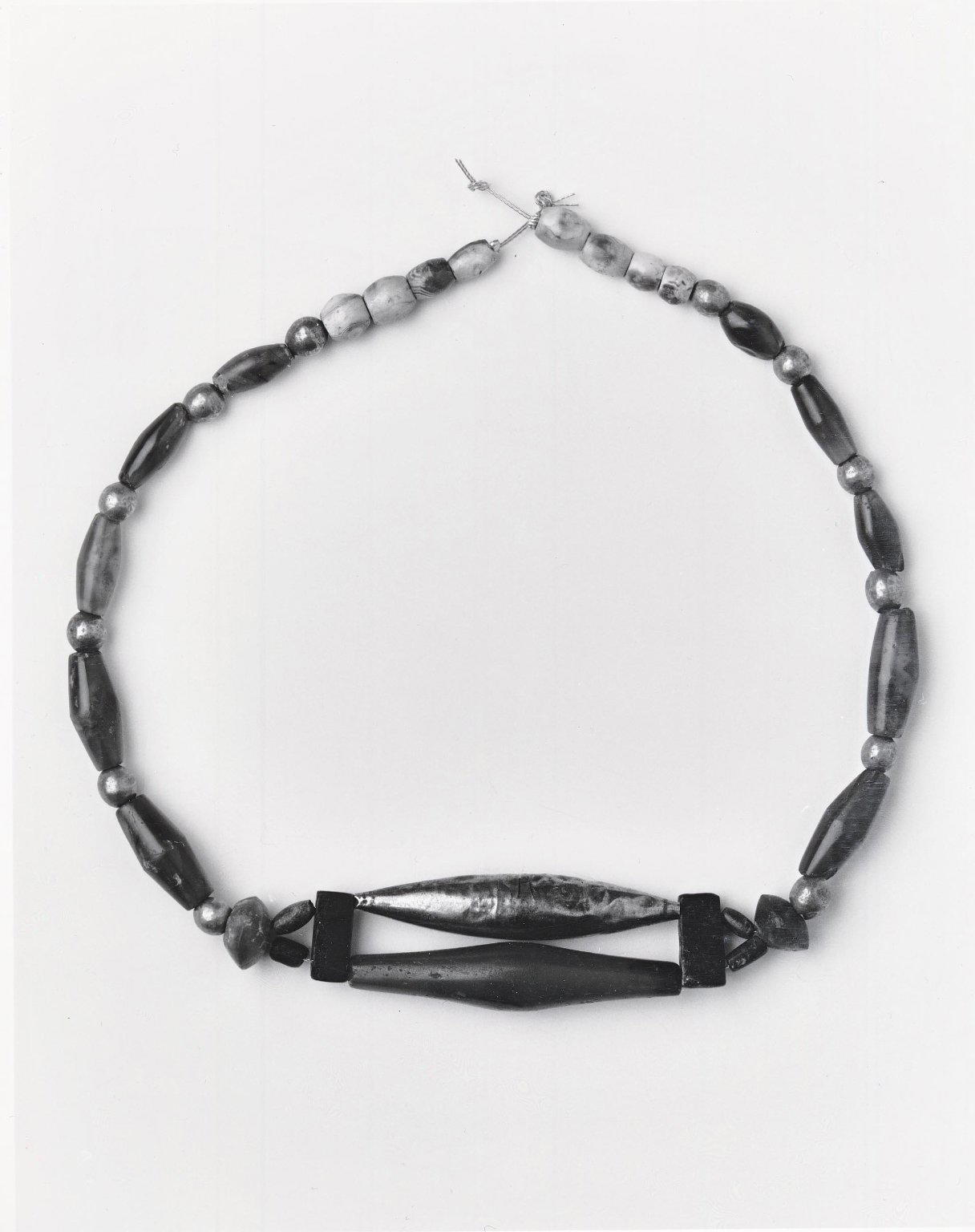
Sumerian. Necklace Elements, ca. 2600–2500 B.C.E.. Gold, lapis lazuli, carnelian, chalcedony (?) on modern string , Overall length: 14 3/8 in. (36.5 cm) as mounted: 6 × 4 1/2 × 1 15/16 in. (15.2 × 11.4 × 5 cm). Brooklyn Museum, Purchased with funds given by Shelby White, 1999.109.1. (Photo: Brooklyn Museum)
Gallery
Not on view
Gallery
Not on view
Culture
Title
Necklace Elements
Date
ca. 2600–2500 B.C.E.
Period
early Dynastic IIIA Period
Geography
Place made: Iraq
Medium
Gold, lapis lazuli, carnelian, chalcedony (?) on modern string
Classification
Dimensions
Overall length: 14 3/8 in. (36.5 cm) as mounted: 6 × 4 1/2 × 1 15/16 in. (15.2 × 11.4 × 5 cm)
Credit Line
Purchased with funds given by Shelby White
Accession Number
1999.109.1
Frequent Art Questions
Where did the museum find this jewelry and how many people do you think wore them?
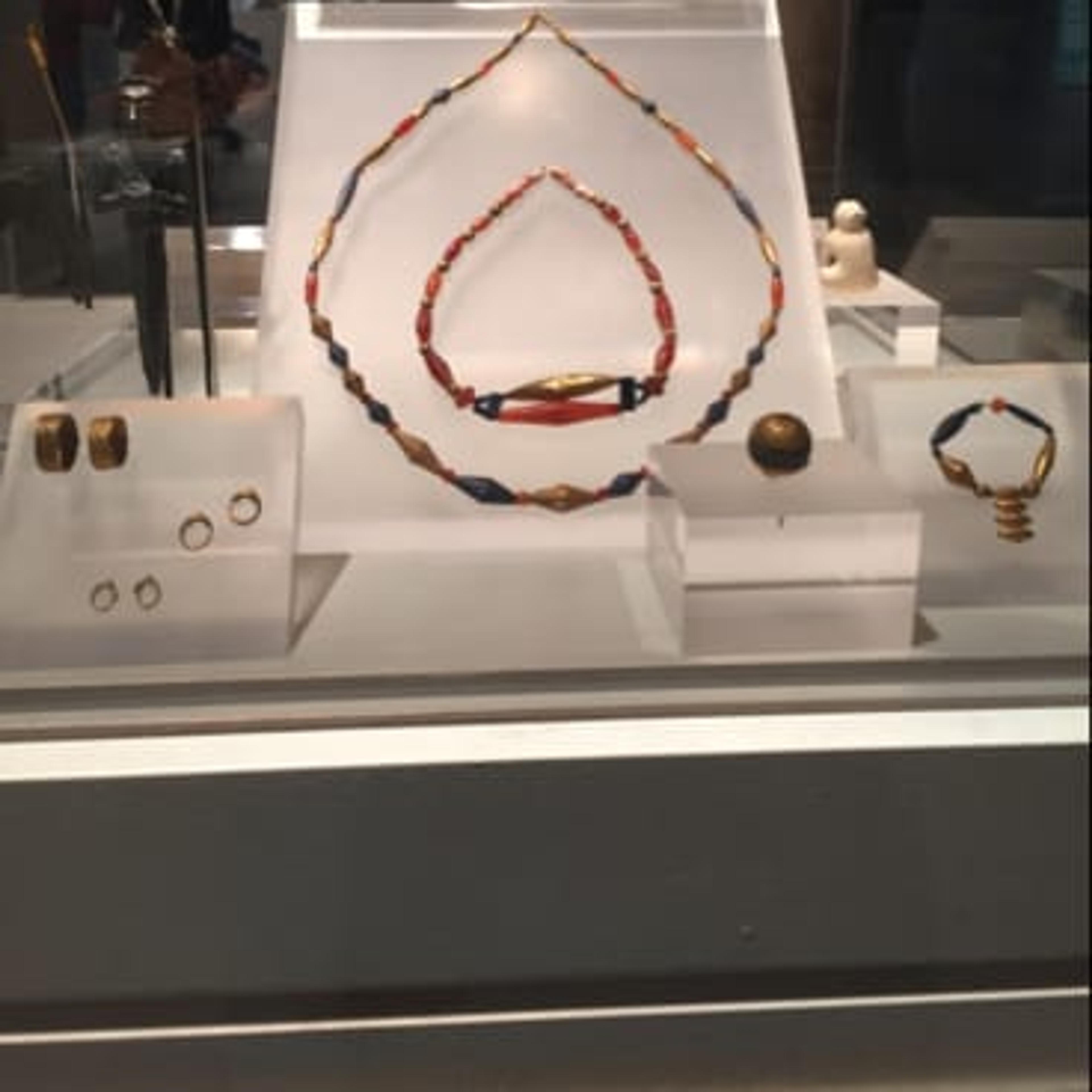 Like much of the finest ancient art, this jewelry likely comes from a Sumerian tomb. Pieces like these made of such precious materials would have belonged to elite--even royal--members of society. We don't know how many hands they may have passed through before being buried though.
Who would wear this piece of jewelry?
 These necklaces come from Sumerian tombs, but include materials that had been imported from other regions such as modern day Afghanistan. Therefore such pieces were expensive and would only have belonged to elite members of society.
How do you pronounce lapis lazuli?
The 'a' in "lapis" sounds like the 'a' in "apple" and the 'i' is short. The same 'a' sound is used in "lazuli," the 'u' is like 'oo' and it ends in a long 'i'.Thanks!Tell me more.
We actually don't know much about these beautiful adornments but they are certainly made of luxurious materials. They are of a style that would have been owned by wealthy Sumerians. Sumer was in southern Iraq.Gold, for example was highly valued in antiquity, not unlike today. Lapis lazuli, the dark blue stone was highly valued for its rarity and brilliant color. Carnelian, the reddish stone, was popular in Near Eastern and Mediterranean jewelry and seals.Thank you
Have information?
Have information about an artwork? Contact us at