Pair of Sandals


1 of 2
Object Label
Caption
Swahili. Pair of Sandals, late 19th century. Wood, A: 4 × 3 1/2 × 9 11/16 in. (10.2 × 8.9 × 24.6 cm) B: 3 3/4 × 3 1/2 × 9 11/16 in. (9.5 × 8.9 × 24.6 cm). Brooklyn Museum, Brooklyn Museum Collection, X1054a-b.
Gallery
Not on view
Collection
Gallery
Not on view
Collection
Culture
Title
Pair of Sandals
Date
late 19th century
Geography
Place made: Witu, Kenya
Medium
Wood
Classification
Dimensions
A: 4 × 3 1/2 × 9 11/16 in. (10.2 × 8.9 × 24.6 cm) B: 3 3/4 × 3 1/2 × 9 11/16 in. (9.5 × 8.9 × 24.6 cm)
Inscriptions
On the underside of the left sandal, in black ink: "Sandals formerly the property of FUM OMARI the rebel Chief of WITU". A small octagonal paper label is adhered to the heel block with the words "African" written in pencil and "Swahili" written in blue ink.
Credit Line
Brooklyn Museum Collection
Accession Number
X1054a-b
Frequent Art Questions
A sandal? Looks uncomfortable!
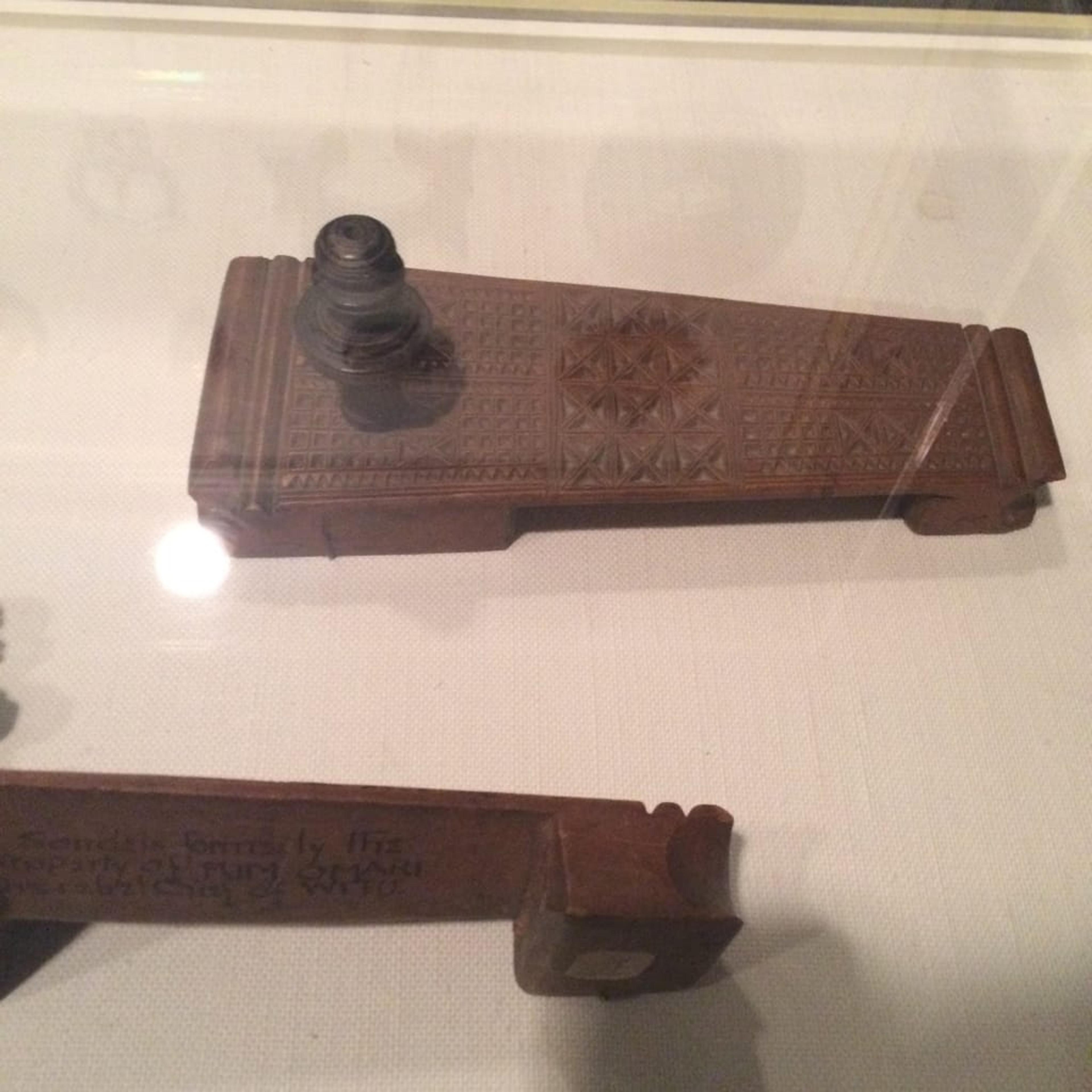 My favorite part of that object is that the inscription survives as does all the dust in the cracks of the intricate carving!It's beautiful!I agree; they are one of the only objects we have in the collection from Witu in East Africa. "Fum Omari" (the name on the base) refers to Fumo Omari, a sultan of the state of Witu between 1890 and 1894.
Have information?
Have information about an artwork? Contact us at