Spittoon
mid–12th century


1 of 2
Object Label
Vessels with wide, flaring rims were used to catch the water when rinsing out teapots and drinking cups. This example is very finely carved and exemplifies the almost-blue color achieved in the finest Goryeo celadons.
Caption
Spittoon, mid–12th century. Stoneware with celadon glaze, Height: 2 7/16 in. (6.2 cm) Diameter at mouth: 6 1/8 in. (15.6 cm) Diameter at base: 2 7/16 in. (6.2 cm). Brooklyn Museum, Gift of the Asian Art Council in memory of Pauline B. Falk, 2001.31.
Collection
Collection
Title
Spittoon
Date
mid–12th century
Dynasty
Goryeo Dynasty
Geography
Place made: Korea
Medium
Stoneware with celadon glaze
Classification
Dimensions
Height: 2 7/16 in. (6.2 cm) Diameter at mouth: 6 1/8 in. (15.6 cm) Diameter at base: 2 7/16 in. (6.2 cm)
Credit Line
Gift of the Asian Art Council in memory of Pauline B. Falk
Accession Number
2001.31
Frequent Art Questions
What is the green color made of in these Goryeo Dynasty stoneware pieces?
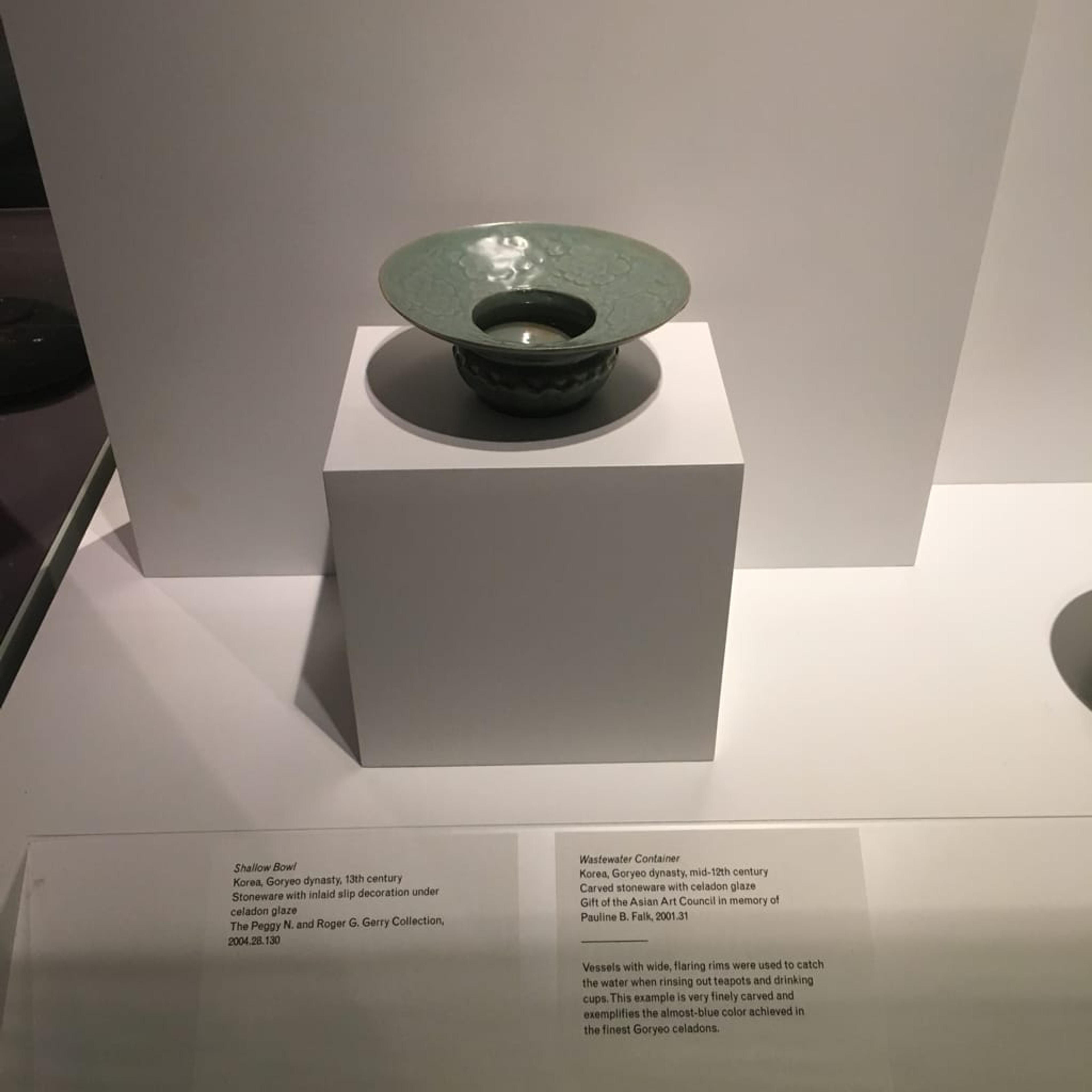 This glazing technique you see here is known as celadon and Korean potters have long been known for achieving jade-like colors.The color is achieved through chemical reactions between iron in the clay, and iron oxide, manganese oxide, and quartz in the glaze when they are placed into a reduction kiln that removes oxygen during the firing process.
What is celadon?
Celadon is a blue-green glaze, often used on stoneware, a kind of ceramic. Celadons are named due to the greenish-blue color of their glaze. Their color can vary in tone from grayish to greenish depending on the composition of the clay. The color of celadon is achieved by placing a green-colored glaze over a gray clay body and the reaction of iron oxide when the vessel is fired in a reduction atmosphere.Thank you.
Have information?
Have information about an artwork? Contact us at