Child's Wheelbarrow


1 of 4
Object Label
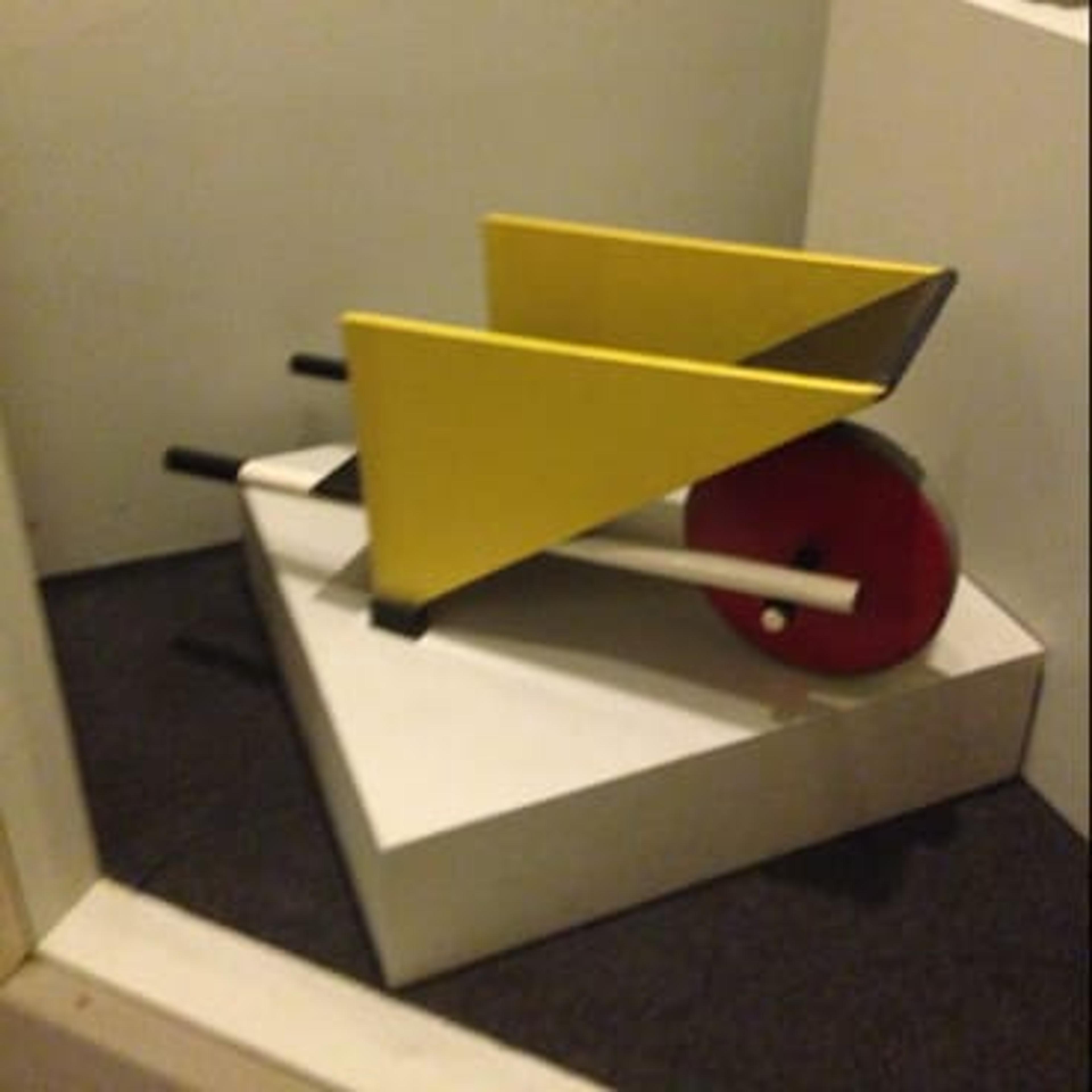
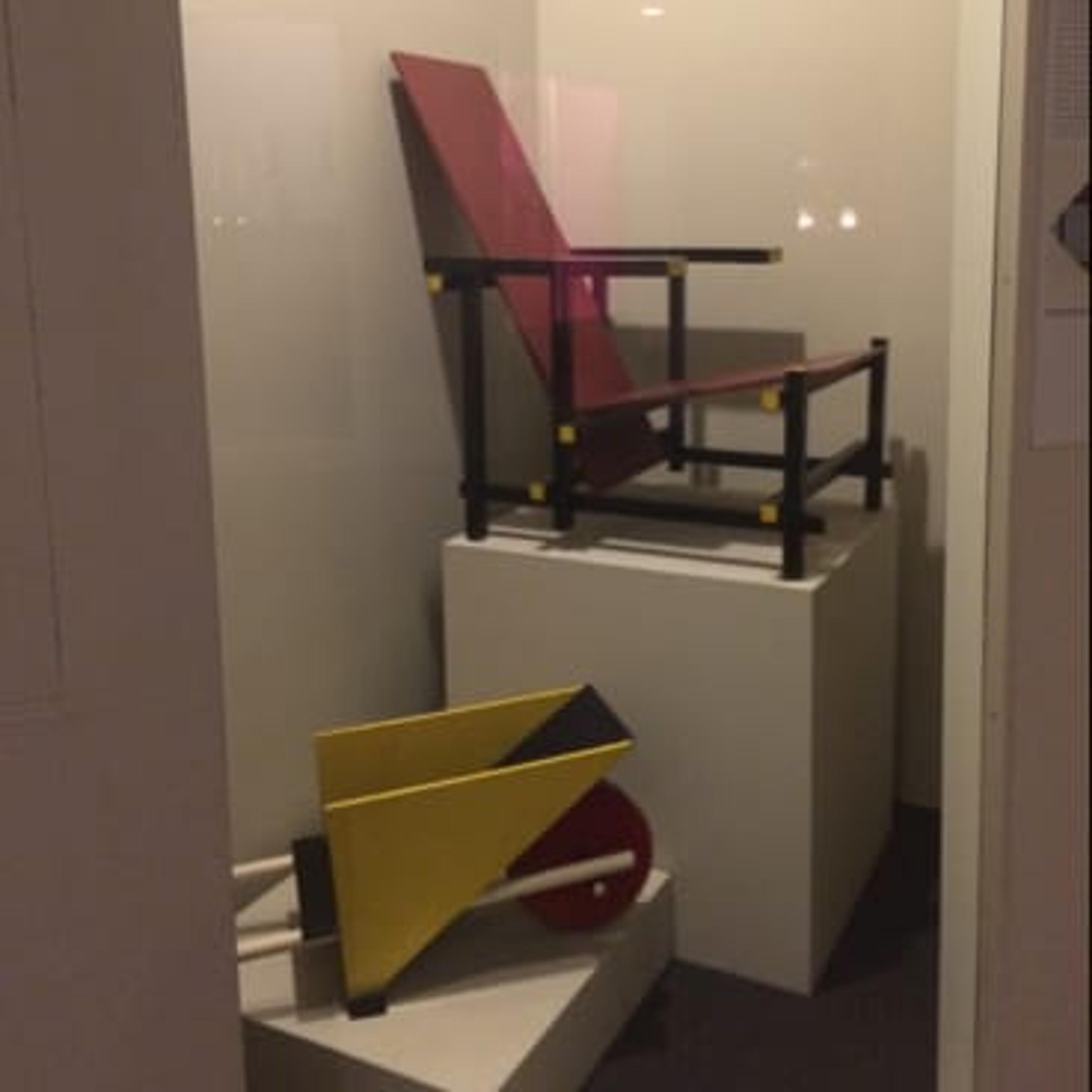
The child's wheelbarrow is based on a toy that Gerrit Rietveld made in 1923 for the son of J. J. P. Oud, the owner of the armchair also displayed here. The wheelbarrow exemplifies the stylistic characteristics of De Stijl: it is composed of elemental geometric forms—rectangular planes, elongated cylinders, and a disk for the wheel—painted in primary colors and made of inexpensive wood. Revived interest in Rietveld in the mid-twentieth century led to this later production of the wheelbarrow.
Caption
Gerrit Th. Rietveld (Dutch, 1888–1964); G.A. van de Groenekan. Child's Wheelbarrow, designed 1923; made 1958. Wood. pigment, metal, 13 × 27 1/2 × 11 in. (33 × 69.9 × 27.9 cm) display measurement: 13 × 11 × 29 in. (33 × 27.9 × 73.7 cm). Brooklyn Museum, Marie Bernice Bitzer Fund, 2001.87. (Photo: Brooklyn Museum)
Designer
Title
Child's Wheelbarrow
Date
designed 1923; made 1958
Geography
Place made: Netherlands
Medium
Wood. pigment, metal
Classification
Dimensions
13 × 27 1/2 × 11 in. (33 × 69.9 × 27.9 cm) display measurement: 13 × 11 × 29 in. (33 × 27.9 × 73.7 cm)
Credit Line
Marie Bernice Bitzer Fund
Accession Number
2001.87
Frequent Art Questions
Did Rietveld design any other toys in his career?
 Yes, he did, we have in our collections a dollhouse that he also designed. Rietveld himself had six children, and many of his friends had kids, for whom he created toys. The dollhouse in particular was designed for the children of his friends, the Jesse family.
Was Rietveld's furniture expensive when it was first produced? What kinds of people had access to buy it?
 It was definitely an avant-garde style, and a very utopian one. Architects and designers were seeking ways to renew society after the first World War. In other words, it wasn't a style to everyone's taste. It was highly non-traditional, with its use of primary colors and its simple, visible means of construction.He made many pieces for himself and his close acquaintances, knowing that it would only have a small audience because it was so experimental.That answers my question, thanks. I was interested in whether a general audience could access these items, or if they were more people in the movement.Some of his colleagues were more interested in sharing their work with a wider market but Rietveld was very much in an inner circle by the 1920s and was experimenting within that group.
My favorite painter is Piet Mondrian. Do you have any similar paintings to recommend?
This is not a painting, but: there are a chair and wheelbarrow designed by De Stijl artist Gerrit Rietveld on the 4th floor. Mondrian was also a member of the De Stijl group and you can really see the similarity in Rietveld's furniture.Cool...I'll check that out. Thanks!
Have information?
Have information about an artwork? Contact us at