Dish
18th century


1 of 3
Object Label
Nabeshima wares were made as gifts to be presented to the Japanese shogunate by the regional lord in charge of the porcelain-producing region of Arita. Because they were to be sent to the court, these wares represented the very finest quality the Arita kilns could produce. Unlike most porcelains made at Arita, they also reflect Japanese tastes. Nabeshima dishes can be identified by their tall foot-rings, decorated with cobalt patterns.
Caption
Dish, 18th century. Nabeshima ware, porcelain with underglaze blue, 2 3/16 x 8 in. (5.5 x 20.3 cm). Brooklyn Museum, The Peggy N. and Roger G. Gerry Collection, 2004.28.81. (Photo: Brooklyn Museum)
Gallery
Not on view
Collection
Gallery
Not on view
Collection
Frequent Art Questions
Tell me more.
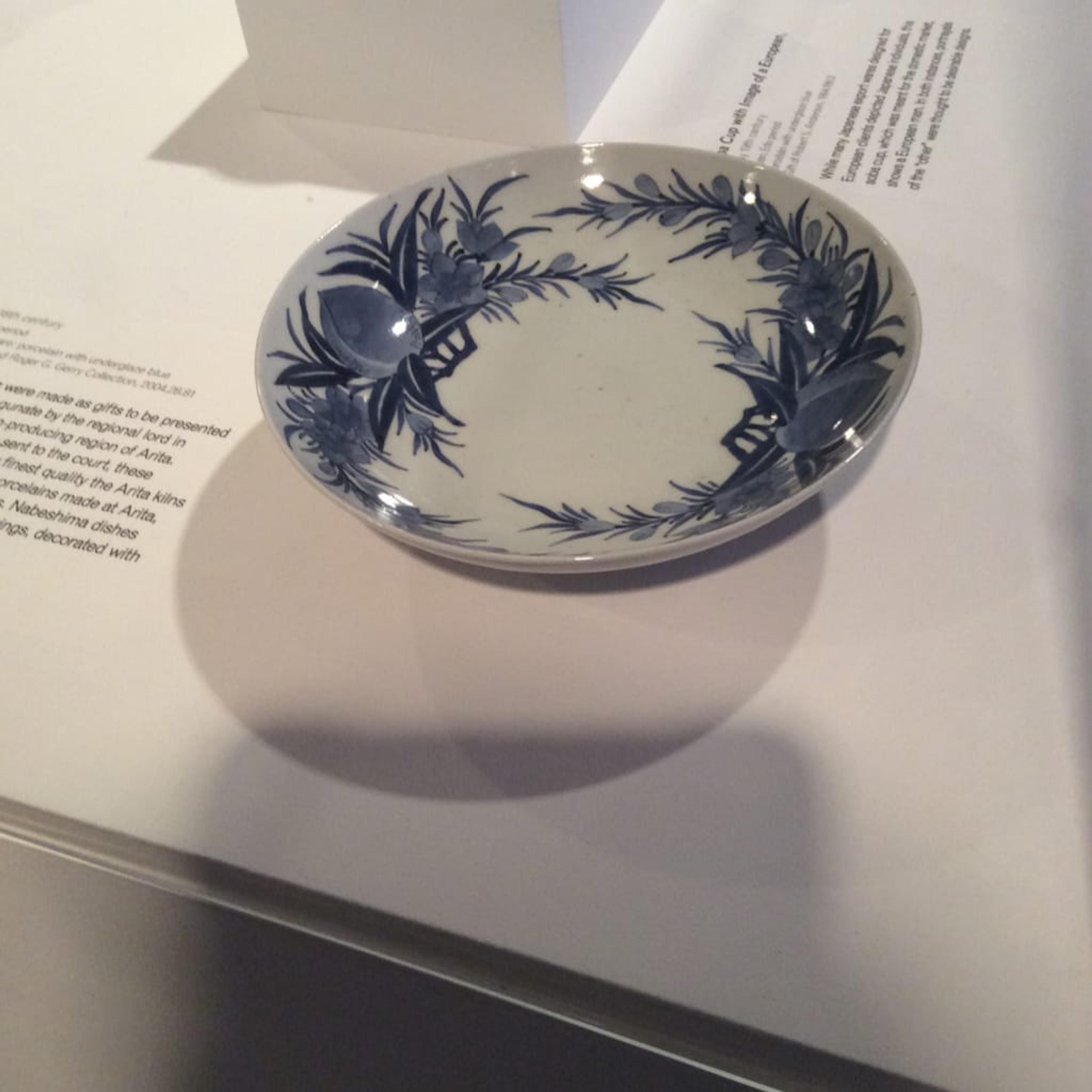 This blue-and-white porcelain dish actually comes from Japan. The peaches on it are symbols of immortality and have connotations of tranquility and fertility in Japan.
Have information?
Have information about an artwork? Contact us at