Tipi Bag or Possible Bag
Sioux


1 of 3
Object Label
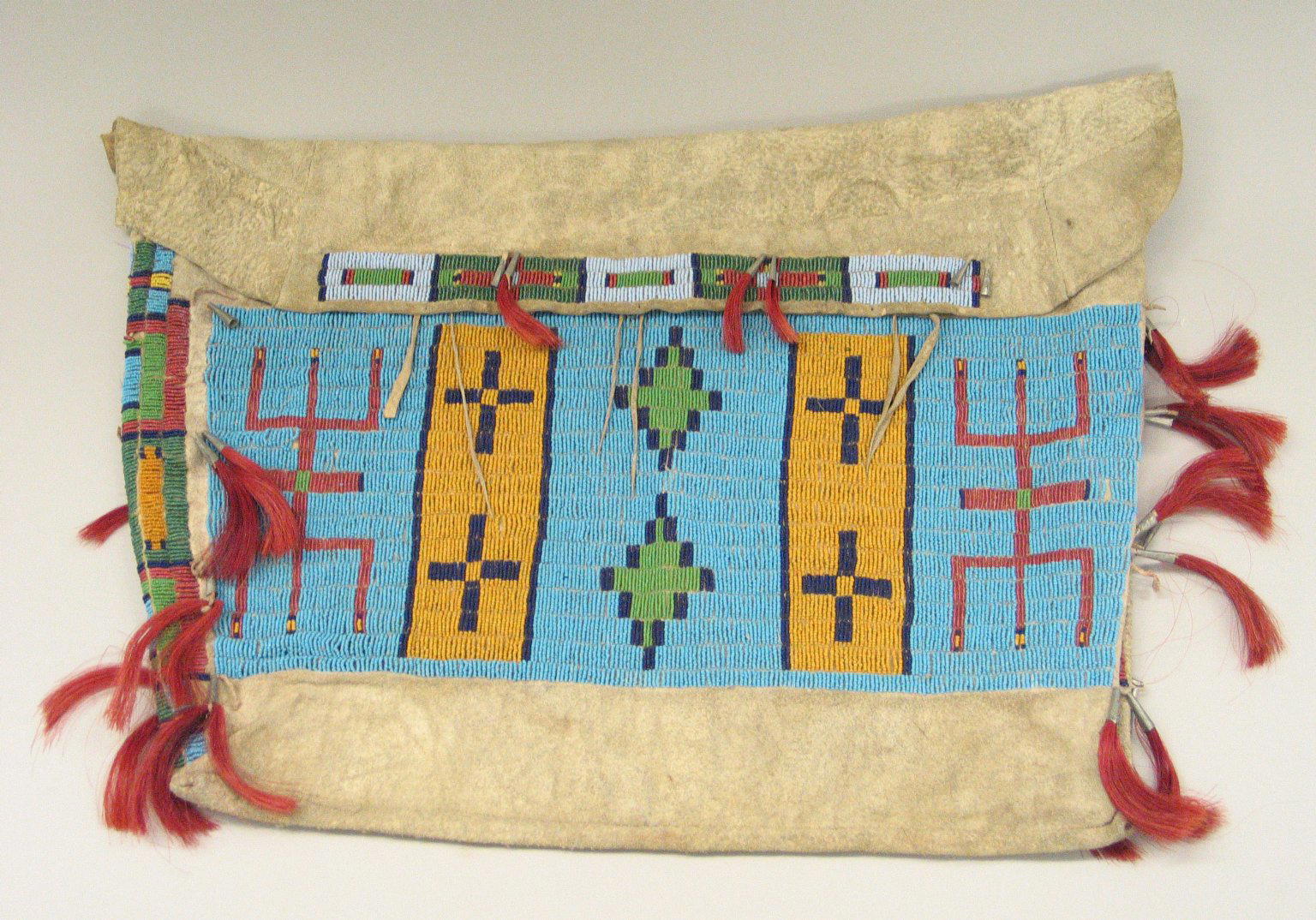
Vivid blue captures the eye in these Salish or Kootenai child’s moccasins and Sioux storage bag. The blue seed beads on both objects are made of glass colored with cobalt blue. Native women made all the clothing and furnishings for their families and eagerly adopted beads as decorative embellishments because of the vast array of colors and greater convenience.
Caption
Sioux. Tipi Bag or Possible Bag, ca. 1860–1900. Hide, beads, tin cones, horse hair, 15 1/2 x 20 1/2 in. (39.4 x 52.1 cm). Brooklyn Museum, Brooklyn Museum Collection, X1111.1. (Photo: Brooklyn Museum)
Gallery
Not on view
Collection
Gallery
Not on view
Collection
Culture
Title
Tipi Bag or Possible Bag
Date
ca. 1860–1900
Geography
Place made: Plains, United States
Medium
Hide, beads, tin cones, horse hair
Classification
Dimensions
15 1/2 x 20 1/2 in. (39.4 x 52.1 cm)
Credit Line
Brooklyn Museum Collection
Accession Number
X1111.1
Frequent Art Questions
What is this?
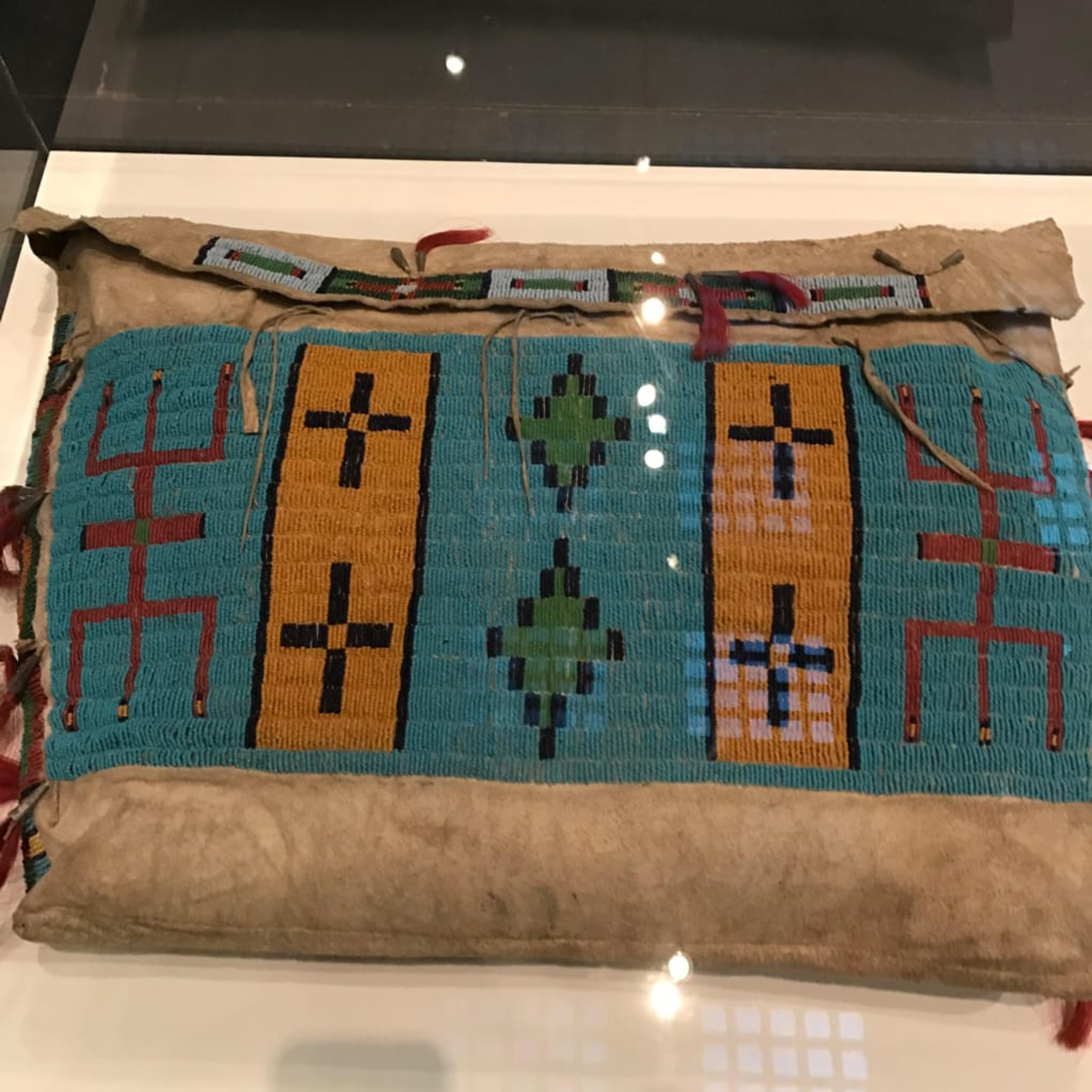 This was a storage bag most likely made by a Sioux artist. Made of soft animal hide, they would be used to hold clothing and household items while traveling.
De que material son las cuentas insertas en los diseños?
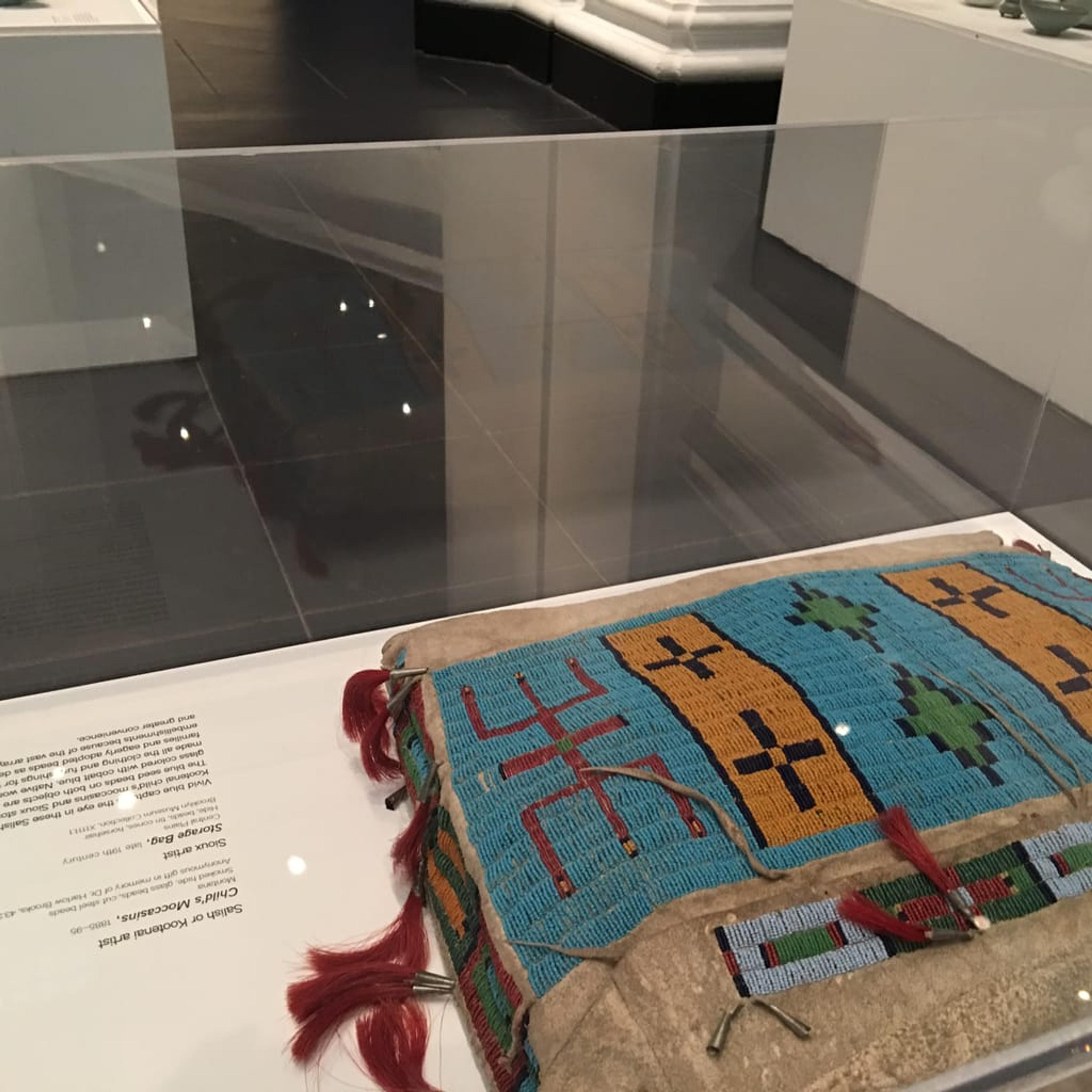 Son cuentas de vidrio. Cuentas de vidrio no existían en América del norte antes del siglo 17 pero cuando los europeos llegaron, las cuentas de vidrio no existía en América del Norte antes del Siglo XVII pero cuando los europeos llegaron, las cuentas de vidrio se convirtieron en una mercancía valiosa. Los nativos americanos solían usar semillas pero prefirieron las cuentas de vidrio porque eran mas durables, menos laboriosas, y existen en muchos más colores. Además, son un símbolo de estatus individual e identidad étnica.
Have information?
Have information about an artwork? Contact us at