Vase, Chief Shavehead


1 of 3
Object Label
During the late nineteenth century, as Indigenous peoples were displaced onto reservations and their land and lifeways denied to them, white settler manufacturers capitalized on their likeness and cultural heritage. In design magazines, living rooms were shown filled with Native baskets, rugs, and ceramics, as well as images of Native people rendered in sculpture, photography, and decorative objects made by white artists.
Grace Young, an artist employed by the woman-owned Rookwood Pottery of Cincinnati, Ohio, was noted for her portraits of Indigenous people. These were often copied from likenesses taken by white photographers, as seen on this vase with the image of an Arapaho individual identified as “Shavehead.” On this amber-hued vase, Young portrayed him as a dignified leader, a design that was particularly attractive to white consumers.
Caption
Grace Young (American, 1869–1947); Rookwood Pottery Company (1880–1967). Vase, Chief Shavehead, ca. 1899. Glazed earthenware, 15 1/2 × 6 × 6 in. (39.4 × 15.2 × 15.2 cm) mount: 15 1/2 × 6 × 6 in. (39.4 × 15.2 × 15.2 cm). Brooklyn Museum, Gift of Mr. and Mrs. Jay Lewis, 84.176.4. (Photo: Brooklyn Museum)
Gallery
Not on view
Collection
Gallery
Not on view
Collection
Decorator
Title
Vase, Chief Shavehead
Date
ca. 1899
Geography
Place manufactured: Cincinnati, Ohio, United States
Medium
Glazed earthenware
Classification
Dimensions
15 1/2 × 6 × 6 in. (39.4 × 15.2 × 15.2 cm) mount: 15 1/2 × 6 × 6 in. (39.4 × 15.2 × 15.2 cm)
Signatures
no signature
Inscriptions
no inscriptions
Markings
Impressed on bottom: "[stamp consisting of reversed 'RP' monogram surrounded by 13 flames] / 856 / B" Incised by hand on bottom, in script: "- Shavehead - / - Arapahoe - "
Credit Line
Gift of Mr. and Mrs. Jay Lewis
Accession Number
84.176.4
Frequent Art Questions
This is epic.
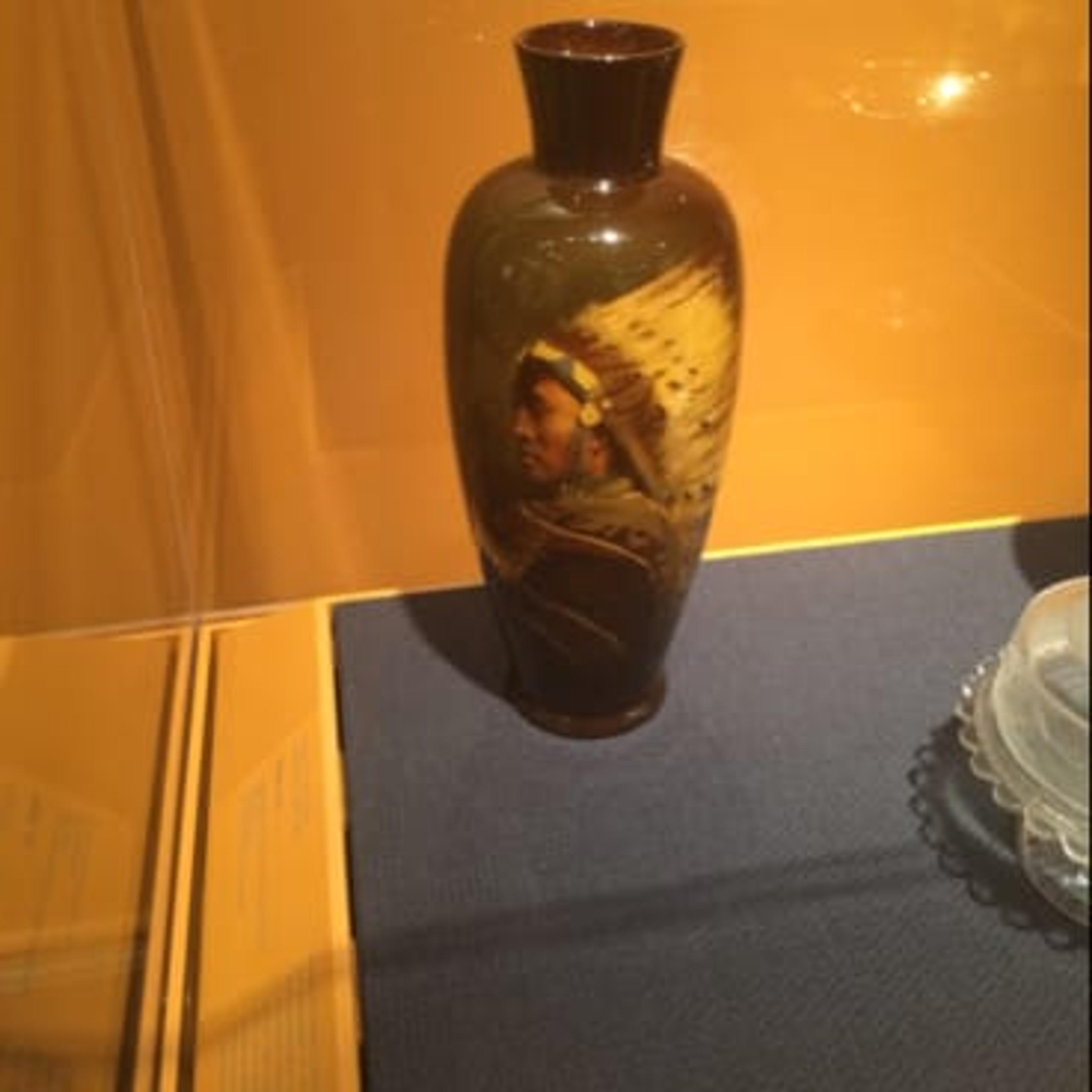 I agree, that's a really striking piece. Several works in that room show American artists' (and audiences') interest in Native American art and identity.Rookwood Pottery was a major American ceramics company of the late 1800s and early 1900s. They produced a series of works decorated with images of Native Americans around the turn of the century. Rookwood's artists used photographs of Native American individuals as source material and they copied the photos to create these decorations.
Have information?
Have information about an artwork? Contact us at