Untitled

Brooklyn Museum photograph
Object Label
Kang Suk Young’s vessels walk the fine line between control and letting go. The rigid geometry of this white porcelain vessel contrasts with its ripped rim and twisting center. Historically, connoisseurs of Korean ceramics have valued the qualities of spontaneity, movement, and imperfection that connect an object to its maker. Young’s vessel quotes these values, and uses a medium typical of Korean ceramics. However, he learned the slip-casting technique while studying in France. In this technique, which has no Korean precedent, liquefied porcelain clay fills a plaster mold. Tweaking a mass production process, Young removes the semidry work from its mold and twists it. This handmade element evokes the slab-work of Ranti Bam’s vessel at right.
Caption
Kang Suk Young (Korean, born 1949). Untitled, 1992. Unglazed porcelain, 24 13/16 x 6 x 6 in. (63 x 15.3 x 15.3 cm). Brooklyn Museum, Purchased with funds given by Dr. and Mrs. Richard Dickes, 2006.20. © Kang Suk Young. (Photo: Brooklyn Museum)
Collection
Collection
Artist
Title
Untitled
Date
1992
Geography
Place made: Korea
Medium
Unglazed porcelain
Classification
Dimensions
24 13/16 x 6 x 6 in. (63 x 15.3 x 15.3 cm)
Signatures
Signature is on base of the object
Credit Line
Purchased with funds given by Dr. and Mrs. Richard Dickes
Accession Number
2006.20
Rights
© Kang Suk Young
Frequent Art Questions
I really like this. I think I’m more of a modern art fan.
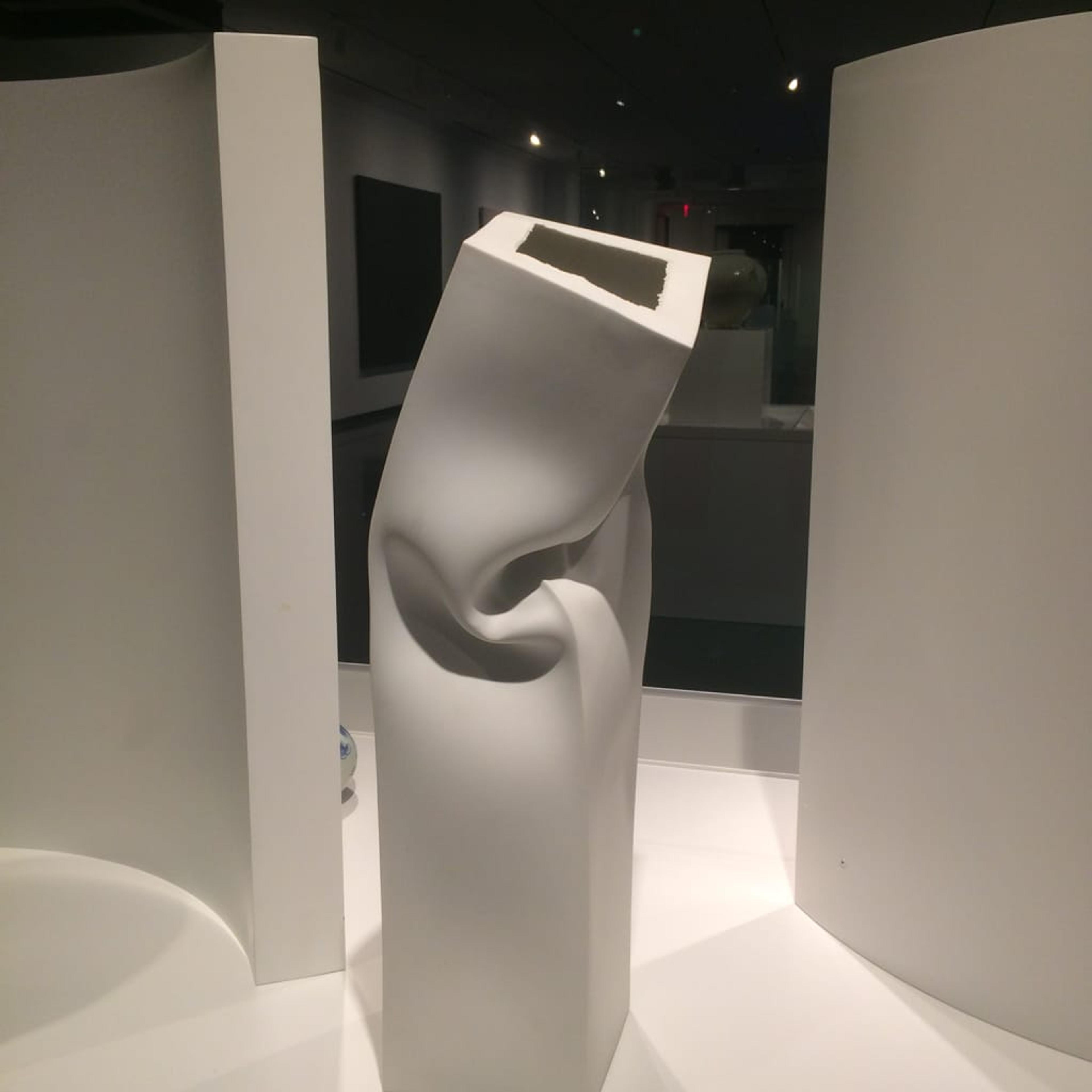 That is a great one for sure. The artist uses traditional materials in new ways. The body of the vessel is made from porcelain, but the lack of glaze is a departure from even the most minimal ceramics of the Joseon Era, like the moon jar!
Tell me more.
There is a trend in contemporary Korean ceramics of looking back at traditional forms and techniques. Here, Kang uses unglazed porcelain, a nod to the long tradition of minimalist ceramics of the Joseon Era, such as the large "Moon Jar" nearby.The artist begins by pouring liquid clay into a mold. When the ceramic is nearly dry, he bends and twists it, then fires the piece without glaze, creating a sculpture in which the human hand has subverted the perfection of the cast porcelain form!Thank you very much! That really helps!Tell me more.
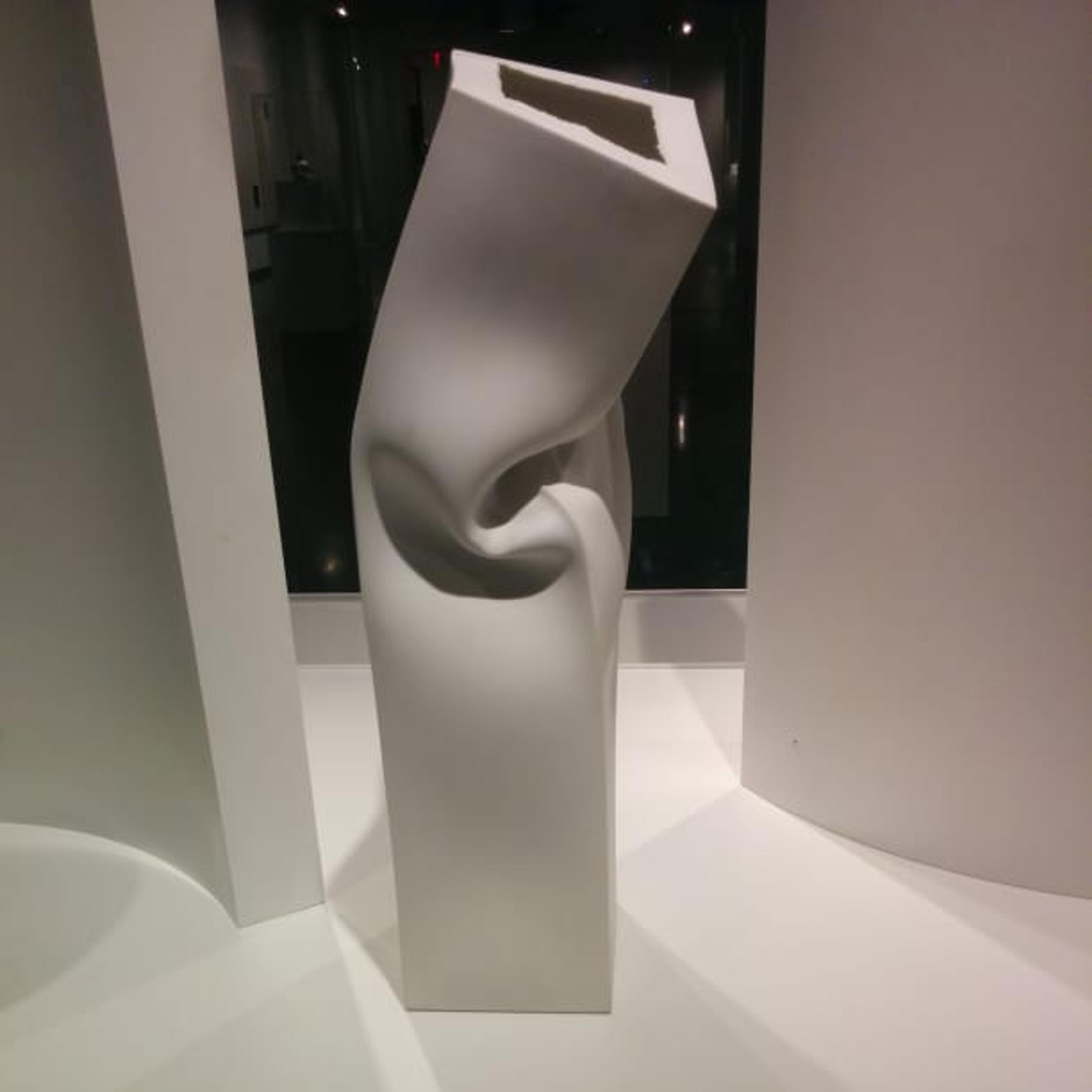 These two make a really interesting pair! The round jar dates to the 18th or 19th century and reflects a long standing tradition in Korea interested in subtle imperfection which reminds a viewer of the human hand that created the vessel.The contemporary rectangular work by Kang Seok Young builds on this tradition adding a much more pronounced asymmetry in the form of a bend in the entire body of the vessel.
Why was this modern piece included in the Korean art exhibition which seems mostly historical?
This work demonstrates the continued evolution of Korean art.Kang, like many contemporary Korean ceramicists, plays with traditional materials in new ways. He uses unglazed porcelain, a nod to the long tradition of porcelain work in Korea. The lack of glaze is a notable departure from even the most minimal ceramics of the Joseon Era.There is a significant trend in contemporary Korean ceramics of looking back at and referencing traditional forms and techniques.Yes, very interesting. Thanks so much.
Have information?
Have information about an artwork? Contact us at