"Gem Bamboo Triplicate" Folding Mirror


1 of 6
Caption
Wiederer and Brother; American. "Gem Bamboo Triplicate" Folding Mirror, Patented April 19, 1887. Wood (probably maple), glass, metal, printed paper, Height: 13 in. (33 cm) Width (closed): 11 in. (27.9 cm) Width (open): 26 in. (66 cm). Brooklyn Museum, H. Randolph Lever Fund, 85.12.2. (Photo: Brooklyn Museum)
Gallery
Not on view
Collection
Gallery
Not on view
Collection
Maker
Culture
Title
"Gem Bamboo Triplicate" Folding Mirror
Date
Patented April 19, 1887
Geography
Place made: New York, New York, United States
Medium
Wood (probably maple), glass, metal, printed paper
Classification
Dimensions
Height: 13 in. (33 cm) Width (closed): 11 in. (27.9 cm) Width (open): 26 in. (66 cm)
Markings
At top edge of rear is affixed metal label: "P:WIEDERER & BRO. / GEM BAMBOO TRIPLICATE / PATENTED APRIL 19,1887."
Credit Line
H. Randolph Lever Fund
Accession Number
85.12.2
Frequent Art Questions
Can you tell me about this mirror?
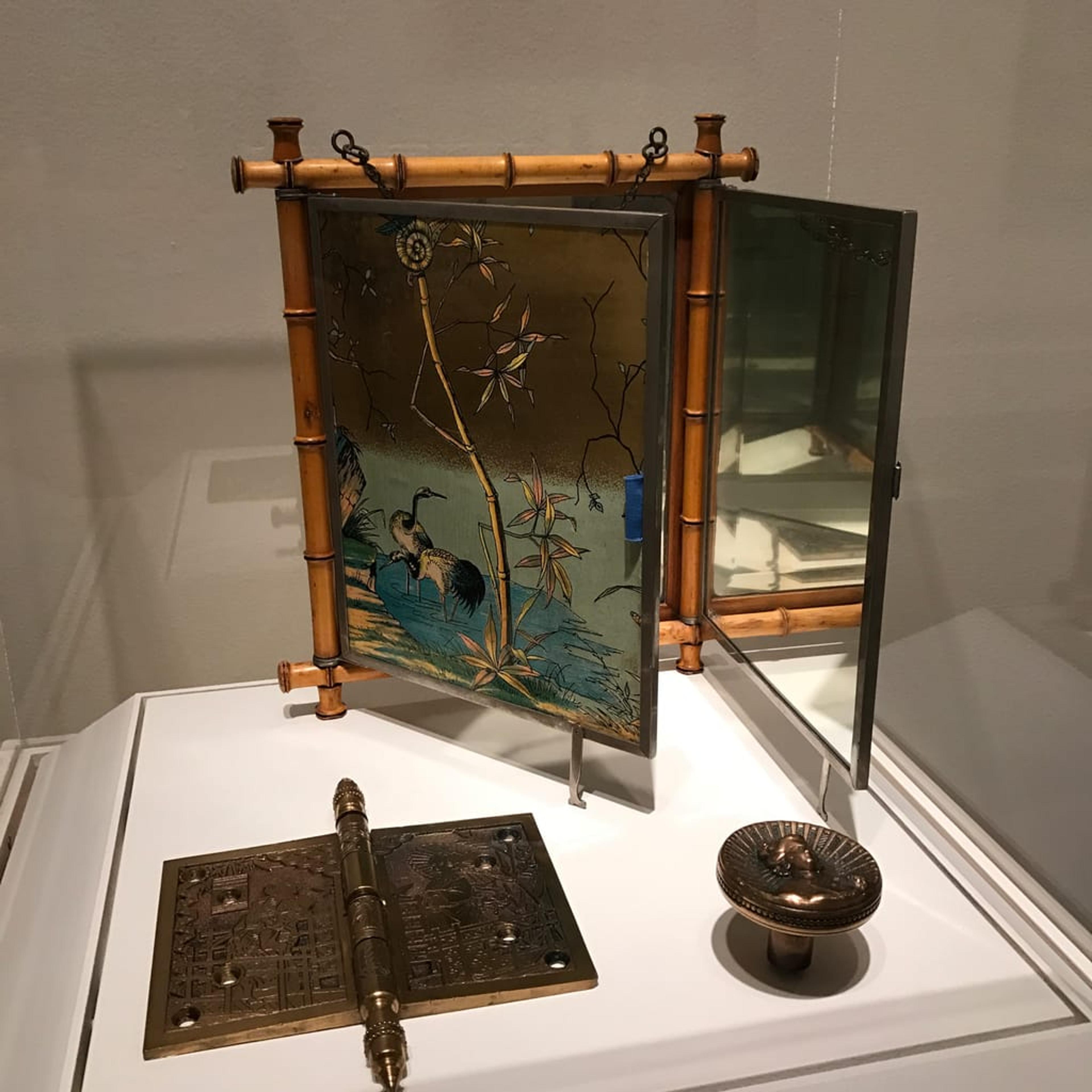 The "Gem Bamboo Triplicate" Folding Mirror, designed by Wiederer and Brother, utilizes an innovative design and a Japanese aesthetic. When this was made in the late 1880s, there was a massive interest in Asian art in the United States.Where in the US was it made?The designer's office was located in New York City. In 1886, the firm's manufacturing facilities were located on Staten Island.
Can you tell me about this?
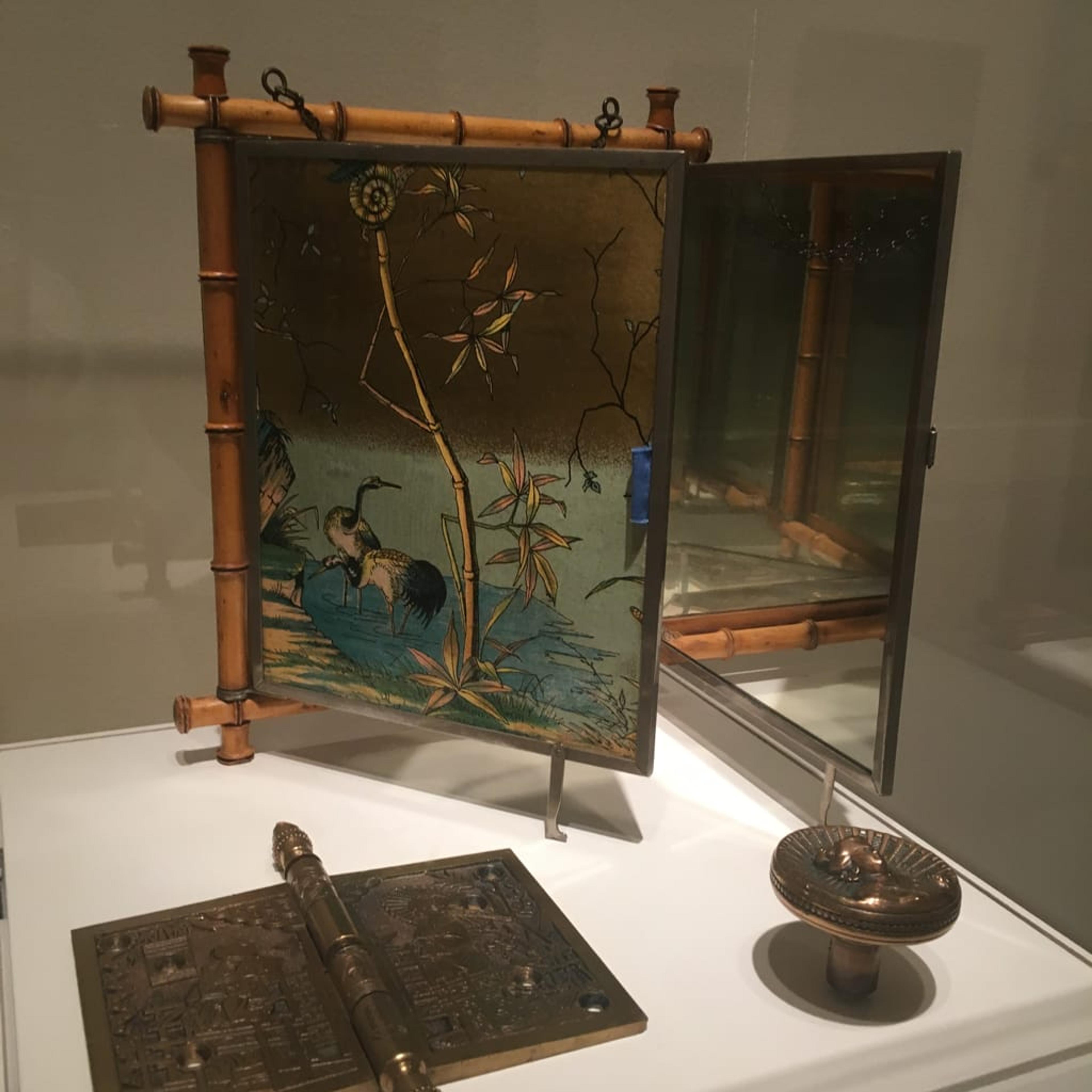 This is in a style known as Aestheticism. It is highly decorative and draws inspiration from cultures that were considered "exotic" in the 19th century, such as Japan.The motto of the Aesthetic Movement was "Art for Art's Sake", which expressed the idea that objects should be as beautiful and artistic as possible, and did not need to convey a moralistic message or even serve a utilitarian function.
Tell me something about this.
This folding mirror is considered innovative because of it's hinges. The design had actually existed for over ten years, having been patented first in France in 1876 then in England by 1881.The hinges were the only new addition that the designer made. Evidently, the mirror's Japanese motifs were popular enough before the hinges, though they did finally allow buyers to spread the mirror flat against their walls!Tell me more.
These objects are terrific examples of American design from the Aesthetic Movement. At this time, designers were strongly influenced by the art and design of Japan. The slogan for the Aesthetic Movement was "Art for Art's Sake." This meant that people could surround themselves with beautiful things without the expectation that it had to be moralistic or educational (as much art was earlier in the 1800s).Were these European-American artists formally trained by Japanese artists or did they just study the art they saw and replicate or incorporate it in their own way?
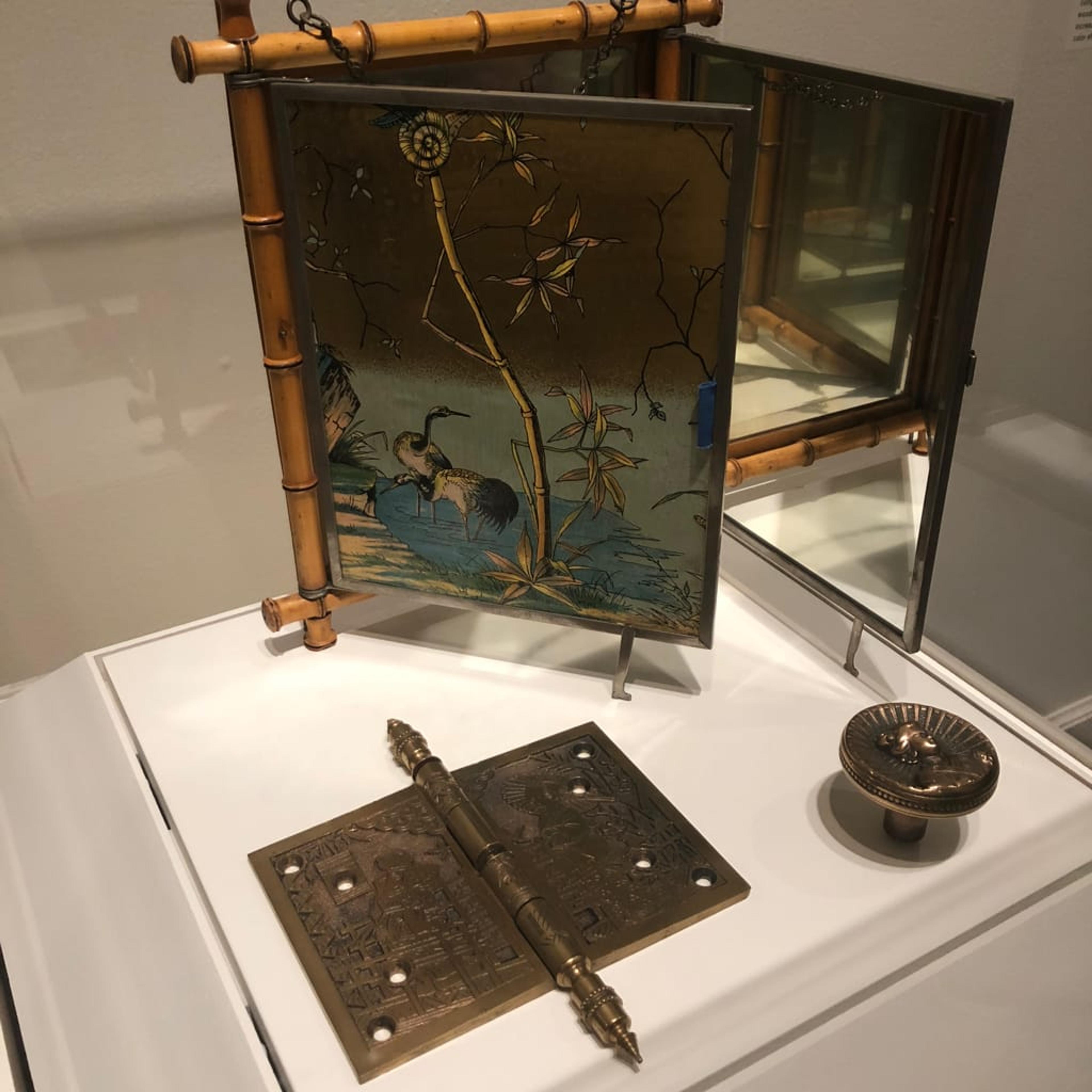 The latter! During this time, right after the travel restrictions were lifted at the close of the Civil War, American artists were found inspiration abroad, either through firsthand travel or encounters with Asian materials and objects through exhibitions, such as world's fairs, or numerous publications.
Have information?
Have information about an artwork? Contact us at