Hat (Jurip)
18th–19th century
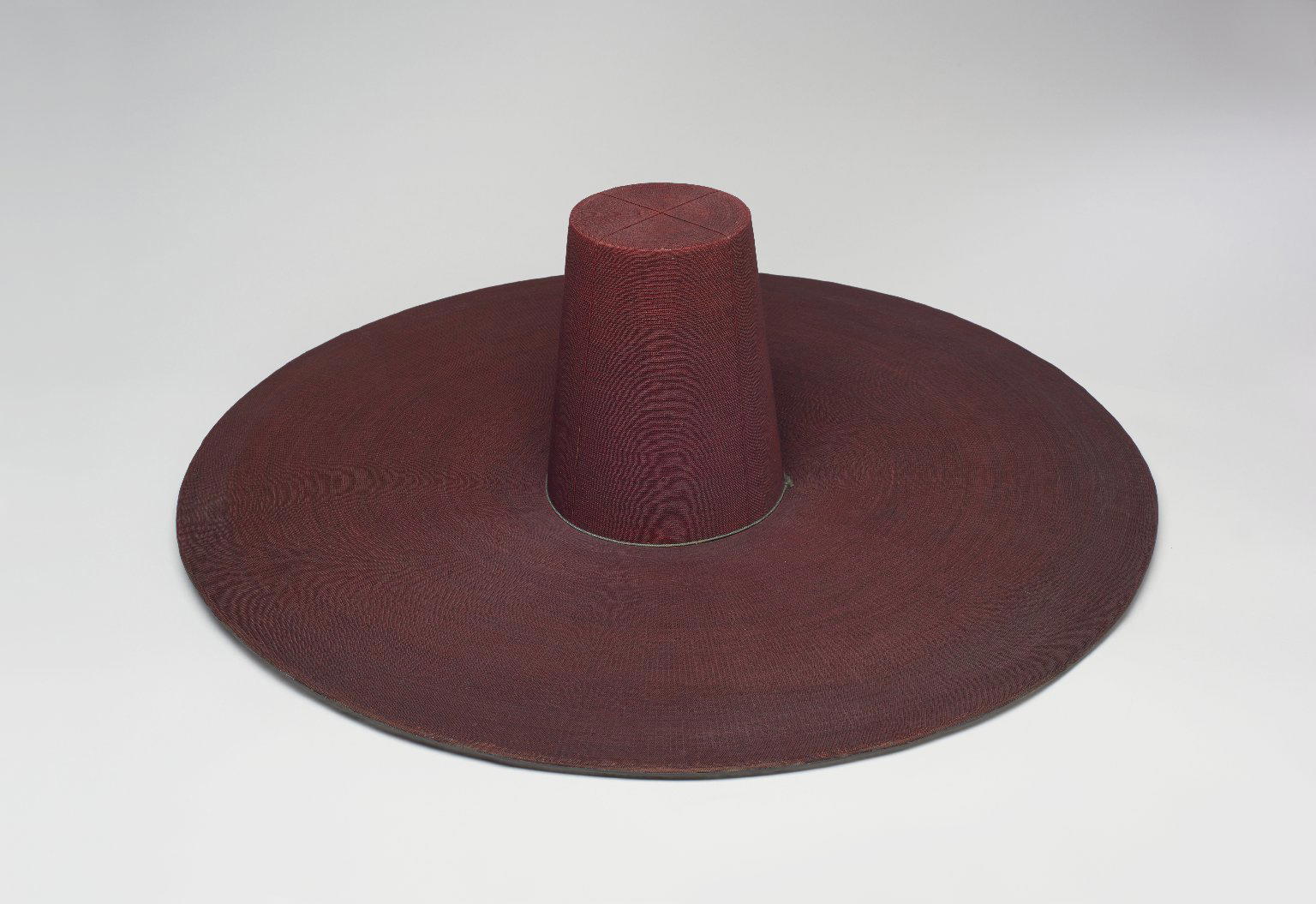
Object Label
Throughout the reign of the Joseon dynasty, men of the upper classes were required to wear brimmed hats called gat any time they appeared in public. Initially the hats had very wide brims as in this example. In the mid-nineteenth century, however, as part of reforms designed to curb the excesses of the aristocracy, Daewongun (regent for the king from 1863 to 1873) banned large hats, replacing them with much smaller models. As a result, this example—and its storage box—is extremely rare. Even rarer is the hat’s red cloth covering, which distinguishes it as a type worn only by high-ranking officials when attending special ceremonies.
Caption
Hat (Jurip), 18th–19th century. Horsehair, bamboo, paper, lacquer, metal, 7 1/2 x 25 3/8 in. (19 x 64.5 cm). Brooklyn Museum, Brooklyn Museum Collection, X1144.1.
Collection
Collection
Frequent Art Questions
How was this made?
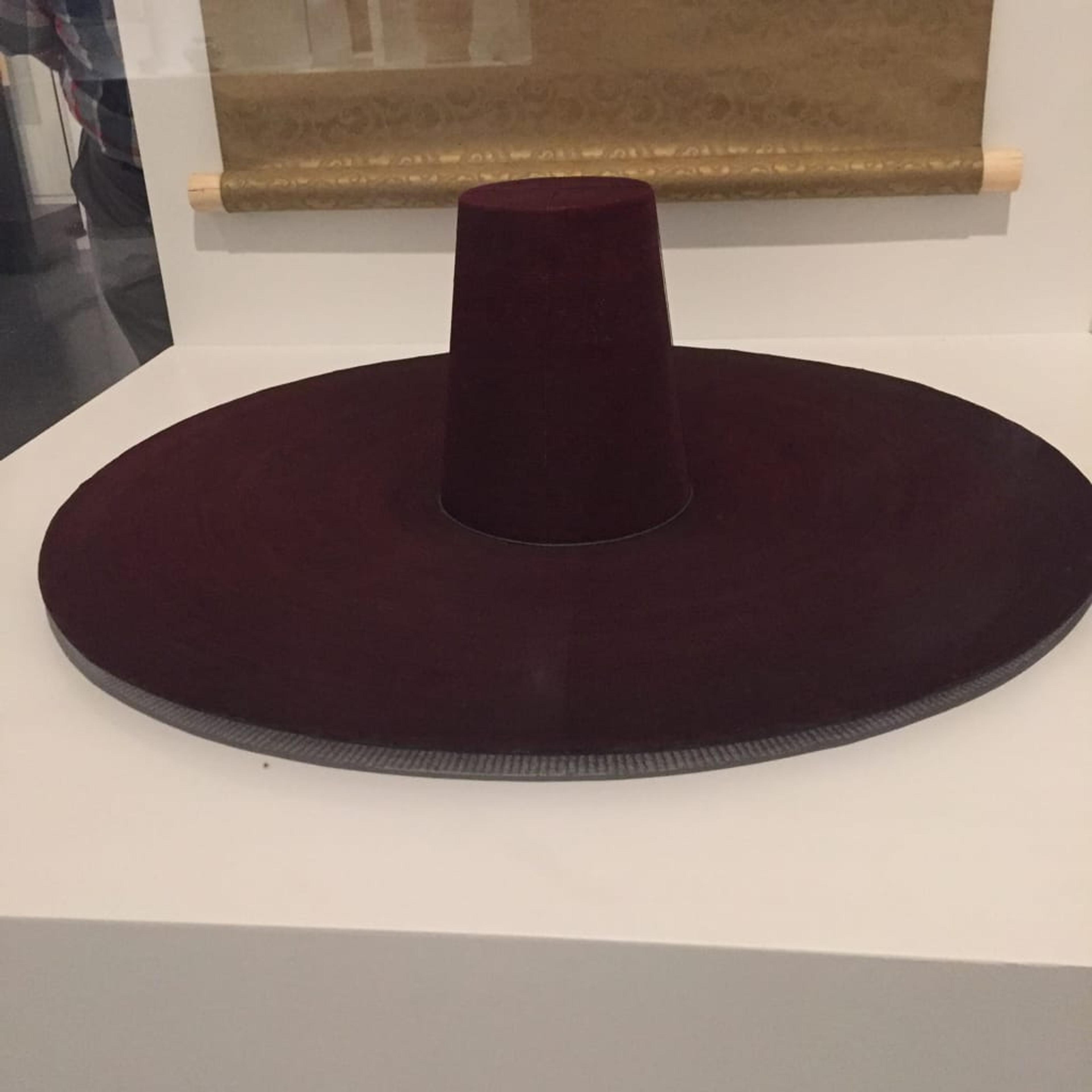 Metal and bamboo were used a framing for the hat. The surface is constructed out of horsehair that has been lacquered to keep it stiff.
Tell me more about these hats.
Hello! Korean men covered their heads at all times during the Joseon period, and had different hats for different ranks and occasions.Our next question is, what is the functionality of this hat’s huge brim? Is it purely decorative?
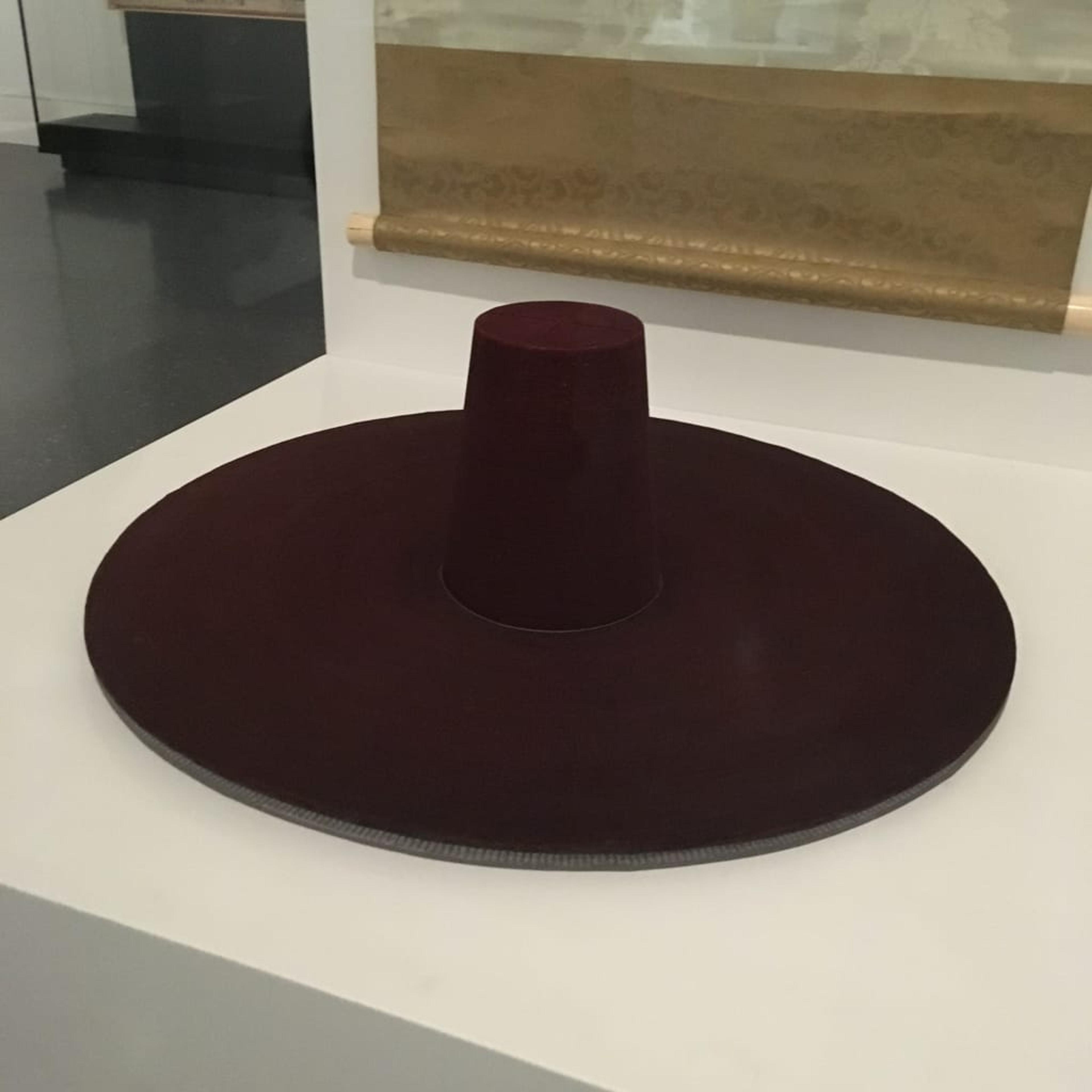 This hat's shape and color were an indication of status in Korean society during the Joseon period.I'm not sure of the origin of the wide brim, but I do know that it was eventually banned by the government because it was deemed too large to be practical. If all of the officials wore these hats (which they often did for formal occasions) there was a limit to how many men--or rather, their hats--could fit in a room!Ah! That’s hysterical! Thank you so much.
At what point in history did big hats become déclassé?
 In Korea, the large brimmed Gat hats were worn into the mid-19th century. They were banned by the royal regent as part of a group of reforms aimed at reducing the power of the aristocracy. Outside of Korea, I think it depends on the culture!That’s interesting. At the Dallas Museum of Art I read that massive hats were worn as a show of wealth.I can see that, because of the labor and materials that go into producing them!Thank you for answering my questions!
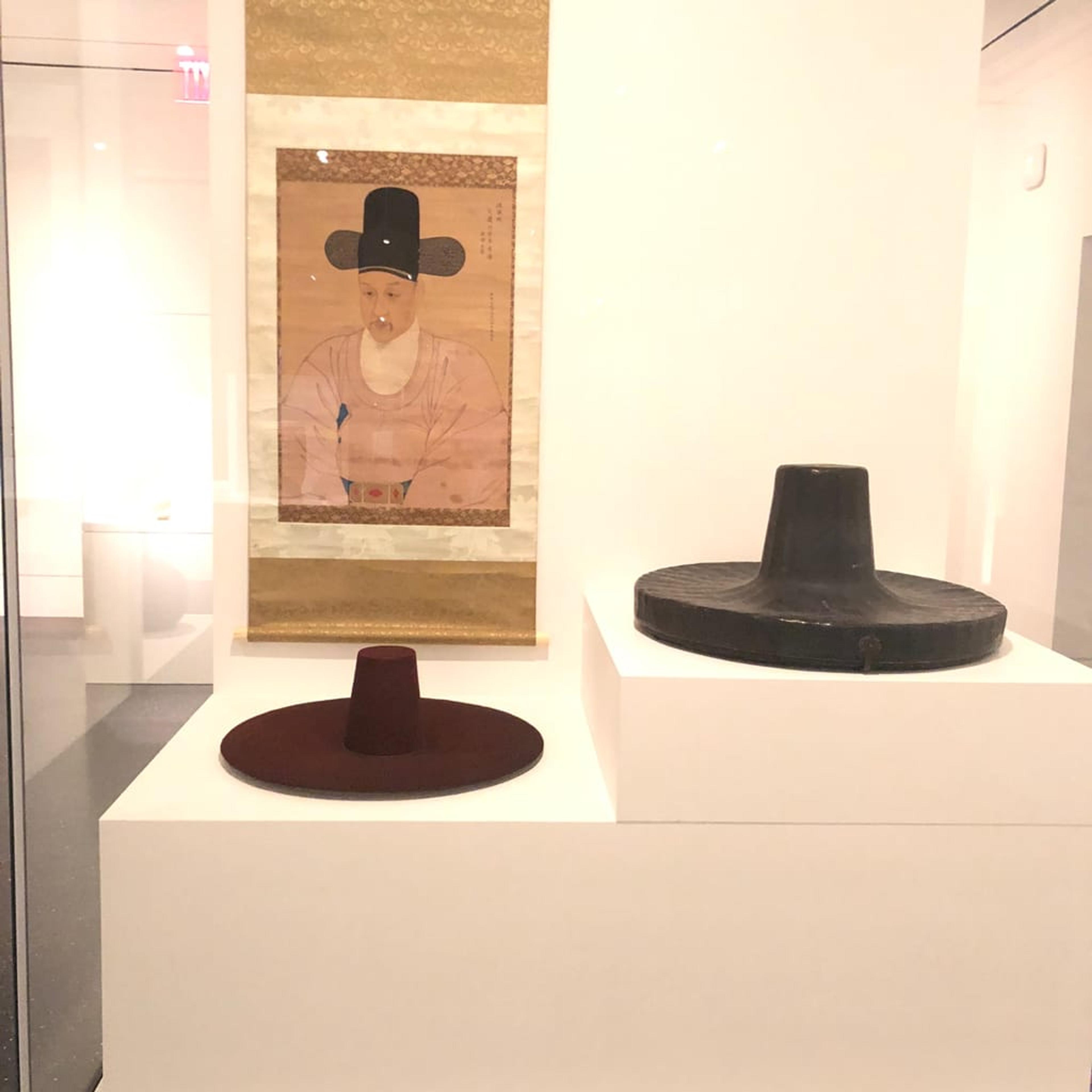
Was this hat for ceremonies or daily use?
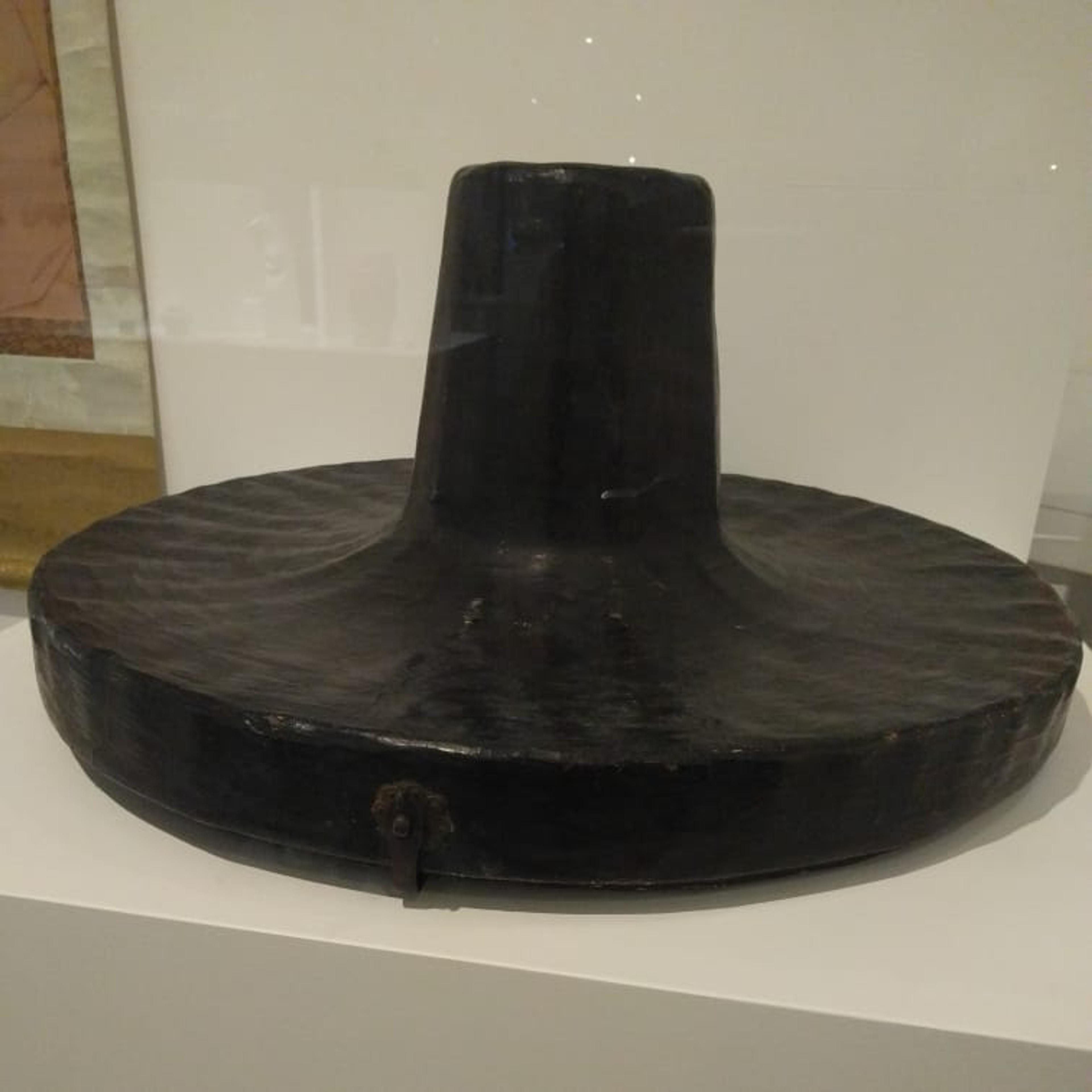 This box, known as a Gatjip, is meant to house the hat, or Gat, next to it in the case. This hat and box combination is very rare to have survived from 18th-19th century Korea.Most Gat's were black, this red color is especially unique and suggests that this hat belonged to an especially high ranking individual. Eventually, these very broad brims were banned because they were deemed too extravagant.
Have information?
Have information about an artwork? Contact us at