Hawk Mummy
30 B.C.E.–395 C.E.


1 of 2
Object Label
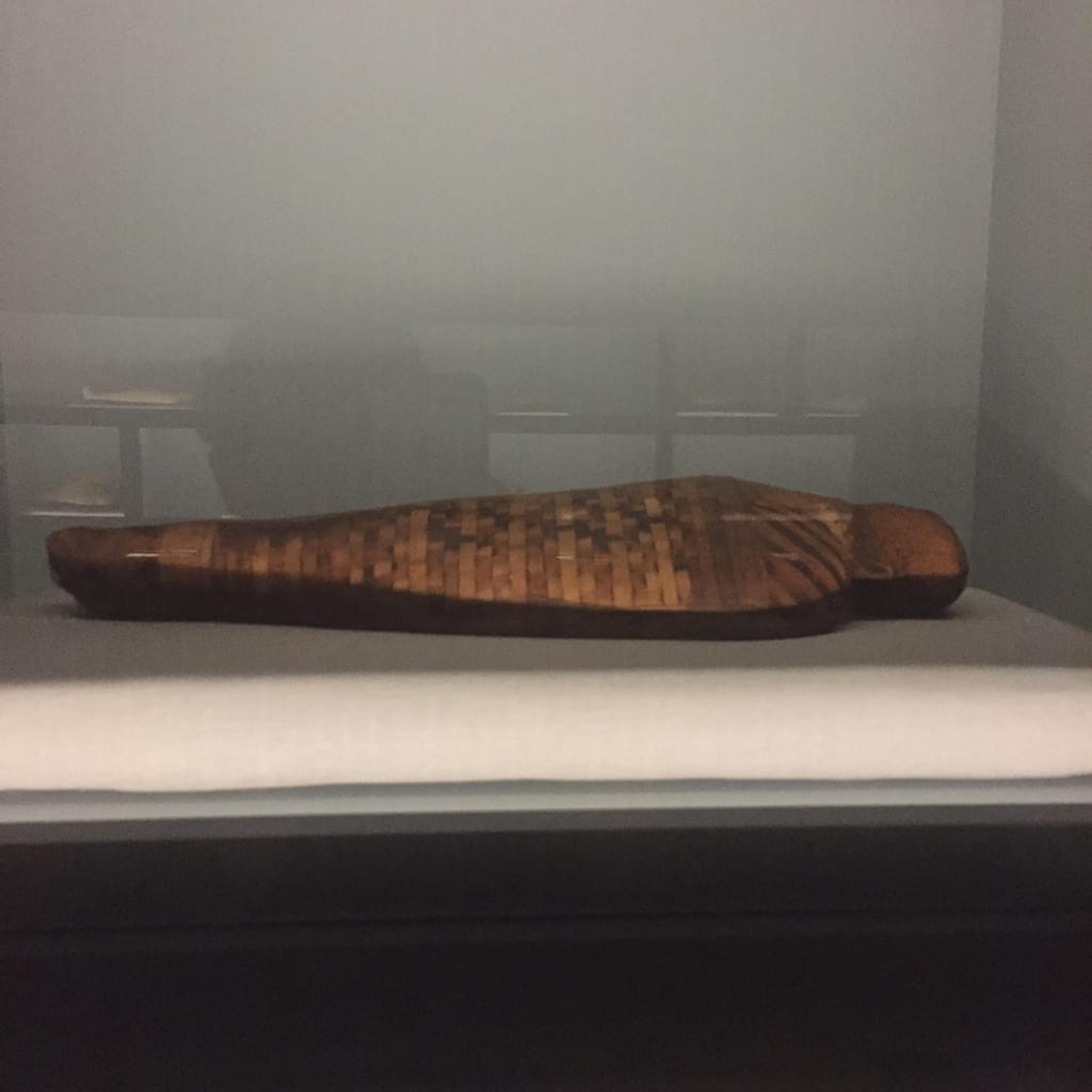
The hawk mummy, with an elaborate pattern of dyed and undyed linen, comes from the Egypt Exploration Fund excavations in Abydos in 1913. The brown dye was made from iron-bearing clay. This pattern and dying technique help identify other animal mummies as being from this site.
The falcon mummy, with undyed linen wrapped in concentric circles around it, has no known burial site. Scholars hope eventually to be able to identify the site or sites where this second wrapping technique was used, revealing more about this mummy than is currently known.
The falcon mummy, with undyed linen wrapped in concentric circles around it, has no known burial site. Scholars hope eventually to be able to identify the site or sites where this second wrapping technique was used, revealing more about this mummy than is currently known.
Caption
Hawk Mummy, 30 B.C.E.–395 C.E.. Animal remains, linen, 16 1/2 × 4 7/8 × 2 5/8 in. (41.9 × 12.4 × 6.7 cm) as mounted: 4 1/2 x 8 7/8 x 20 3/4 in. (11.4 x 22.5 x 52.7 cm). Brooklyn Museum, Gift of the Egypt Exploration Fund, 13.1092. (Photo: Brooklyn Museum)
Gallery
Not on view
Gallery
Not on view
Title
Hawk Mummy
Date
30 B.C.E.–395 C.E.
Period
Roman Period
Medium
Animal remains, linen
Classification
Dimensions
16 1/2 × 4 7/8 × 2 5/8 in. (41.9 × 12.4 × 6.7 cm) as mounted: 4 1/2 x 8 7/8 x 20 3/4 in. (11.4 x 22.5 x 52.7 cm)
Credit Line
Gift of the Egypt Exploration Fund
Accession Number
13.1092
Frequent Art Questions
We’re any of these found before x-rays existed?
 Many of these mummies were found before x-rays existed, yes. With new x-ray technologies we can learn more and more about them!So they physically opened them up, at first?In the past, some mummies were opened, yes. Many were left in tact, though and we are only now able to see inside of them with modern imaging technologies.Thanks! You guys are always so great about answering my million questions.
Have information?
Have information about an artwork? Contact us at