Standing Figure
Jama-Coaque

Brooklyn Museum photograph
Caption
Jama-Coaque. Standing Figure, 1–600 C.E.. Ceramic, pigment, 18 3/4 x 13 1/4 x 6 1/2 in. (47.6 x 33.7 x 16.5 cm). Brooklyn Museum, Gift of Mr. and Mrs. Tessim Zorach, 88.57.1. (Photo: Brooklyn Museum)
Gallery
Not on view
Collection
Gallery
Not on view
Collection
Culture
Title
Standing Figure
Date
1–600 C.E.
Period
Regional Developmental Period
Geography
Possible place made: Manabí Province, Ecuador, Possible place made: Esmeraldas Province, Ecuador
Medium
Ceramic, pigment
Classification
Dimensions
18 3/4 x 13 1/4 x 6 1/2 in. (47.6 x 33.7 x 16.5 cm)
Credit Line
Gift of Mr. and Mrs. Tessim Zorach
Accession Number
88.57.1
Frequent Art Questions
I'm in the Luce Center, can you tell me more about 88.57.1?
That sculpture is made of ceramic, with traces of green and yellow paint. It wears a nose-ring and earrings, and its tunic and hat are decorated with a pattern like animal tusks. This figure was made in a mold and then its smaller pieces, made in small separate molds, were applied. It was probably meant to be viewed from the front and was probably used in rituals that we don't know much about today. The clothing and jewelry would have been symbolic to the sculpture's original viewers they would have understood the messages about social status. Also, the Jama Coaque culture (the makers of this piece) was located in Ecuador, South America.What is this and where is it from?
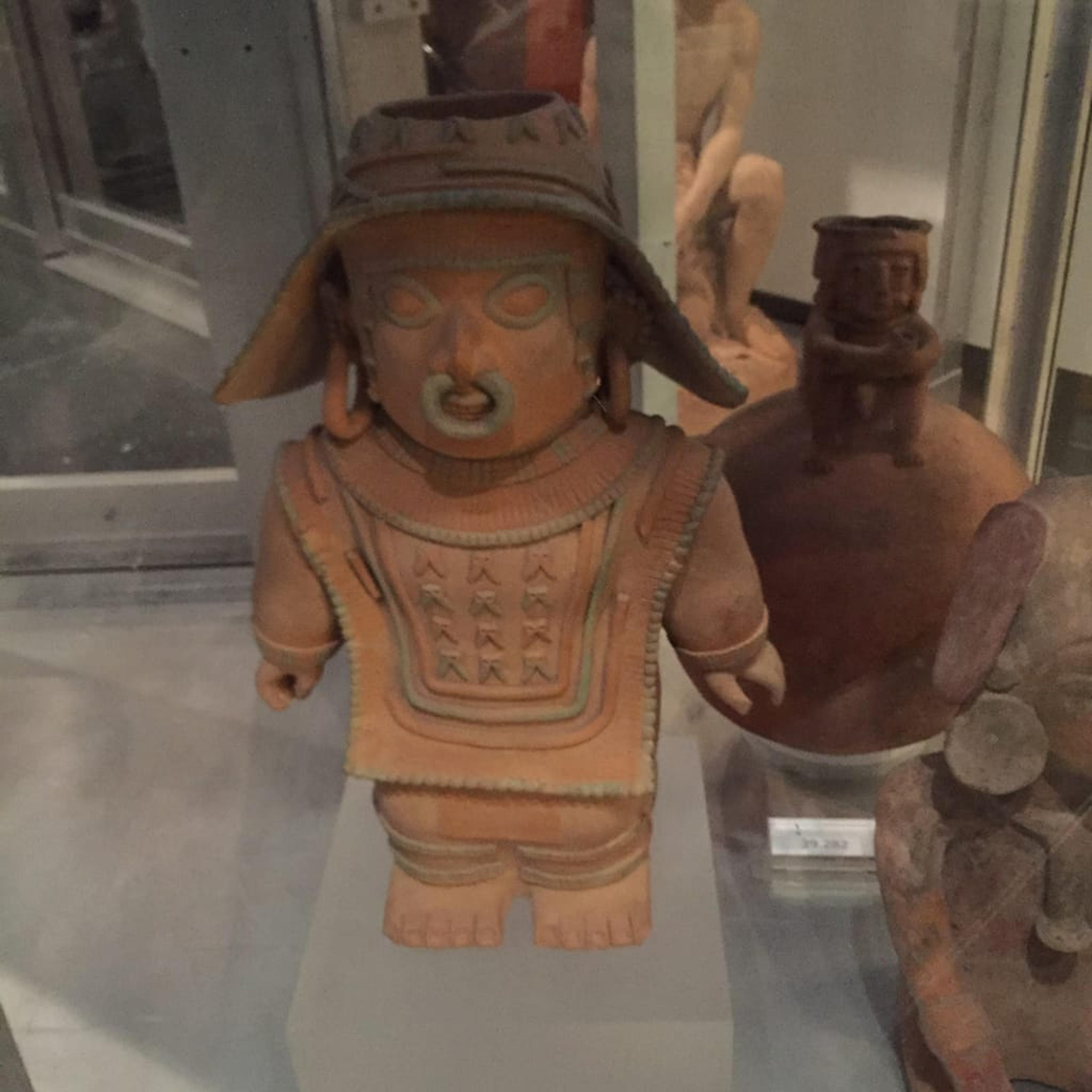 The work you sent is a ceramic sculpture by a Jama Coaque artist (from Ecuador). Jama Coaque artists are known for producing complex mold and hand made ceramics. This particular example dates to between the years 1 and 600 C.E.This form is called an "effigy vessel." This type of ceramic sculpture often depicts humans or animals. We have an example of an animal vessel by another Jama Coaque artist on view at the beginning of our American galleries!
Have information?
Have information about an artwork? Contact us at