Hawk Mummy
1 of 3
Object Label
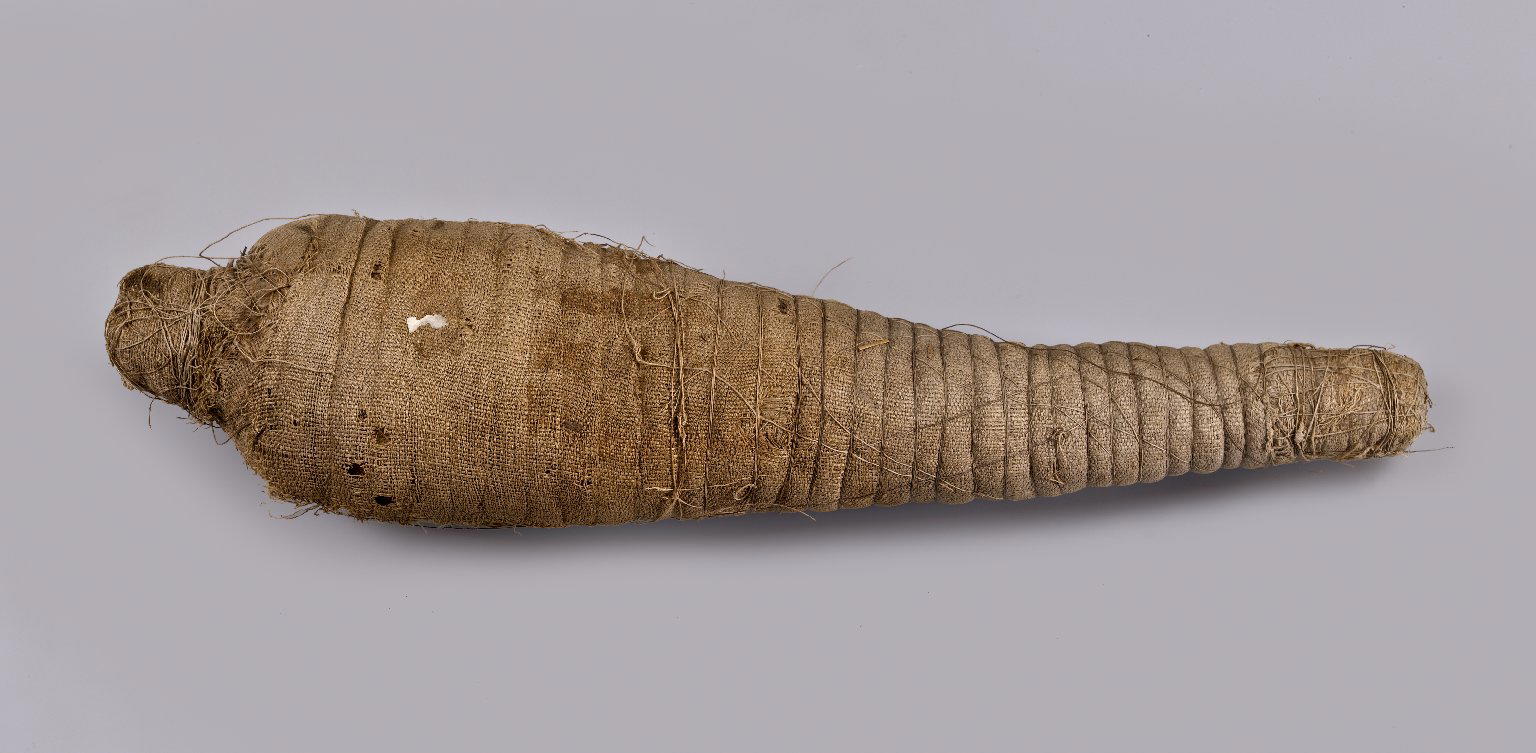
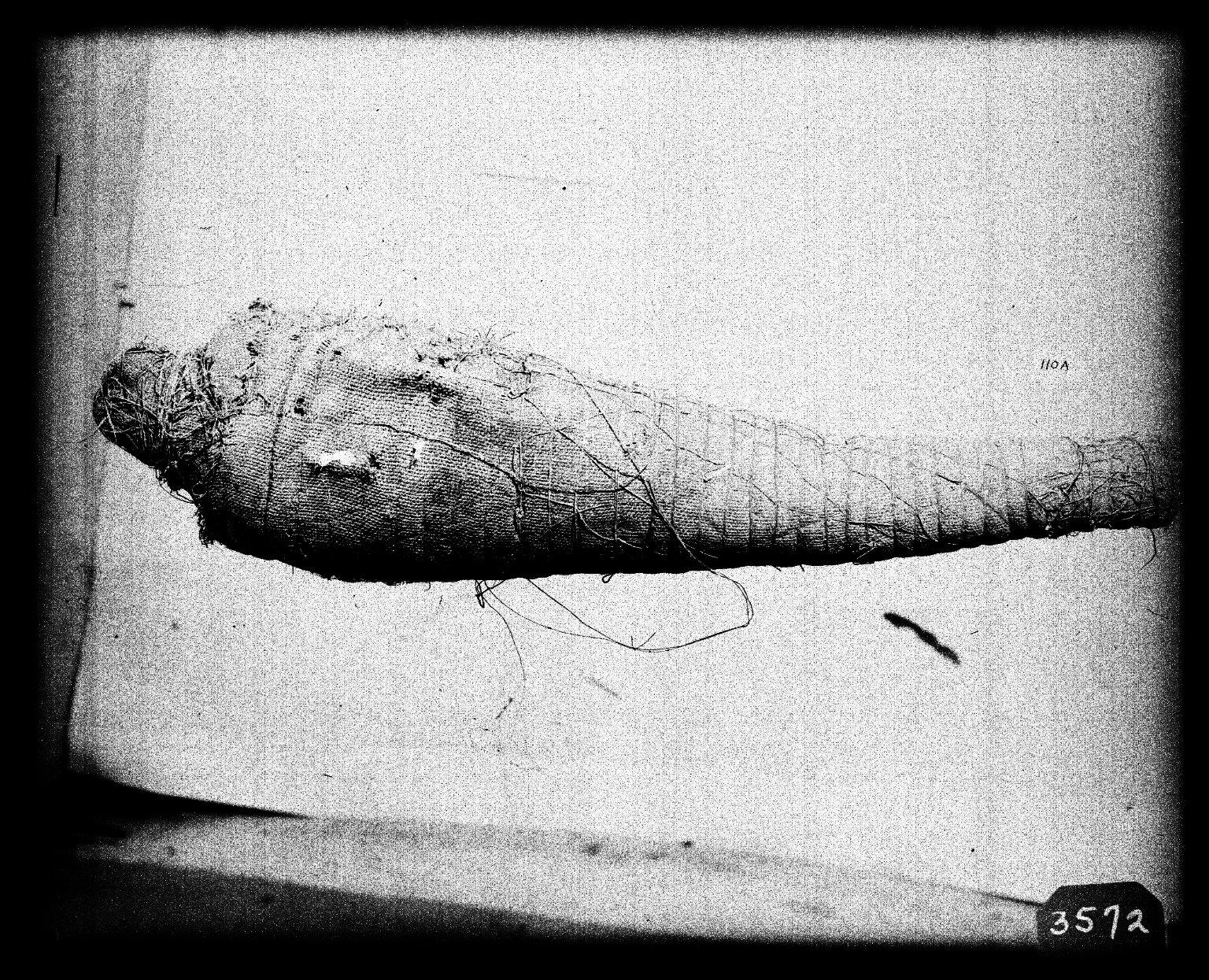
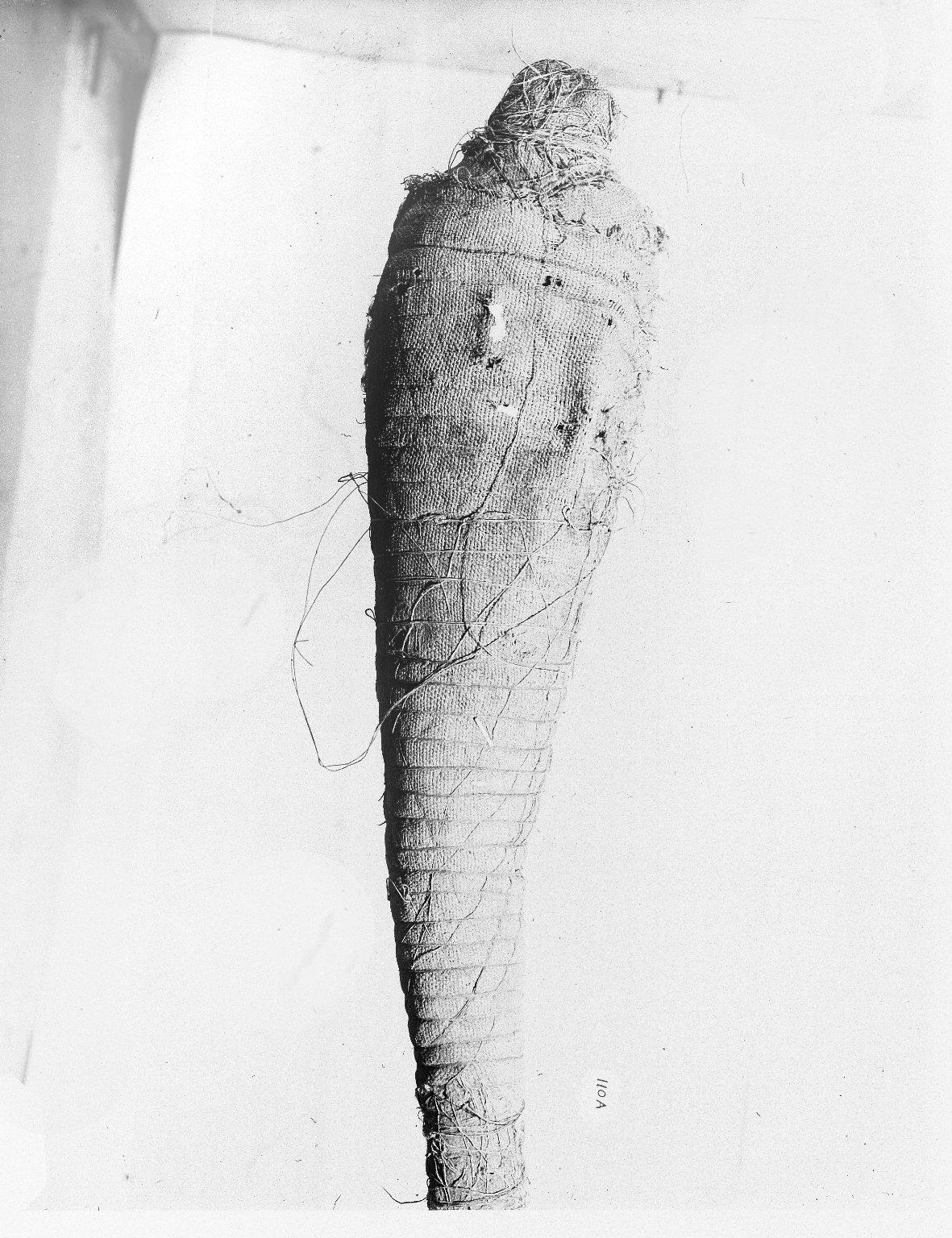
The falcon mummy, with undyed linen wrapped in concentric circles around it, has no known burial site. Scholars hope eventually to be able to identify the site or sites where this second wrapping technique was used, revealing more about this mummy than is currently known.
Caption
Hawk Mummy, 664–30 B.C.E.. Animal remains (Common Kestrel, genus Falco), linen, wood, 4 1/4 × 3 × 16 3/4 in. (10.8 × 7.6 × 42.5 cm) mount (display dims on support board): 4 1/2 × 8 × 21 in. (11.4 × 20.3 × 53.3 cm). Brooklyn Museum, Charles Edwin Wilbour Fund, 37.2042.3E. (Photo: Brooklyn Museum (Gavin Ashworth, photographer))
Gallery
Not on view
Gallery
Not on view
Title
Hawk Mummy
Date
664–30 B.C.E.
Dynasty
Dynasty 26, or later
Period
Late Period to Ptolemaic Period
Geography
Place made: Egypt
Medium
Animal remains (Common Kestrel, genus Falco), linen, wood
Classification
Dimensions
4 1/4 × 3 × 16 3/4 in. (10.8 × 7.6 × 42.5 cm) mount (display dims on support board): 4 1/2 × 8 × 21 in. (11.4 × 20.3 × 53.3 cm)
Credit Line
Charles Edwin Wilbour Fund
Accession Number
37.2042.3E
Have information?
Have information about an artwork? Contact us at