Ibis Mummy
664–30 B.C.E.

Brooklyn Museum photograph
Object Label
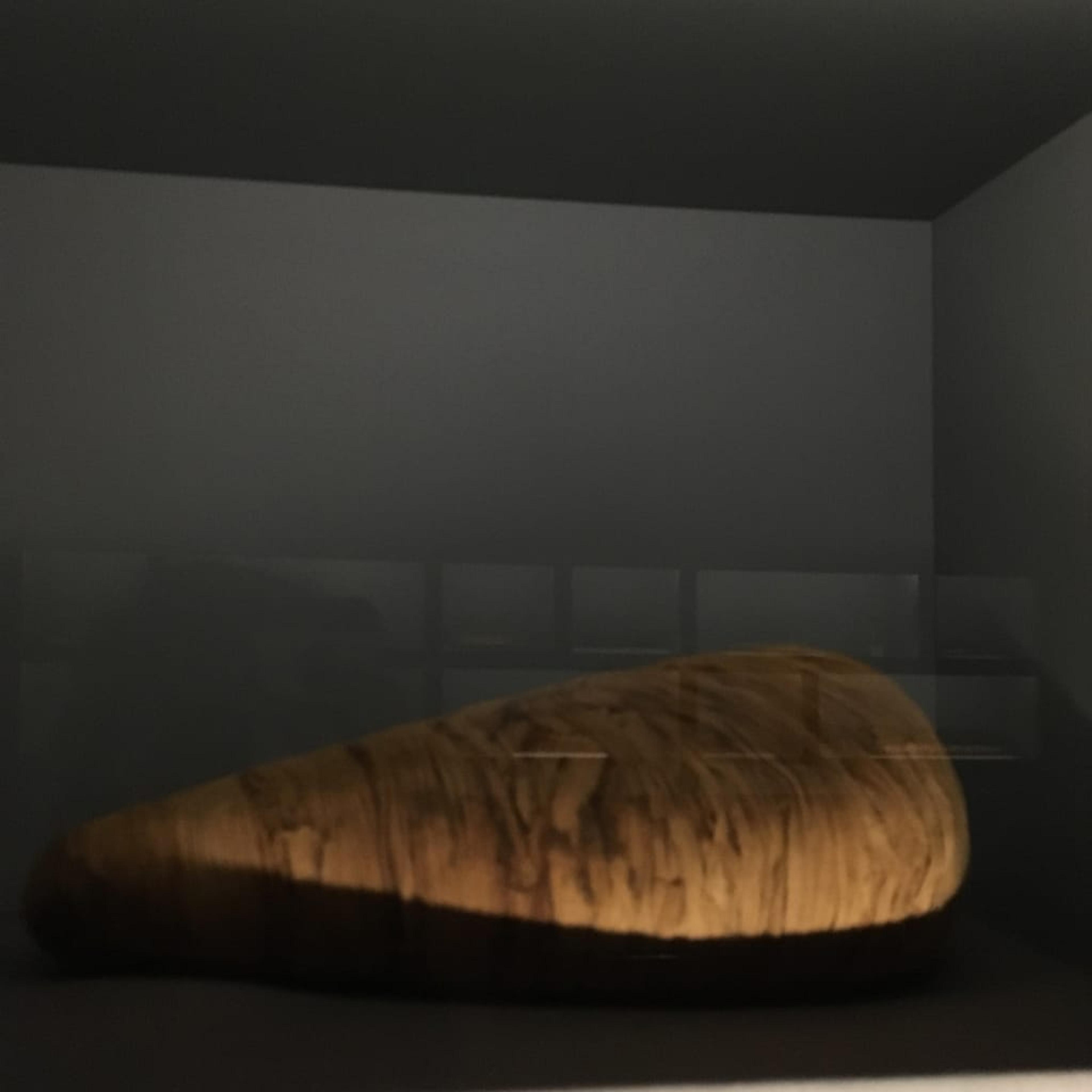
Though both of these mummies originally had elaborate wrappings, it is impossible to predict from the wrappings exactly what lies inside the package. CT scans and X-rays reveal that one ibis is complete and the other mummy contains feathers but no skeleton. The fragmentary one might represent a corrupt practice that cheated the worshipper of a complete animal.
The mummy decorated with a herringbone pattern is complete.
The mummy decorated with a herringbone pattern is complete.
Caption
Ibis Mummy, 664–30 B.C.E.. Animal remains, linen, 15 11/16 × 7 1/2 × 6 in. (39.8 × 19.1 × 15.2 cm). Brooklyn Museum, Charles Edwin Wilbour Fund, 37.2042.7E. (Photo: Brooklyn Museum)
Gallery
Not on view
Gallery
Not on view
Title
Ibis Mummy
Date
664–30 B.C.E.
Dynasty
Dynasty 26, or later
Period
Late Period to Ptolemaic Period
Geography
Reportedly from: Saqqara, Egypt
Medium
Animal remains, linen
Classification
Dimensions
15 11/16 × 7 1/2 × 6 in. (39.8 × 19.1 × 15.2 cm)
Credit Line
Charles Edwin Wilbour Fund
Accession Number
37.2042.7E
Frequent Art Questions
Are the animal mummies wrapped in an additional netting? Or is that original
 Yes, the mummies are all in a very fine modern netting used for conservation purposes. Good eye!Oh wow, that’s cool!
What is the ibis mummy
Hi! An ibis is a type of water bird with a long, curved beak. The ancient Egyptians associated them with Thoth, the god of wisdom and writing.There were certain temples where the priests bred the birds specifically to be mummified and sold to the public for making donations to the god.Thank you!!What did the ibis symbolize something that made them so popular?
Their long beak resembled the reed pens used by scribes, which is how they came to be associated with the god Thoth.
Have information?
Have information about an artwork? Contact us at