Effigy Vessel in the Form of a Jaguar
Maya
1 of 8
Object Label
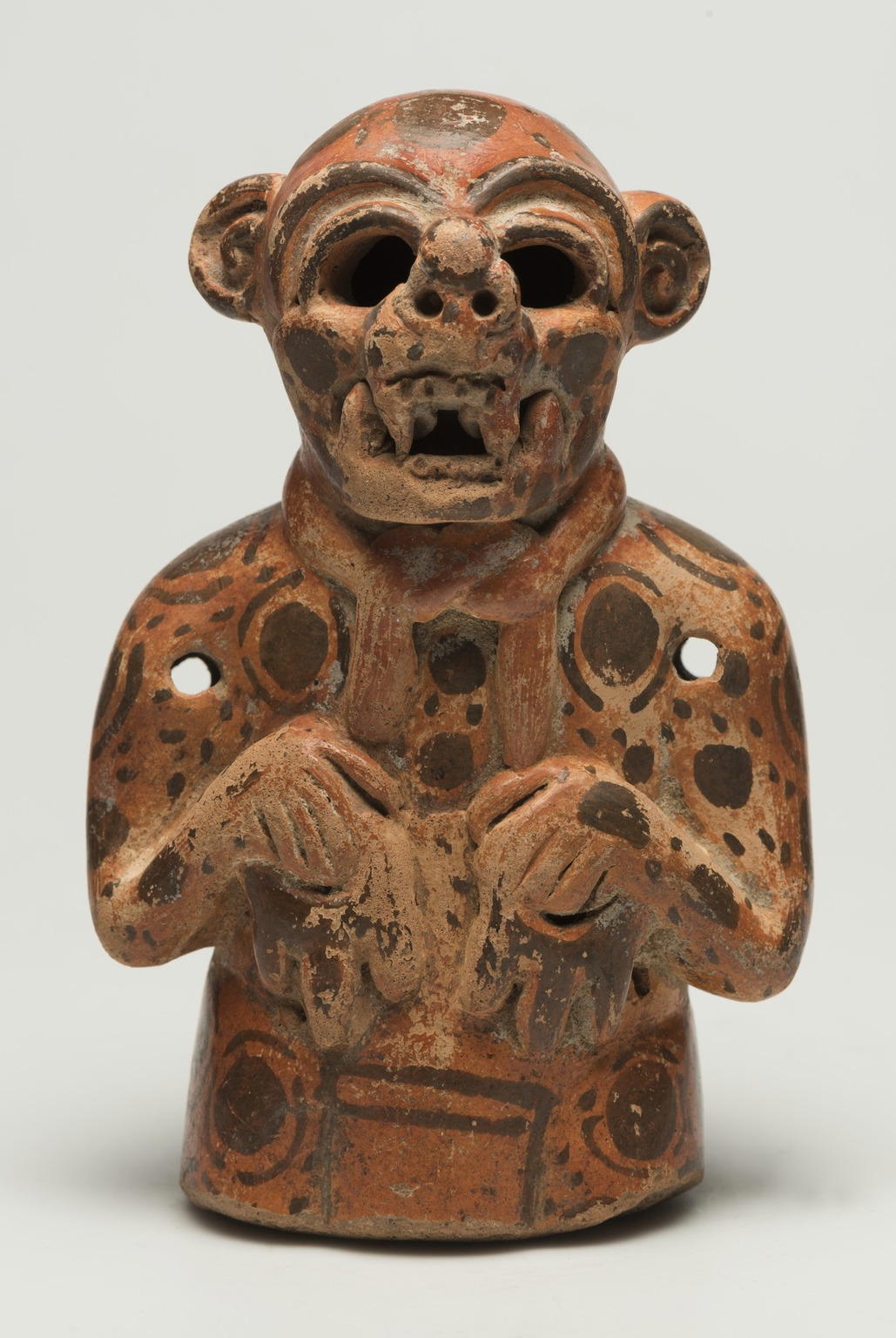
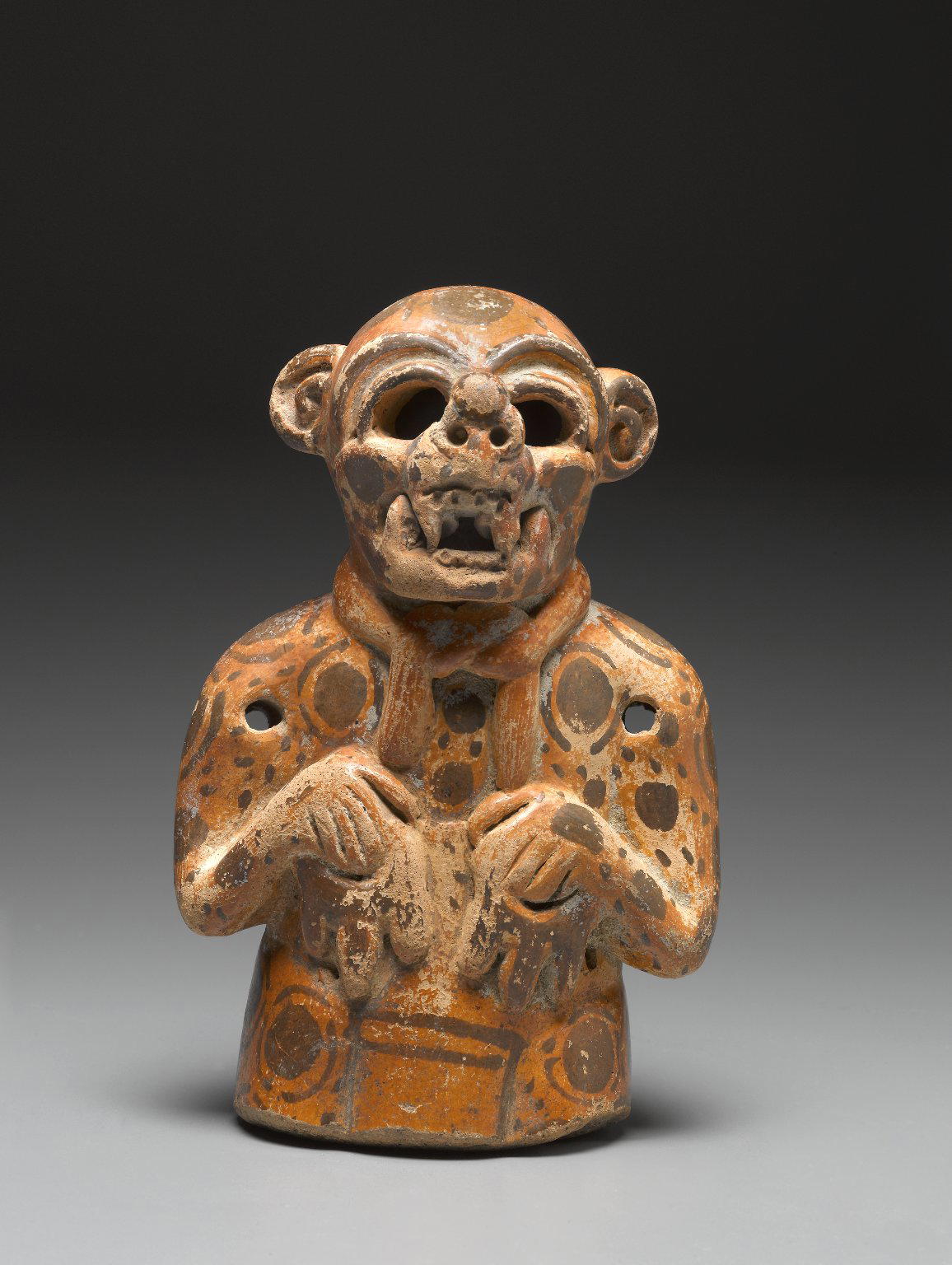
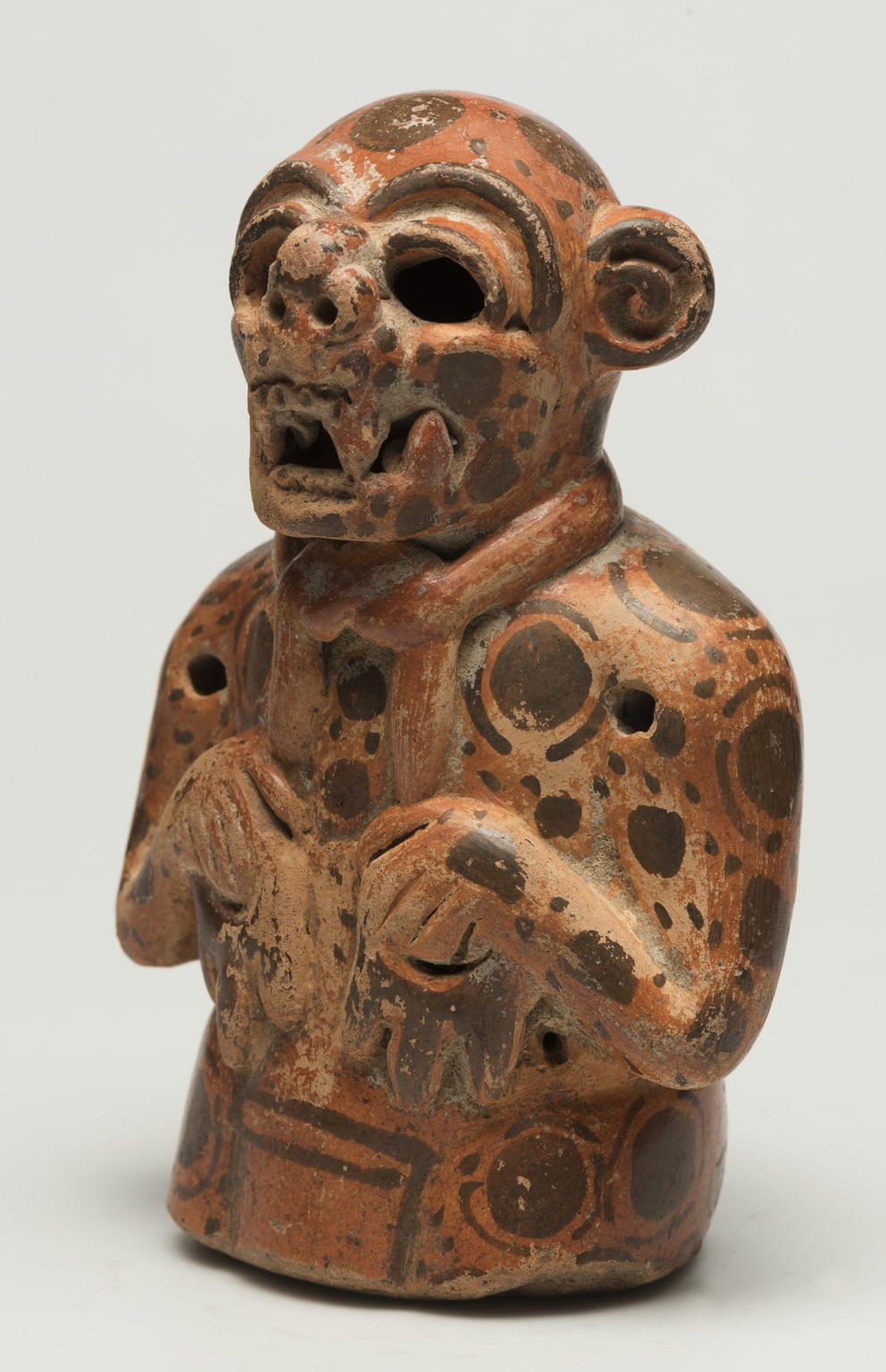
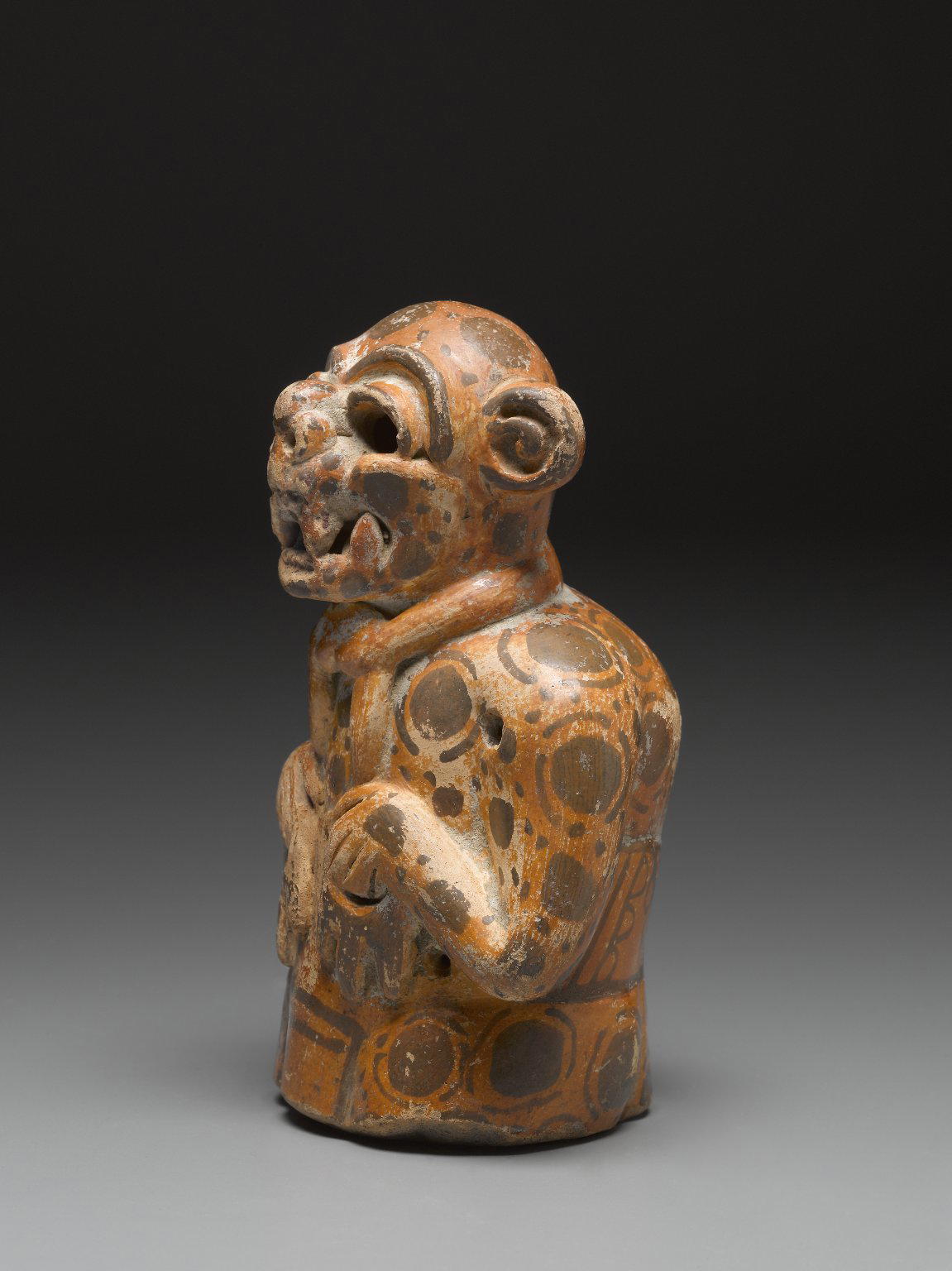
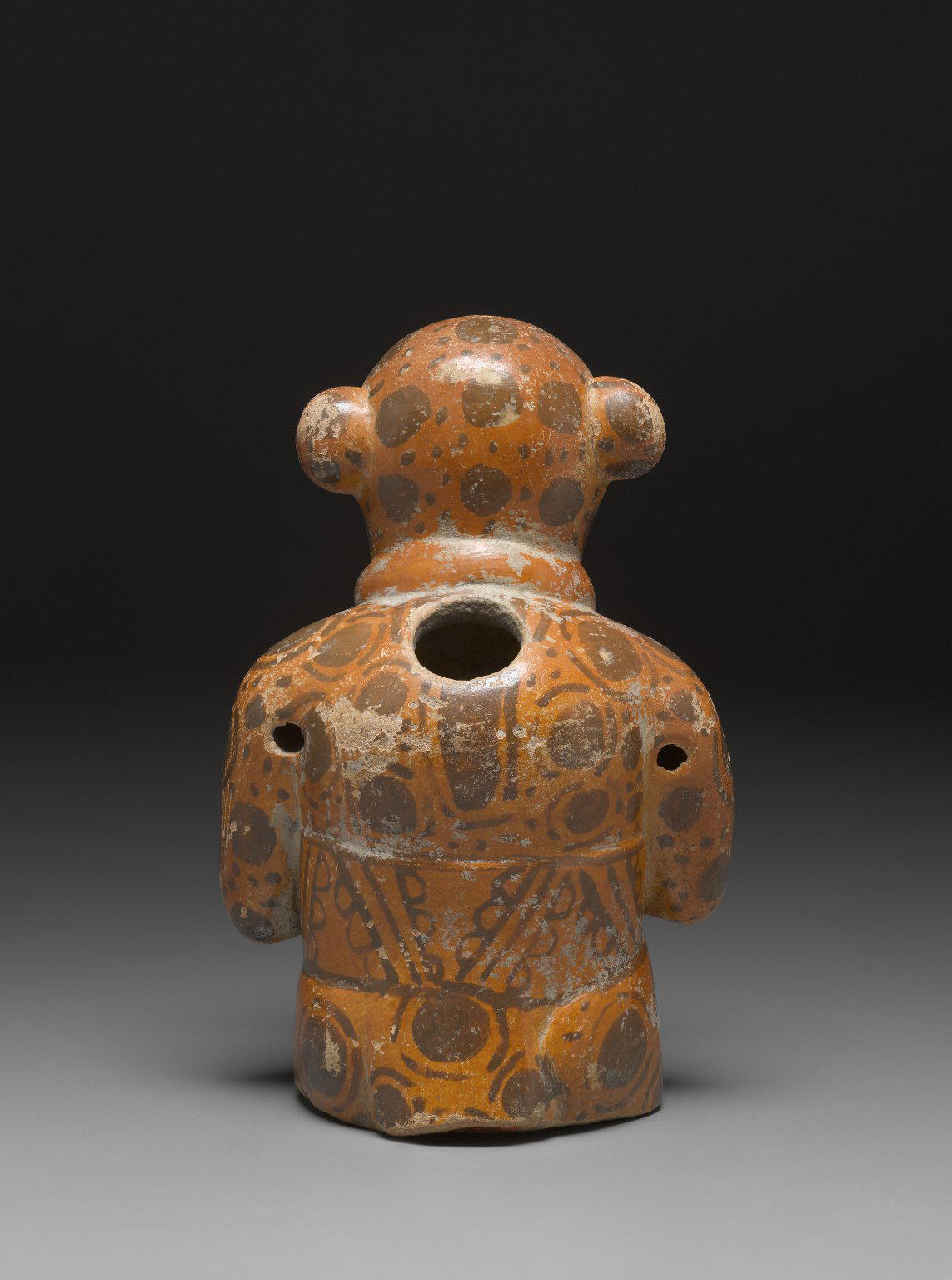
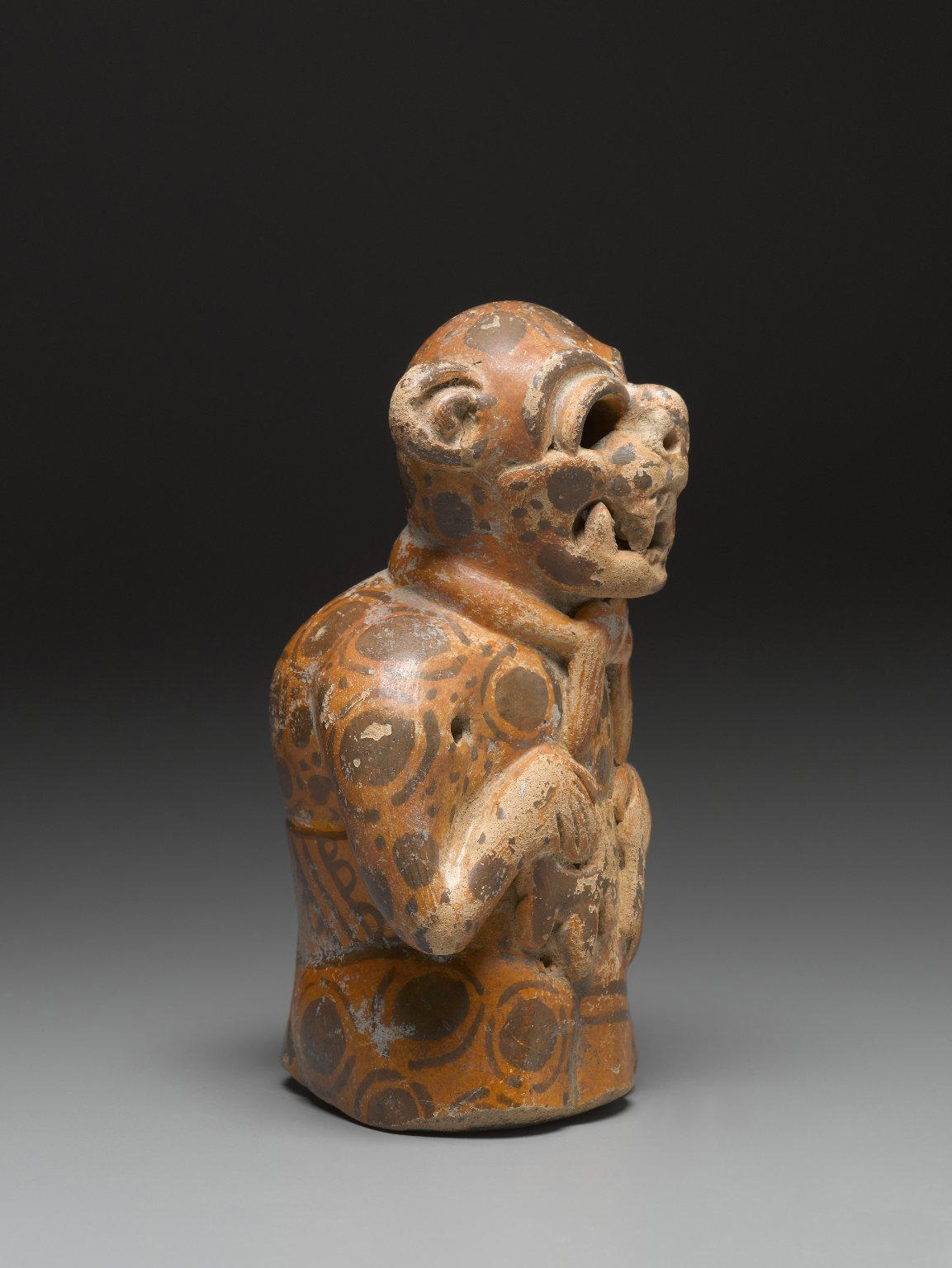
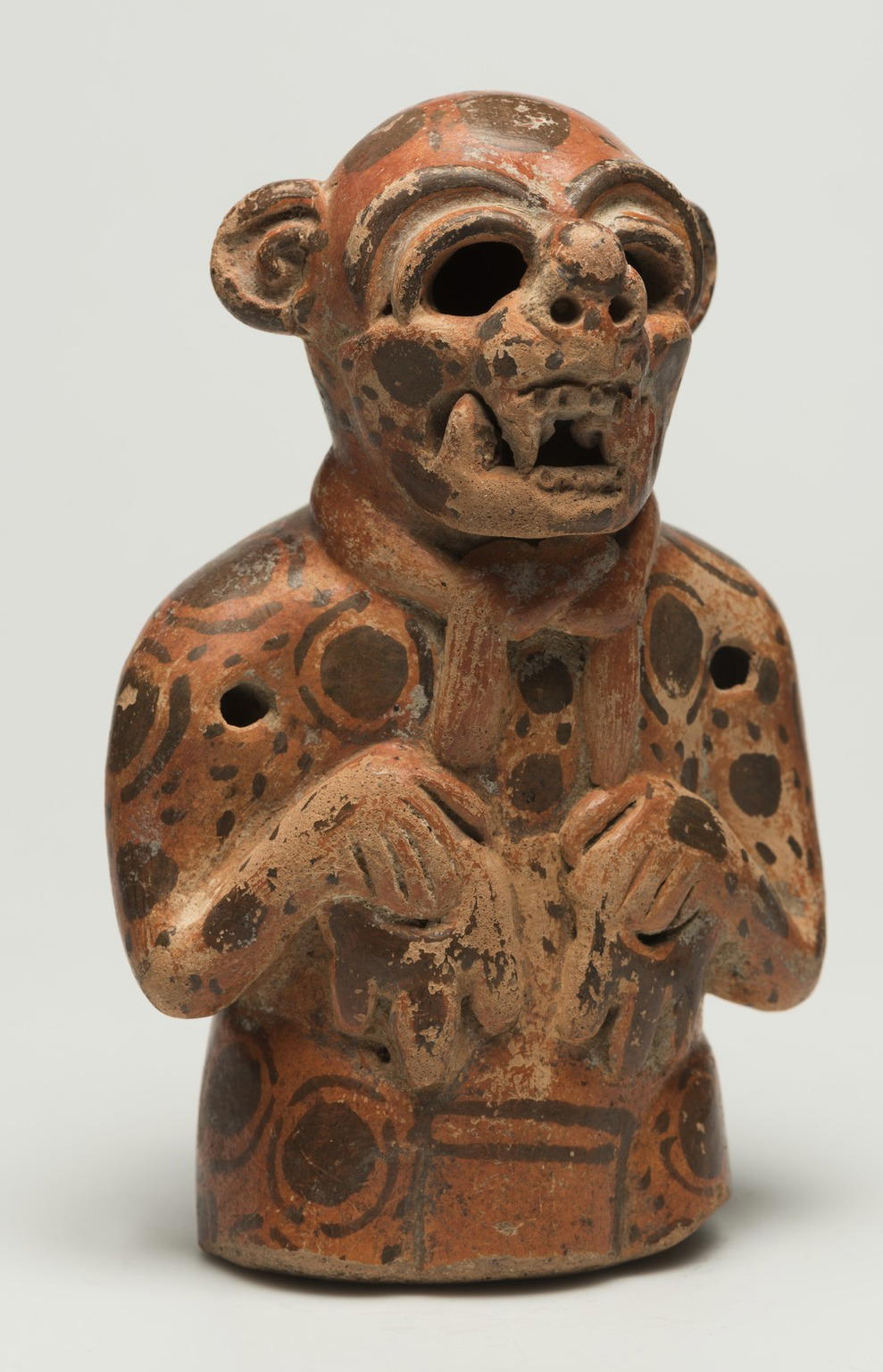
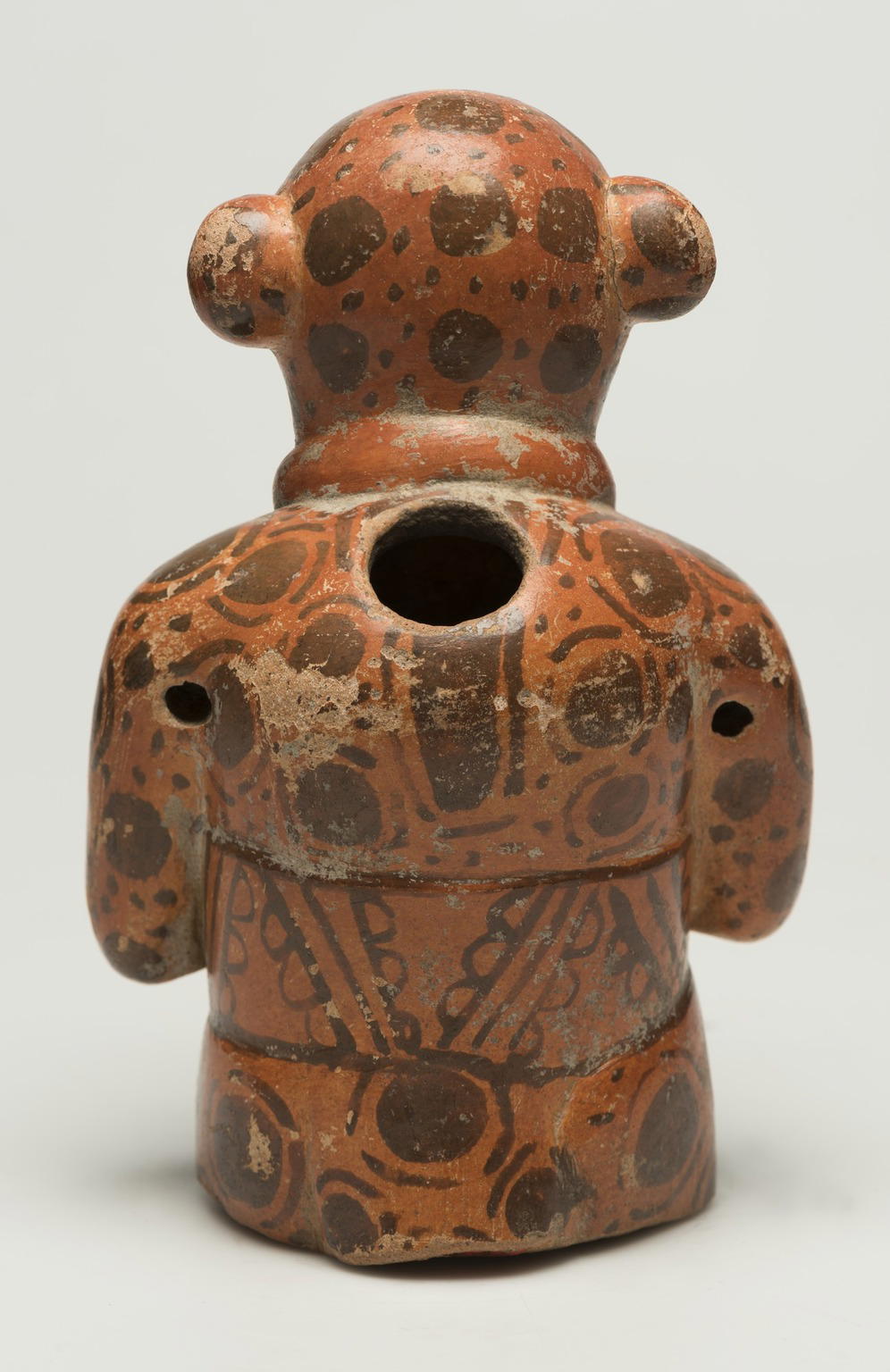
This Maya effigy vessel depicts the head and torso of a hunchback human figure wearing a full jaguar-skin costume. Small teeth are visible near the fangs, and hands appear above the paws. Hunchbacks and dwarves were highly respected among the Maya, frequently serving as attendants to rulers. Like the jaguar-skinned dancers depicted on cylindrical vessels, this figure may be impersonating the God of the Underworld, with the scarf around his neck symbolizing human sacrifice and death.
Caption
Maya. Effigy Vessel in the Form of a Jaguar, 400–500. Ceramic, pigment, 7 x 4 1/4 x 3 in. (17.8 x 10.8 x 7.6 cm) mount: 7 1/2 × 4 1/2 × 3 3/4 in. (19.1 × 11.4 × 9.5 cm). Brooklyn Museum, Gift in memory of Frederic Zeller, 2009.2.11. (Photo: Brooklyn Museum)
Gallery
Not on view
Collection
Gallery
Not on view
Collection
Culture
Title
Effigy Vessel in the Form of a Jaguar
Date
400–500
Geography
Possible place made: Mexico, Possible place made: Peten, Guatemala
Medium
Ceramic, pigment
Classification
Dimensions
7 x 4 1/4 x 3 in. (17.8 x 10.8 x 7.6 cm) mount: 7 1/2 × 4 1/2 × 3 3/4 in. (19.1 × 11.4 × 9.5 cm)
Credit Line
Gift in memory of Frederic Zeller
Accession Number
2009.2.11
Frequent Art Questions
Is this a person or a cat?
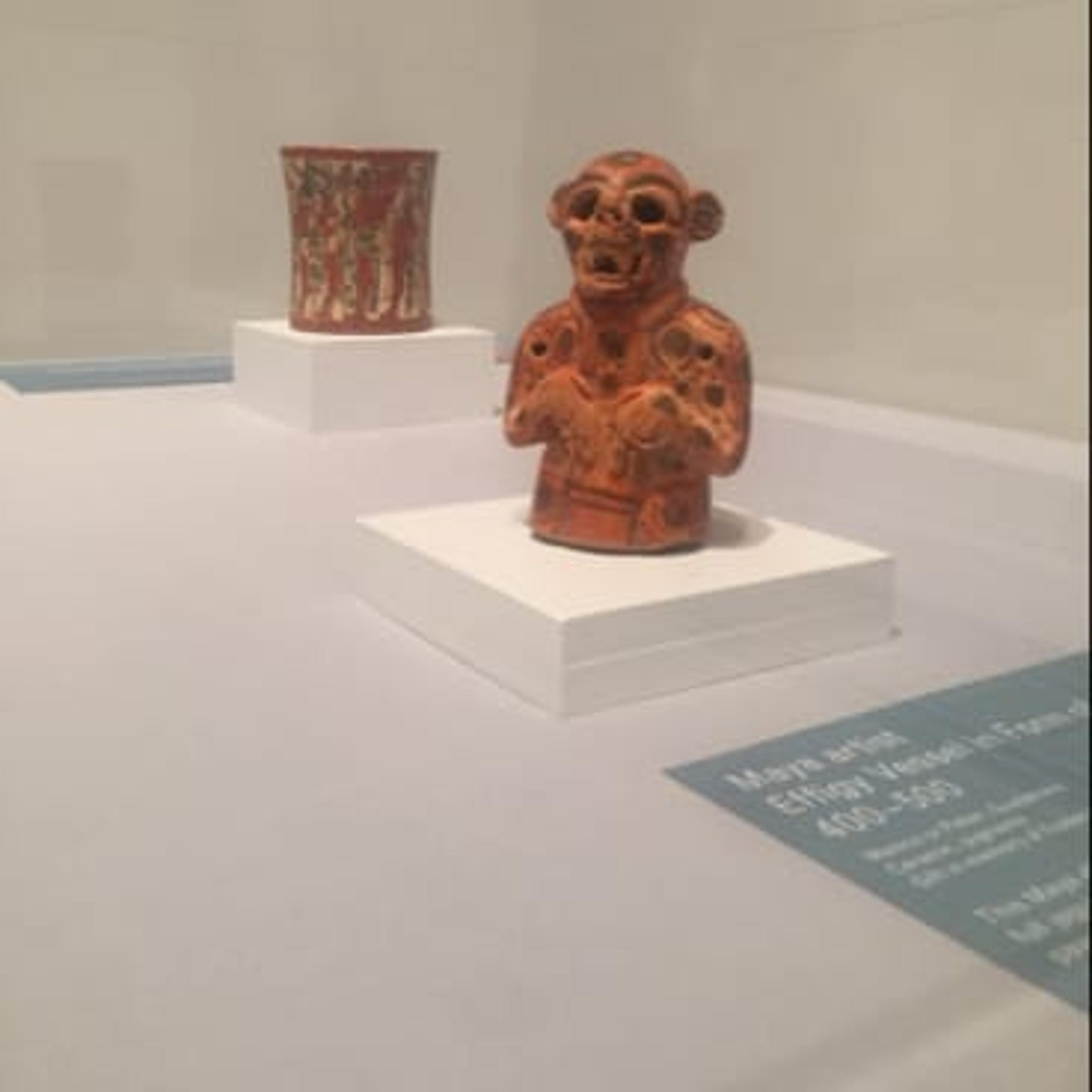 This ceramic by a Mayan artist depicts a human man wearing a jaguar-skin costume. Jaguars represented power and royalty in Mayan culture at the time.Humans wearing animal features or costumes may represent shamans. Shamans are members of the community who can intercede between the world we live in and the supernatural worlds.
Have information?
Have information about an artwork? Contact us at