Dresser with Mirror
Object Label
Caption
Unknown Designer. Dresser with Mirror, ca. 1880. Ebonized cherry, other woods, marble, mirrored glass, and brass, Dresser and Mirror: 90 x 53 x 26 in. (228.6 x 134.6 x 66 cm) (a) chest: 30 3/8 x 55 1/2 x 25 15/16 in. (77.2 x 141 x 65.9 cm) Other ((b) Mirror): 61 1/4 x 53 1/4 x 12 3/4 in. (155.6 x 135.3 x 32.4 cm). Brooklyn Museum, Gift of Mr. and Mrs. John B. Schorsch, 2009.52.2a-b.
Gallery
Not on view
Collection
Gallery
Not on view
Collection
Title
Dresser with Mirror
Date
ca. 1880
Medium
Ebonized cherry, other woods, marble, mirrored glass, and brass
Classification
Dimensions
Dresser and Mirror: 90 x 53 x 26 in. (228.6 x 134.6 x 66 cm) (a) chest: 30 3/8 x 55 1/2 x 25 15/16 in. (77.2 x 141 x 65.9 cm) Other ((b) Mirror): 61 1/4 x 53 1/4 x 12 3/4 in. (155.6 x 135.3 x 32.4 cm)
Credit Line
Gift of Mr. and Mrs. John B. Schorsch
Accession Number
2009.52.2a-b
Frequent Art Questions
Any more info on the origins of this baby? My grandma wants to know about the inspiration behind this piece.
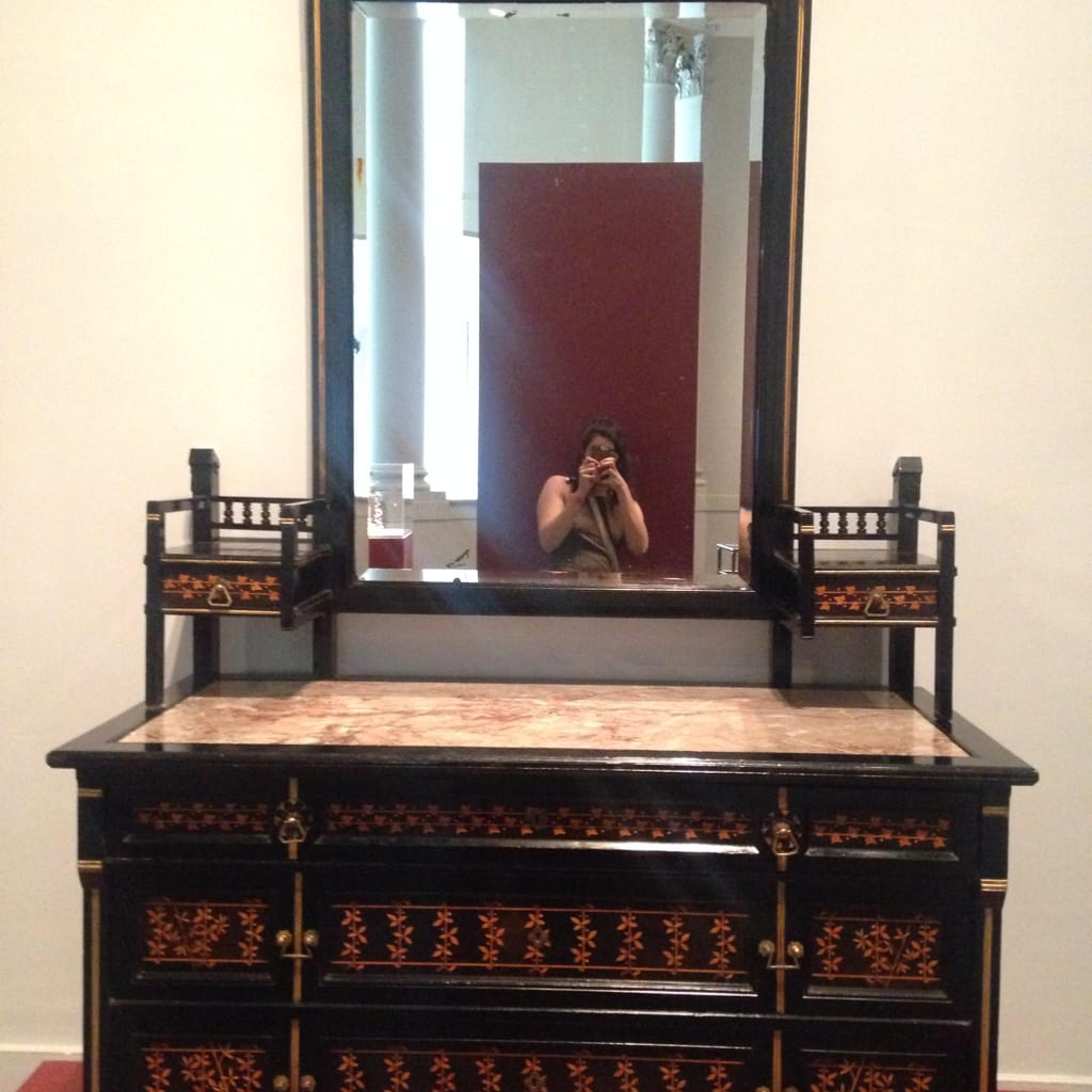 This dresser was made in New York! It represents the Aesthetic Movement and the reaction against the "perceived excesses of the overwrought revival styles that preceded it."The Movement was based on the theories of the English architect Augustus Pugin, who was inspired by medieval building and craft. It was also influenced by an influx of art and furniture from Japan.Ah, so a big helping of Orientalism, as grandma suspected.
Have information?
Have information about an artwork? Contact us at