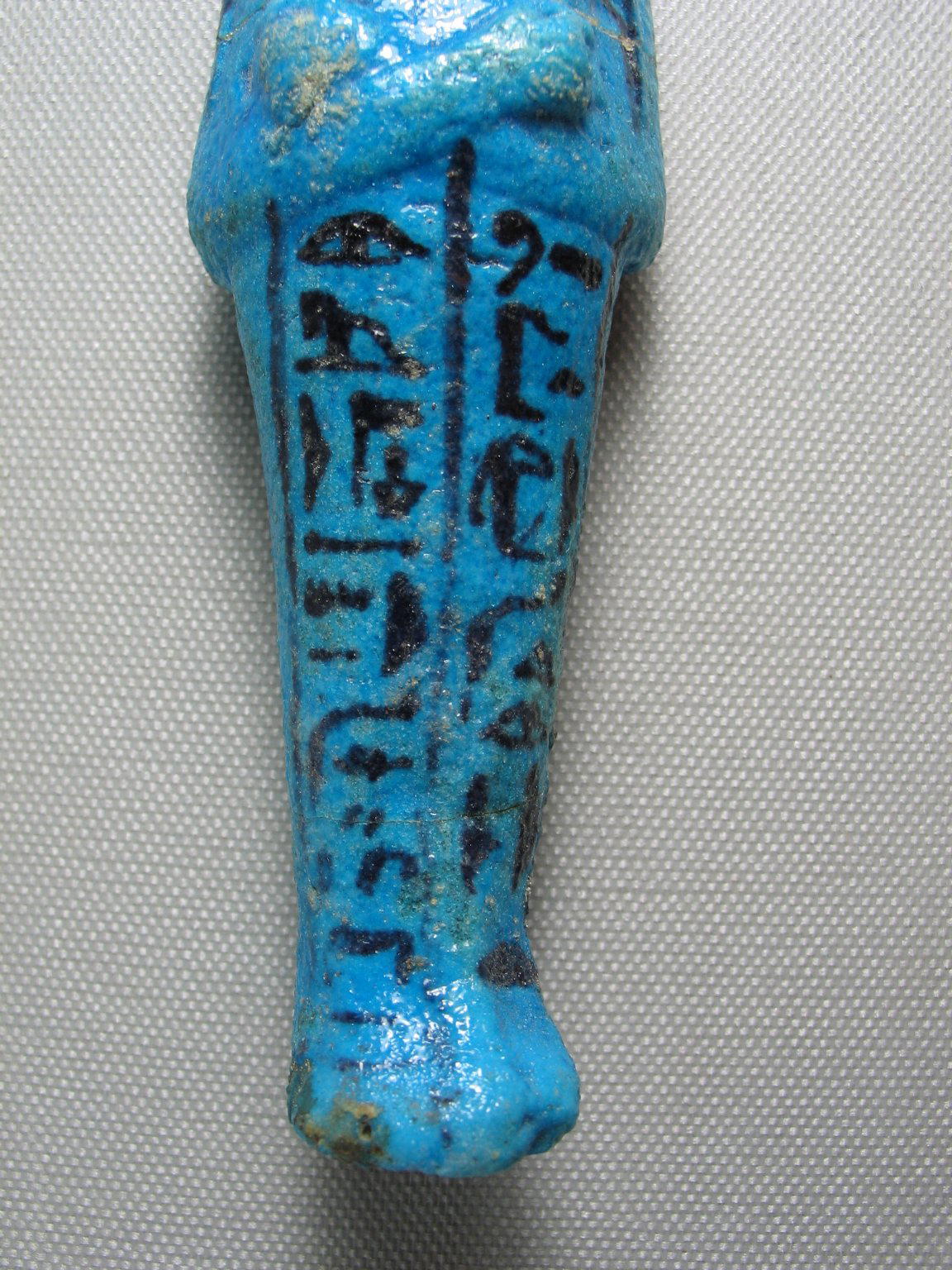
Funerary Figurine of the Divine Father and Scribe Nesperennub
1070–664 B.C.E.
1 of 5
Caption
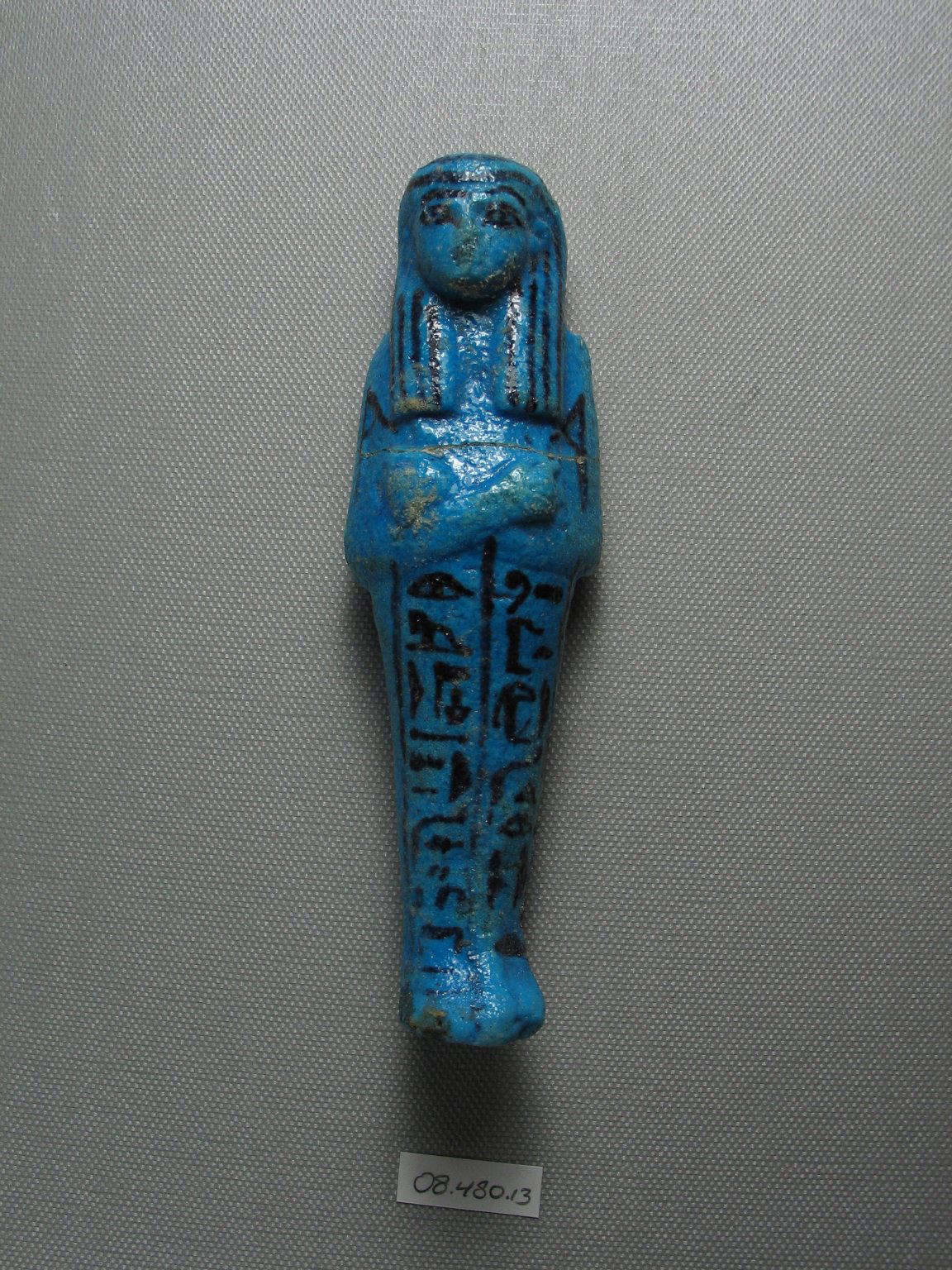
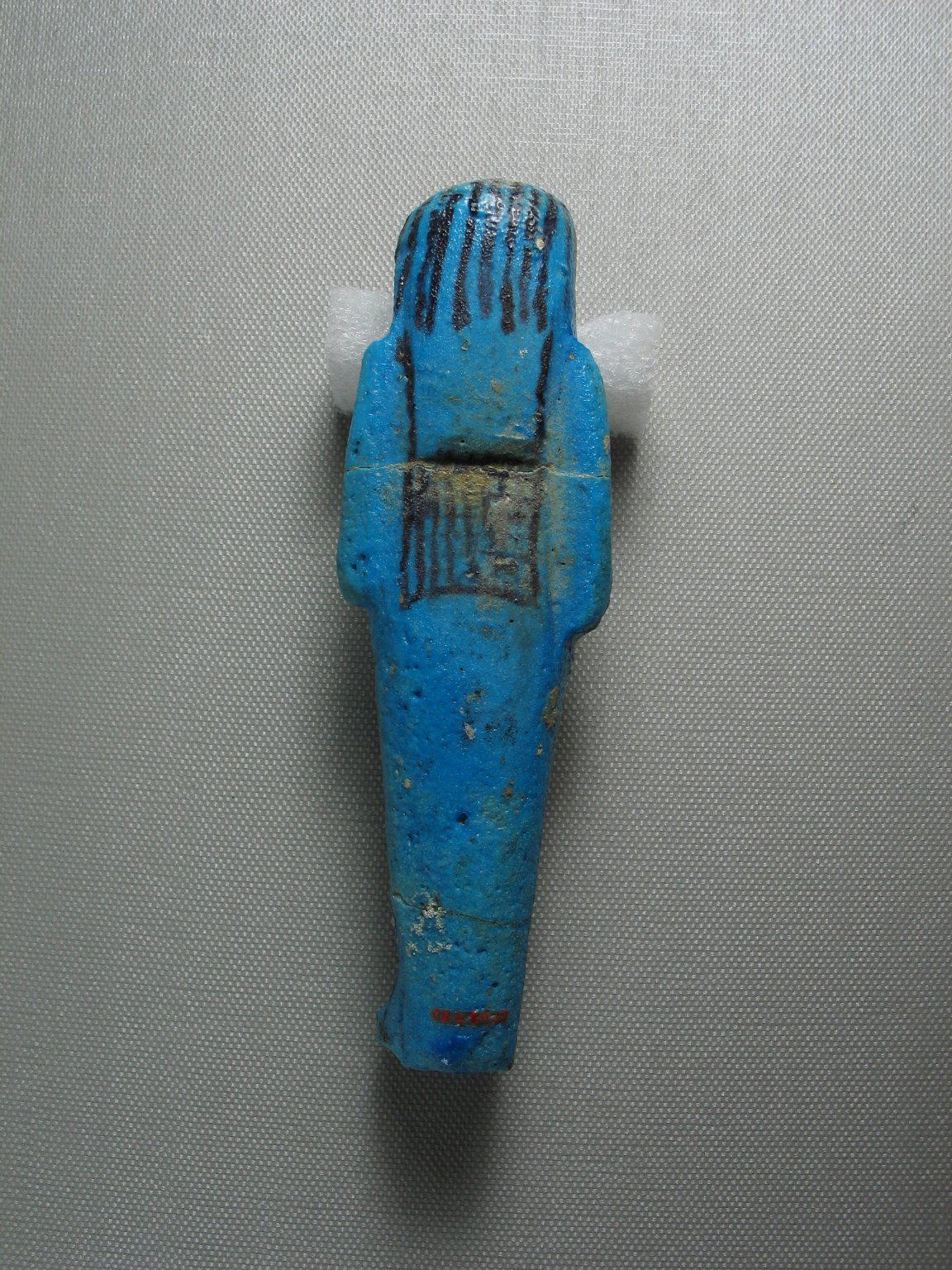
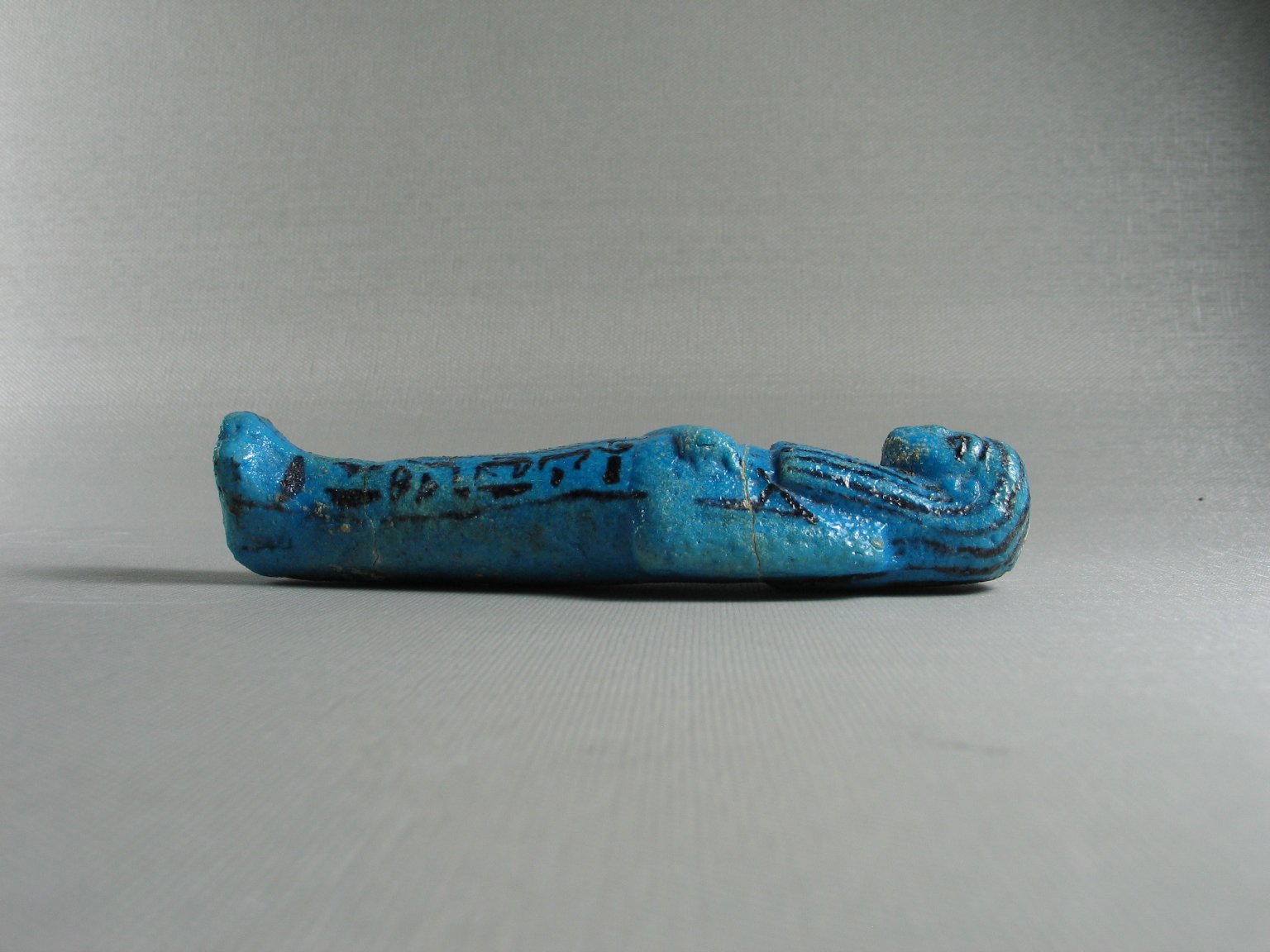
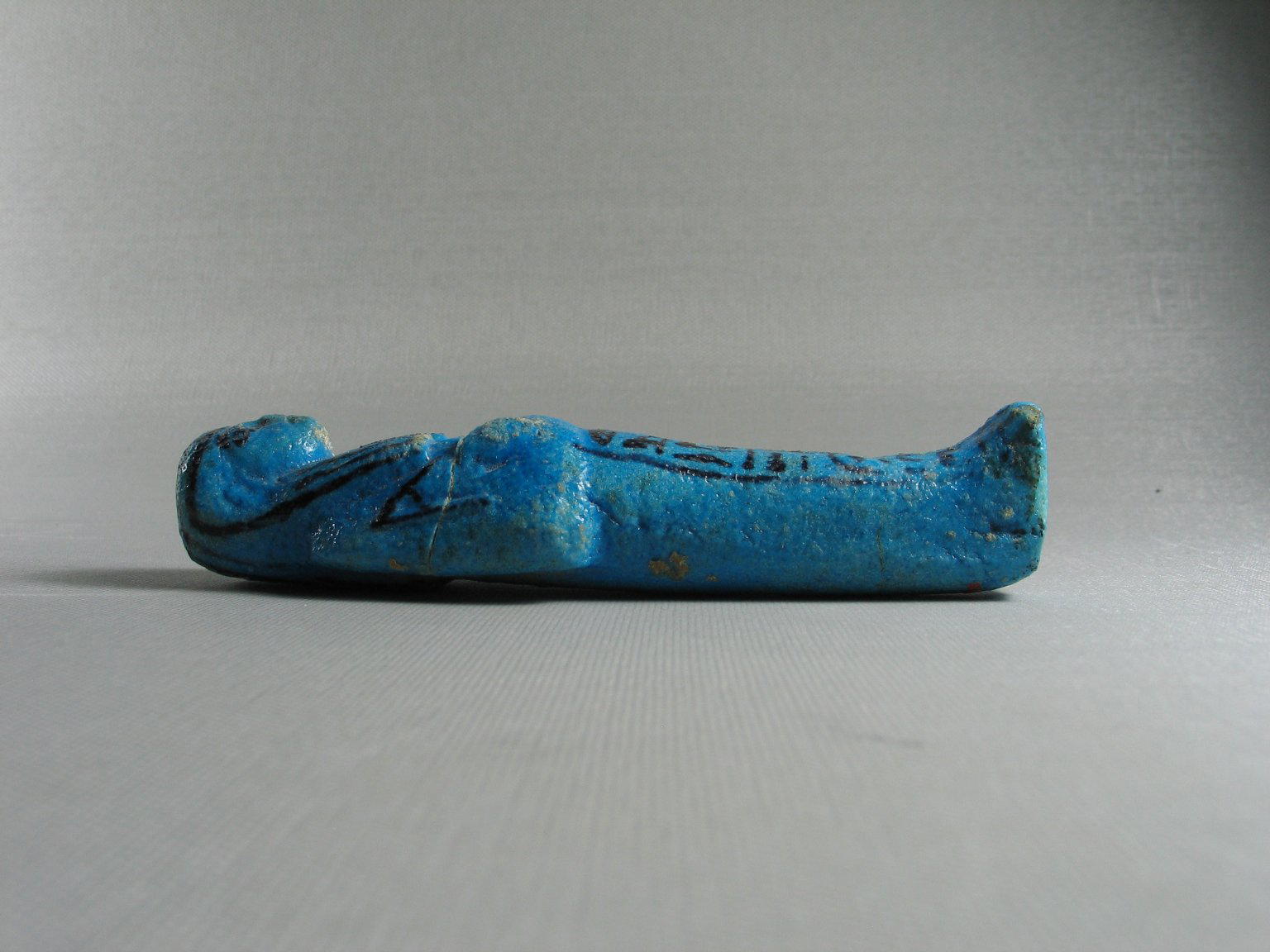
Funerary Figurine of the Divine Father and Scribe Nesperennub, 1070–664 B.C.E.. Faience, 5 11/16 x 1 11/16 x 1 3/16 in. (14.4 x 4.3 x 3 cm). Brooklyn Museum, Charles Edwin Wilbour Fund, 08.480.13. (Photo: Brooklyn Museum)
Gallery
Not on view
Gallery
Not on view
Title
Funerary Figurine of the Divine Father and Scribe Nesperennub
Date
1070–664 B.C.E.
Dynasty
Dynasty 21
Period
Third Intermediate Period
Medium
Faience
Classification
Dimensions
5 11/16 x 1 11/16 x 1 3/16 in. (14.4 x 4.3 x 3 cm)
Inscriptions
Yes: Divine Father of Ammon and Scribe of prophets, Nsi-pa-nub
Credit Line
Charles Edwin Wilbour Fund
Accession Number
08.480.13
Frequent Art Questions
Could you tell me how faience was made?
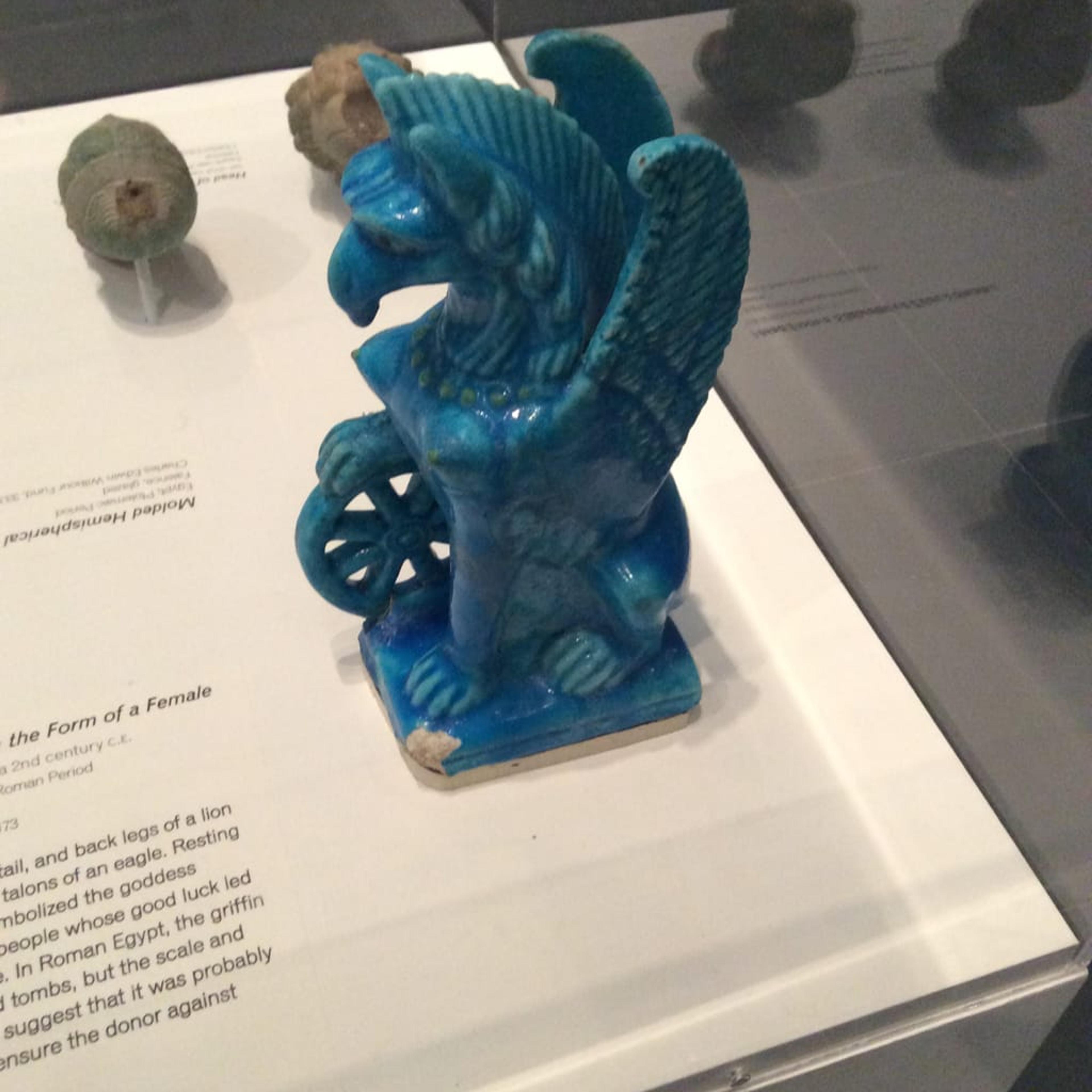 Faience is a man-made mixture of "ground quartz or quartz-sand held together by and alkaline binder. The bright and shiny surface seen on this figurine is a result of glazing. The glaze was made of a form of powdered glass mixed with a liquid and applied either with a brush or by dipping the entire figurine.It gets it's blue color from copper that is mixed into or applied to the surface of the quartz body before firing.
What materials were used to get this color?
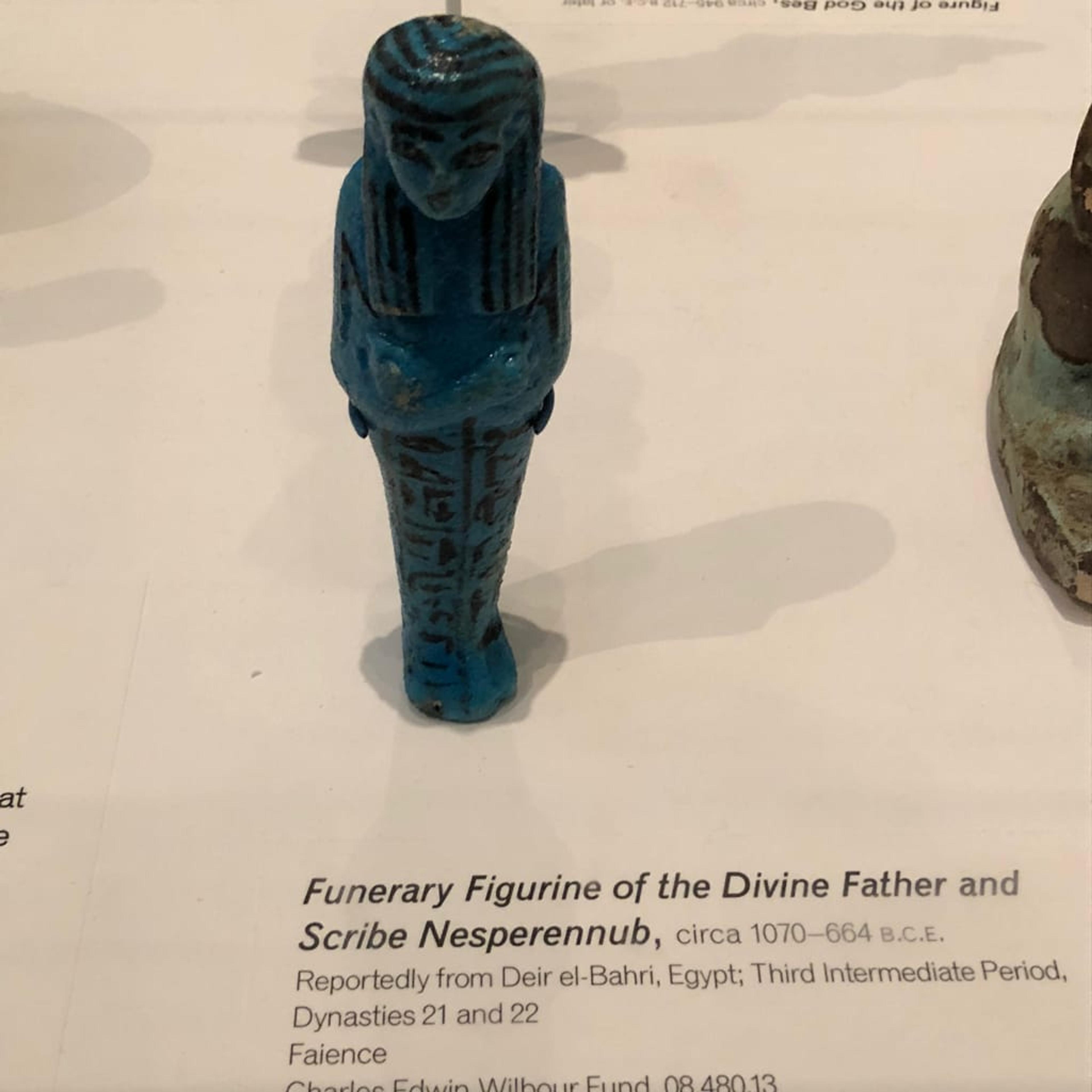 That's a very popular question! This figurine is made of a material called faience which is a quartz-based paste that is fired to harden it. Faience is naturally sparkling white and therefore takes color, like this glaze, very well.The glaze you see here gets its blue color from copper oxide. The high temperature of the kiln and the white faience underneath contribute to the brilliance.Thank you!
Have information?
Have information about an artwork? Contact us at