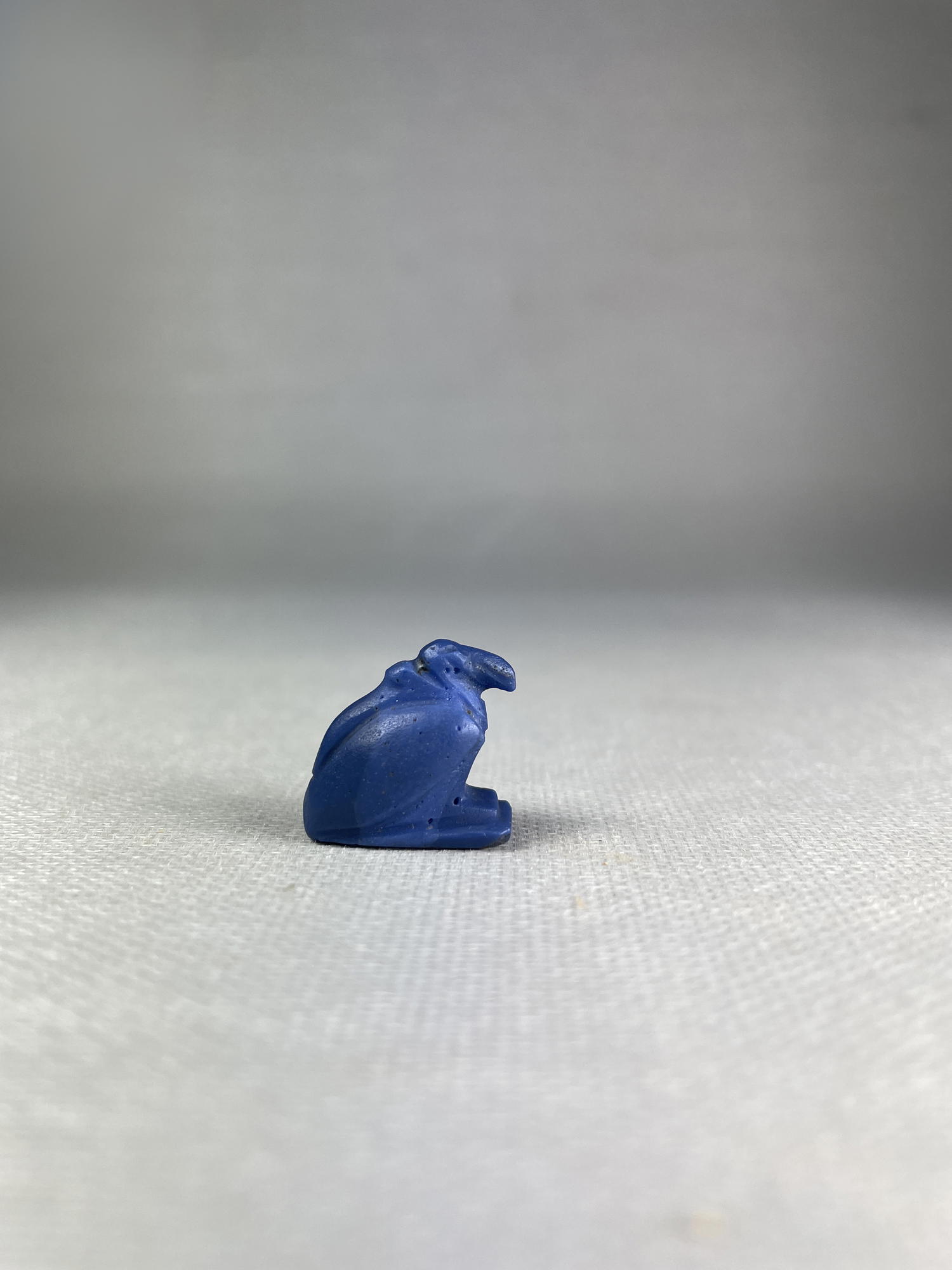
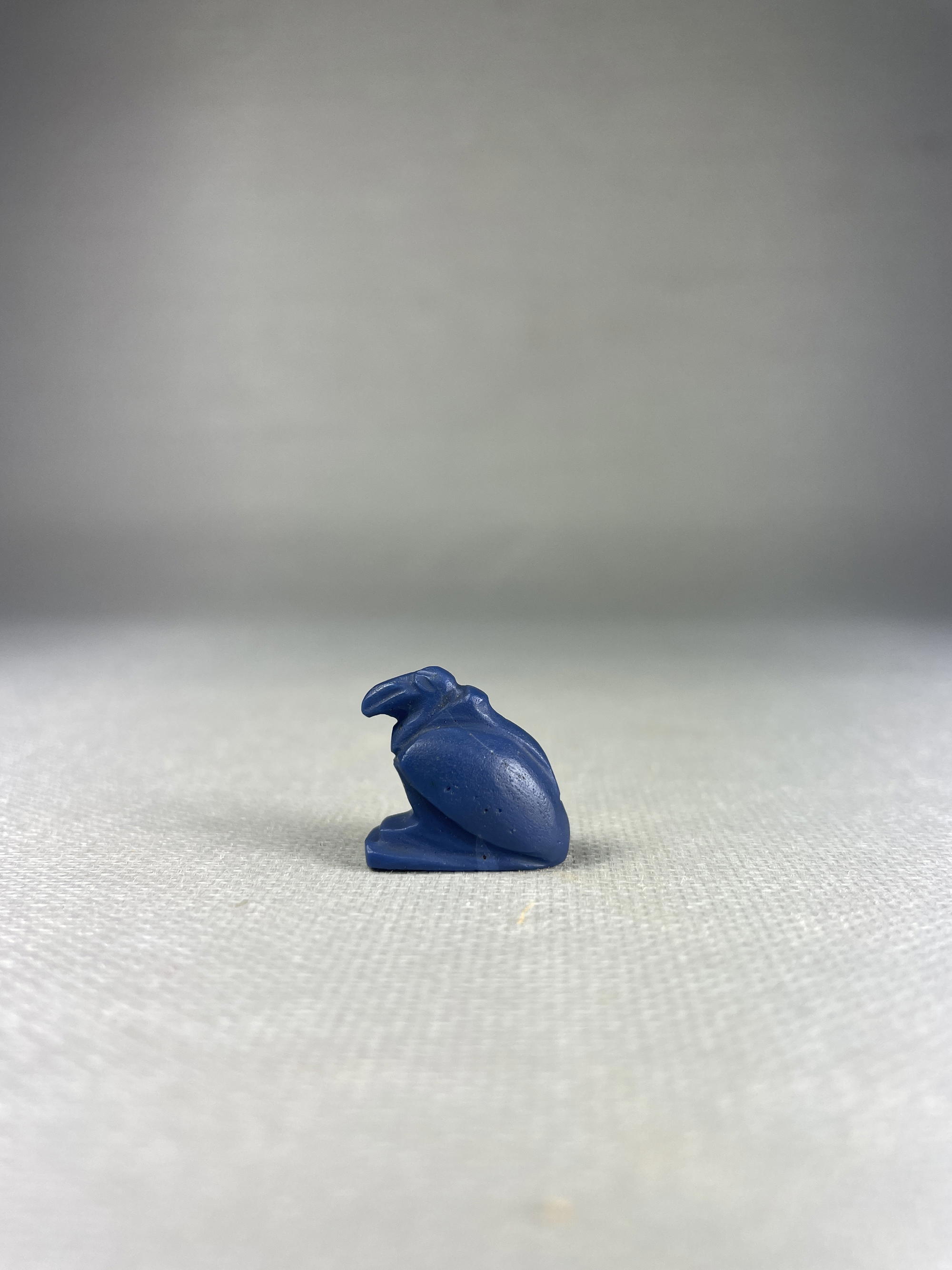
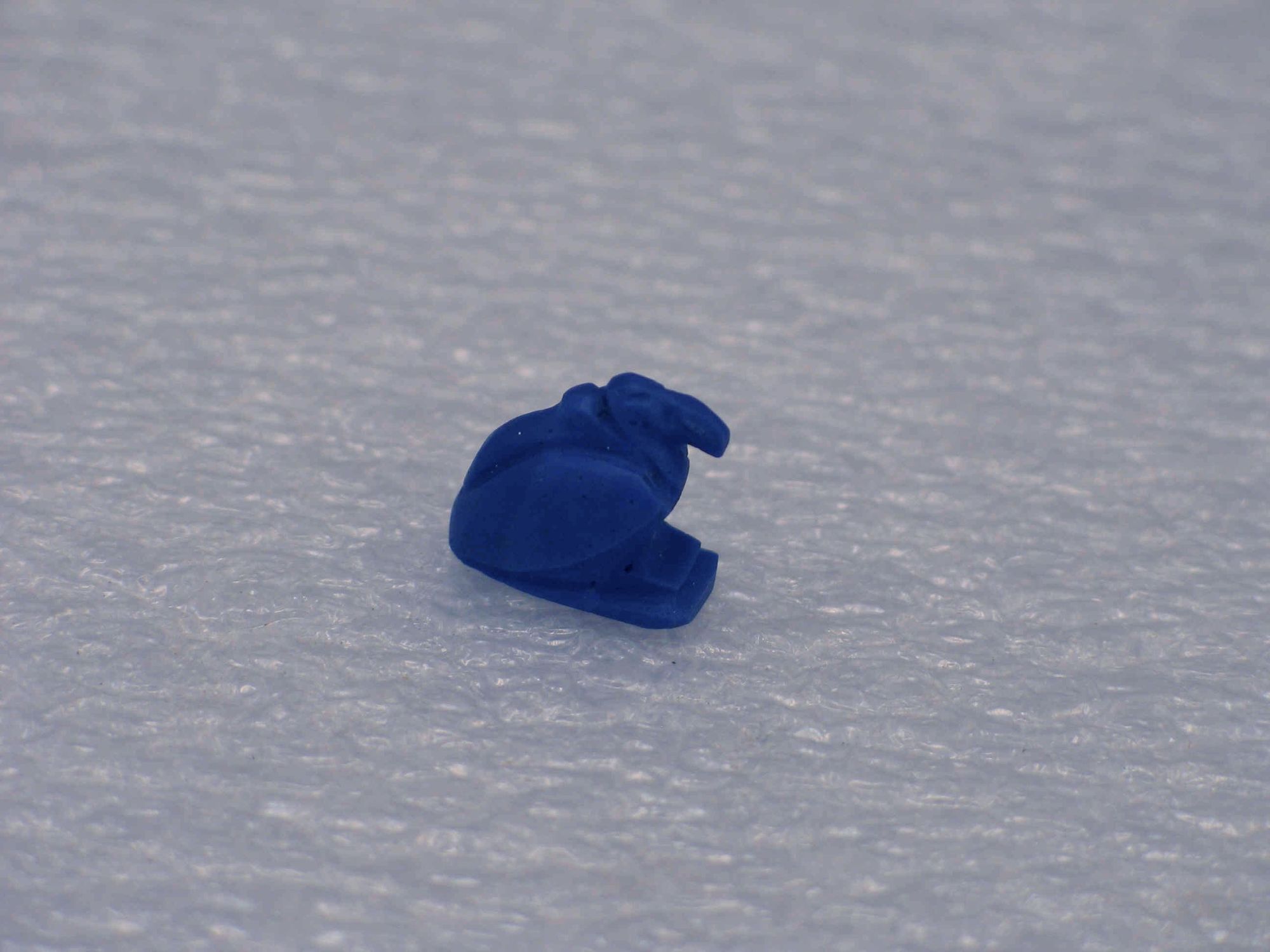
Figure of an Ibis
664–332 B.C.E.
1 of 3
Caption
Figure of an Ibis, 664–332 B.C.E.. Glass, 11/16 × 3/8 × 11/16 in. (1.7 × 1 × 1.7 cm). Brooklyn Museum, Charles Edwin Wilbour Fund, 08.480.91. (Photo: Brooklyn Museum)
Gallery
Not on view
Gallery
Not on view
Title
Figure of an Ibis
Date
664–332 B.C.E.
Period
Late Period
Medium
Glass
Classification
Dimensions
11/16 × 3/8 × 11/16 in. (1.7 × 1 × 1.7 cm)
Credit Line
Charles Edwin Wilbour Fund
Accession Number
08.480.91
Frequent Art Questions
Any idea how this was made?
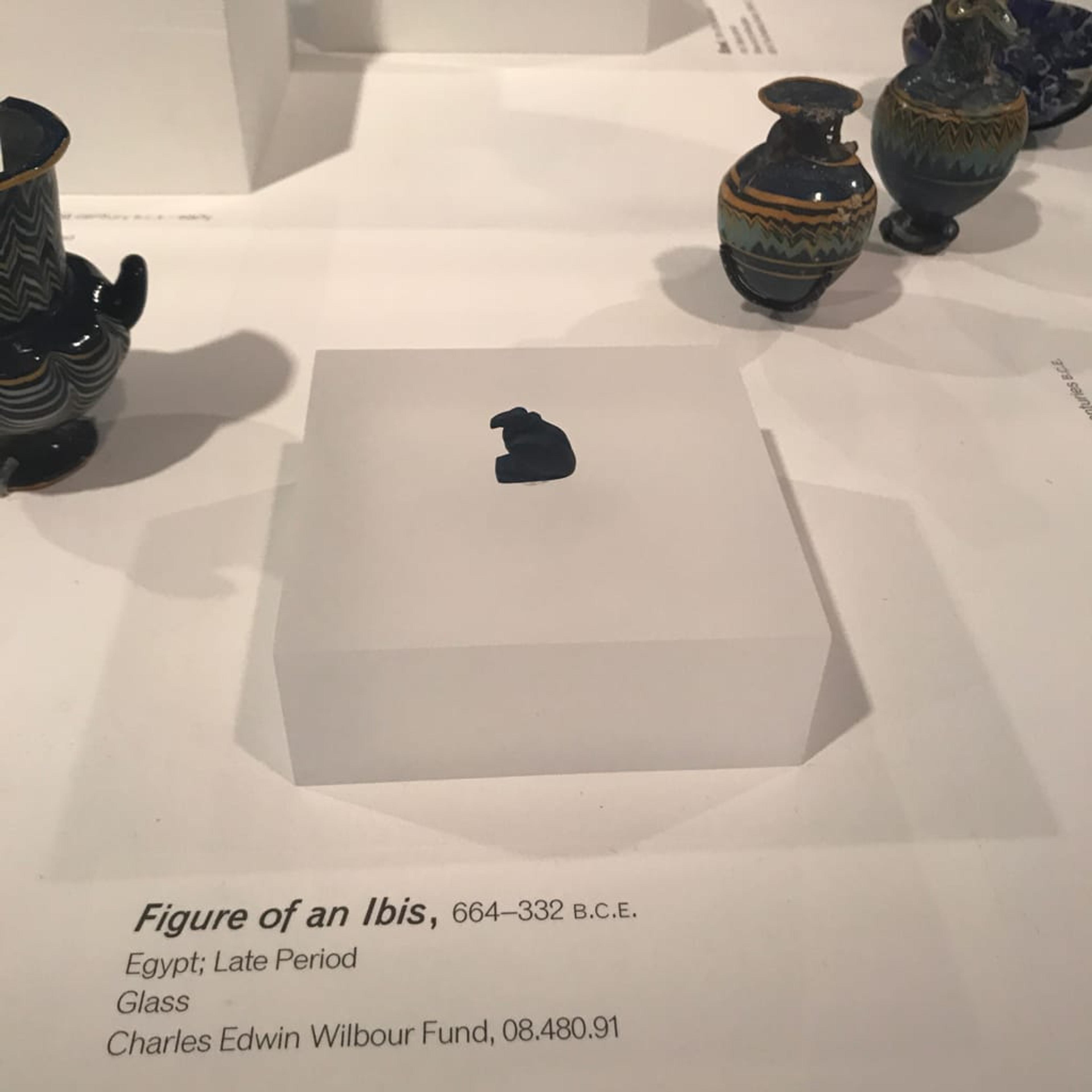 This little ibis would have been made in a mold. Very hot glass would have been pressed into an ibis-shaped mold where it cooled and maintained the shape.The ibis was an important and symbolic animal in ancient Egypt and the molded glass technique allowed figures to made even smaller and thus even more portable!Interesting! Thank you.
Tell me more.
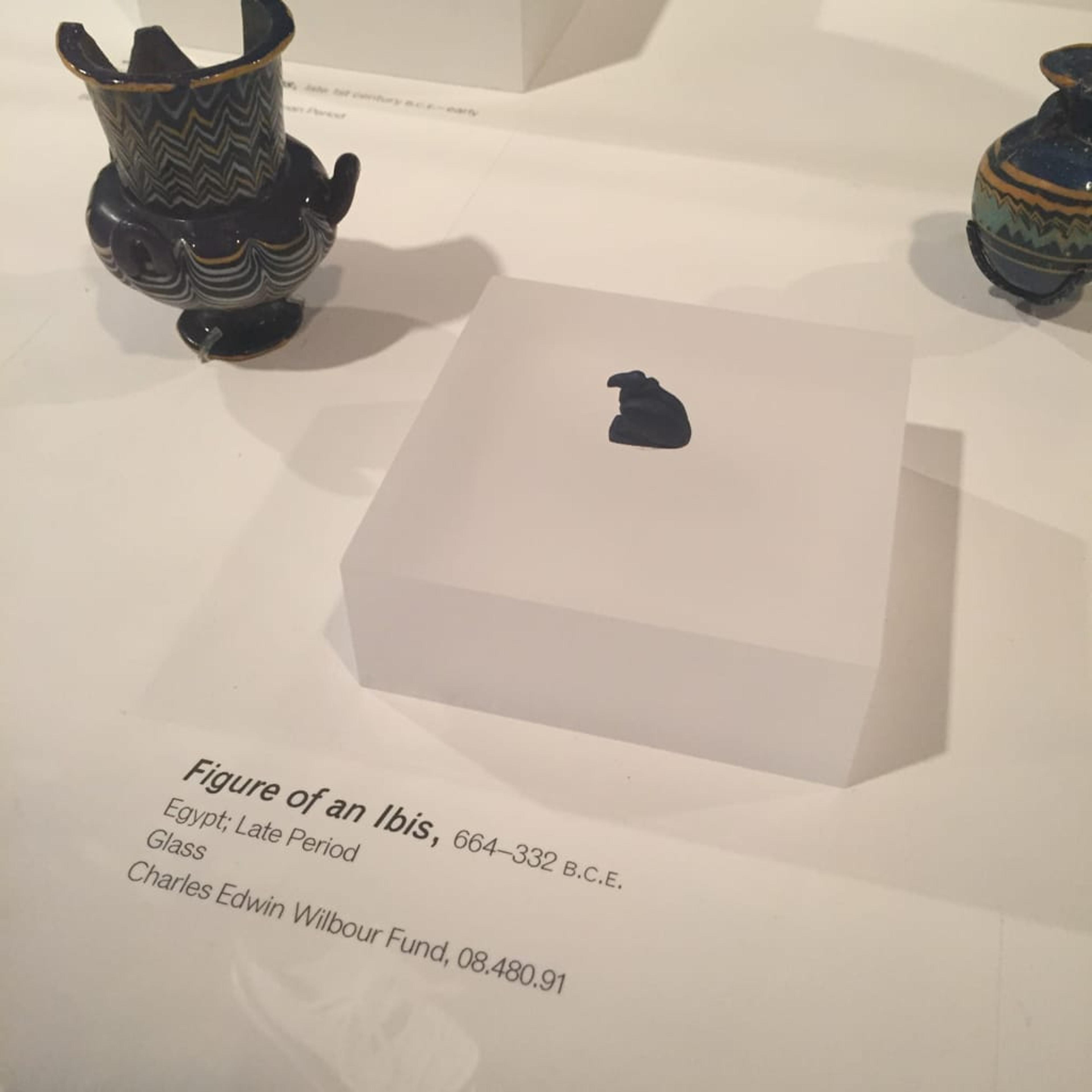 In the ancient world, glass was often used as a cheaper alternative to precious stones. This ibis amulet in blue glass was meant to imitate lapis lazuli, one of the most prized materials in the ancient Near East and Egypt.This small amulet would have been made by pressing the molten glass into a mold.
Have information?
Have information about an artwork? Contact us at