Carved Figure (Bulto) of Saint Joseph
Zia Pueblo

1 of 3
Object Label
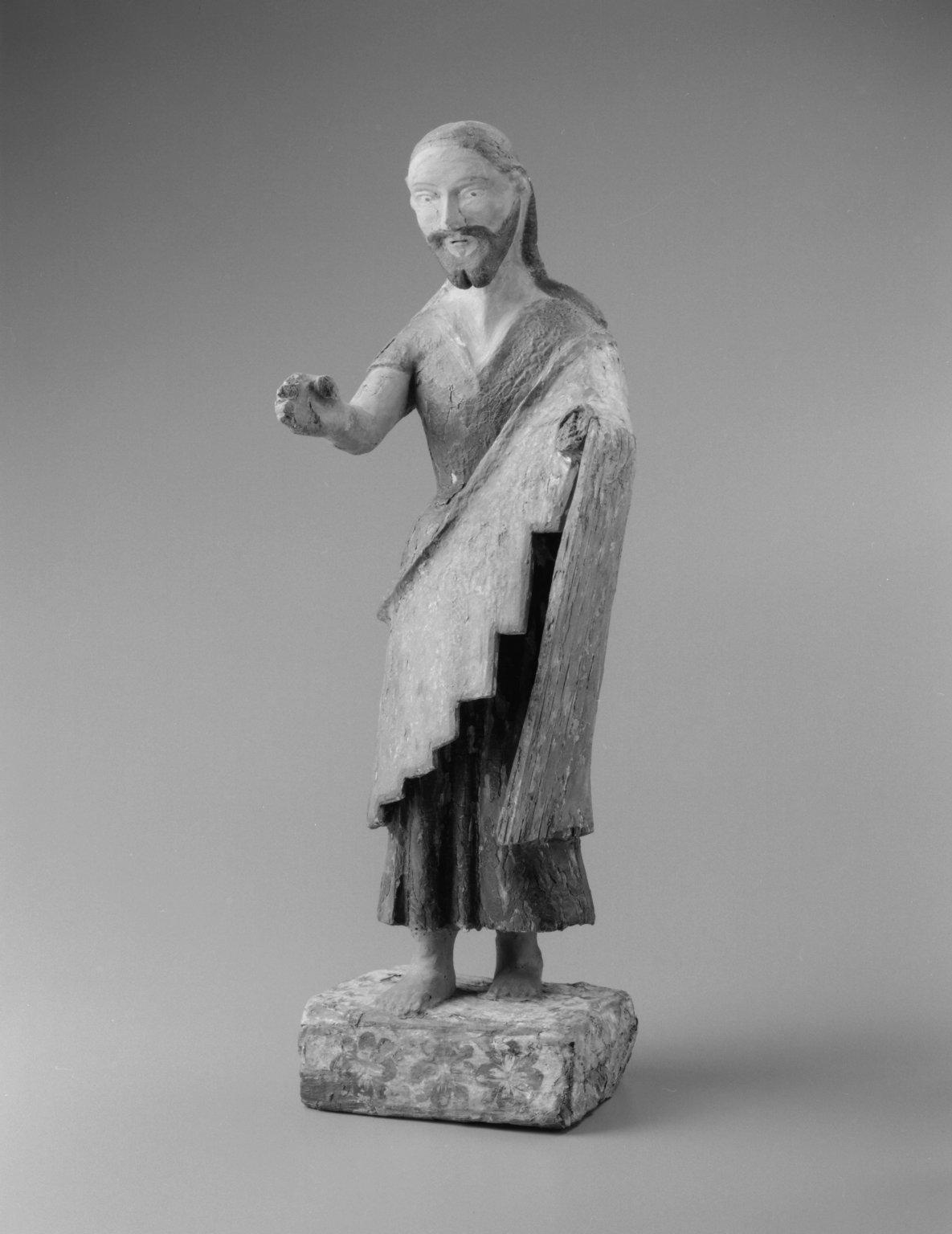
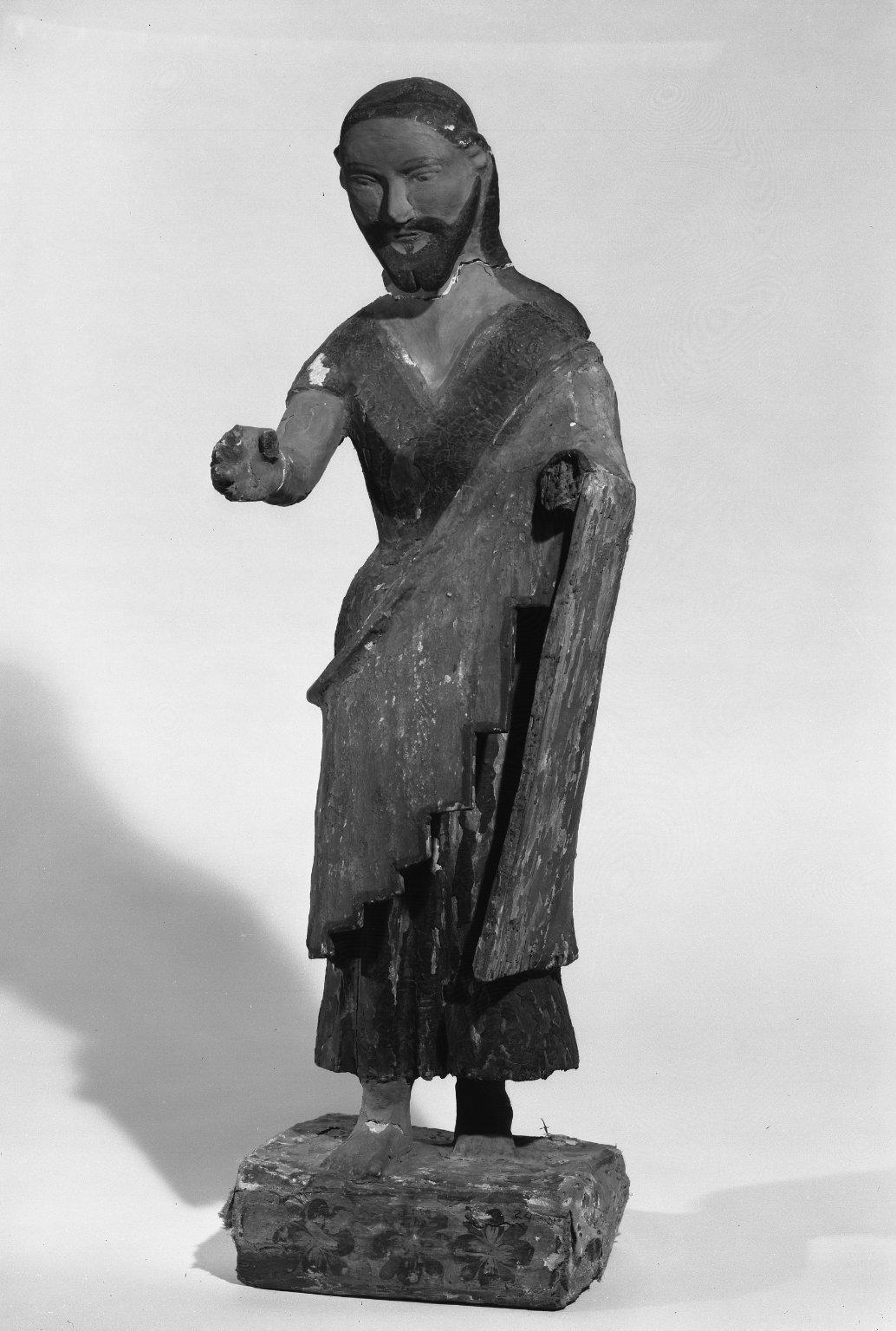
This statue of Saint Joseph (his staff and the Christ Child are missing) reportedly comes from the church at Zia Pueblo, where it was likely displayed on a sanctuary table. The artist could have been Native American or of Mexican-Hispanic heritage.
Present-day New Mexico was the northernmost frontier of the Spanish colonial empire. Spanish missions were established there to convert the indigenous population to Catholicism. The remoteness of the region encouraged the development of religious folk images that differed greatly from the more elaborate devotional sculptures produced in Europe and the viceregal capital (modern Mexico City).
Present-day New Mexico was the northernmost frontier of the Spanish colonial empire. Spanish missions were established there to convert the indigenous population to Catholicism. The remoteness of the region encouraged the development of religious folk images that differed greatly from the more elaborate devotional sculptures produced in Europe and the viceregal capital (modern Mexico City).
Caption
Zia Pueblo. Carved Figure (Bulto) of Saint Joseph, 19th century. Wood, cloth, gesso, paint, 25 1/4 x 7 1/2 x 5 1/4in. (64.1 x 19.1 x 13.3cm)). Brooklyn Museum, Riggs Pueblo Pottery Fund, 02.257.2425. (Photo: Brooklyn Museum)
Collection
Collection
Culture
Title
Carved Figure (Bulto) of Saint Joseph
Date
19th century
Geography
Place made: Zia Pueblo, New Mexico, United States
Medium
Wood, cloth, gesso, paint
Classification
Dimensions
25 1/4 x 7 1/2 x 5 1/4in. (64.1 x 19.1 x 13.3cm))
Credit Line
Riggs Pueblo Pottery Fund
Accession Number
02.257.2425
Frequent Art Questions
Can you tell me more about this?
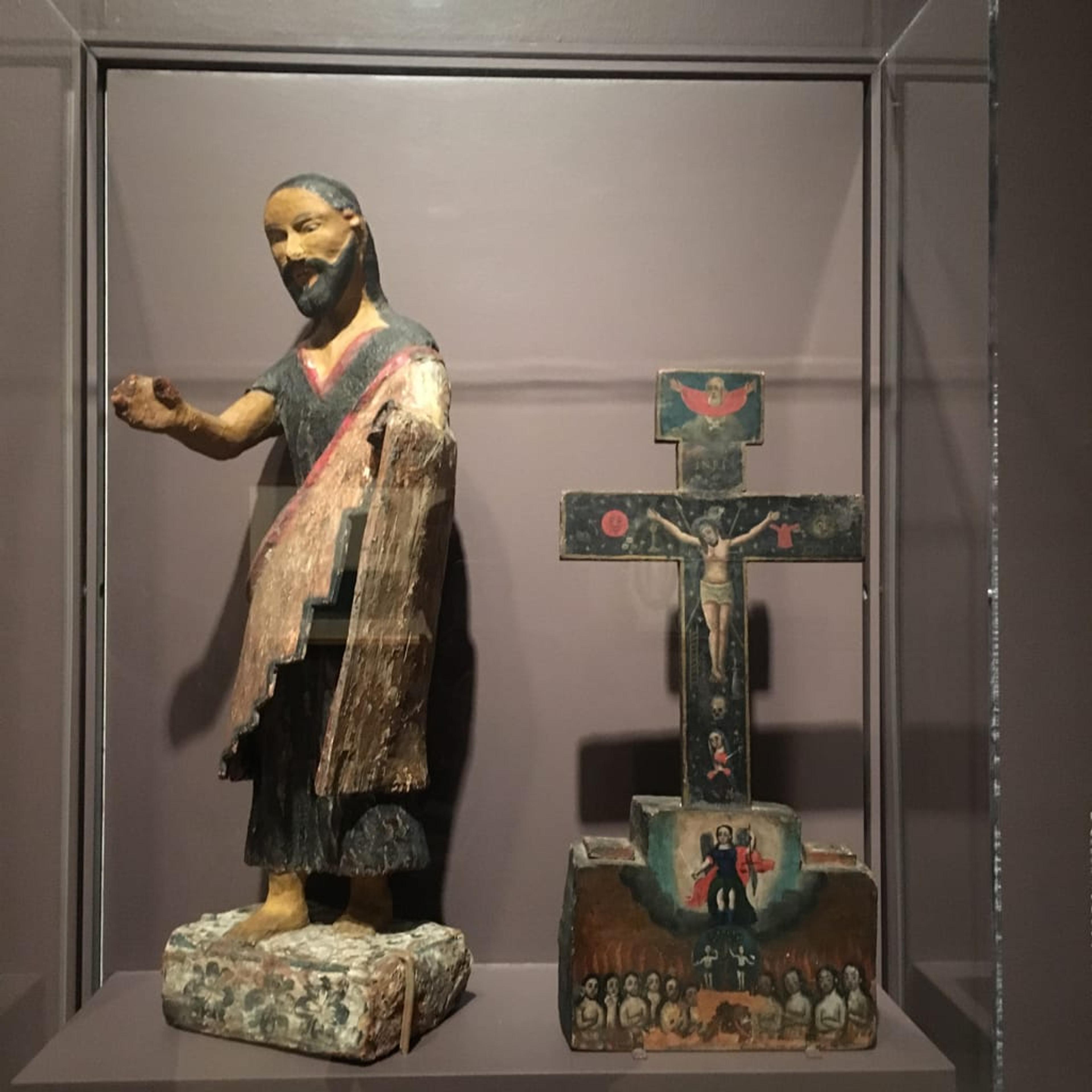 This is an example of work being produced in Zia Pueblo, New Mexico after the colonial period ended and Mexico gained its independence from Spain in 1821. New Mexico was the northern most frontier of New Spain during the Colonial Period. While this is very clearly Christian (more specifically Catholic) imagery, it really demonstrates a blending of Native and Spanish stylesIn Europe, Saint Joseph was overshadowed by The Virgin and Christ. He was seen mostly as a a mundane counterpart to the otherworldly Mary and Jesus. However, he enjoyed great popularity in the colonial Hispanic world due to a deliberate "rebranding" effort by Spanish missionaries, who succeeded in transforming him into a social role model for both Spanish and indigenous people.Do you think Saint Joseph appealed more to the indigenous populations? Primarily since they were hard working, cultural and religious people?I think so, because he was a normal man, and yet he was involved in a miraculous story. Everyone needs someone to relate to as an entry point.
Have information?
Have information about an artwork? Contact us at