Page from a Buddhist Manuscript with an Illustration of Akshobhya
18th–19th century

Brooklyn Museum photograph
Object Label
Unlike Vajrabhairava, Akshobhya is distinctly placid. He is one of the five primary Buddhas and the guardian of the Eastern Paradise. Akshobhya means “Immovable One,” and his emblem is the similarly unyielding elephant, two of which are included in the base of his throne. Akshobhya’s blue color represents the coolness of his temperament: he made a vow to reject all passionate emotions that might disturb his meditation.
The horizontal orientation of this manuscript page is typical of traditional books in southern Asia, where long, narrow palm leaves were used as a writing surface for millennia before the introduction of paper. The script is a Nepalese form of Sanskrit.
The horizontal orientation of this manuscript page is typical of traditional books in southern Asia, where long, narrow palm leaves were used as a writing surface for millennia before the introduction of paper. The script is a Nepalese form of Sanskrit.
Caption
Page from a Buddhist Manuscript with an Illustration of Akshobhya, 18th–19th century. Ink and opaque watercolor and gold on paper, 3 9/16 x 12 3/16 in. (9 x 31 cm). Brooklyn Museum, Gift of Doris Wiener, 2010.65.5. (Photo: Brooklyn Museum)
Gallery
Not on view
Collection
Gallery
Not on view
Collection
Title
Page from a Buddhist Manuscript with an Illustration of Akshobhya
Date
18th–19th century
Geography
Place made: Nepal
Medium
Ink and opaque watercolor and gold on paper
Classification
Dimensions
3 9/16 x 12 3/16 in. (9 x 31 cm)
Credit Line
Gift of Doris Wiener
Accession Number
2010.65.5
Frequent Art Questions
Do we know what the text on this page says?
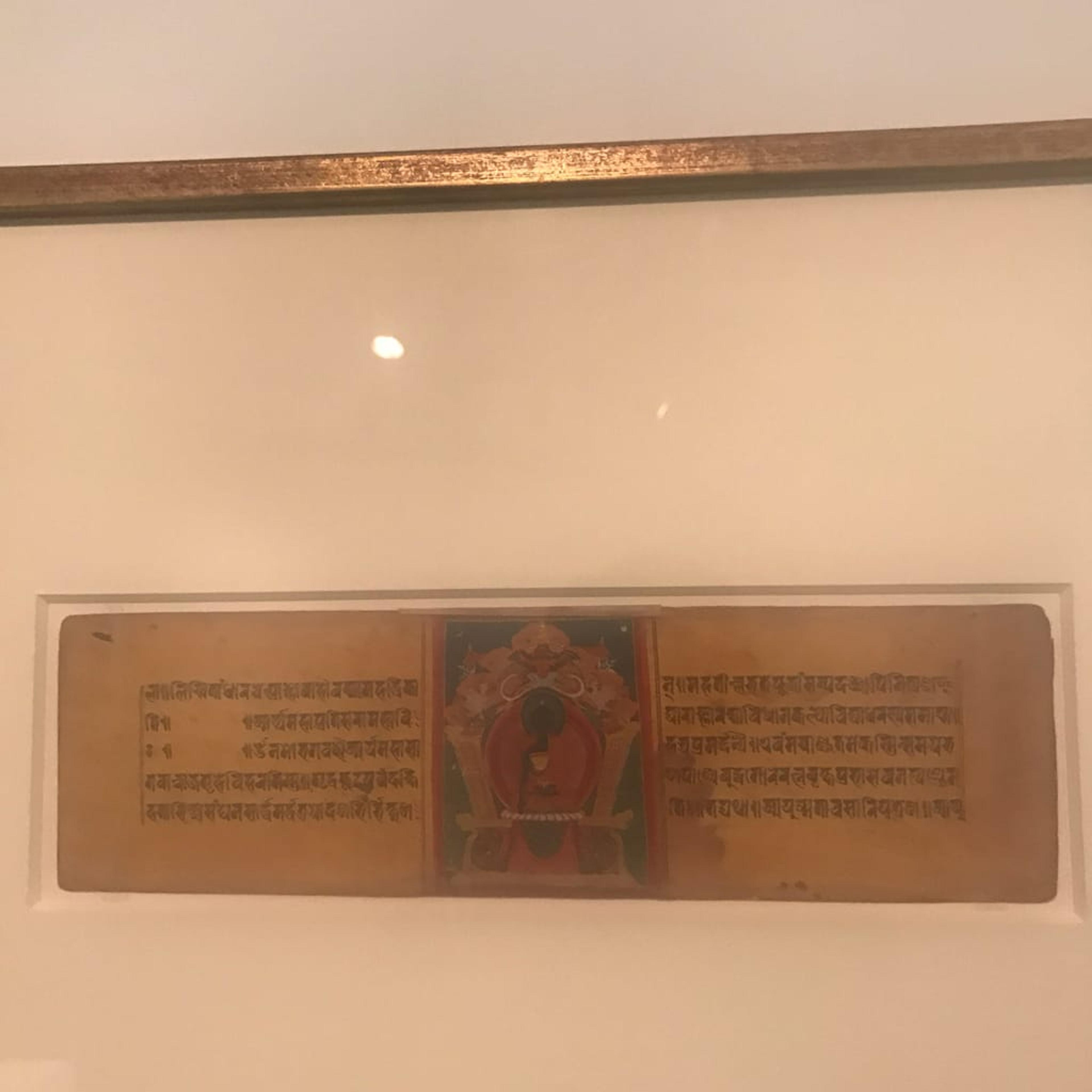 We currently do not have a full translation of this page. It's a Nepalese version of Sanskrit and the page is part of a Buddhist manuscript that I believe we are still trying to identify.Awesome, thank you!Of course! Sometimes the image of a deity depicted on a page can help us figure out which book it had been part of, as so many have been dispersed over time. Akshobhya is one of the more common figures and appears in many, many Buddhist manuscripts.
Can you tell me what the text is in this work?
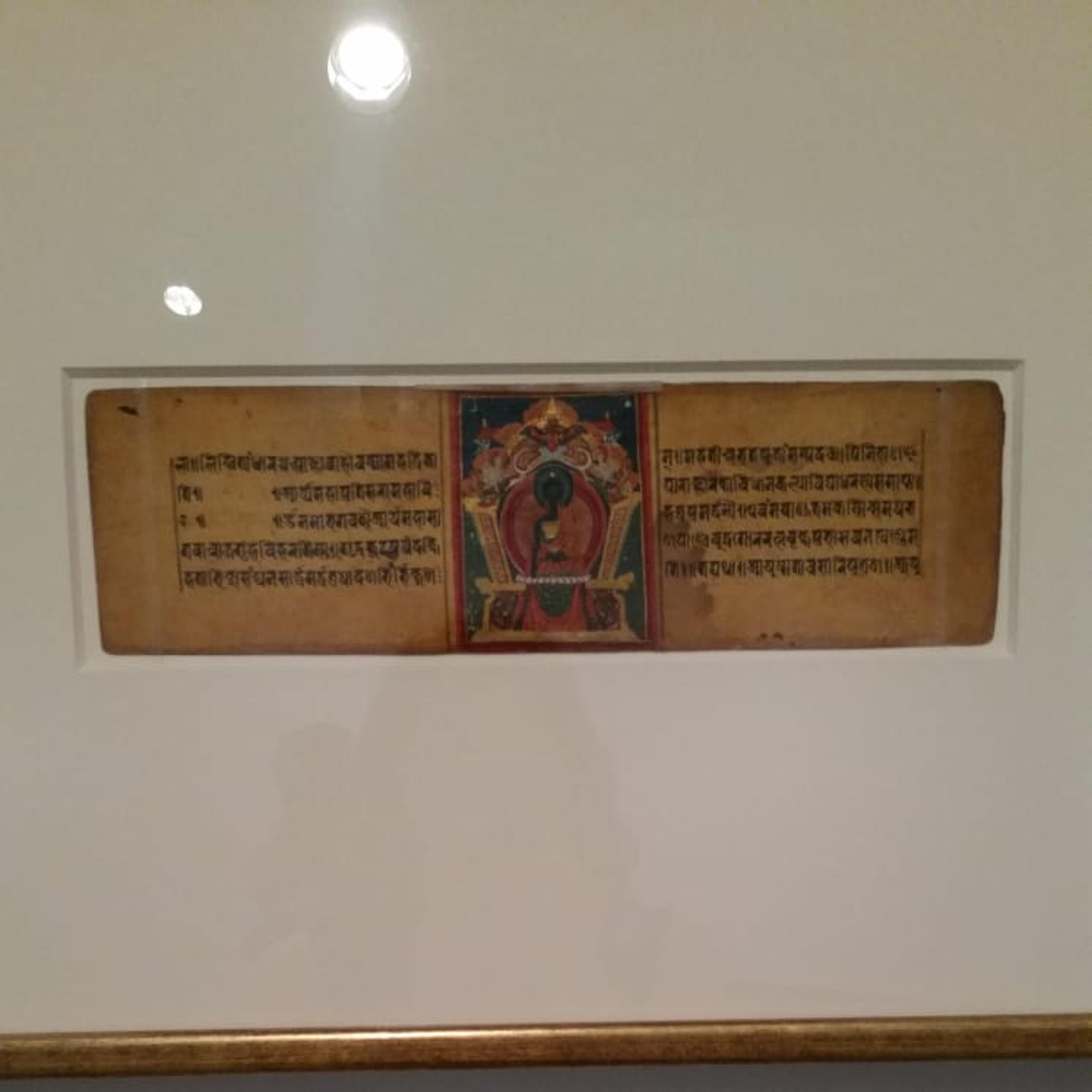 This text has not been fully translated yet but the manuscript is written in a Nepalese version of Sanskrit. We know that it is a part of a Buddhist manuscript that would have been commissioned as a donation to a temple.
Have information?
Have information about an artwork? Contact us at