Crucifix


1 of 2
Object Label
From about 1750, Catholic churches in Spanish New Mexico were increasingly decorated with the work of native craftspeople rather than with paintings, sculpture, and furniture imported from Europe. This small santo (saint's image) is typical of the locally produced objects. It is made of indigenous pine and painted with water-based pigments used by native artisans. The artist, José Rafael Aragón, who often invented new arrangements of traditional symbols, here placed an image of the Sacred Heart just below Christ's feet.
Caption
Attributed to José Rafael Aragón (ca. 1795–1862). Crucifix, ca. 1820–1862. Pine, leather, gesso, water-based paints, Cross: 22 1/2 x 14 1/2 in. (57.2 x 36.8 cm) Figure: 14 x 11 1/4 in. (35.6 x 28.6 cm). Brooklyn Museum, Brooklyn Museum Collection, 02.257.2427. (Photo: Brooklyn Museum)
Gallery
Not on view
Collection
Gallery
Not on view
Collection
Title
Crucifix
Date
ca. 1820–1862
Geography
Place made: New Mexico, United States
Medium
Pine, leather, gesso, water-based paints
Classification
Dimensions
Cross: 22 1/2 x 14 1/2 in. (57.2 x 36.8 cm) Figure: 14 x 11 1/4 in. (35.6 x 28.6 cm)
Credit Line
Brooklyn Museum Collection
Accession Number
02.257.2427
Frequent Art Questions
Can you tell me more about this?
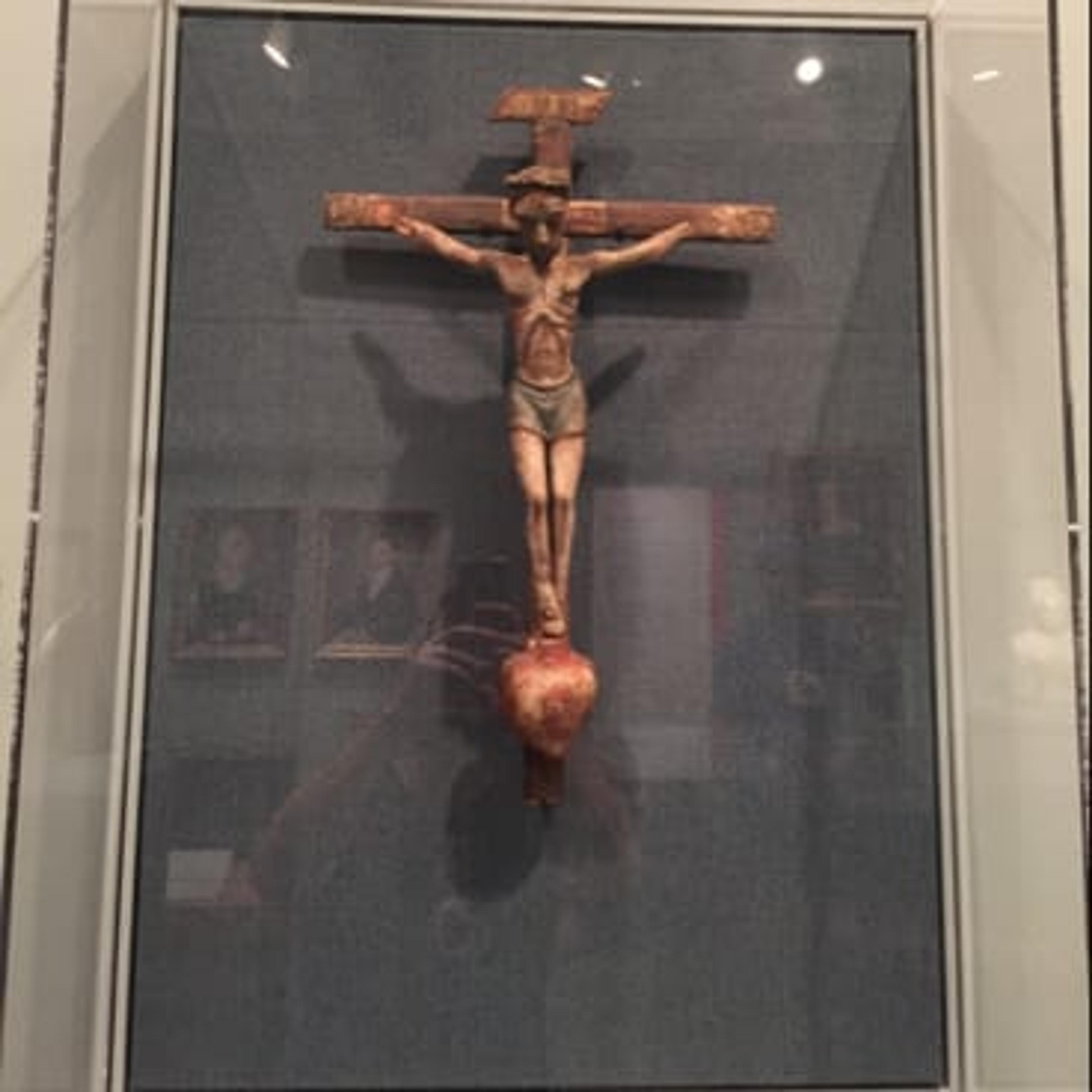 Churches in Spanish New Mexico started being decorated with native craftspeople rather than with paintings and furniture imported from Europe in the 1750s and the cross is an example of a typical decoration, created from a local pine wood.
This object comes from a very interesting place and time, when the Southwest was Spanish.
At the time, churches were being decorated with work by native craftspeople rather than with European imports. So this was crafted with indigenous pine wood and local leather.One aspect of this work that I really love is the unconventional imagery: it's almost as if Christ is standing on top of the Sacred Heart. Aragon did not have training in Academic conventions, so he was very inventive with how he was using Biblical imagery.
Have information?
Have information about an artwork? Contact us at