Vase
late 18th century
1 of 14
Object Label
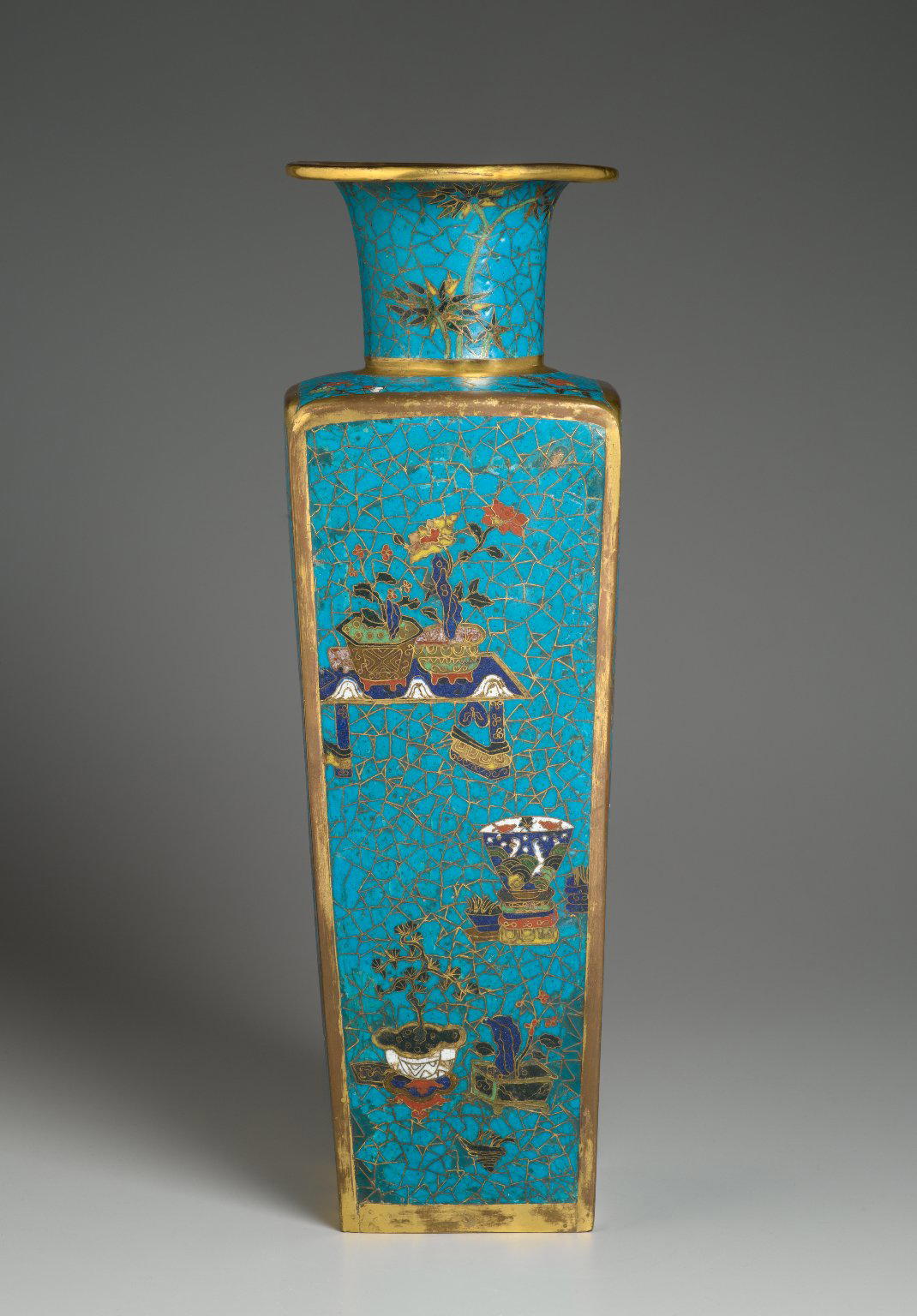
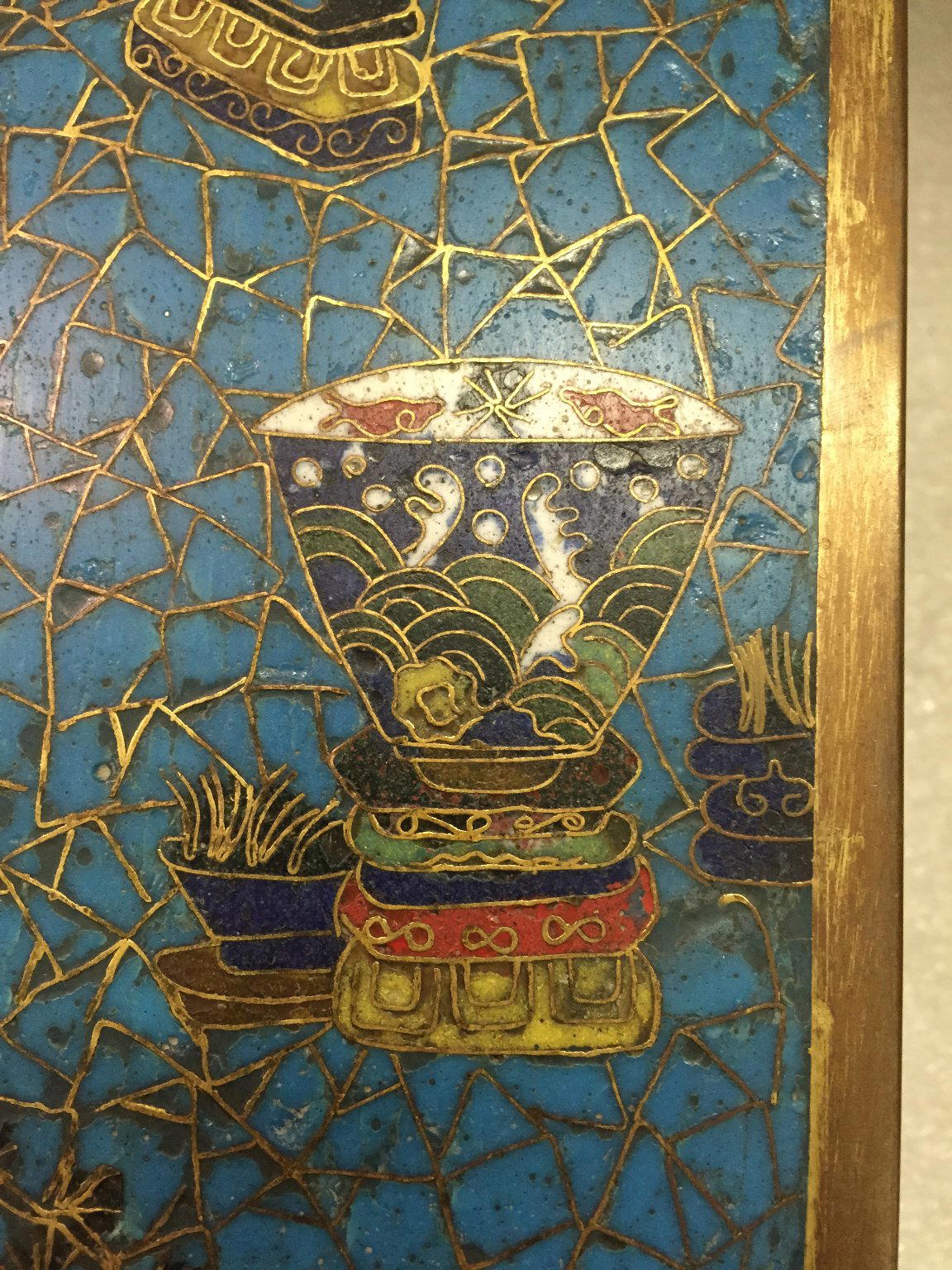
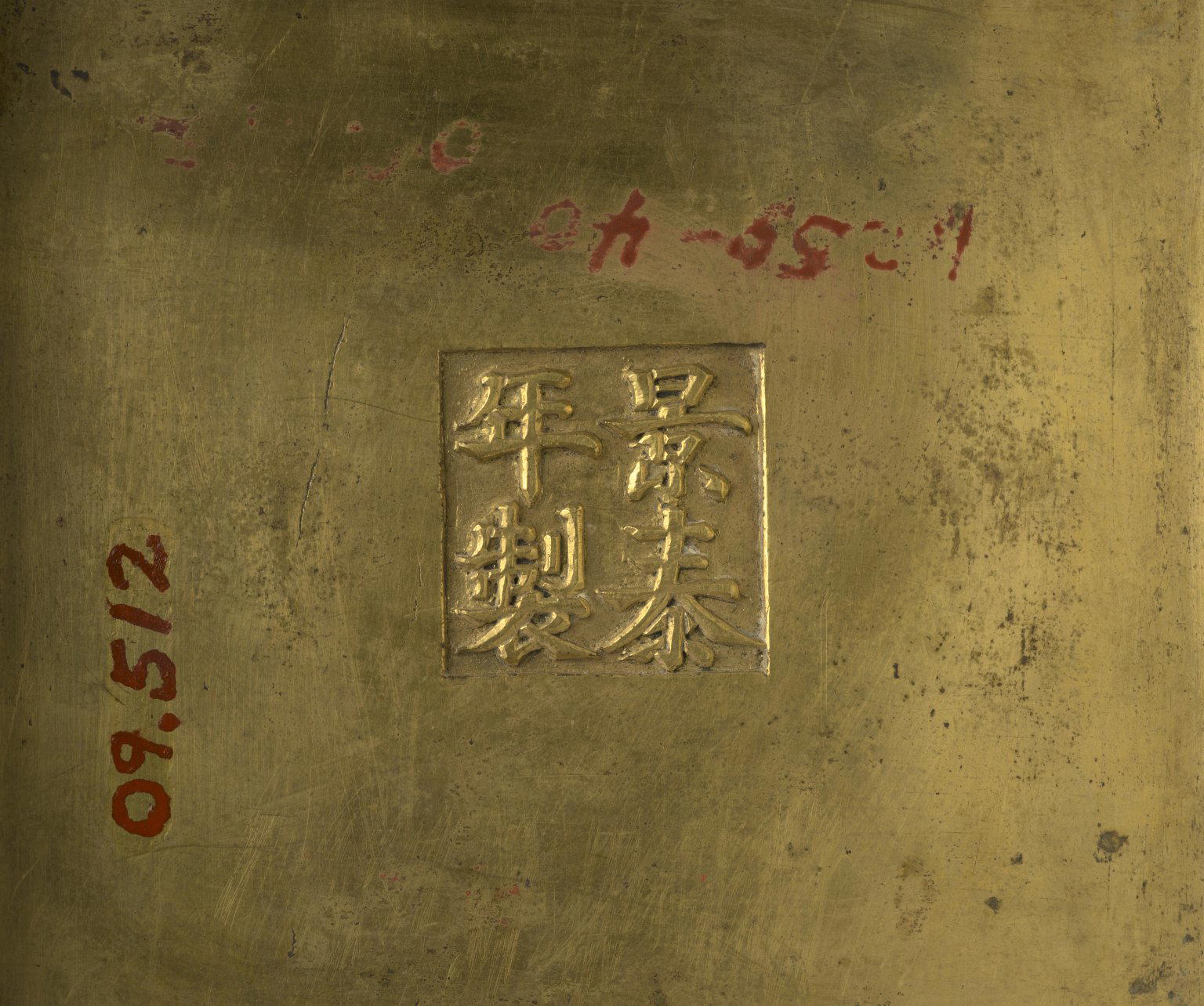
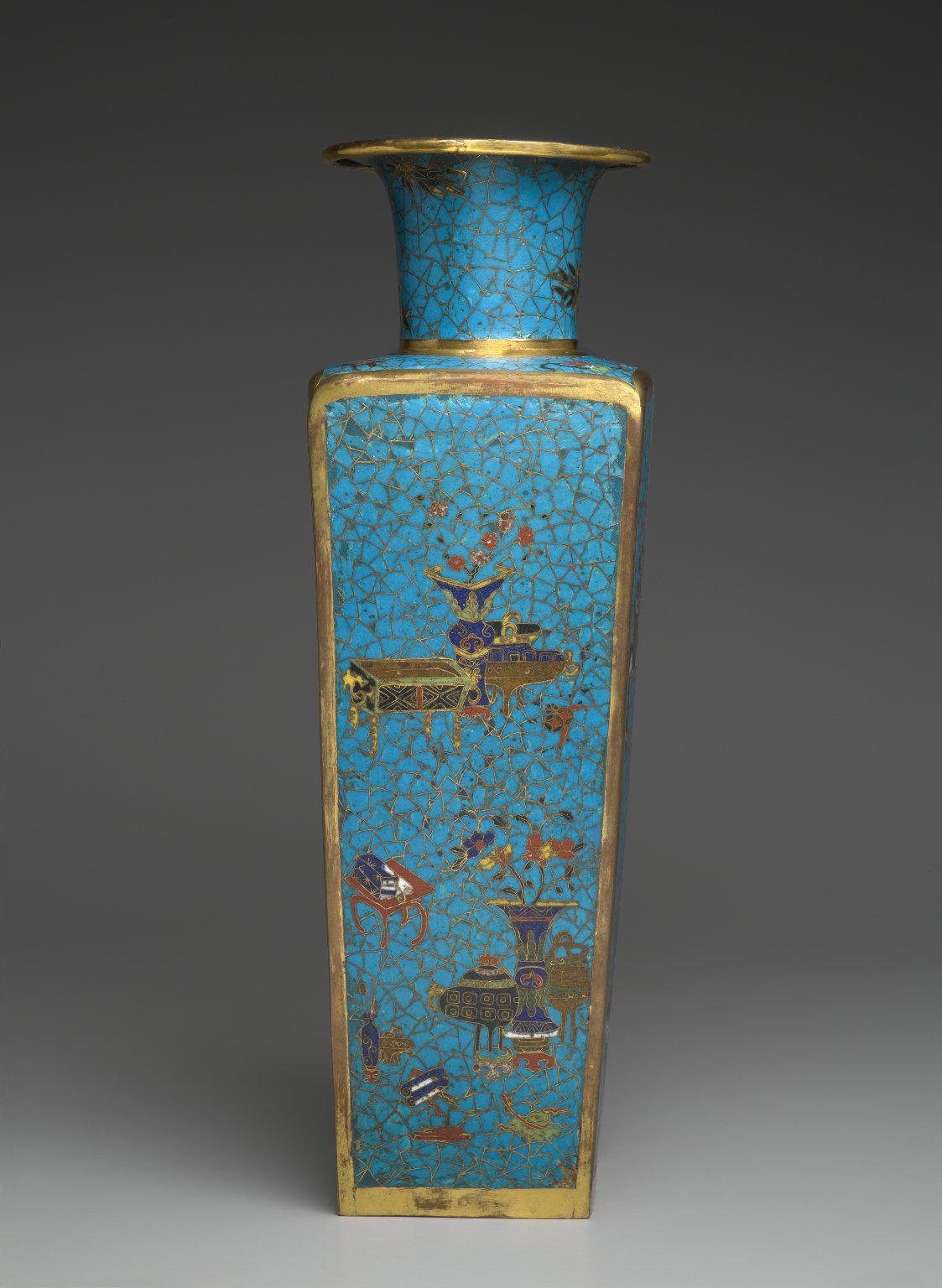
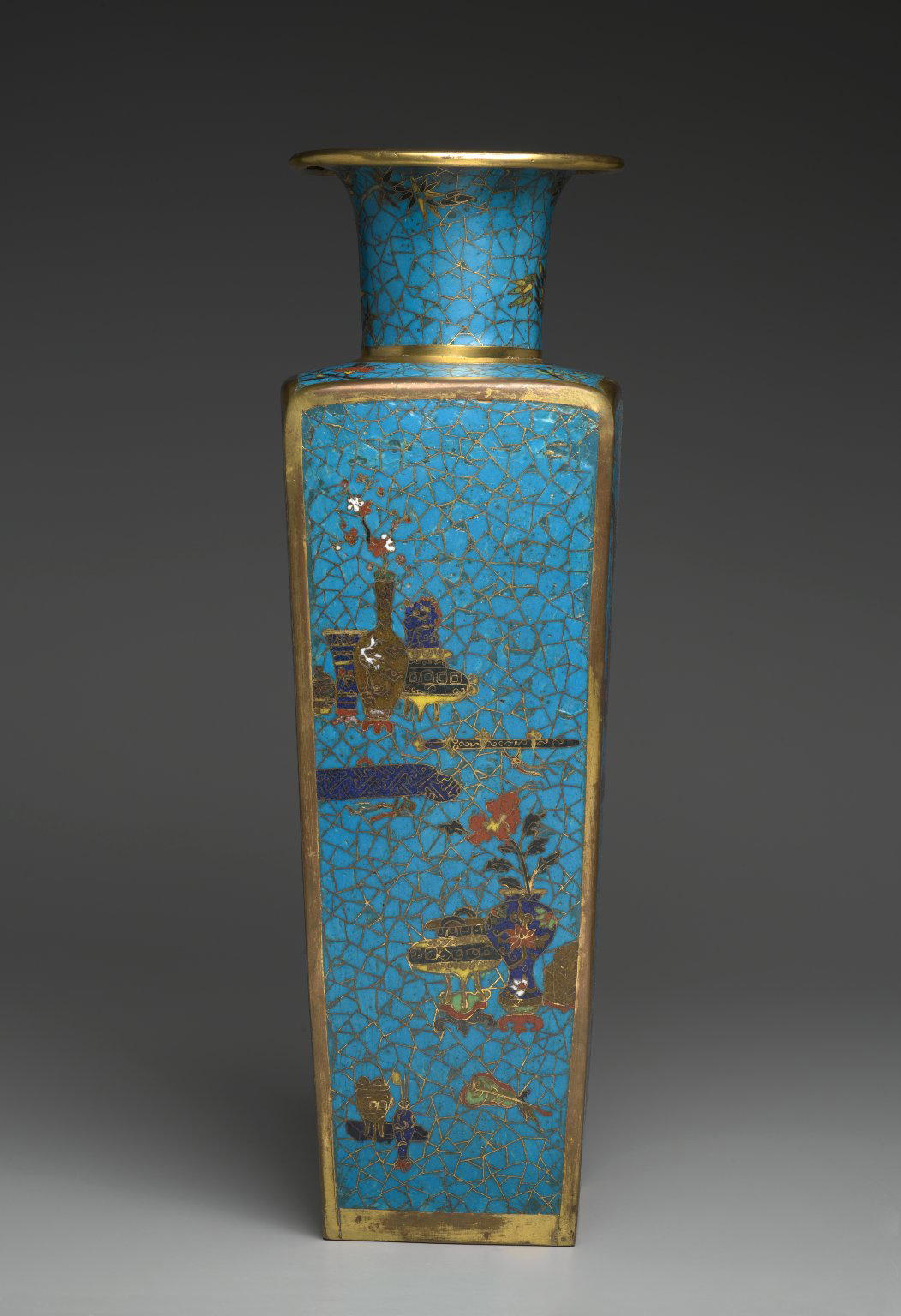
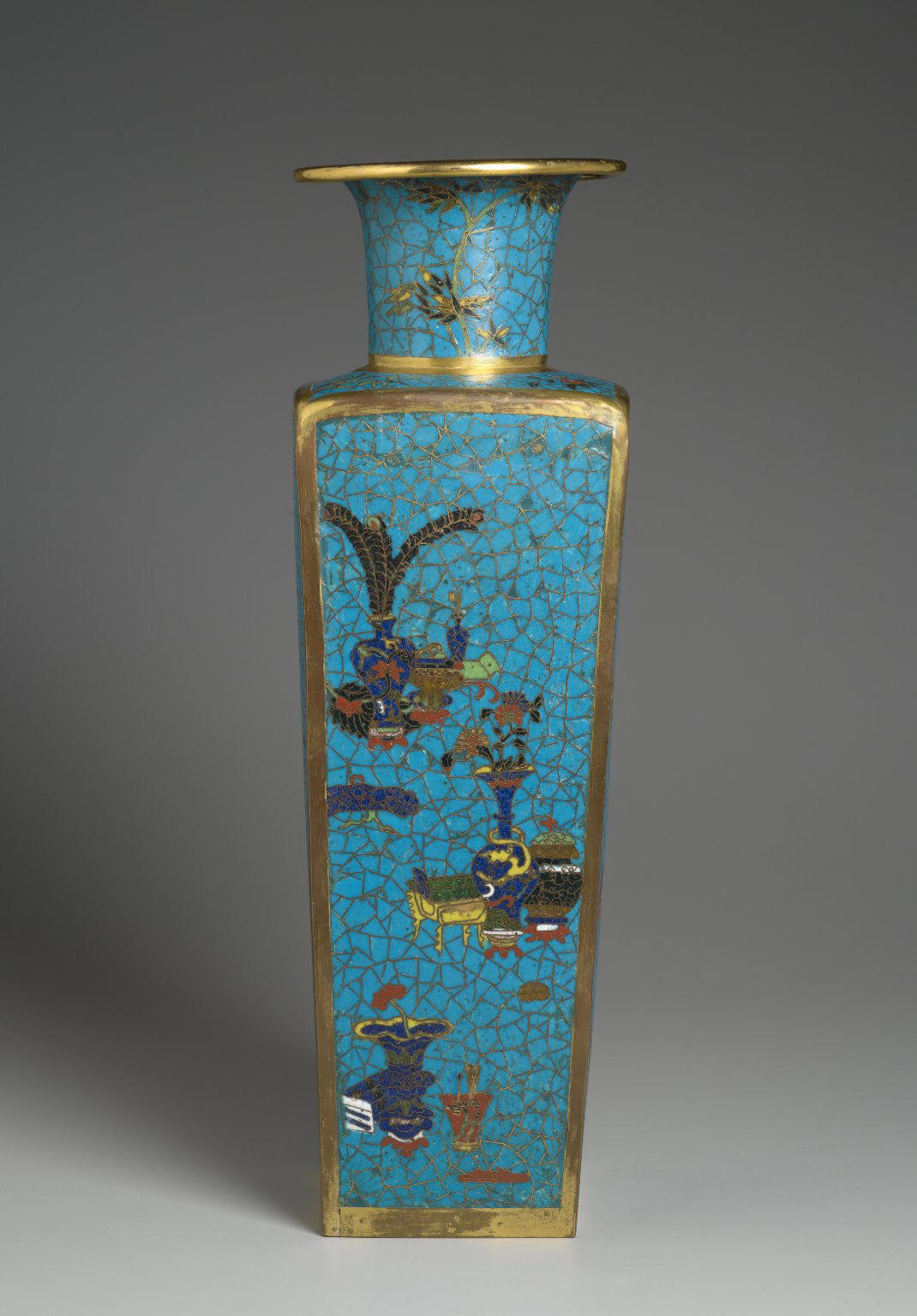
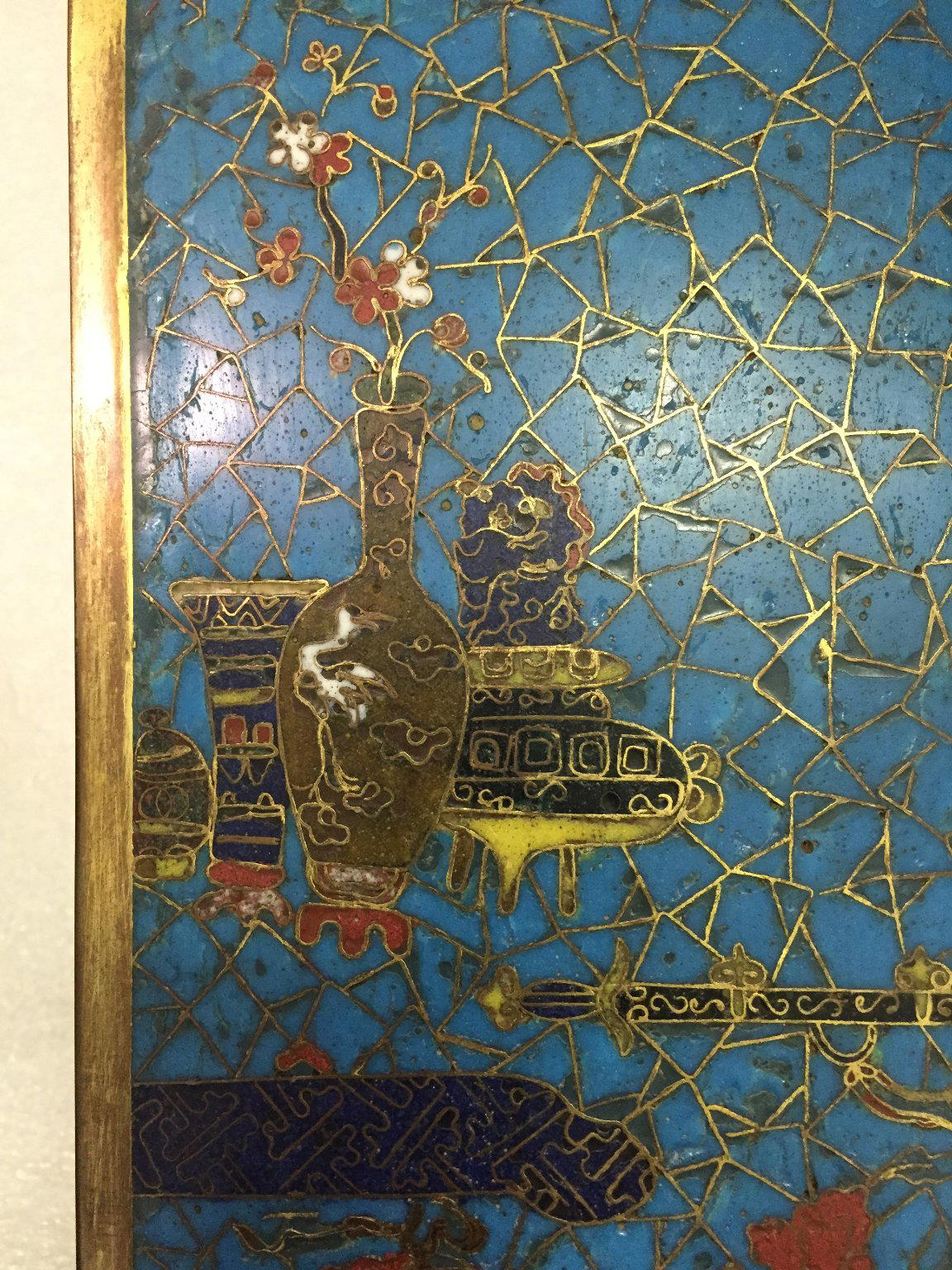
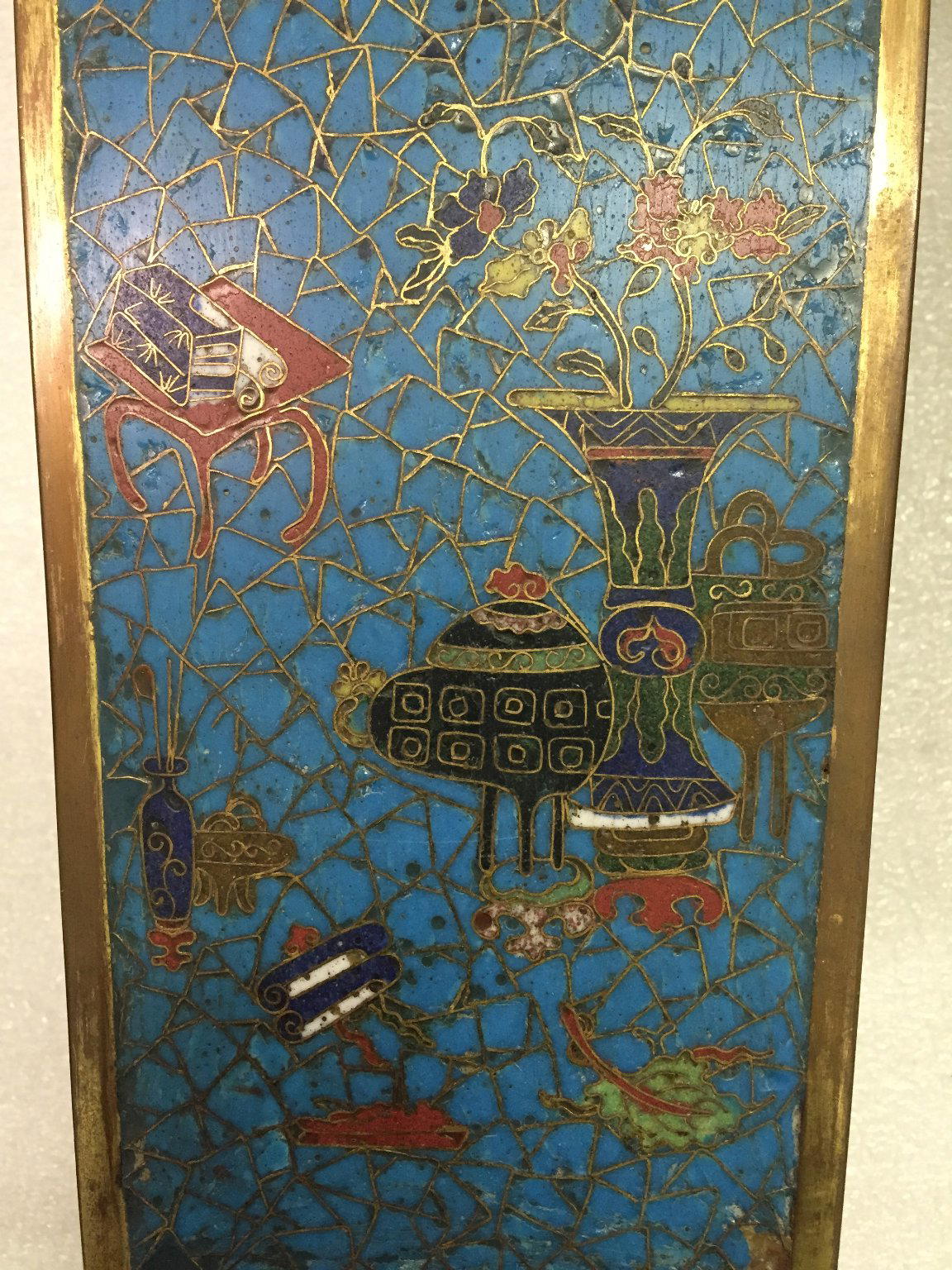
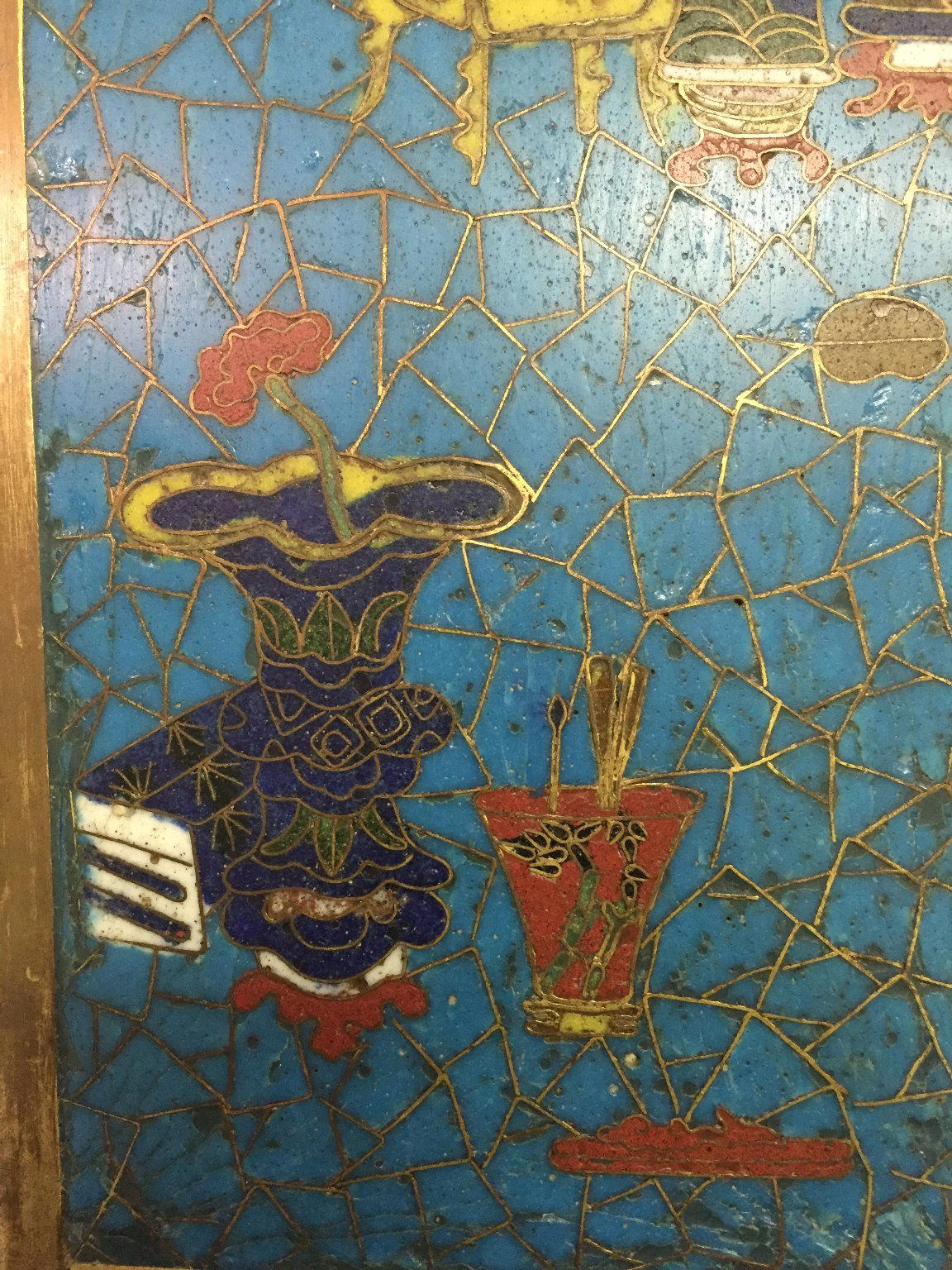
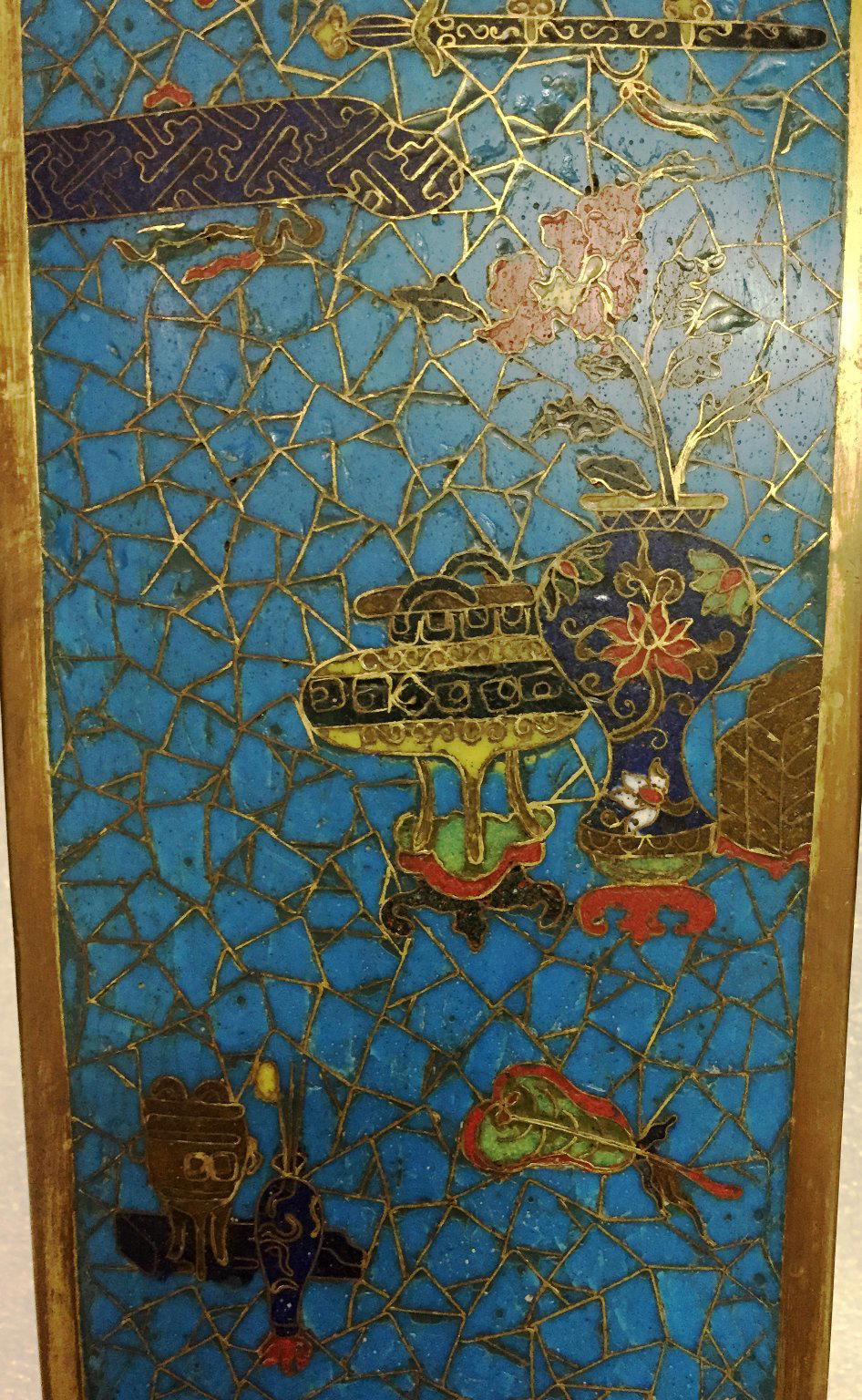
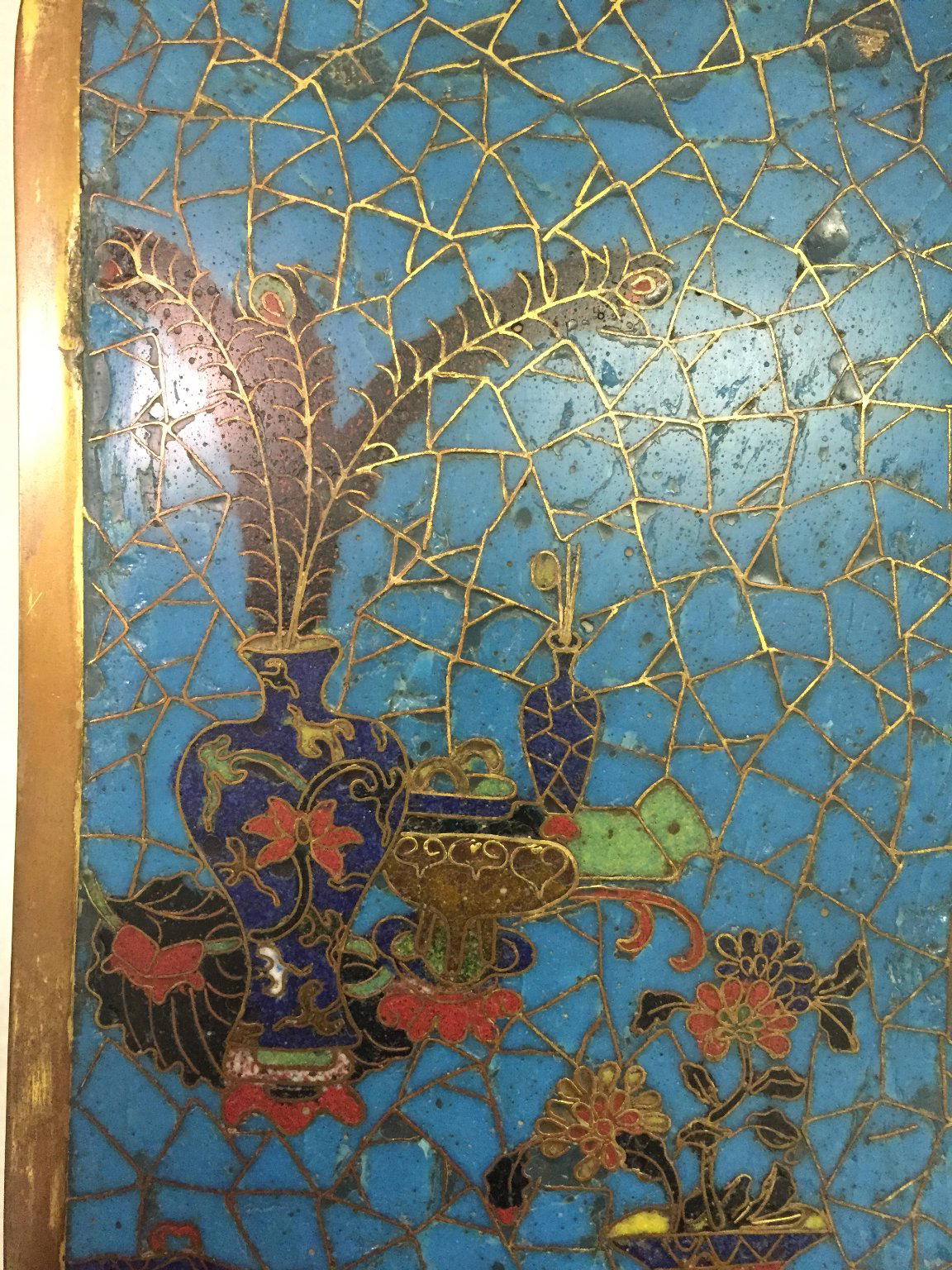
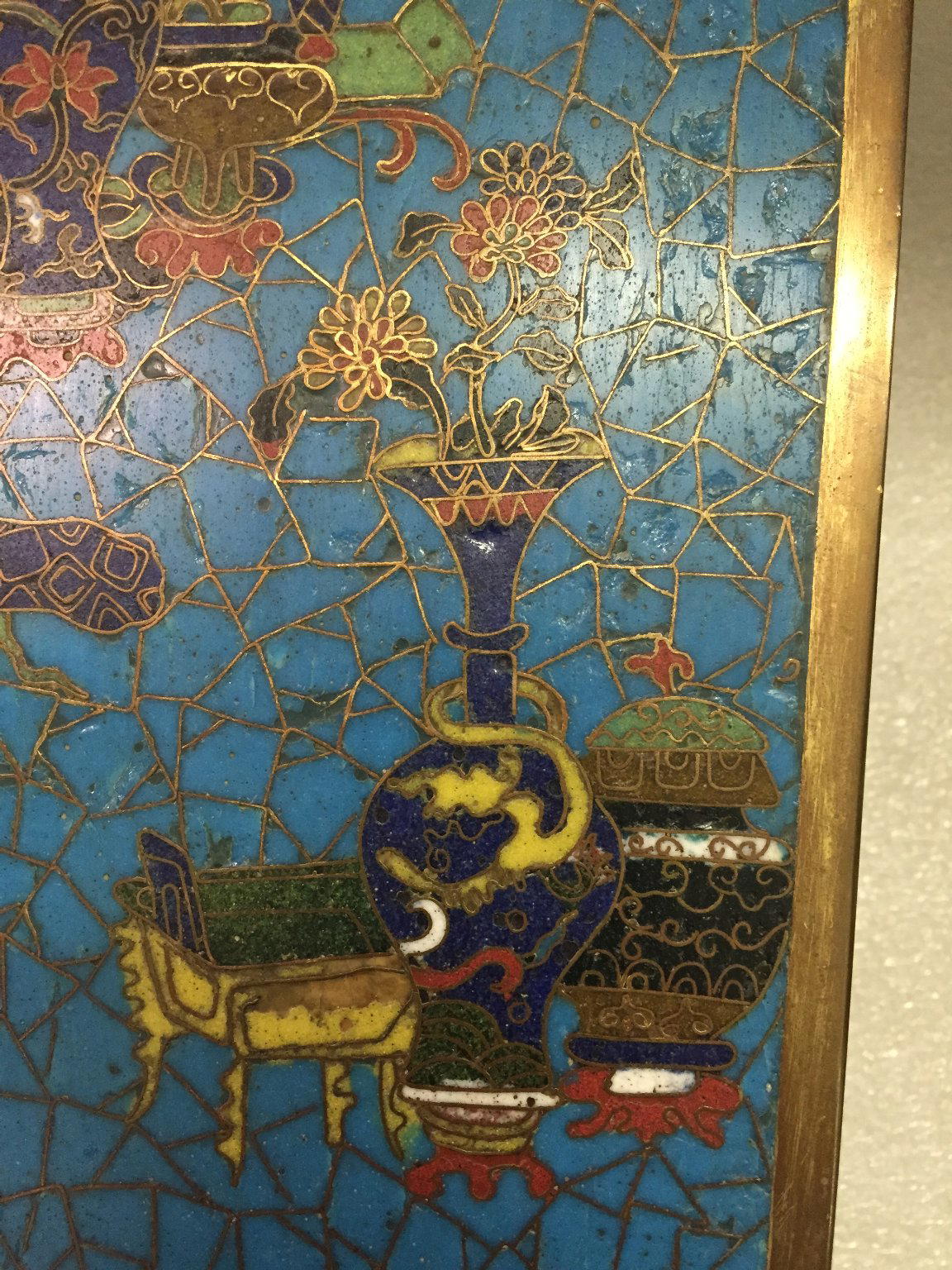
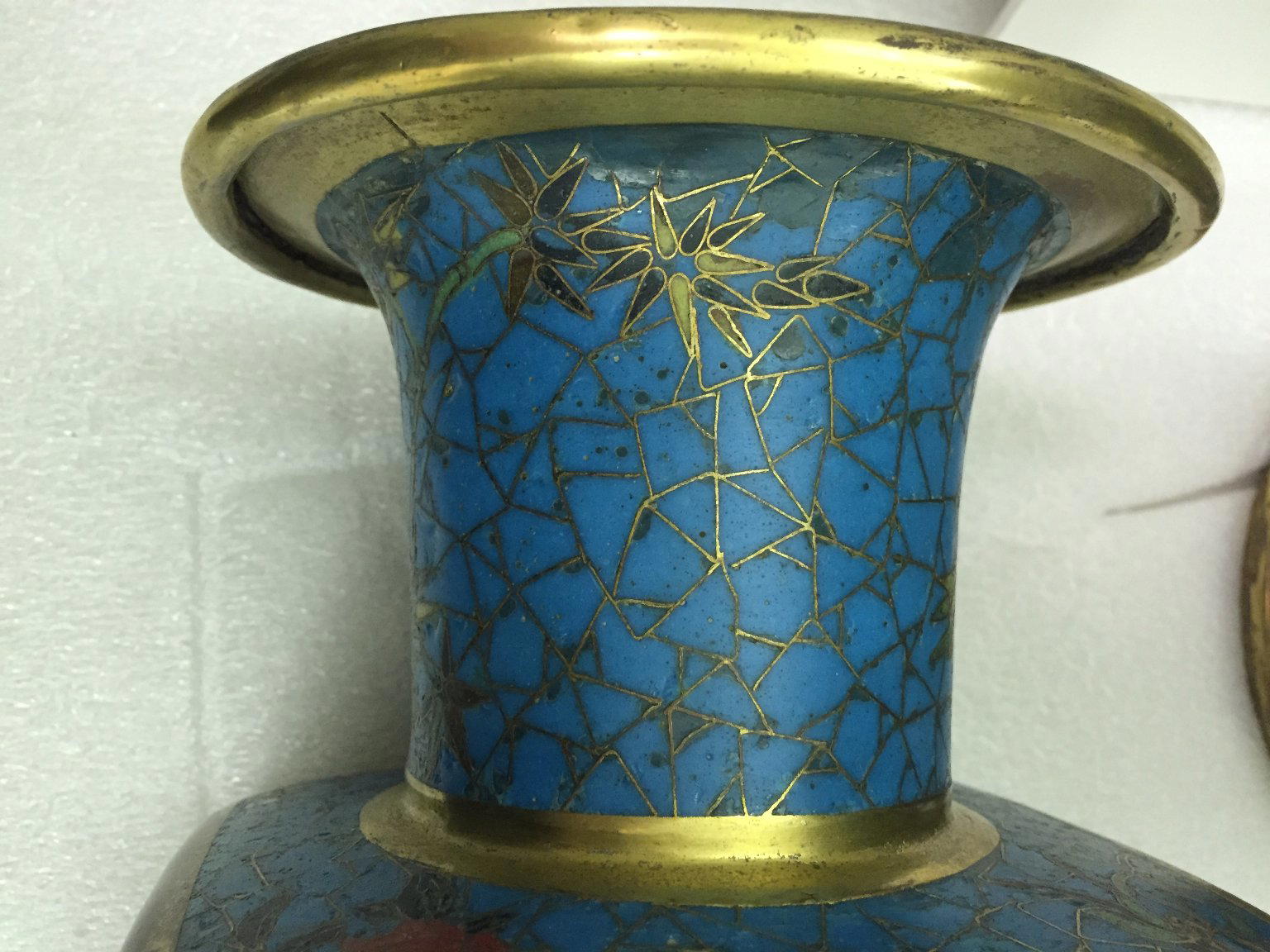
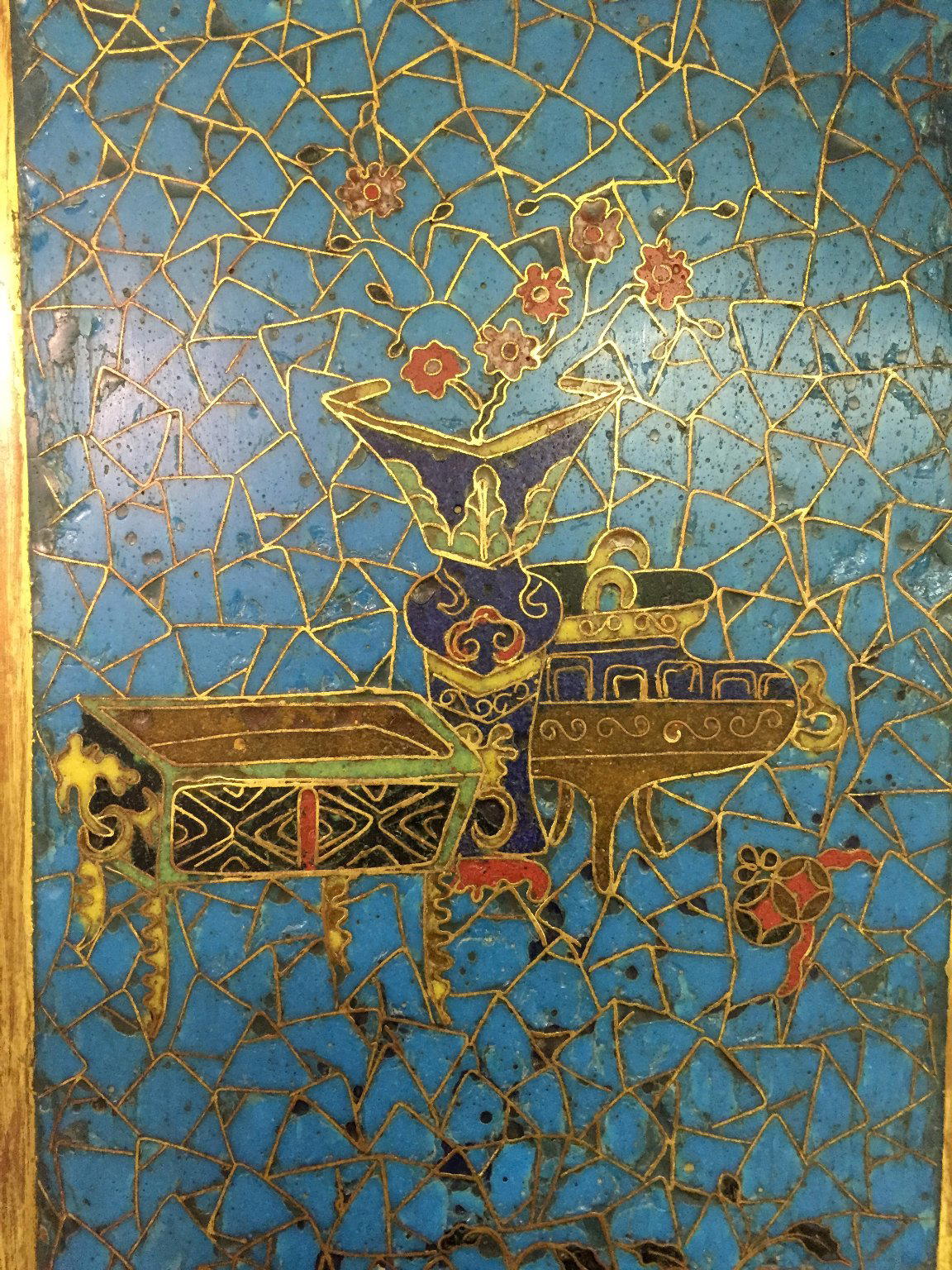
The four sides of this vase depict the Hundred Antiquities, objects that signified the learned and comfortable life of the Confucian scholar-official. These included ancient bronze ritual vessels, books, painting scrolls, a qin (a Chinese zither with seven strings) in a brocade bag, incense sets, a sword, and a fan in the shape of a banana leaf, among others. On the base is the mark of the Jingtai emperor (ruled 1450–57), famous for promoting the blue color of cloisonné, but the piece was made roughly 150 years after his reign.
Caption
Vase, late 18th century. Cloisonné enamel on copper alloy, 20 9/16 x 6 1/4 in. (52.3 x 15.8 cm). Brooklyn Museum, Gift of Samuel P. Avery, 09.512. (Photo: Brooklyn Museum)
Gallery
Not on view
Collection
Gallery
Not on view
Collection
Frequent Art Questions
Why is Chinese art in a case with Medieval Cloisonné?
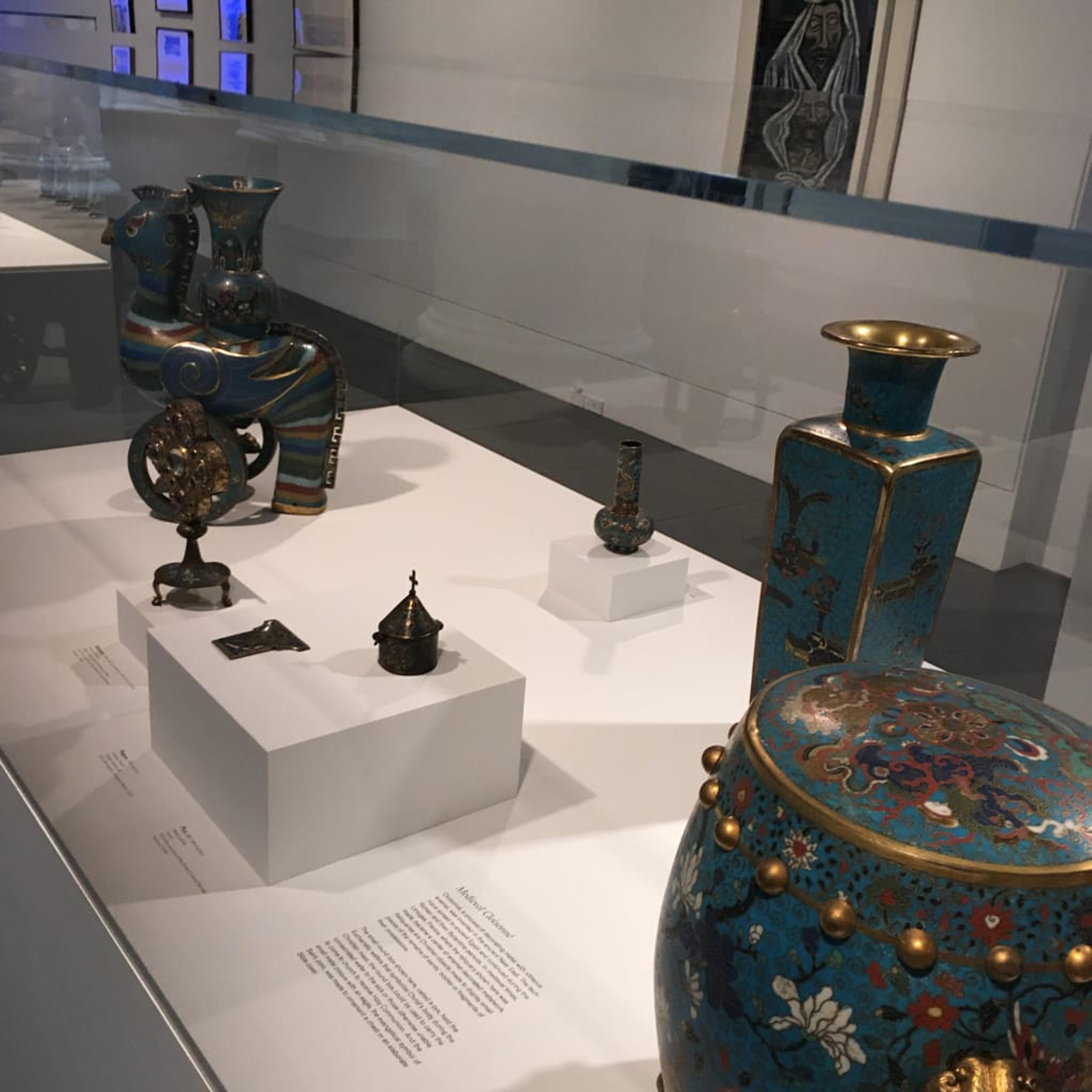 It's surprising at first, right? We're most used to seeing things separated by geography. However, cloisonné is a cross-cultural technique! It was first developed in the Mediterranean basin around 1500 B.C.E. It became highly developed in the Byzantine Empire in the tenth and eleventh centuries and appears to have been transmitted to China via the maritime and overland Silk Routes. It starts showing up in China by the early fifteenth century.Don't miss the small set of objects showing the different stages of cloisonne --- that really helped me to understand how it is made.Thanks! Enjoying the exhibit and the chance to chat with you.
I’m surprised that although these 2 pieces were made decades apart that they have such similar colors/blue in them. Can you tell us more about that?
Yes, that is a terrific observation!The enamel tradition, including the color palette, was formalized in Ming China. The later Qing dynasty wanted to legitimize their rule and intentionally produced objects that resembled Ming products.The round garden seat is Ming and the tall square vase is Qing.So interesting! Thank you.
Have information?
Have information about an artwork? Contact us at