Reliquary in the Shape of a Stupa
1 of 11
Object Label
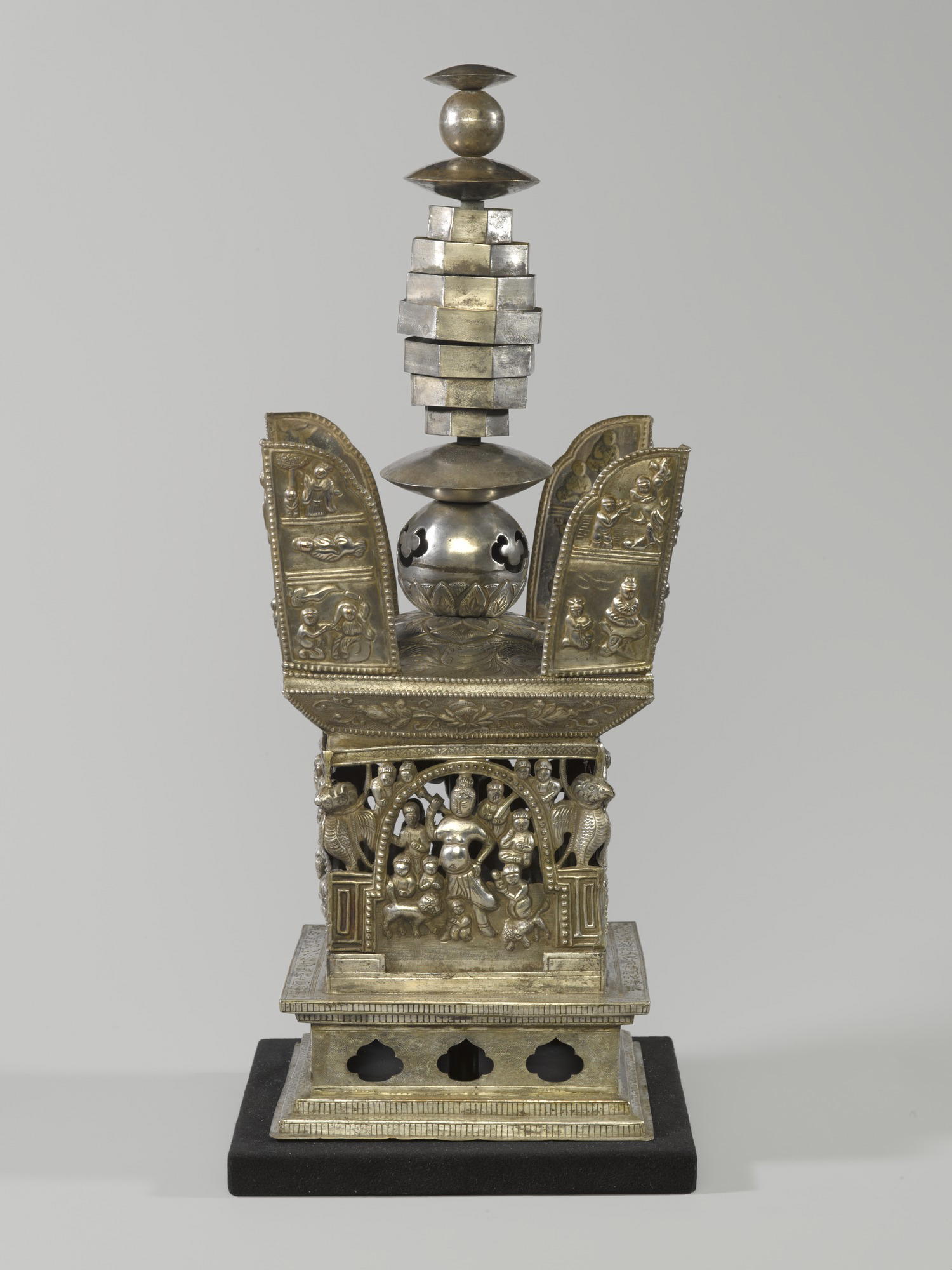
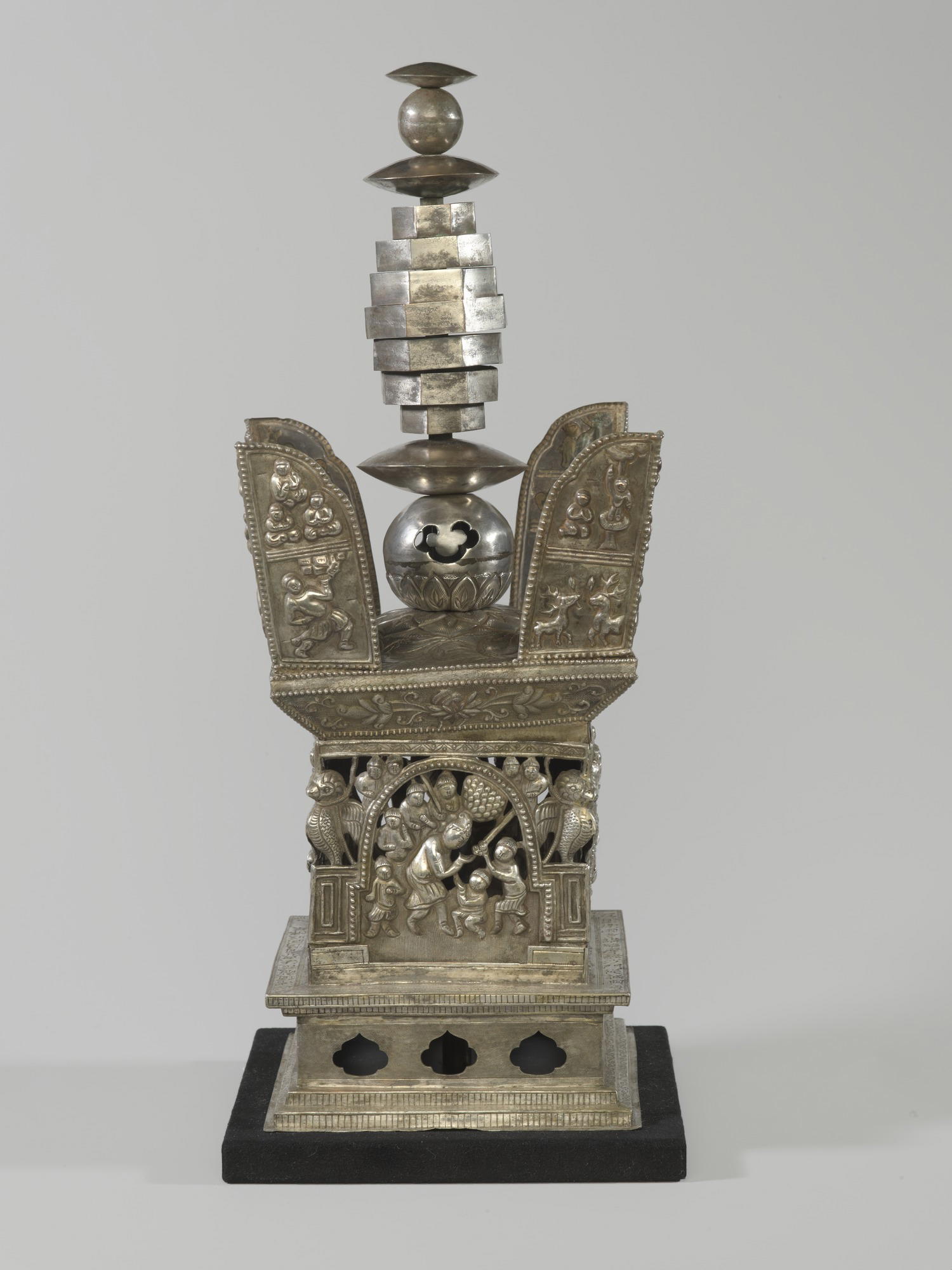
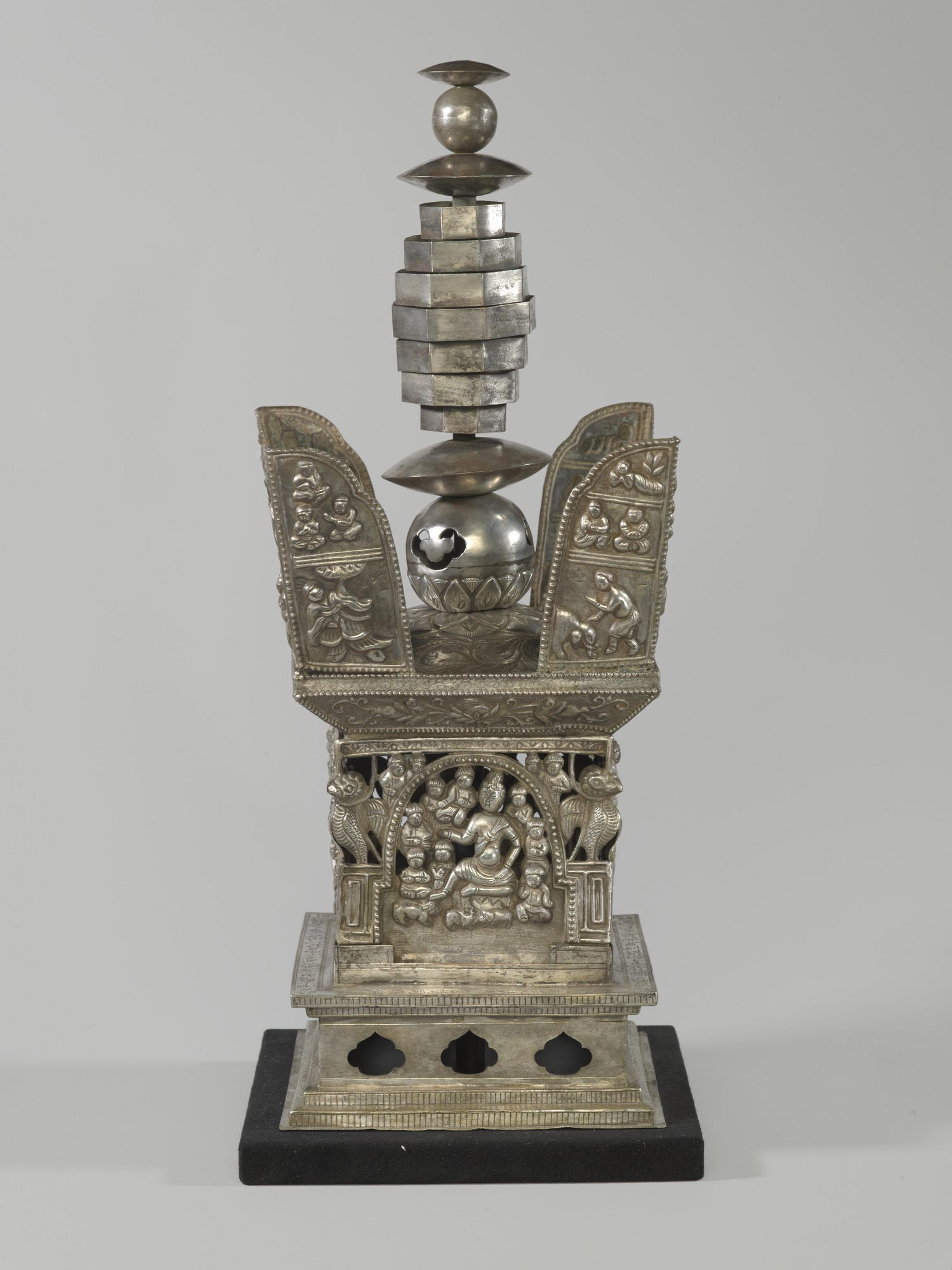
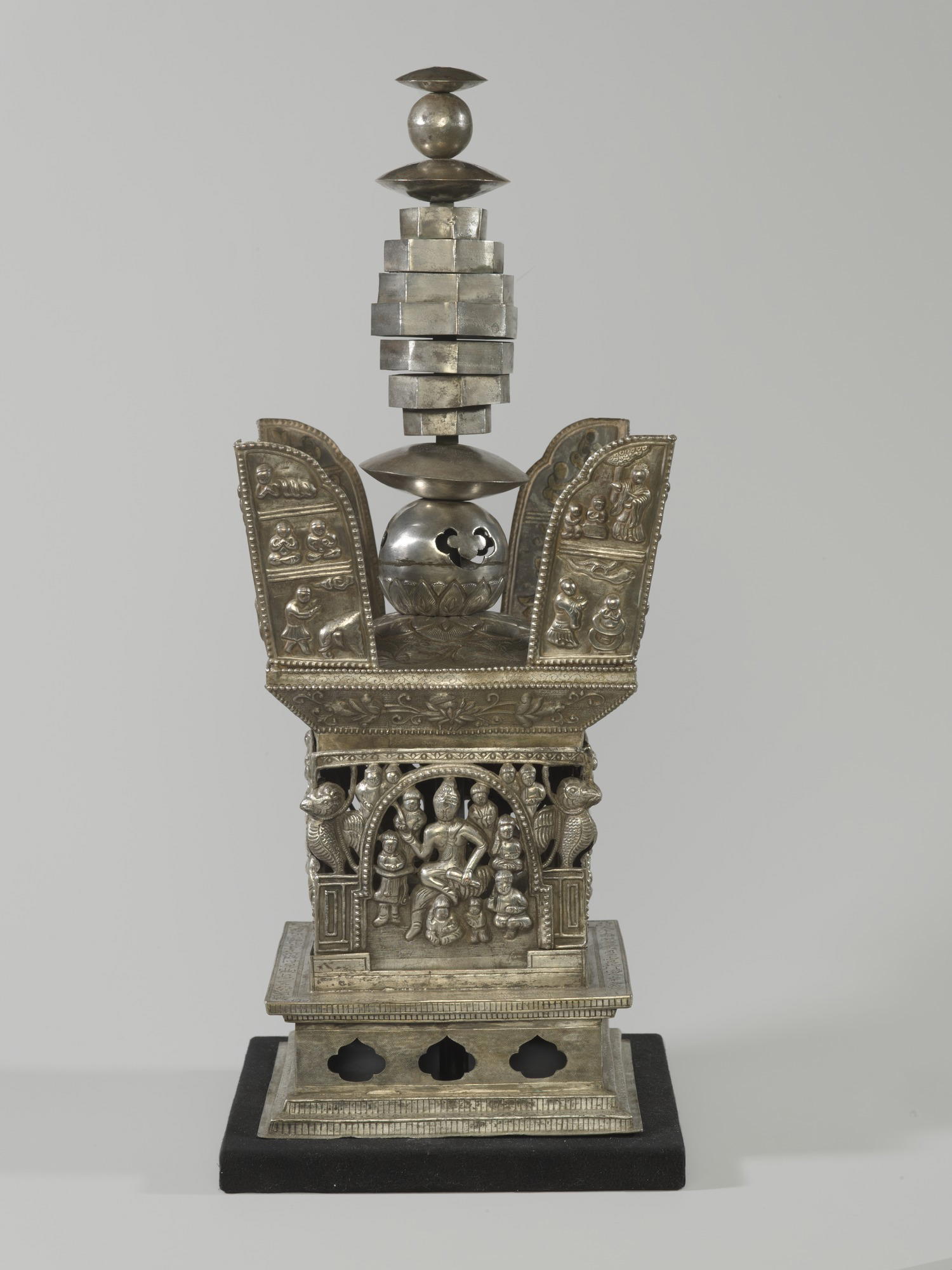
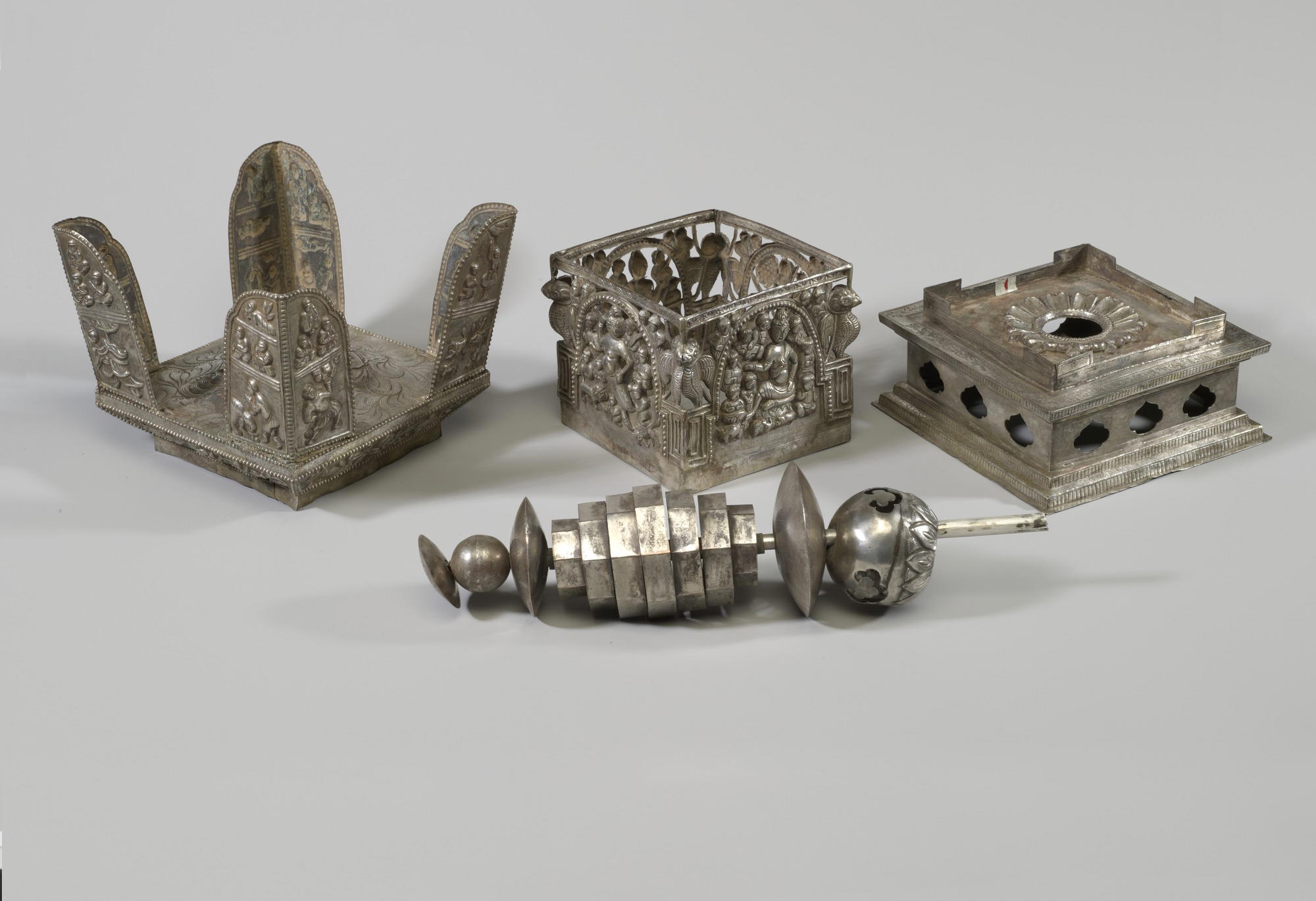
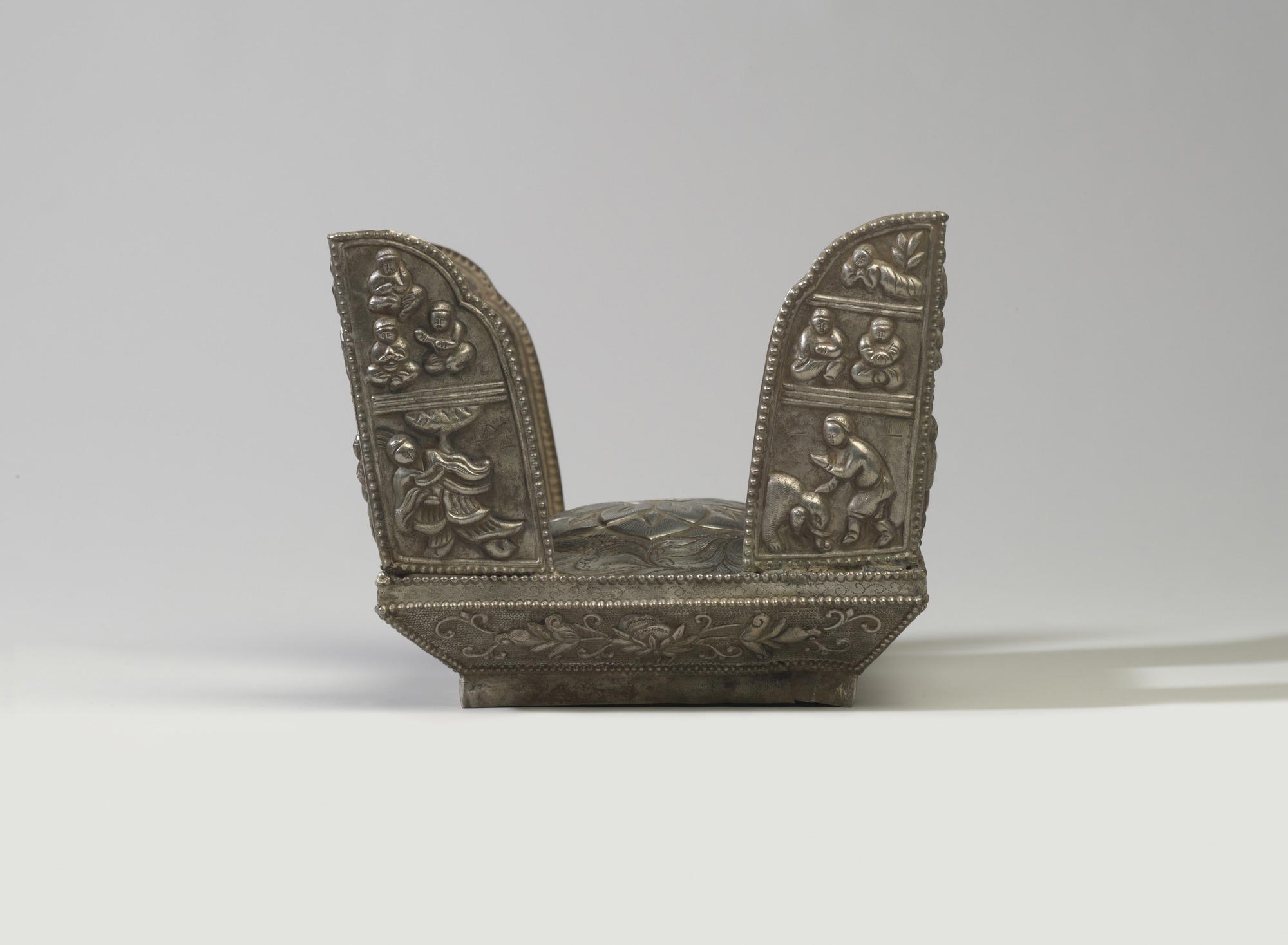
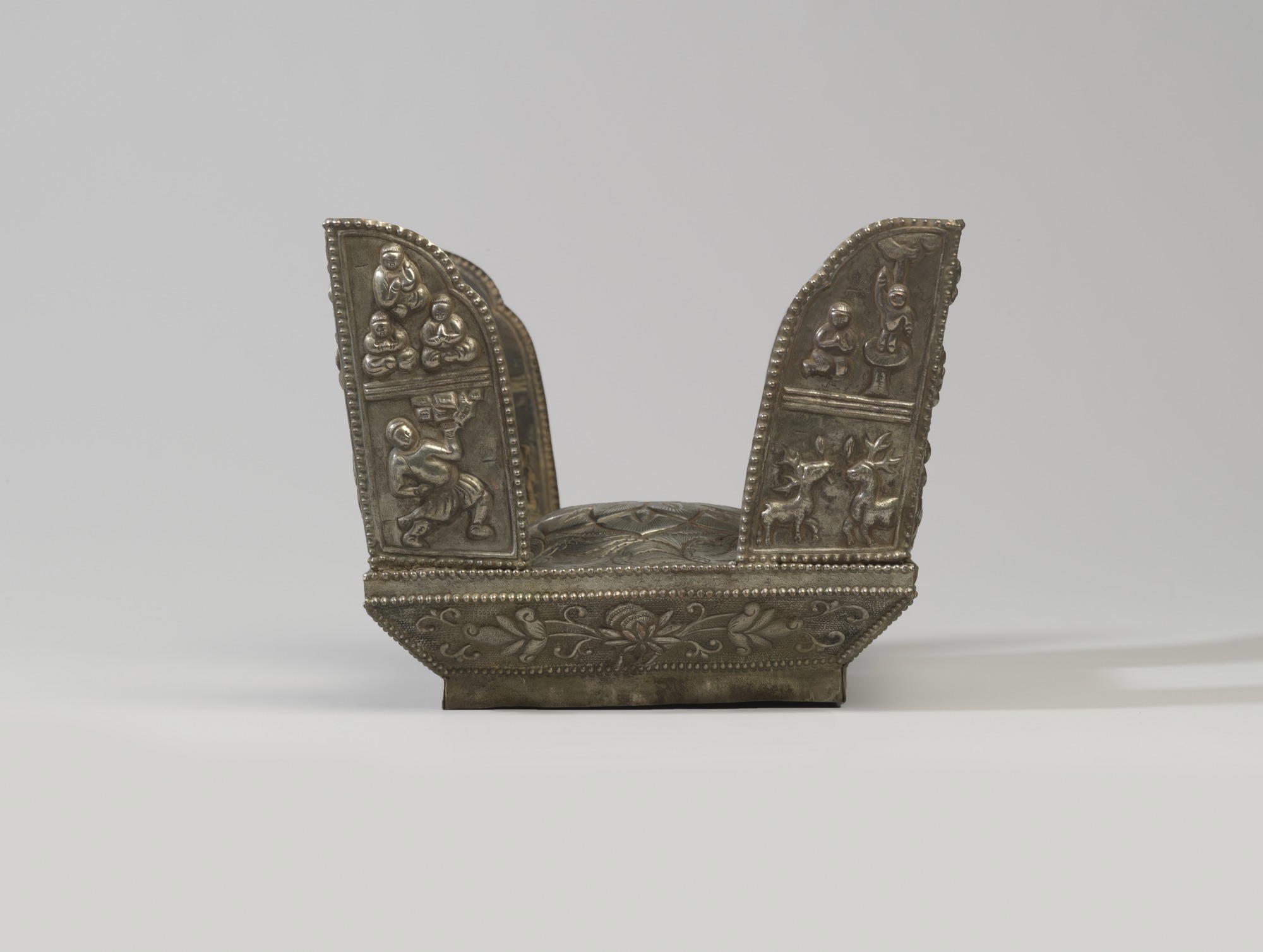
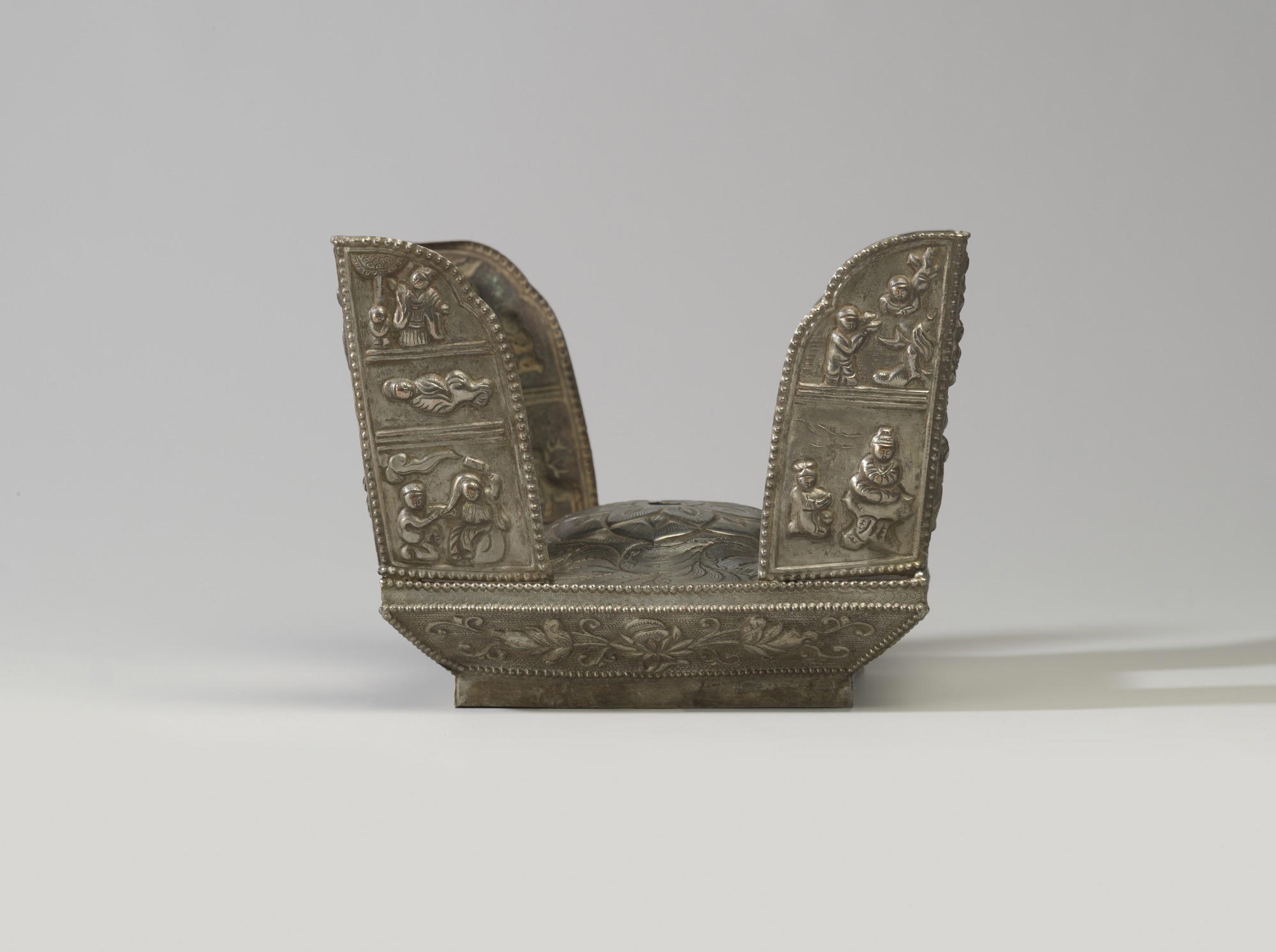
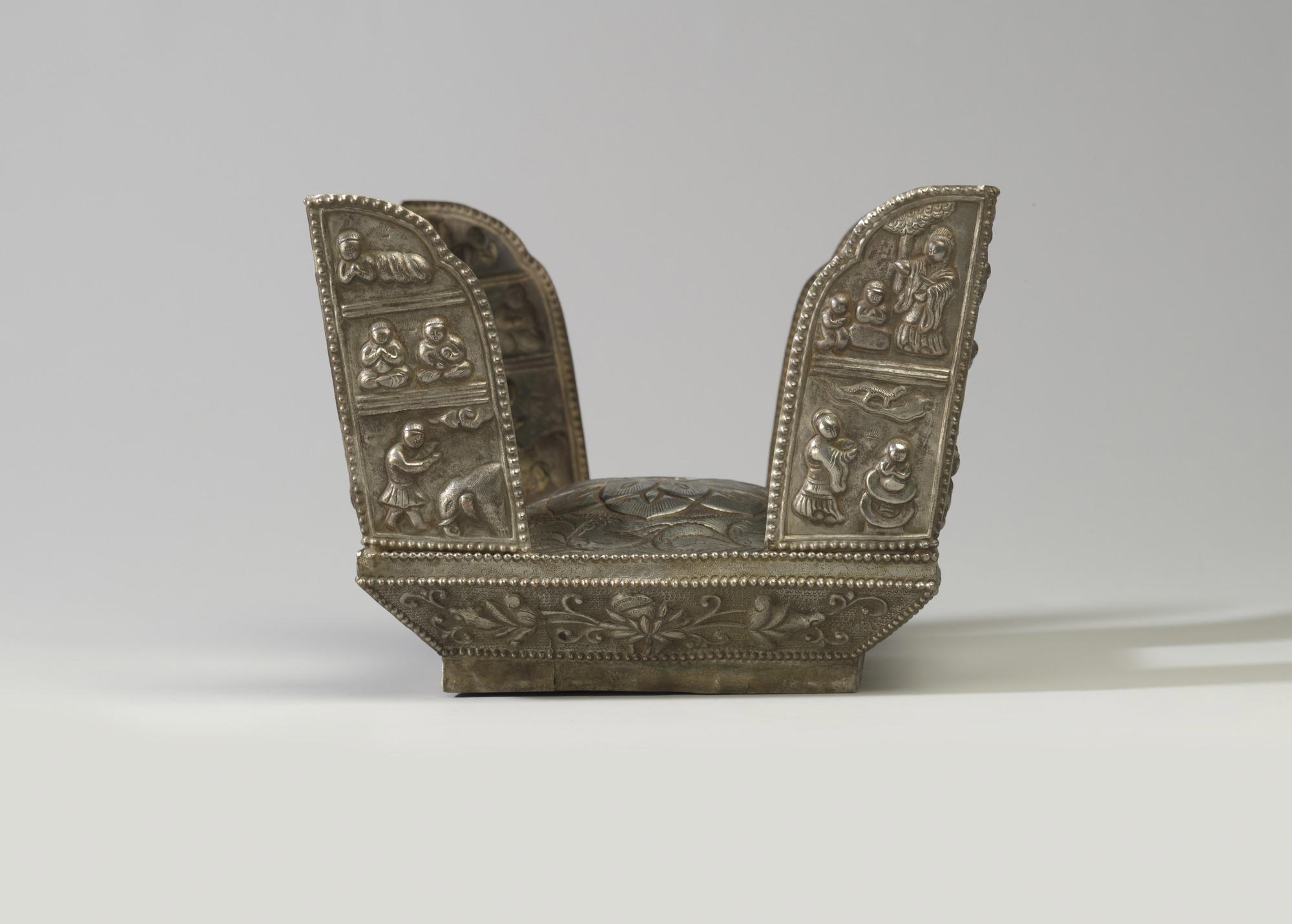
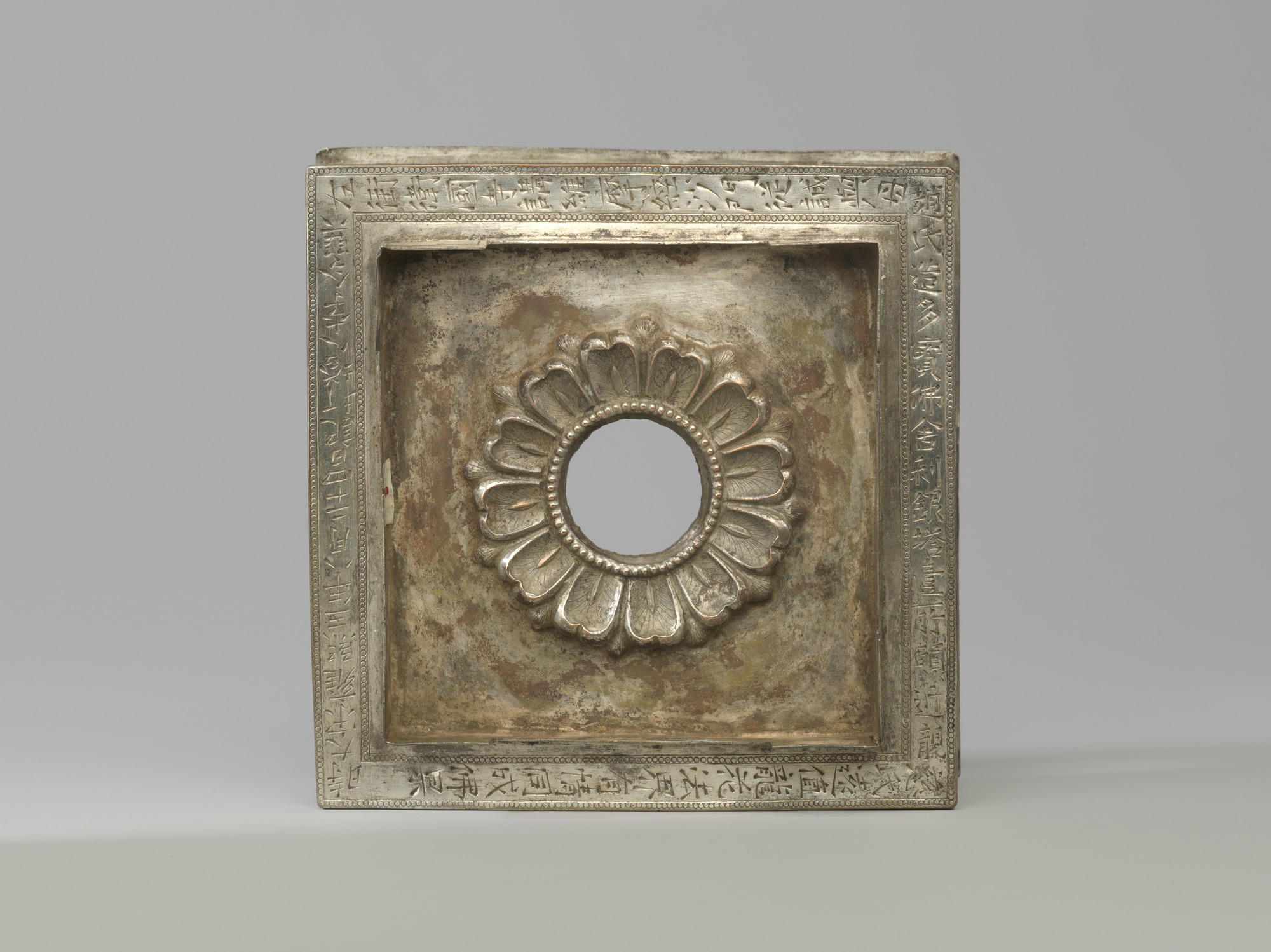
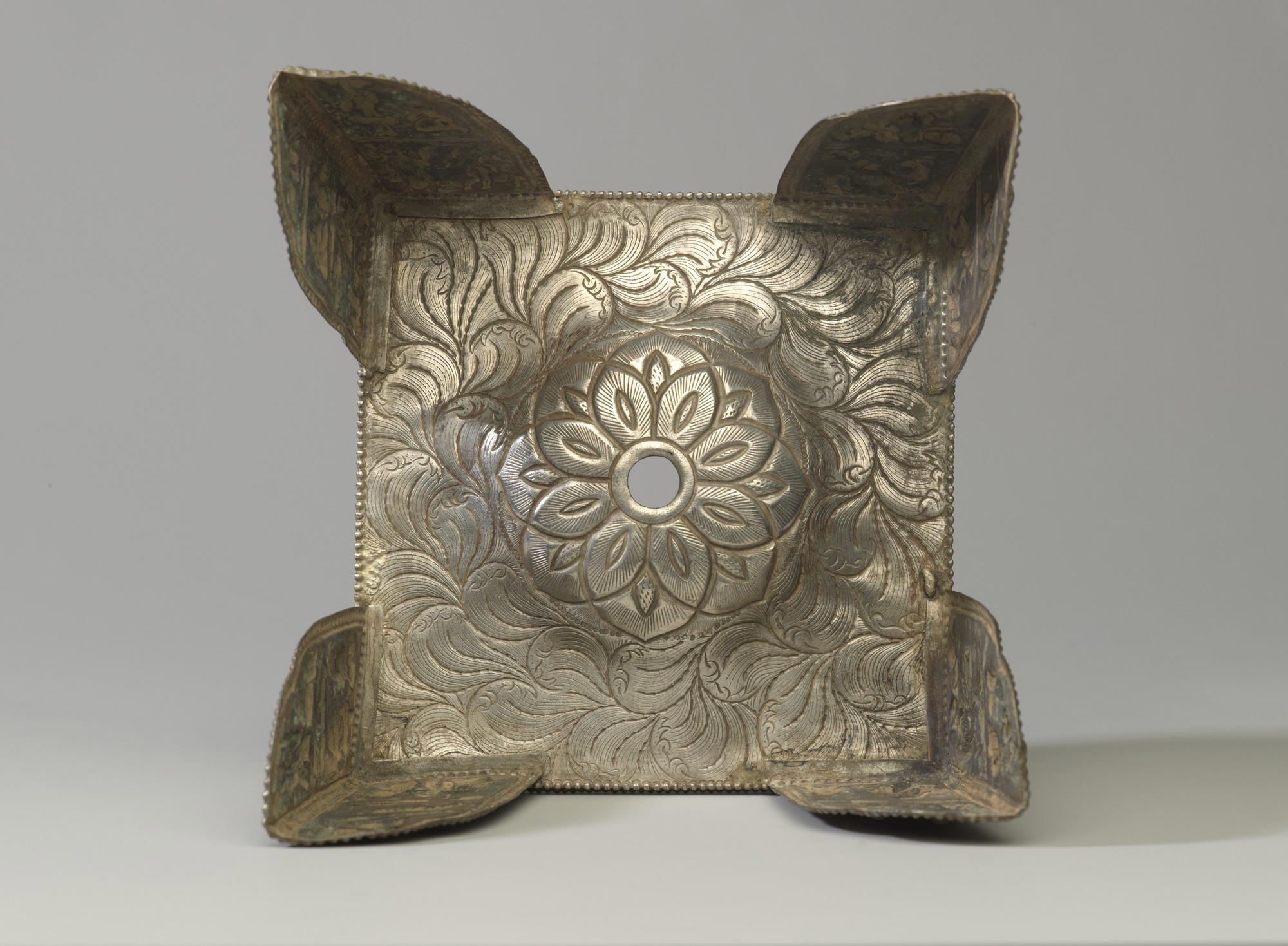
This silver container is in the shape of a burial structure known as a stupa. Stupas take very different forms in Buddhism’s many regions, but they always have a spire of multiple parasols rising from the center. Because of their funerary function, stupas (and stupa-shape containers) became emblems of the enlightened Buddhist’s passage out of the earthly realm. The pictures on the sides of this piece depict the previous lives of the historical Buddha, and an inscription in Chinese indicates that a monk and his mother commissioned the deluxe object to contain a relic from a Buddhist leader.
Caption
Reliquary in the Shape of a Stupa, 986 C.E.. Silver, height: 14 in. (35.6 cm). Brooklyn Museum, Gift of Mrs. Walter N. Rothschild and anonymous gift, by exchange , 2012.5a-d. (Photo: Brooklyn Museum)
Collection
Collection
Title
Reliquary in the Shape of a Stupa
Date
986 C.E.
Dynasty
Song Dynasty
Period
Song Dynasty
Geography
Place made: China
Medium
Silver
Classification
Dimensions
height: 14 in. (35.6 cm)
Inscriptions
The inscription may be translated as: The monk Congcheng, who expounds the Vimalakirti Sutra at the Weiguo Monastery on Zuo Avenue, and his mother Madame Zhao [commissioned] to be manufactured one silver reliquary stupa [in the form] of the Stupa of the Abundant Treasures Buddha (Prabhutaratna), with the wish that: Those nearby may take Maitreya as their kin Those afar may attend Him at the Dragon Flower Tree That all sentient beings in the experiential realms May together attain the fruit of becoming a Buddha Recorded on the twenty-fourth day of the eighth lunar-month in the third year of the Yongxi reign period of the Great Song dynasty (30 September 986), by Li Lingxun, maker of the stupa.
Credit Line
Gift of Mrs. Walter N. Rothschild and anonymous gift, by exchange
Accession Number
2012.5a-d
Have information?
Have information about an artwork? Contact us at